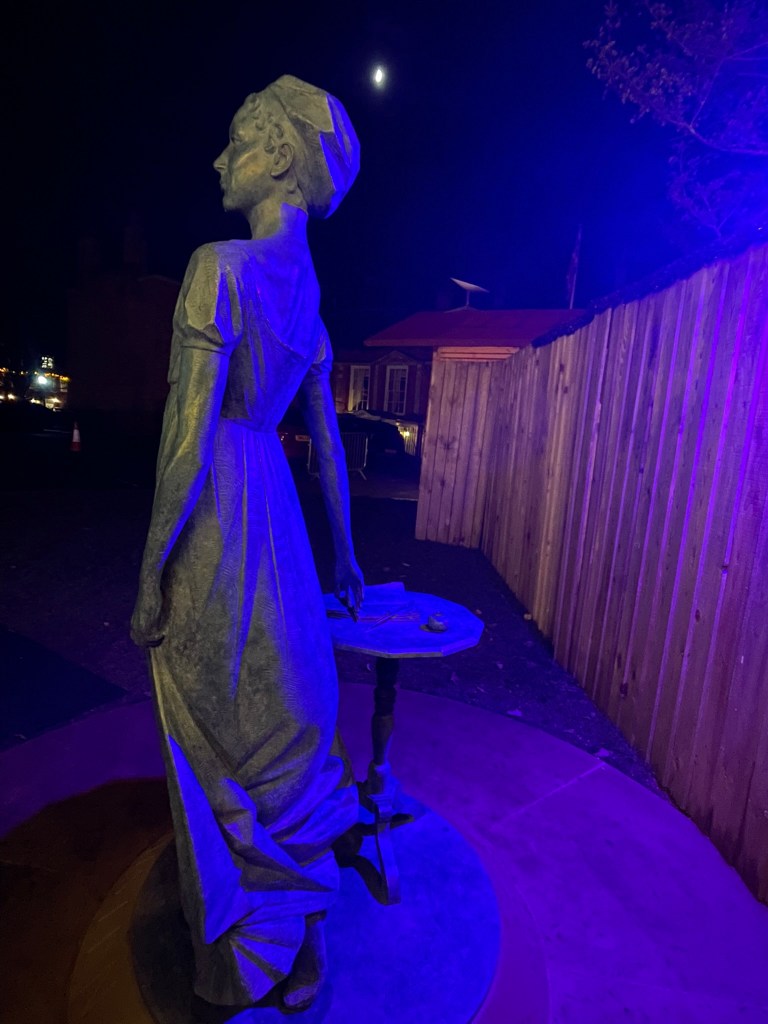
Geraldine Connor

(1952-2011)

Foyer of Leeds School of Arts, Portland Way, Leeds, England
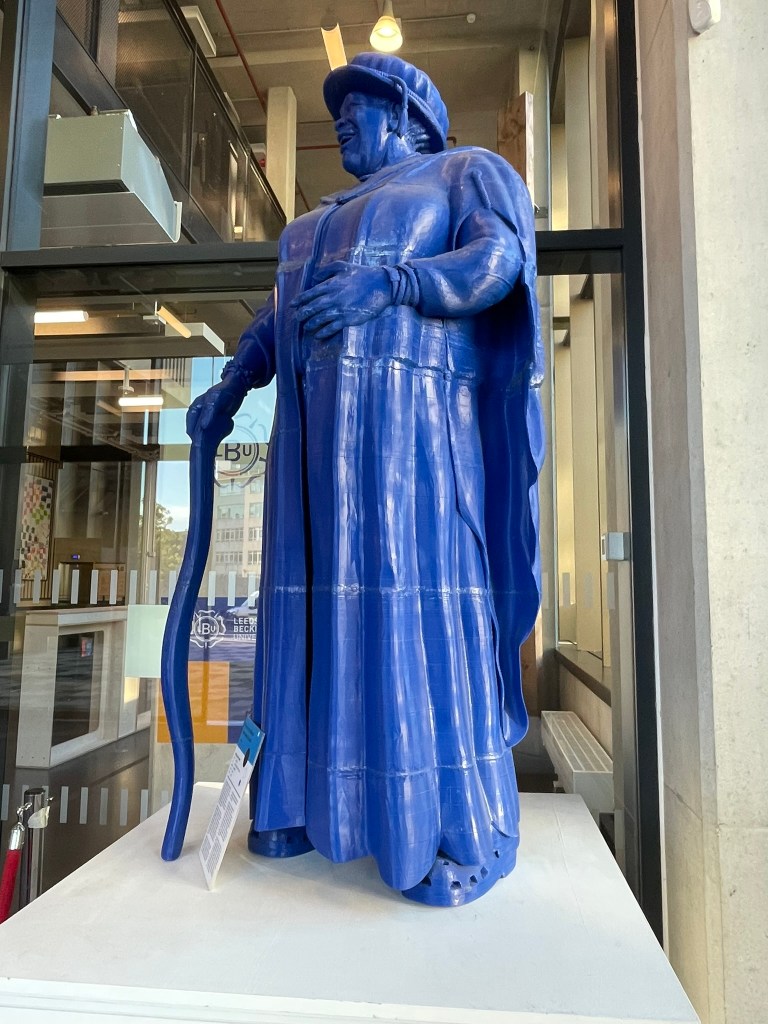
Are we allowing this here?  I don’t mean because the statue is blue, but because it was produced on a 3D printer.  So far so futuristic.

It was local artist Sarah Roberts who flagged this piece up, as, ashamedly I was unaware of it despite being a stone throw away from it.  I’m even more ashamed that on my first visit I went to the wrong art place (I rocked up at the Leeds Arts University instead of Leeds School of Arts, surely everyone has made this blunder…)

The city of Leeds has around 850,000 inhabitants but there are no women statues, and PhD Art Student and statue creator Lara Rose highlights there are no statues of black people in the city.  Pretty stark.

Geraldine was an ethnomusicologist, theatre director, singer, composer and performer.  Born in London but raised in Trinidad, her studies and work spanned both places.  She taught music in the 70’s and 80’s as well as working as a backing singer for stars such as Jimmy Cliff, Bob Marley and Tom Jones.  She also sang on the original recording of Andrew Lloyd Webber’s Jesus Christ Superstar.
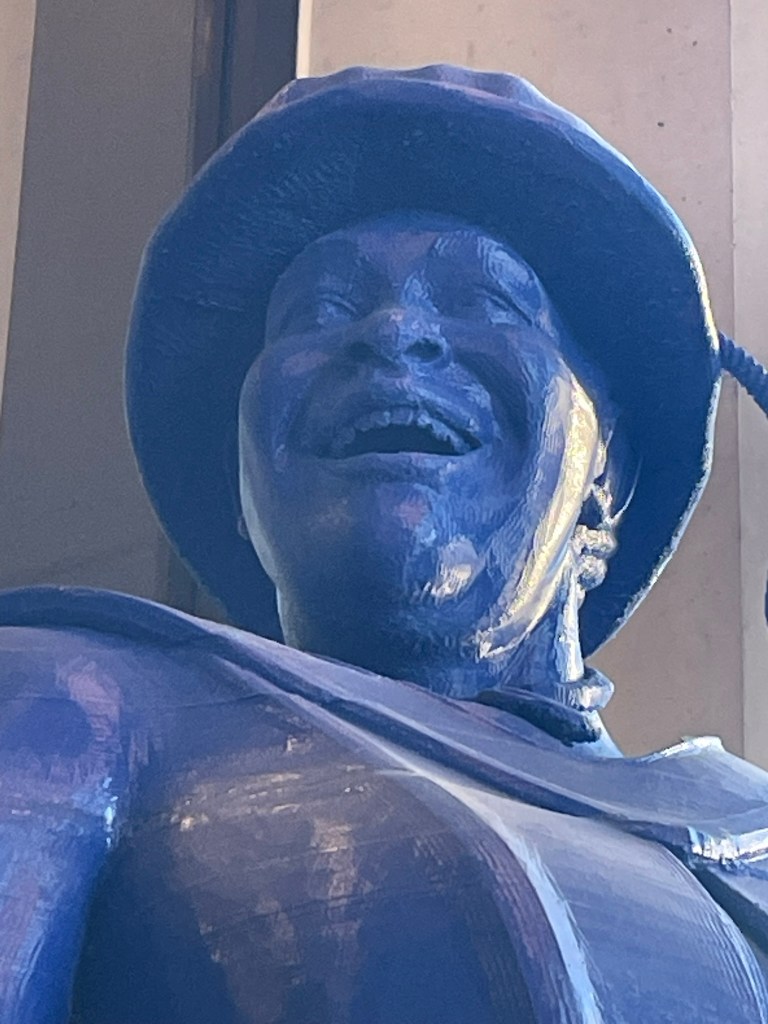
Geraldine moved north in 1990 as a lecturer at the University of Leeds.  During her time there she composed and directed her most famous work, Carnival Messiah, fusing European classical tradition of oratorio – like Handel’s Messiah – with musical inspiration from the African diaspora.  Over three decades Geraldine created or directed a number of theatrical and musical productions, whilst finding time to complete her Doctorate at the University of Leeds.  Geraldine’s artist Lara Rose captures her wearing her graduation robes.

The Geraldine Connor Foundation (GCF) was established in Leeds a year after her death to continue her work and vision.
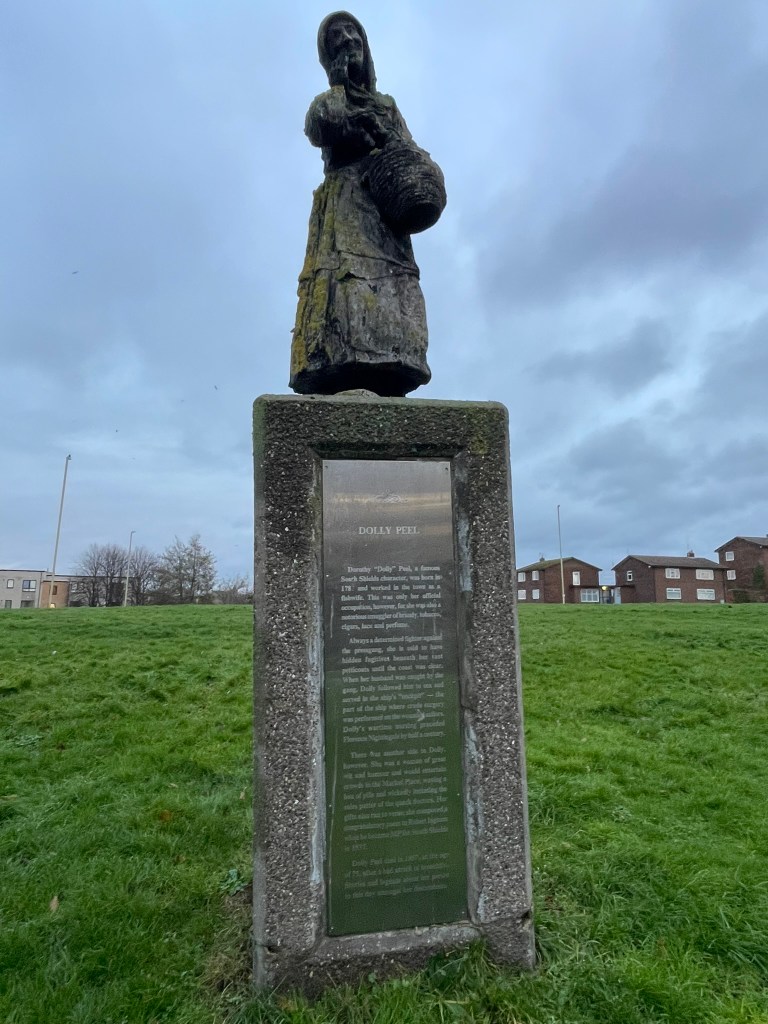
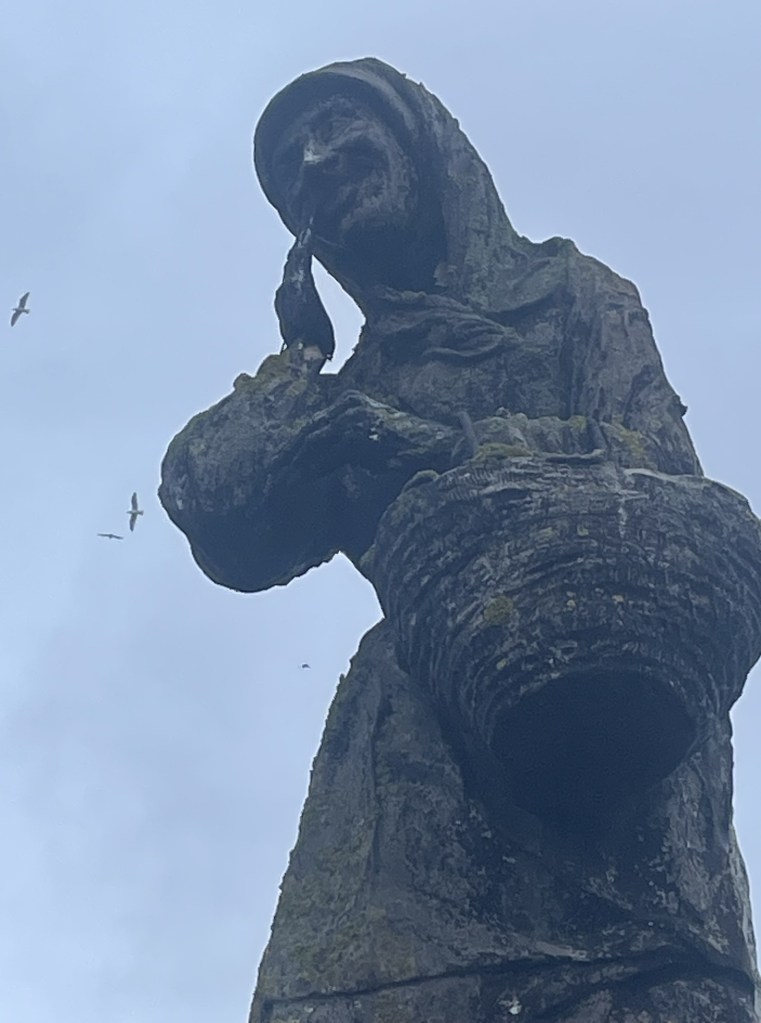
Dolly Peel (1782–1857)

River Drive near the junction with Palatine Street, South Shields, England

Characters don’t come much more colourful than Dorothy (Dolly) Peel.  The https://fabulousnorth.com/ website describe her as, ‘Fishwife by day and smuggler by night’.  In short, she was your ‘go to’ lass for alcohol, tobacco, perfume and lace.

During her lifetime, the pressgang were active, forcing men into military service. Legend has it that she would hide local sailors under her petticoats to avoid conscription.  However, this subterfuge only lasted so long, and her husband and son were forcibly enrolled in the navy during the Napoleonic Wars.  Dolly stowed away on their ship, and when discovered took on a new career as an onboard nurse and was allowed to stay because of her exemplary efforts before eventually being pardoned and returned to shore.

Dolly was also said to have a great sense of humour and entertained the public in the market place, mocking the fake doctors trading dubious pills.  Later in life she published poetry.  Imagine her LinkedIn profile with her range of skills. The statue was commissioned by her great-great-great grandson Reginald Peel and based on a surviving photograph.  It is also intended as a tribute to all working women.  Made of ciment fondu (a fast setting, durable material – everyday’s a school day) the statue was unveiled in 1987.

I had visited Dolly initially last year but got there as the light was fading.  Seeing as I was in the area this year visiting new statue Mary Ann Macham I decided to hop over the Tyne, practically opposite Mary Ann across the water to get a better pic.  When I reach Dolly this time, the light too is fading, and I check when I first visited the statue.  It was exactly the same day last year.

Winifred Carney

(1887–1943)

Grounds of Belfast City Hall, Donegall Square, Belfast, Northern Ireland

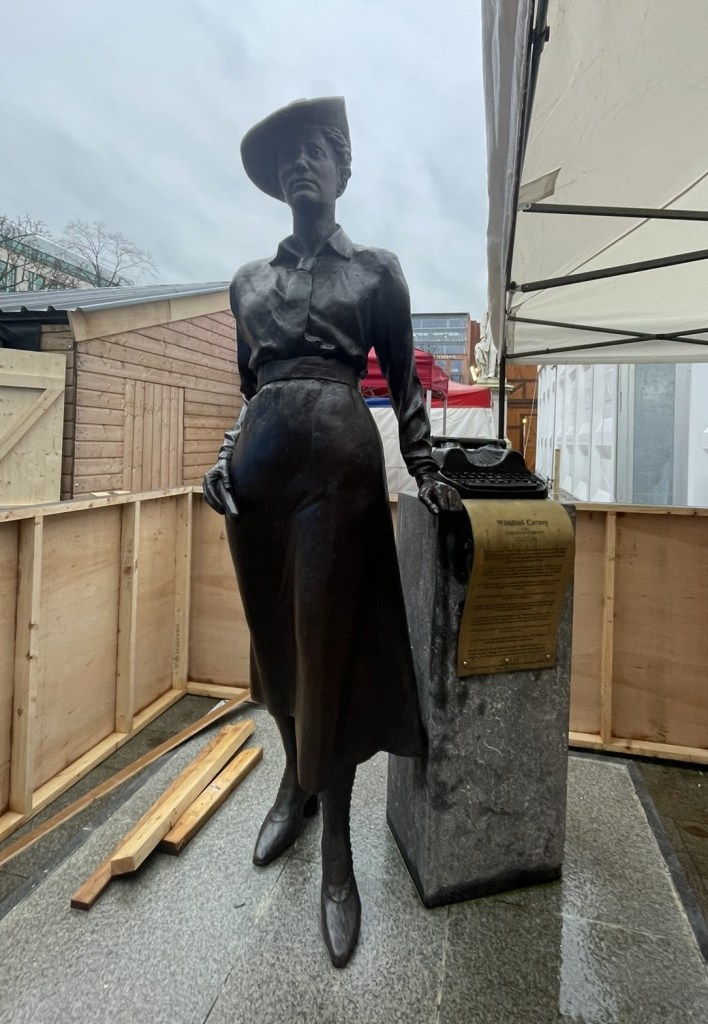
I have a little more luck with Winfred.  She stands behind a stall that allows me access to the back (stall name is anonymous to protect any health and safety violations).

Partially boxed off, it’s tricky to get a good look round Winifred, hence I capture her thus.  Your shots will be better.

The statue was unveiled alongside Mary Ann McCracken, with both being commissioned by Belfast City Council.

Winifred left school as a qualified secretary and shorthand typist and became involved in the Gaelic League (promoting the Irish language), Cumann na mBan (The Irishwomen’s Council) and the suffragist movement.  She joined the Irish Textile Workers’ Union where she was introduced to the republican, politician and socialist James Connolly and together they wrote the manifesto, ‘To the Linen Slaves of Belfast’ highlighting the long hours and dangerous conditions workers were subjected to.  Through sharing Connolly’s political ideas and revolutionary plans she became his personal secretary and confidante including the lead up and throughout the 1916 Easter Uprising and was with him at the surrender. 

The statue has her wearing her 1916 uniform as Adjutant in the Irish Citizen Army with a typewriter and a revolver.

Mary Ann McCracken

(1770-1886)

Belfast City Hall 1st Floor and Grounds, Donegall Square, Belfast, Northern Ireland

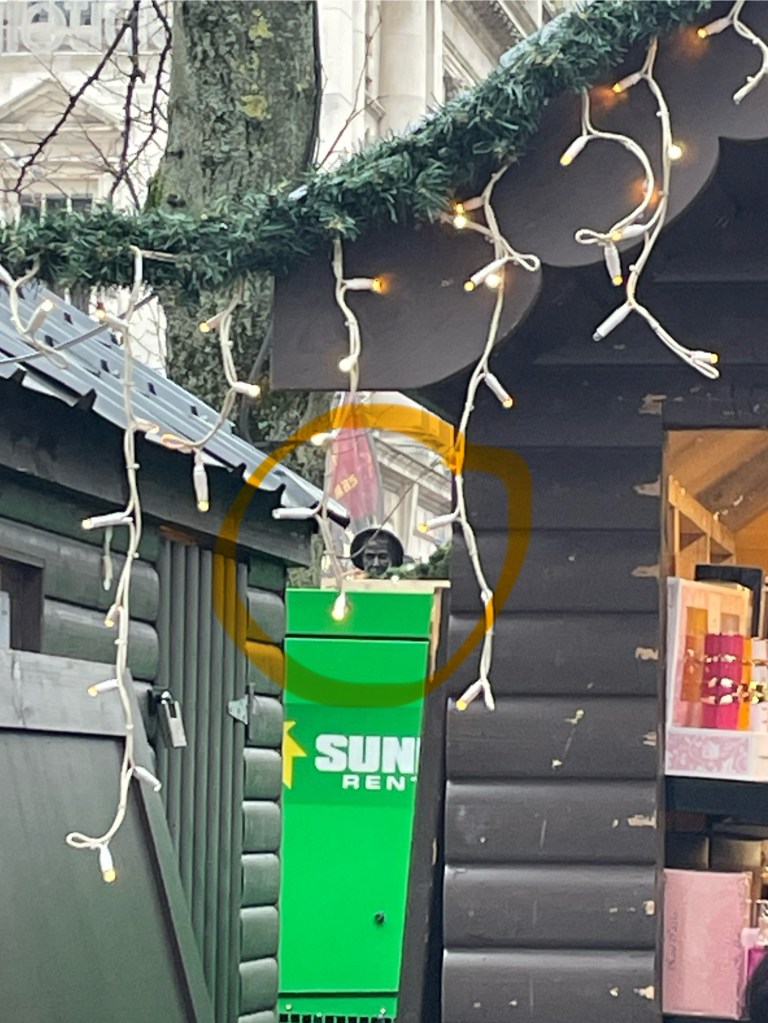
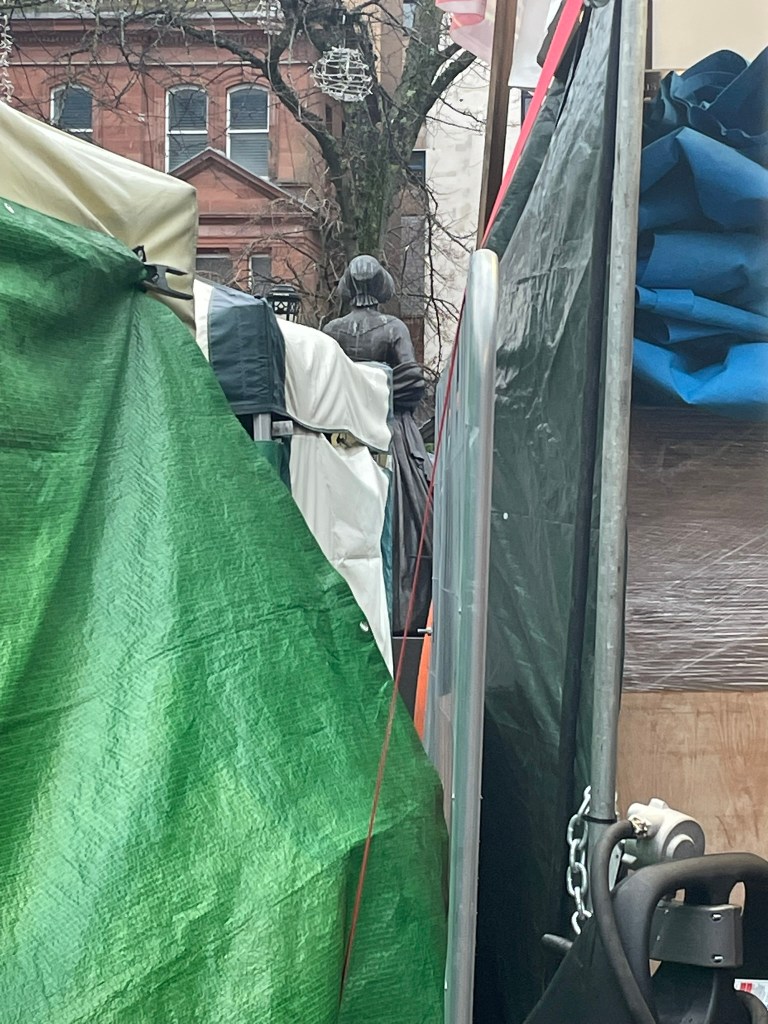
My second visit to Belfast’s statues does not start well.  Fresh off the plane, I head straight to City Hall where not one, but two new statues were unveiled on International Women’s Day in 2024.  But I’m struggling to find either of them.  Ah. That’s because there’s a Christmas market on and the grounds are jammed packed with hot dog stands, fudge stalls, mulled wine outlets, beer tent… you get the picture.

And it’s absolutely rammed.  Good for the Belfast economy, not so good for a culture visit to tick of what is essentially the last few statues of my project.  I circle round.  And again.  Desperate I hop on a bench near where I feel Mary Ann should be.  And there I spot a flash of her bonnet.  She is cornered in behind makeshift stands and inaccessible.  I go to the nearest stall to her and ask to sneak round the back (obviously leaving out the ‘sneak’ adjective).  No can do.  My culture tour isn’t cutting it.  Desperate, I find a man in a high vis to reason with.  I’m a grown adult, I just want a picture, I’ll be sensible.  Access denied.  Health and safety.  Come back another time.

And so, I end up to resorting to the only thing I have available to me at the time.  I have a meltdown somewhere between the frankfurters and the olive stalls.  Don’t get me wrong, I have enjoyed my project, I’ve learned about wonderful women and seen beautiful places, but it all calls comes at a cost, not just time, but money.  And I’ve already spent over one grand on the weekend, transport and accommodation all told.   This isn’t a ‘pop back’ journey for me and I don’t know when or if I could afford to do it again.  My two sons, possibly out of respect or more probably embarrassment, shield round me, with my youngest being the adult here, suggesting we could visit the City Hall inside – at least they may have some info on the statue.

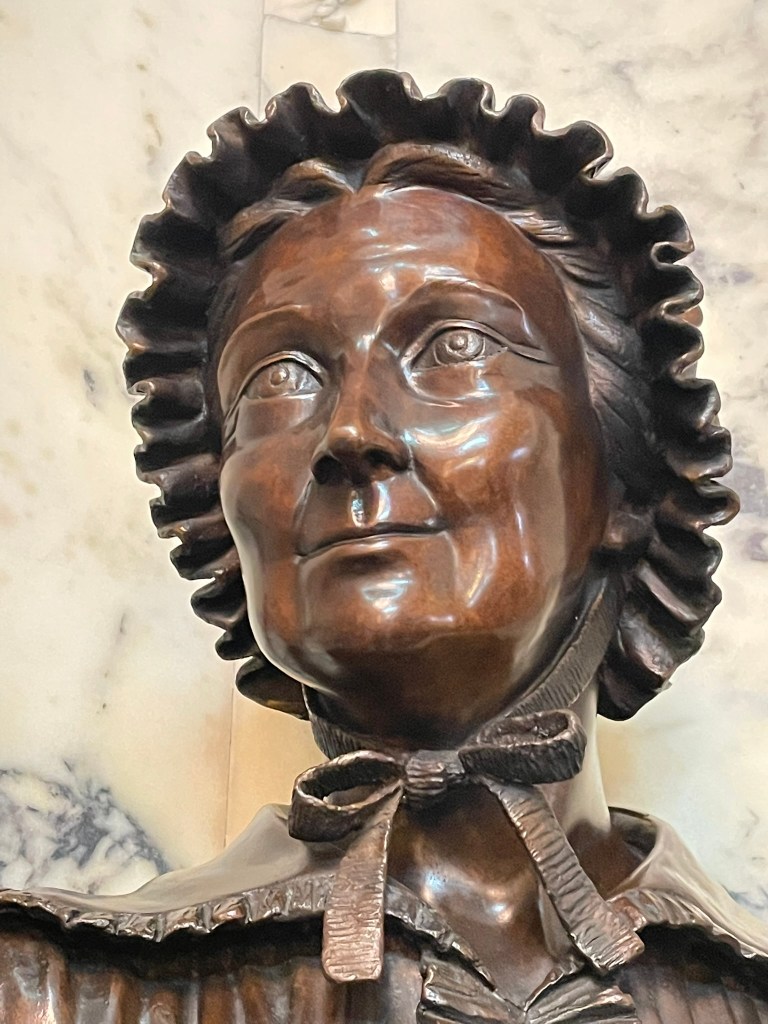
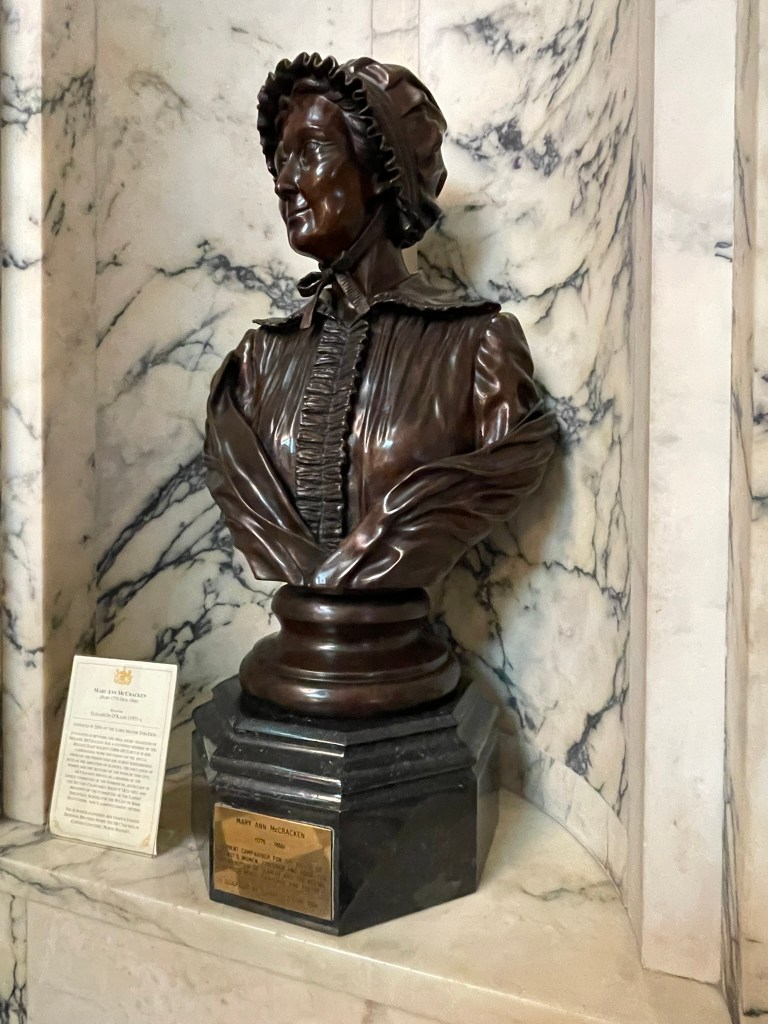
Cruise forward twenty-four hours and I get to meet Mary Ann, or at least her head and shoulders, on a brilliant City Hall tour. 

Mary Ann’s plaque on the base of the bust describes her as fervent campaigner for the rights of Belfast’s women, children and poor, for the abolition of slavery and the revival of Irish music, language and poetry.  Not a bad accolade.  Not bad at all.

Born into a Belfast family supporting an independent Ireland, she too fought for independence, although her brother Henry Joy McCracken was executed for his part in the failed United Irishmen rebellion in 1798.  Still, Mary Ann continued fighting for this cause and many others.  Unusual in the fact that she ran a factory (making muslin cloths) her duty for championing the poor meant that when business took a downward trajectory, she still kept all workers employed despite diminishing profits to ensure families were financially supported.  She was a strong abolitionist, even refusing to eat sugar due to the American slave plantations.  Accounts report her leafleting emigrants at Belfast docks into her 80’s about the wrongs of the slavery trade while the boarded ships to the US.

The City Hall grounds statue depicts McCracken handing out an abolitionist leaflet and wearing an anti-slavery brooch with the words ‘Am I not a man and brother’. Of course, I was unaware of any of this seeing as I couldn’t get to see it.  I hope you can.  Safe travels.

Joy Battick

Brixton Train Station, London SW9 8JB, England

Imagine having the opportunity of being able to look at your future and know everything turns out fine.

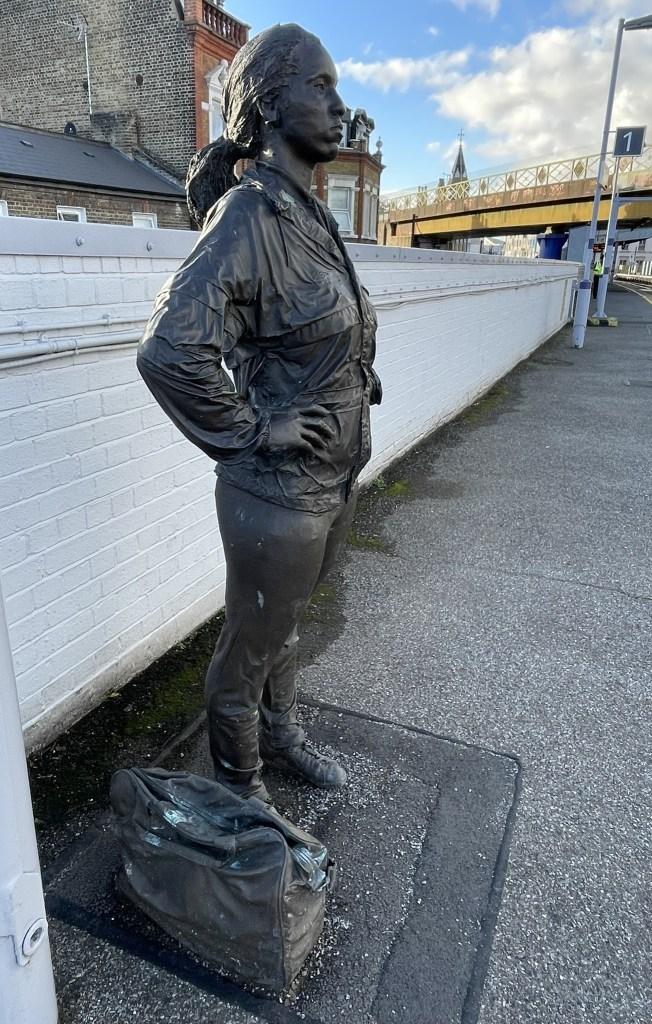
In 1985, sculptor Kevin Atherton set out to capture 3 ordinary folk of Brixton in a public art formation entitled ‘Platform Piece’ which would stand at Brixton train station. Joy was one of the three.  Juliet Rix’s book, London’s Statues of Women’ tells the story of Joy.

At that time working at the local leisure centre, Joy later remarked that she only agreed to take part to get out of a 7.30am pool side shift.  What followed was a ticket office repurposed as a studio as Joy’s body was smothered in wet plaster and Vaseline in preparation for bronze casting.  An event in itself no doubt, but Joy’s statue was the first public statue of an individual woman of colour in London.  The three-piece installation was unveiled at Brixton station a year later.

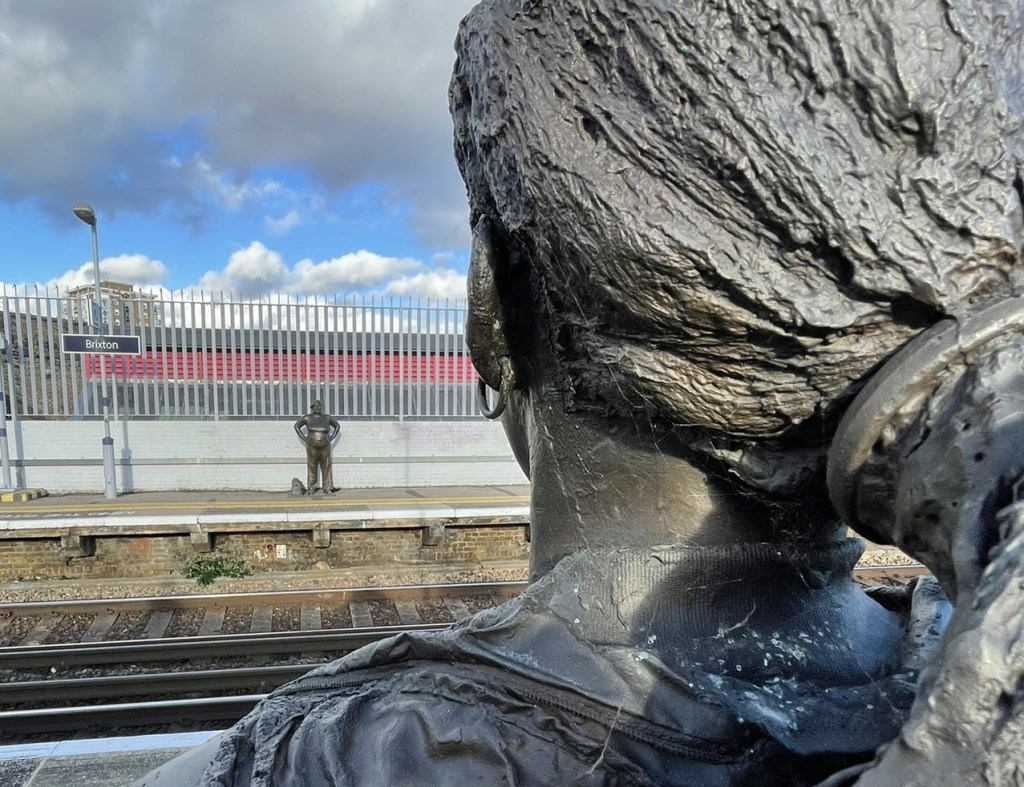
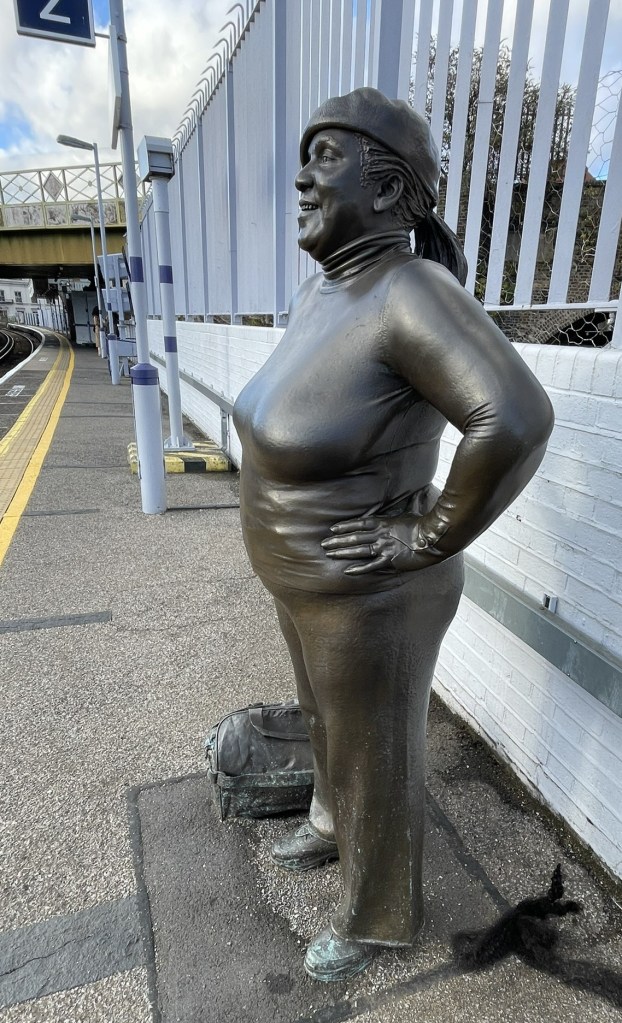
Fast forward 30 years and Kevin discovers ‘Platform Piece’ missing a figure, with Joy almost hidden behind a safety fence.  Time for a revamp he thinks.  Kevin contacted Joy, who had recently finished cancer treatment.  This time no petroleum jelly was involved, just a 3D scan.  Rix’s book quotes Joy on what would become ‘Joy II’ – ‘Making the statue was a real tonic – it makes me feel I’m still in the game’.

And so, Joy I gets to gaze at Joy II, across the station platform, 37 years apart.

Mary Wollaston

1600’s

Calthorpe Community Garden,
Gray’s Inn Road, London WC1X 8LH

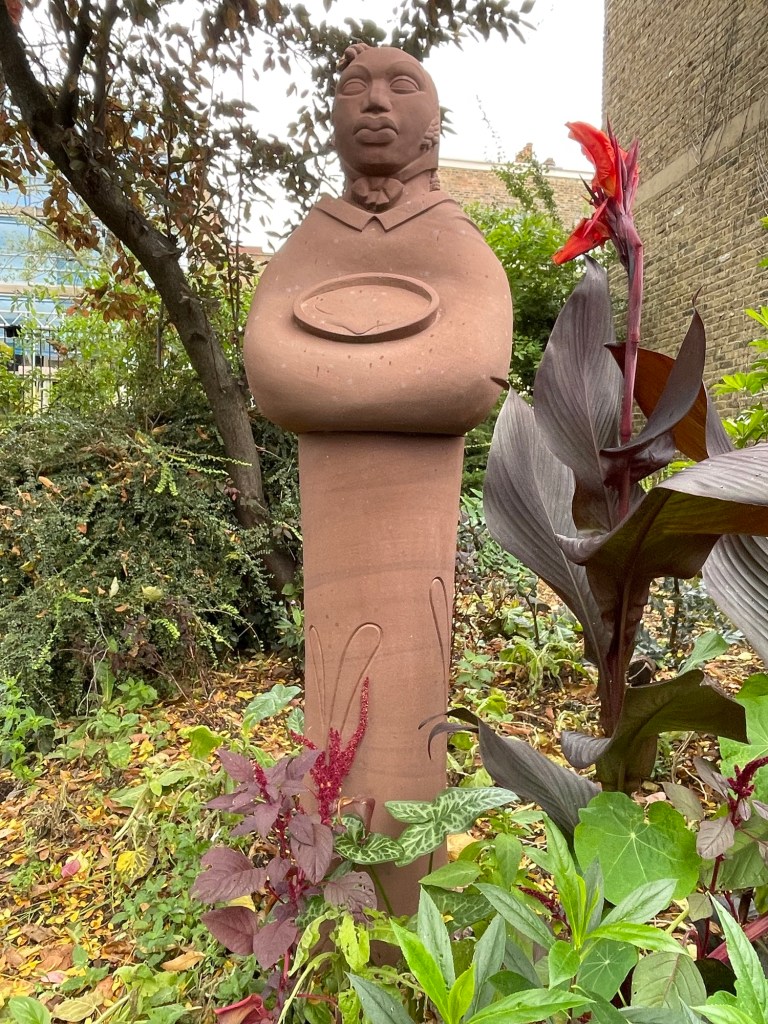
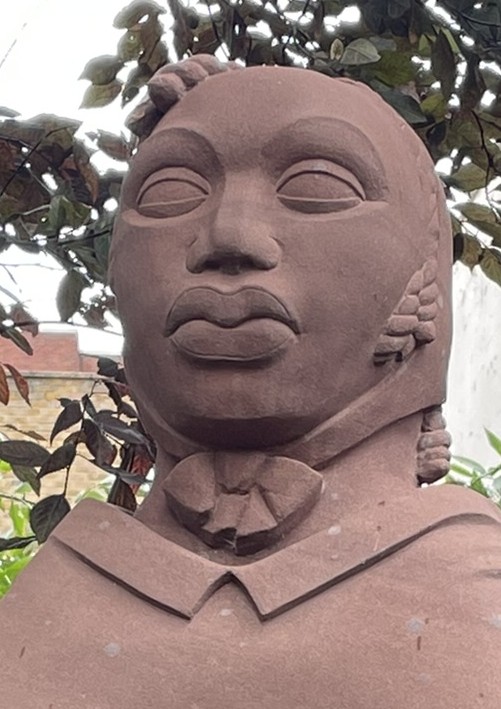
Standing 160cm tall in the gardens at Calthorpe Community Centre is Mary Woolaston, aka ‘Black Mary’. Creator Marcia Bennett Male is the only black female classically trained stone carver in the UK, so it is fitting that her design for ‘Black Mary’ was chosen for Calthorpe.

But what’s Mary’s story?  In the 1600’s century she ran a healing well in the King’s Cross area of London.  Known for its chalybeate properties (meaning water rich in iron salts – you’re on your own for the pronunciation though).  The healing well was prized for its health benefits for various cures and ailments, and such places were popular in the 17th – 19th centuries.

The spot of Mary’s business (known as ‘Black Mary’s Hole’) became largely forgotten over time and there is little information about it, although history does seem to suggest the well was a stone’s throw from where Mary now stands. 

Angela Burdett-Coutts

(1814-1906)

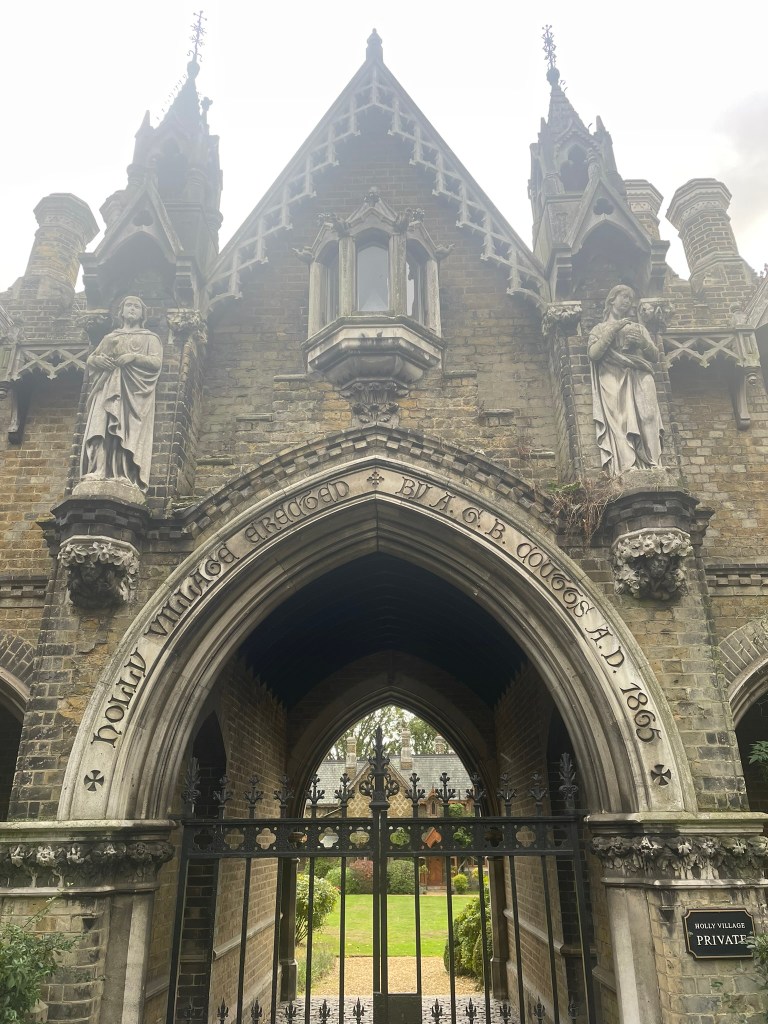
Holly Village, Swain’s Lane London N6 6QJ, England

Known as, ‘The Queen of the Poor’, at the age of 23, Angela inherited a vast amount of wealth from her step-grandmother, a fortune that had been passed on from her grandfather Thomas Coutts – co-founder of Coutts bank.  Added to the inheritance was several properties including a mansion in Highgate (Holly Lodge) which, over her lifetime, was frequented by royalty, the rich and the famous.

Despite the parties, there’s no doubt that Angela put her fortune to good use.  She built churches and schools, funded hospitals and medical research and poured time and money into regeneration areas of East London to bring better homes and fresh water supplies.  During the Irish Potato Famine she provided large donations to ease the devastation in Ireland setting up relief centres providing food supplies.  In 1870 she became the President of the Ladies’ Committee of the Royal Society for the Prevention of Cruelty to Animals which developed into today’s anti animal cruelty charity the RSPCA.  The famous ‘Greyfriar’s Bobby’ statue in Edinburgh was commissioned by Angela.  In 1884 she co-founded the London Society for the Prevention of Cruelty to Children, a forerunner to the National Society for the Prevention of Cruelty to Children (NSPCC).

Naturally her status sparked a lot of attention and subsequent marriage proposals, but Angela preferred to spend her life living with her former governess Hannah Meredith until Hannah passed away in 1878. 

ever one to shy away from controversy, in 1881, at the age of sixty-seven, she married her secretary William Lehman Ashmead Bartlett who was twenty-nine years old.  As William was American this forfeited a large amount of her inheritance but both continued good work for good causes in their lifetime.

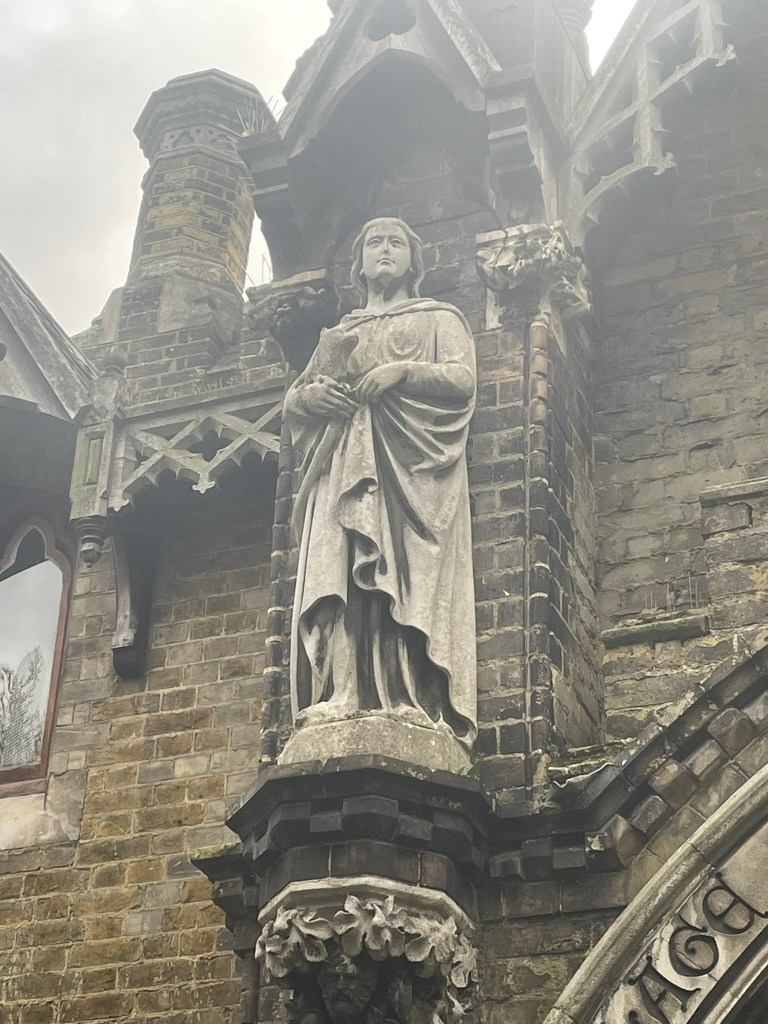
Close to Angela’s residence at Holly Lodge is the housing development she created.  I reach the place from an open side gate and wonder around the green on the lookout for the statues.  Known as Holly Village it is here that both Angela and Hannah are featured.  As I scour the site a fox follows me around as if on guard.  It isn’t until I leave that I spot the statues.  In truth it is tricky to tell which one is which – the artist clearly has a style they are sticking to.  The almost identical pair stand high above an archway to the estate – below there’s a sign that says, ‘private’.  Oops.

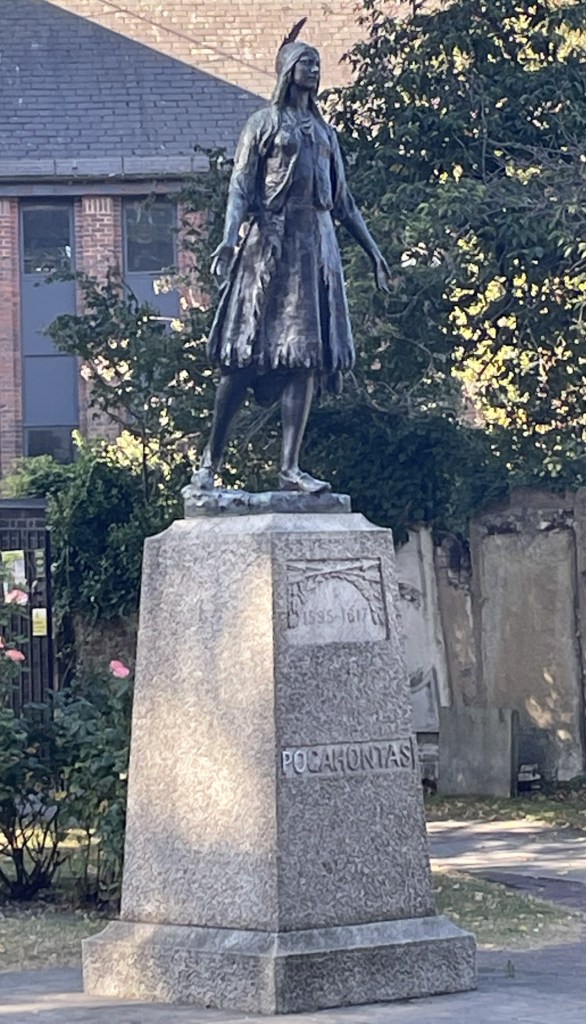
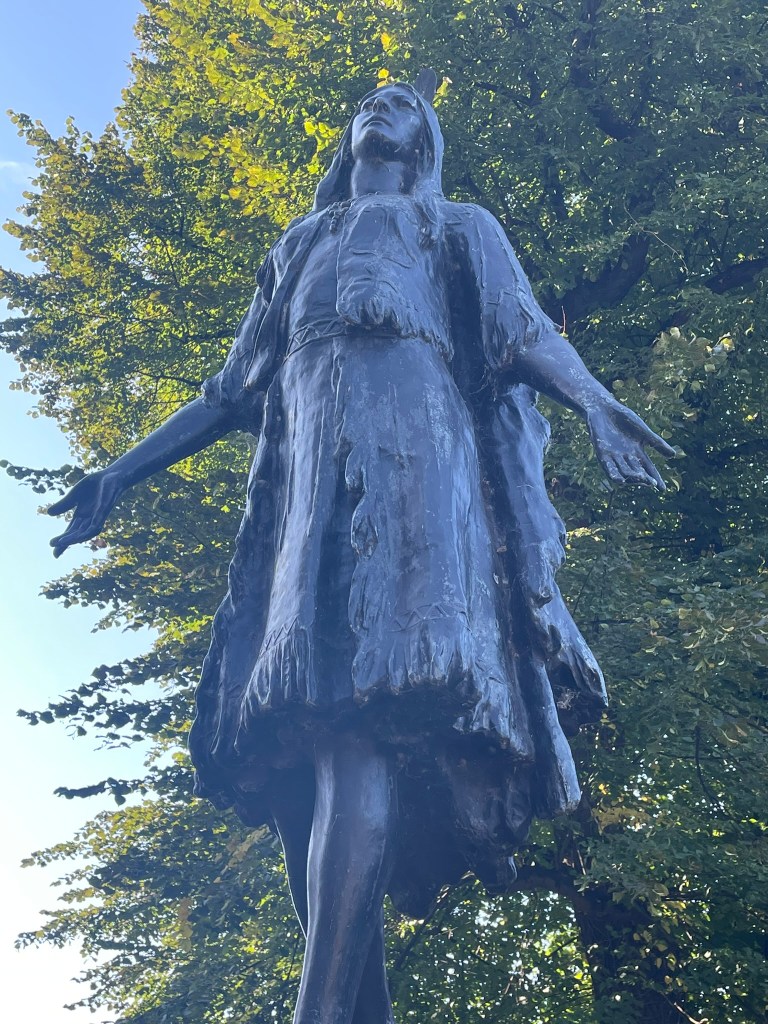
Pocahontas (Rebecca Rolfe)

(1595-1617)

Graveyard of St George’s Church, Gravesend, Kent, England

Pocahontas was a native American who intervened, at the age of 12, to save the life of colony settler Captain John Smith.  She later met Englishman James Rolfe who arrived in the newly formed Jamestown colony in 1610.  They married and travelled to England, where she changed her name to Rebecca Rolfe and converted to Christianity.

She died in 1617, around the age of 23, while making a return voyage to Virginia with her husband and son Thomas.  The ship would have stopped in Gravesend as the last place for fresh food and water for the journey.  She was buried St George’s Church, but the original building was destroyed by fire in 1727 so her exact resting place is unknown.

Folk will no doubt be familiar with the Disney interpretation of Pocahontas’s story.  In reality, her act of heroism opened her, and many other native Americans, up to new diseases that their immune systems could not fight – her cause of death in England could have been from any number of ills at the time, from smallpox to flu.

Rolfe, continued his journey back to Virginia to work his tobacco farm, leaving their son Thomas with family, believing that without his mother he was unlikely to survive the arduous journey across the Atlantic.  He never saw Thomas again but knew that his son had been brought up safely in England, married, and had children of his own. The actor Edward Norton and Edith Wilson, wife of America’s President Woodrow Wilson, are amongst those who claim to be descended from Thomas and thus from Pocahontas herself.

The Grade II listed statue was gifted by the then governor of Virginia in 1958 and is a cast of the 1907 sculpture by William Ordway Partridge on display in Jamestown, Virginia.

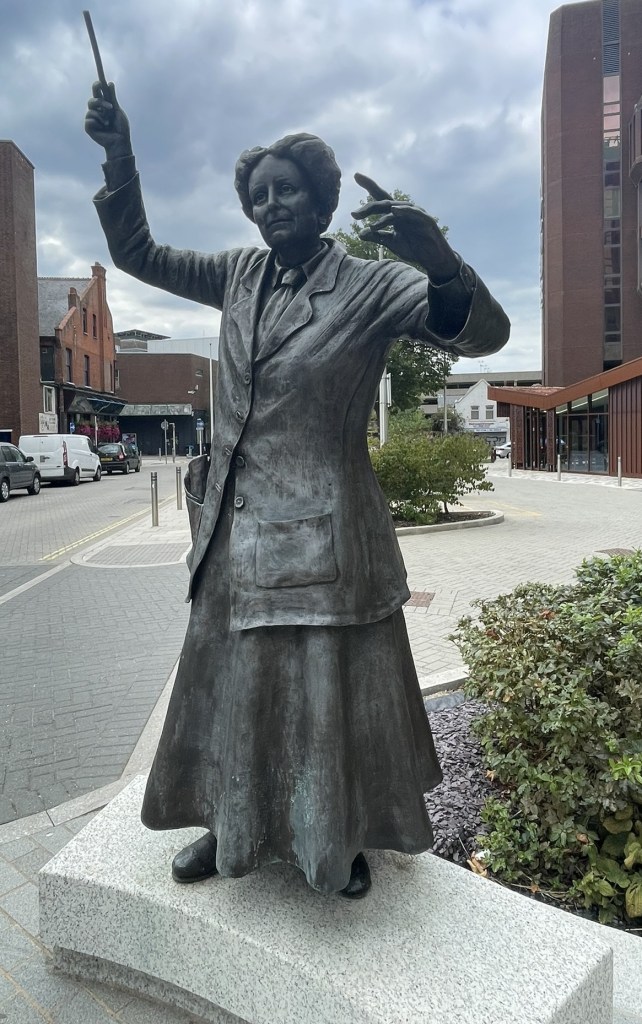
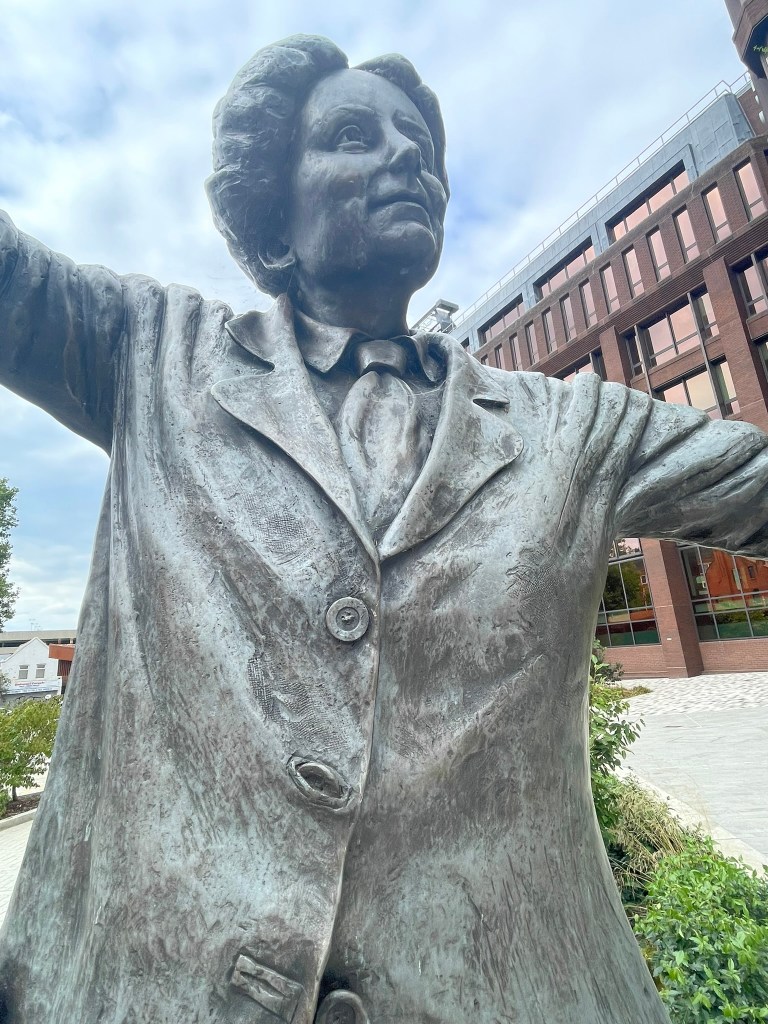
Ethel Smyth

(1858-1944)

Duke Court, Duke Street, Woking, Surrey, England

Ever get the feeling that you are underachieving? The statue’s plaque boasts Ethel as a composer, author, sportswoman and suffragette.  To be frank, it’s exhausting reading the list of it all.

Ethel wrote 6 operas in her lifetime, as well as other musical compositions in what was a very male dominated world in music.  She was the first woman to have an opera performed at the Metropolitan Opera House in New York and it wasn’t until over a hundred years later that another woman composer took her place.

Ethel composed the suffragette anthem, ‘The March of the Women’ and was a leading figure in the movement in the 1910’s.  A friend of Emmeline Pankhurst, her house was used as a ‘safe house’ for campaigners.  She loved sport and had a passion for golf.  Her sporting prowess came in handy while teaching women how to throw stones.  Along with many prominent suffragettes, she spent time in prison for the cause (this could be where the sport of ‘throwing stones at windows’ plays a part) and organised sports with fellow prisoners in her time at Holloway jail.

Sadly, Ethel began to lose her hearing in her 50’s, becoming completely deaf later in life.  At this stage, she developed her writing and went on to publish 10 books in the last 25 years of her life.

Jane Austen

(1775 –1817)

St Nicholas Church, Chawton,
Market Square, Basingstoke and
Grounds of Winchester Cathedral, Hampshire
, England

St Nicholas Church, Gosport Road, Chawton, Hampshire

Writing at the end of the 18th century, her six novels have been translated and circulated prolifically.  Her first books were published anonymously when she was around 35 years of age with her last two published posthumously.  Most of you will at least know the name of her most famous works, ‘Sense and Sensibility’, ‘Emma’, and ‘Pride and Prejudice’.

And what of her statues?  You may recall that Florence Nightingale holds the record for the most decorated woman in statues, but Jane is having a resurgence, some 200 years after her death.  It seems her work is appreciated now more than ever.

Market Square, Basingstoke, Hampshire

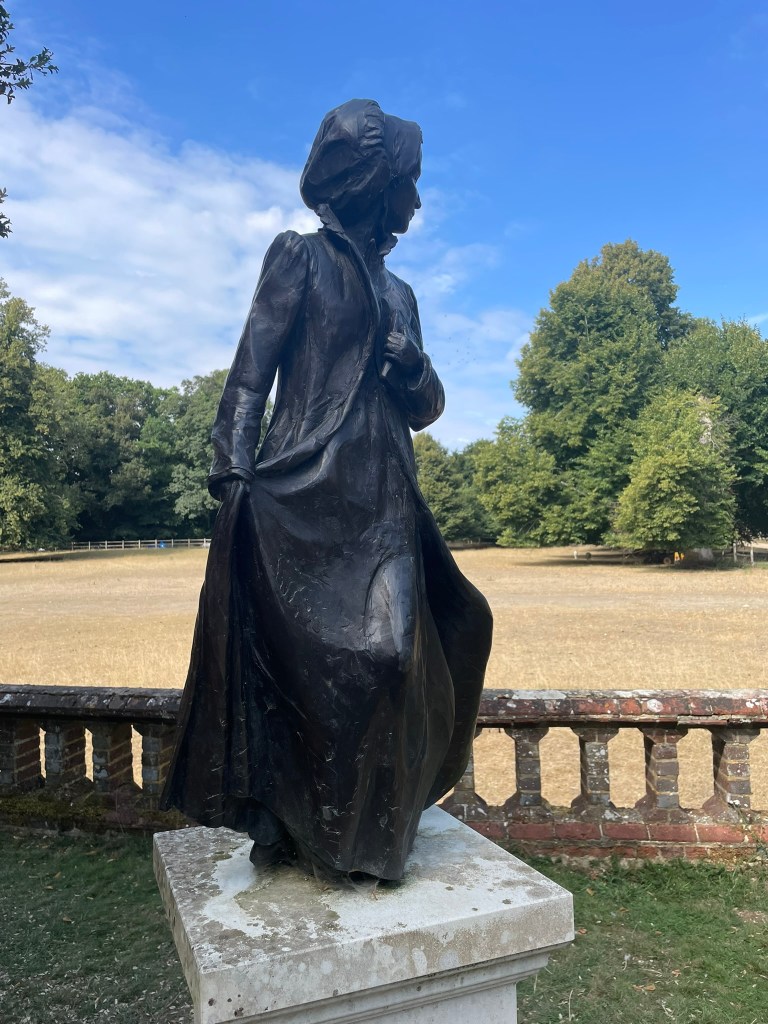
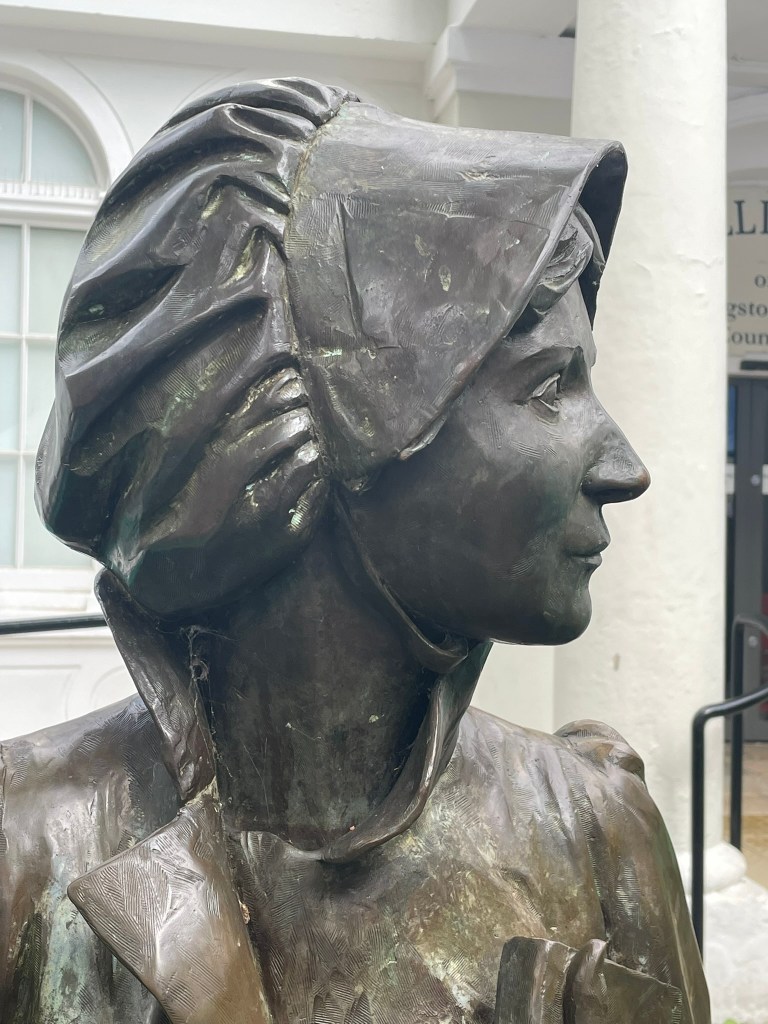
Up first – St Nicholas Church in Chawton where Jane attended services in her time in the village between 1809-1817.  Her gaze looks over a picturesque grazing field to where she lived.  This is not the original statue, but a maquette cast and based on the original in Basingstoke, where Jane would have attended dances near the Market Square.

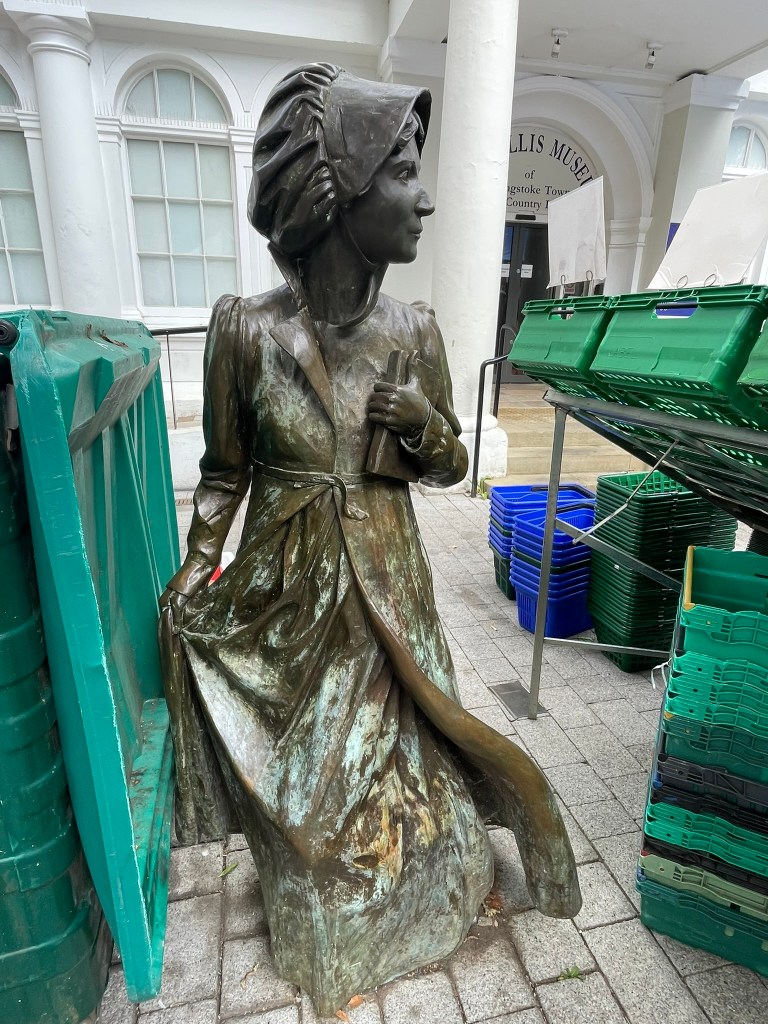
Alas, when I hit Basingstoke it is market day, but not the market of Jane’s day.  Here I find her sandwiched between a bunch of crates and a dumper bin.  Poor Jane.

Market Square, Basingstoke, Hampshire

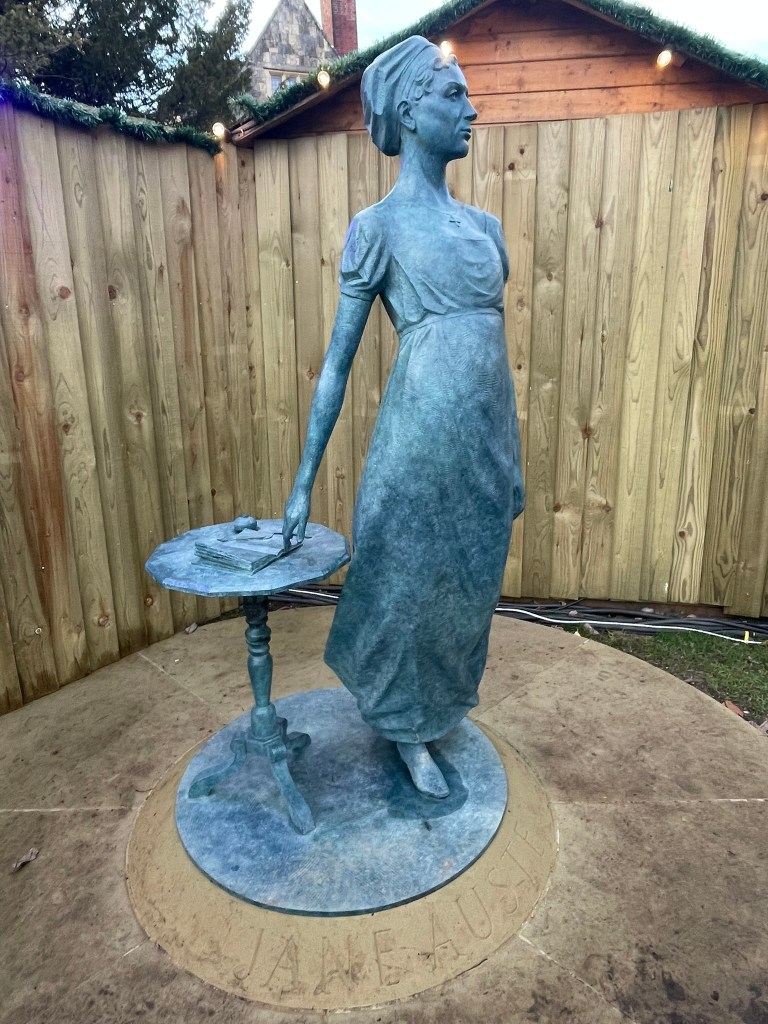
Things improve little (with me and Jane) with a move to Winchester where Jane spent her final days.  Unveiled in 2025 to mark the 250th anniversary of Jane Austen’s birth, I find Jane fenced outside the annual Christmas market as a backdrop, somewhat obscuring the cathedral’s inner close housing.  Christmas market foibles are a speciality of mine when statue hunting it seems (don’t get me started on Belfast). On this occasion my friend is reprimanded by a security guard who appears out of nowhere to chastise him for touching the sculpture.  Naughty!

Jane’s dedications don’t end here it seems – not far from Chawton a bust was unveiled just two months before my local visit but only discovered by me some 10 months later.  Don’t fret.  It’s on the list.