(1770-1886)
Belfast City Hall 1st Floor and Grounds, Donegall Square, Belfast, Northern Ireland
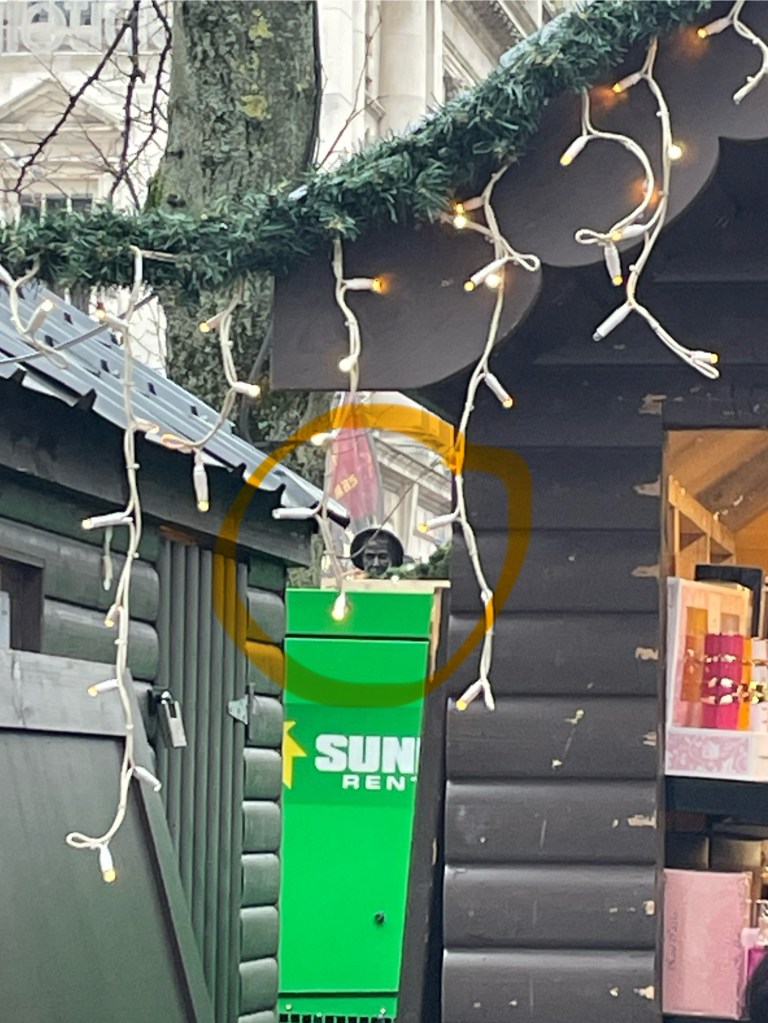
My second visit to Belfast’s statues does not start well. Fresh off the plane, I head straight to City Hall where not one, but two new statues were unveiled on International Women’s Day in 2024. But I’m struggling to find either of them. Ah. That’s because there’s a Christmas market on and the grounds are jammed packed with hot dog stands, fudge stalls, mulled wine outlets, beer tent… you get the picture.
And it’s absolutely rammed. Good for the Belfast economy, not so good for a culture visit to tick of what is essentially the last few statues of my project. I circle round. And again. Desperate I hop on a bench near where I feel Mary Ann should be. And there I spot a flash of her bonnet. She is cornered in behind makeshift stands and inaccessible. I go to the nearest stall to her and ask to sneak round the back (obviously leaving out the ‘sneak’ adjective). No can do. My culture tour isn’t cutting it. Desperate, I find a man in a high vis to reason with. I’m a grown adult, I just want a picture, I’ll be sensible. Access denied. Health and safety. Come back another time.
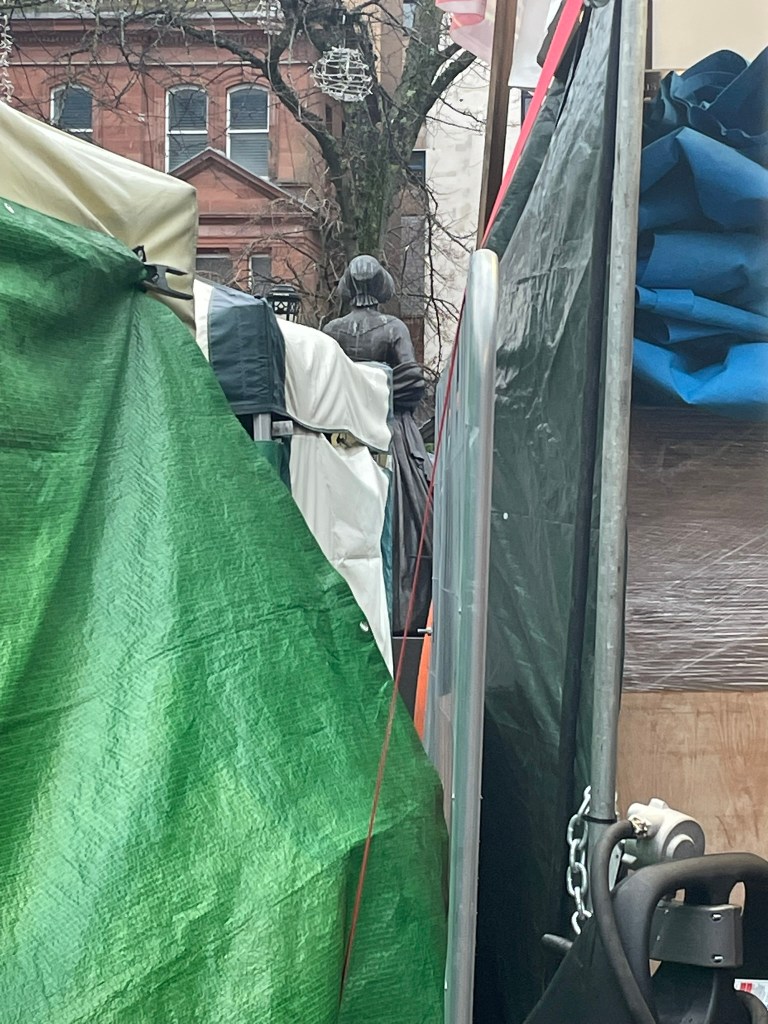
And so, I end up to resorting to the only thing I have available to me at the time. I have a meltdown somewhere between the frankfurters and the olive stalls. Don’t get me wrong, I have enjoyed my project, I’ve learned about wonderful women and seen beautiful places, but it all calls comes at a cost, not just time, but money. And I’ve already spent over one grand on the weekend, transport and accommodation all told. This isn’t a ‘pop back’ journey for me and I don’t know when or if I could afford to do it again. My two sons, possibly out of respect or more probably embarrassment, shield round me, with my youngest being the adult here, suggesting we could visit the City Hall inside – at least they may have some info on the statue.
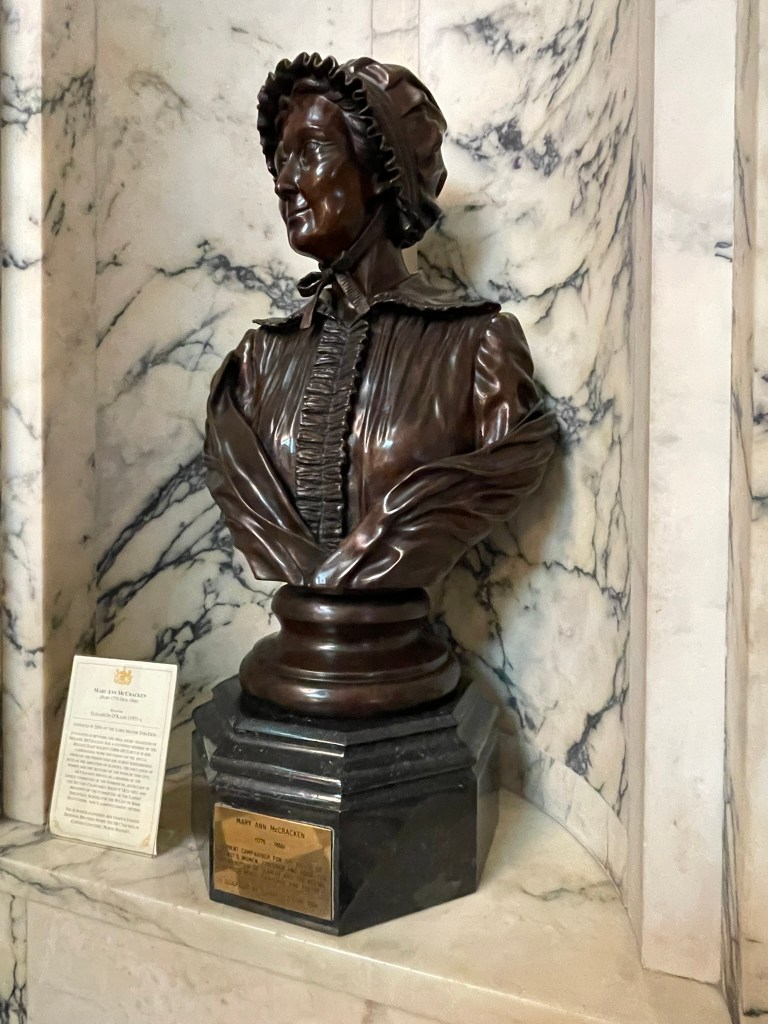
Cruise forward twenty-four hours and I get to meet Mary Ann, or at least her head and shoulders, on a brilliant City Hall tour.
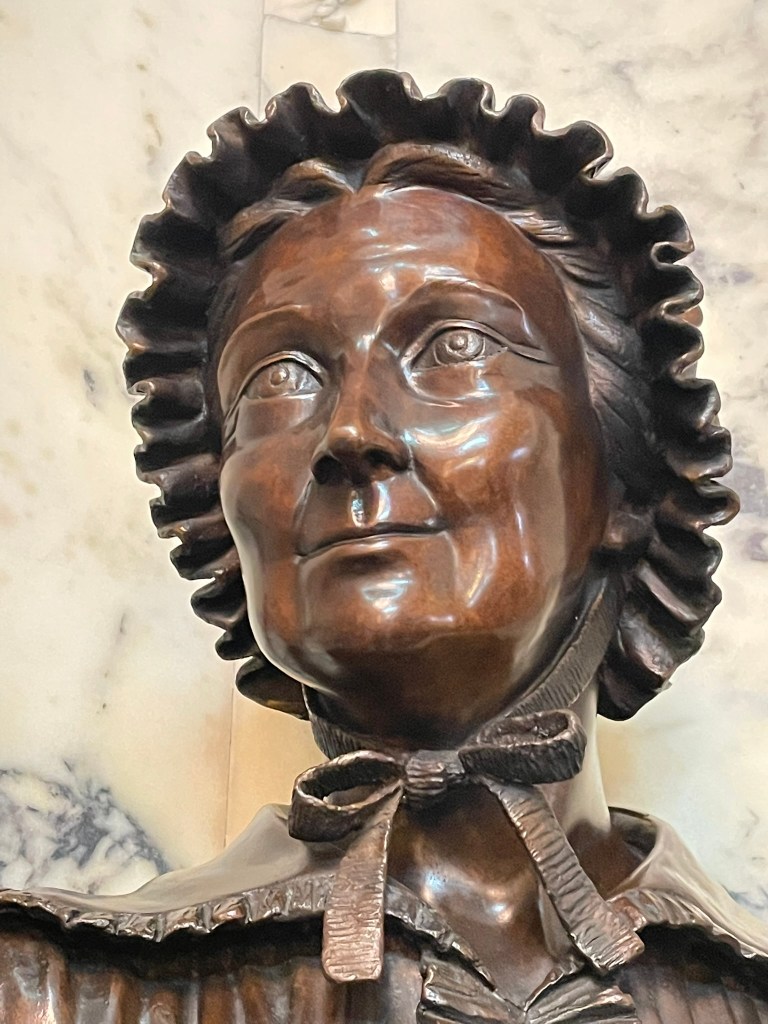
Mary Ann’s plaque on the base of the bust describes her as fervent campaigner for the rights of Belfast’s women, children and poor, for the abolition of slavery and the revival of Irish music, language and poetry. Not a bad accolade. Not bad at all.
Born into a Belfast family supporting an independent Ireland, she too fought for independence, although her brother Henry Joy McCracken was executed for his part in the failed United Irishmen rebellion in 1798. Still, Mary Ann continued fighting for this cause and many others. Unusual in the fact that she ran a factory (making muslin cloths) her duty for championing the poor meant that when business took a downward trajectory, she still kept all workers employed despite diminishing profits to ensure families were financially supported. She was a strong abolitionist, even refusing to eat sugar due to the American slave plantations. Accounts report her leafleting emigrants at Belfast docks into her 80’s about the wrongs of the slavery trade while the boarded ships to the US.
The City Hall grounds statue depicts McCracken handing out an abolitionist leaflet and wearing an anti-slavery brooch with the words ‘Am I not a man and brother’. Of course, I was unaware of any of this seeing as I couldn’t get to see it. I hope you can. Safe travels.
 WomenstatuesUK