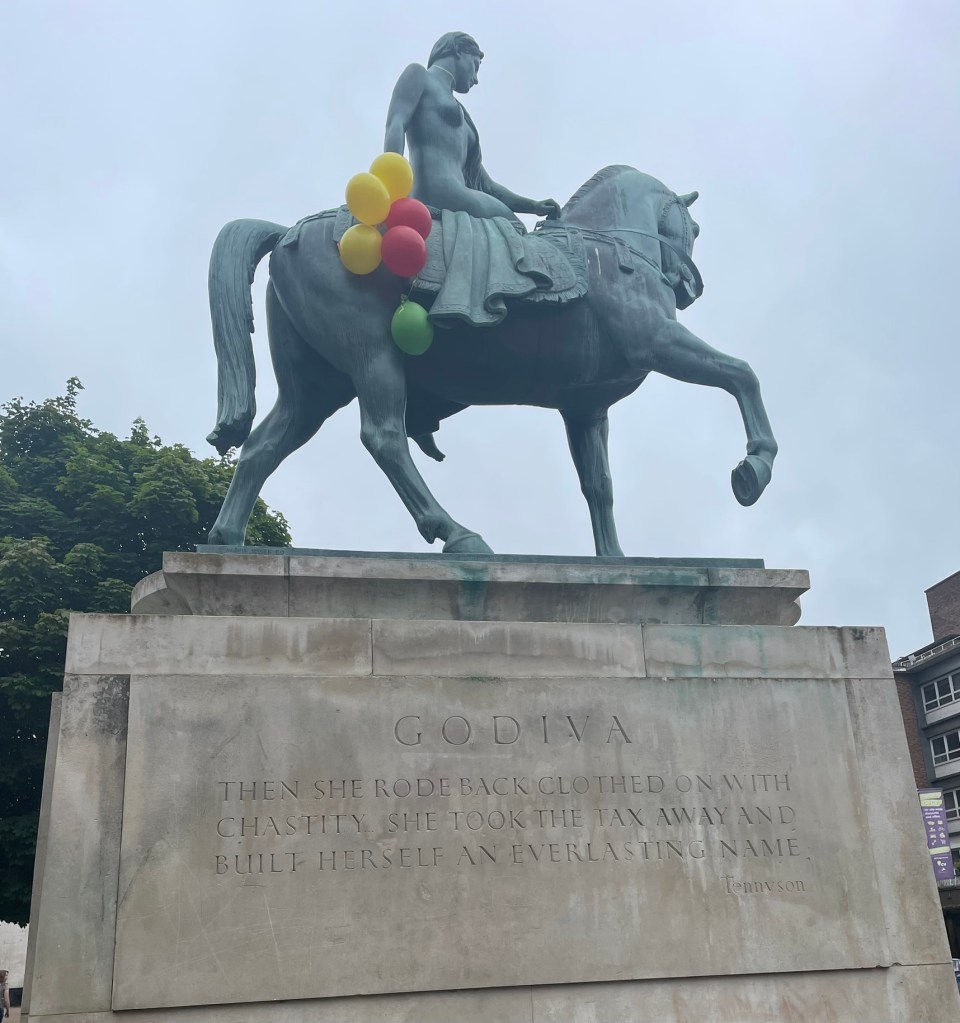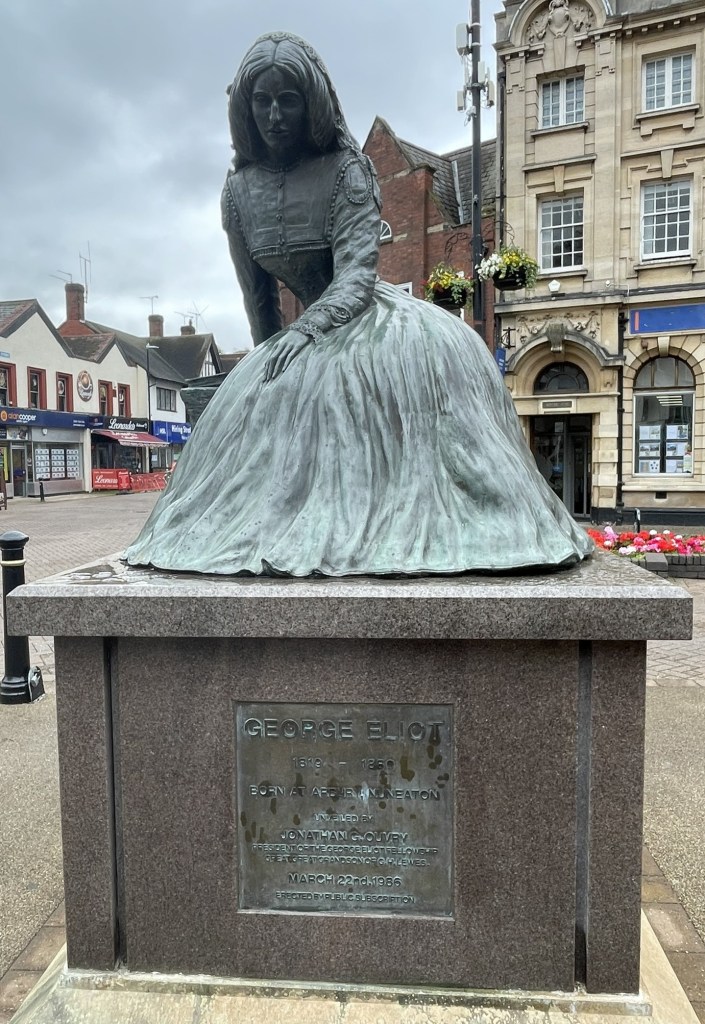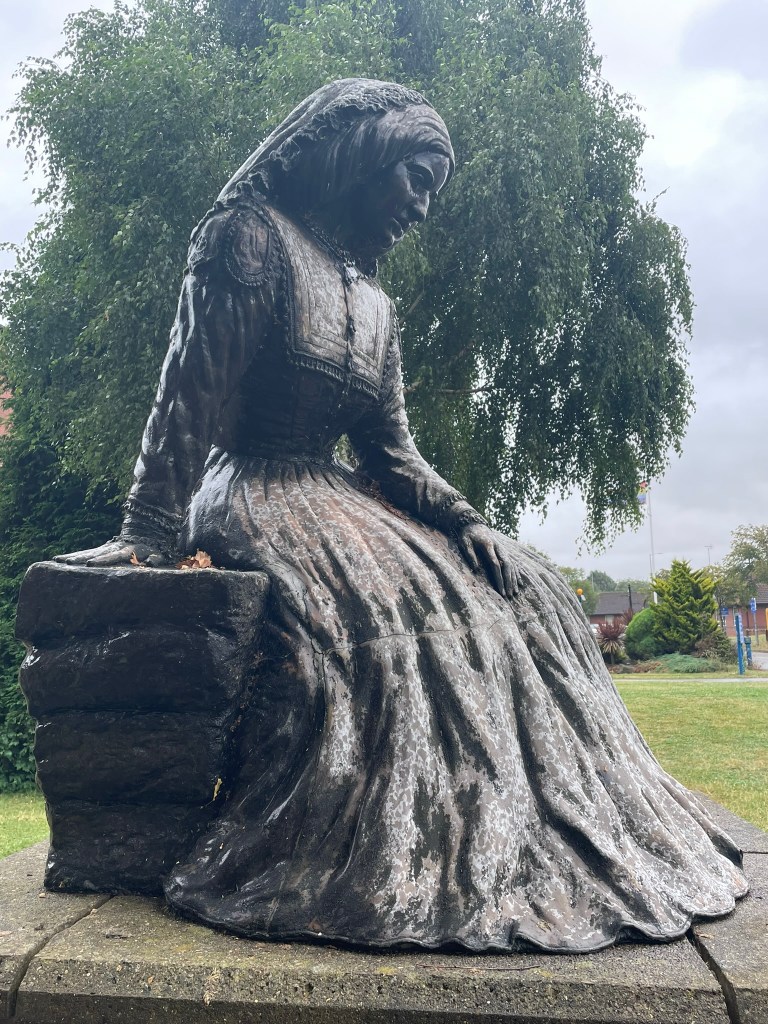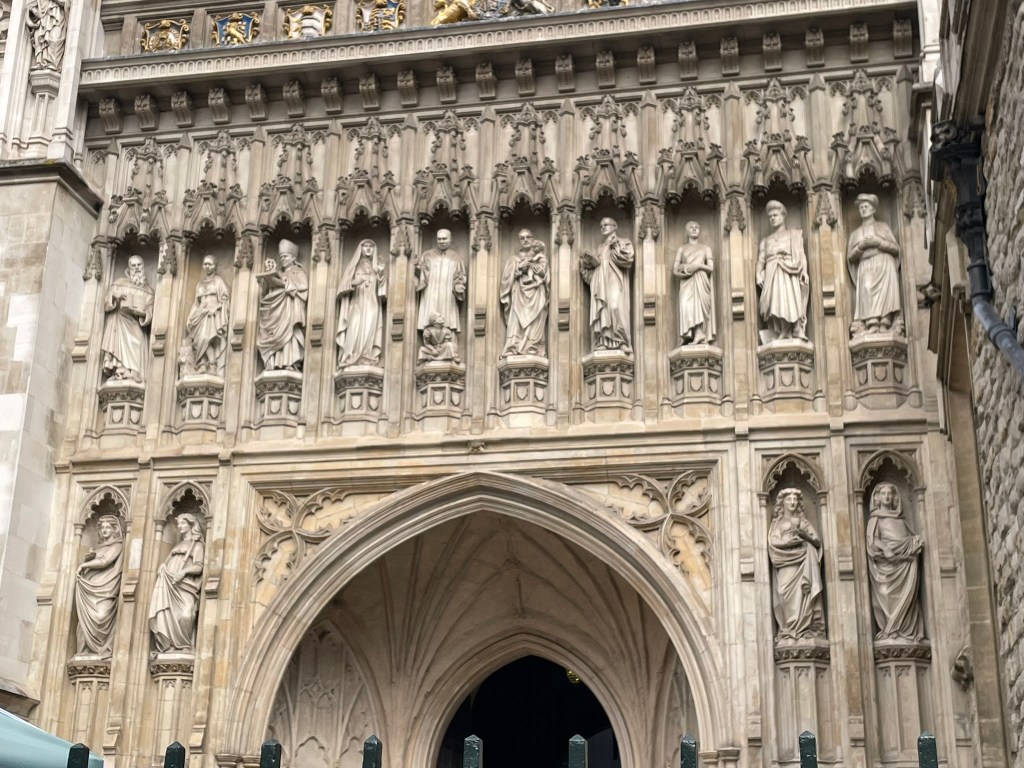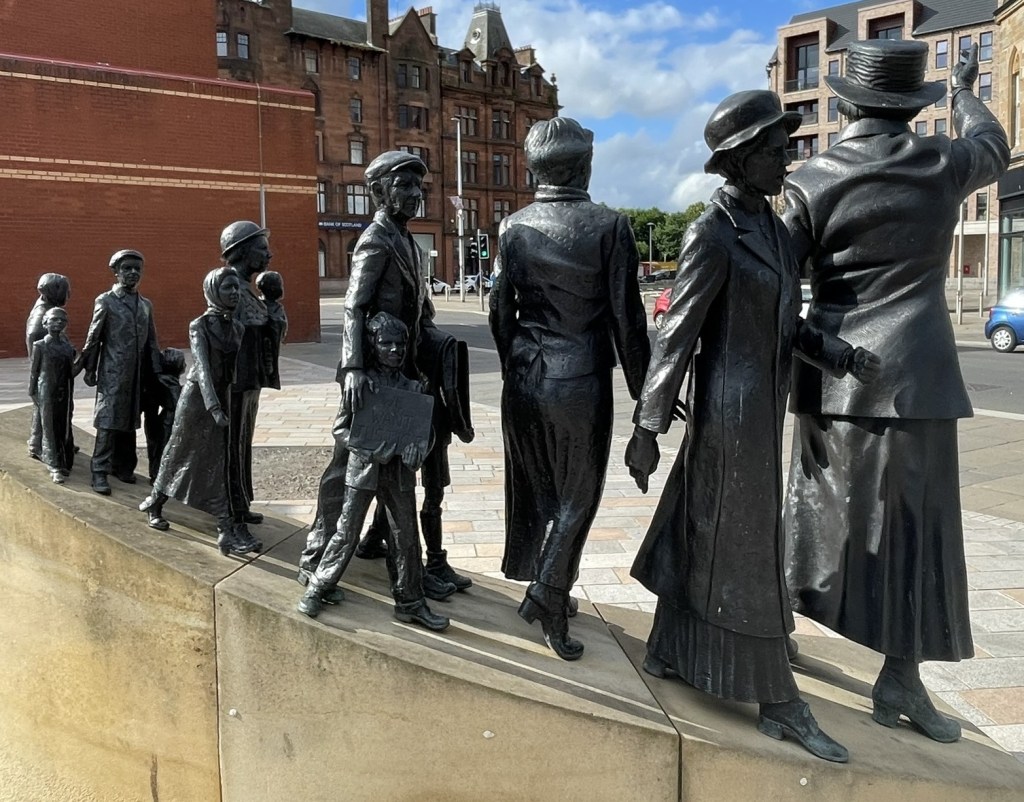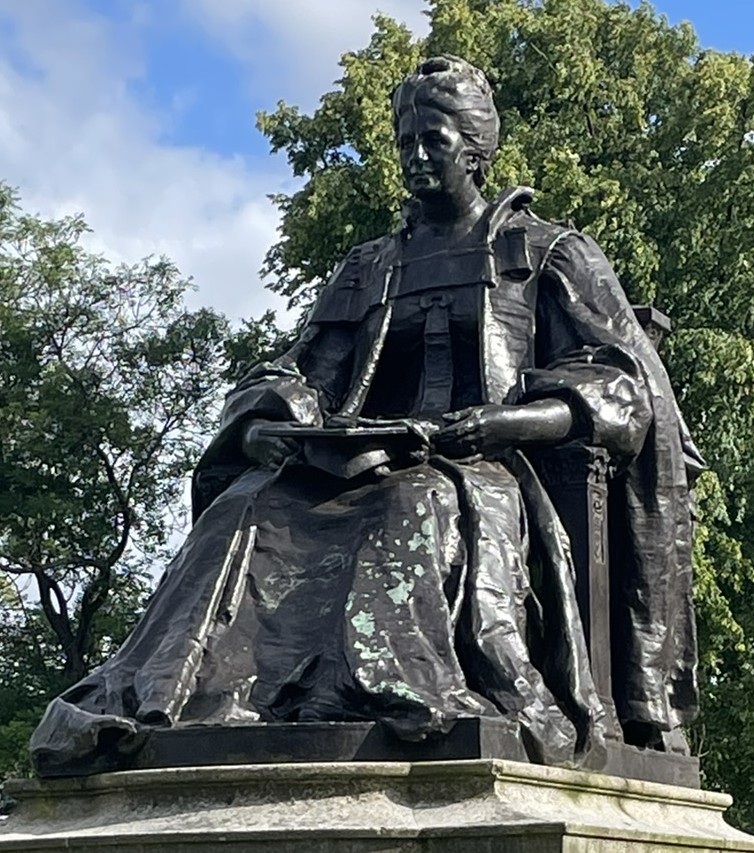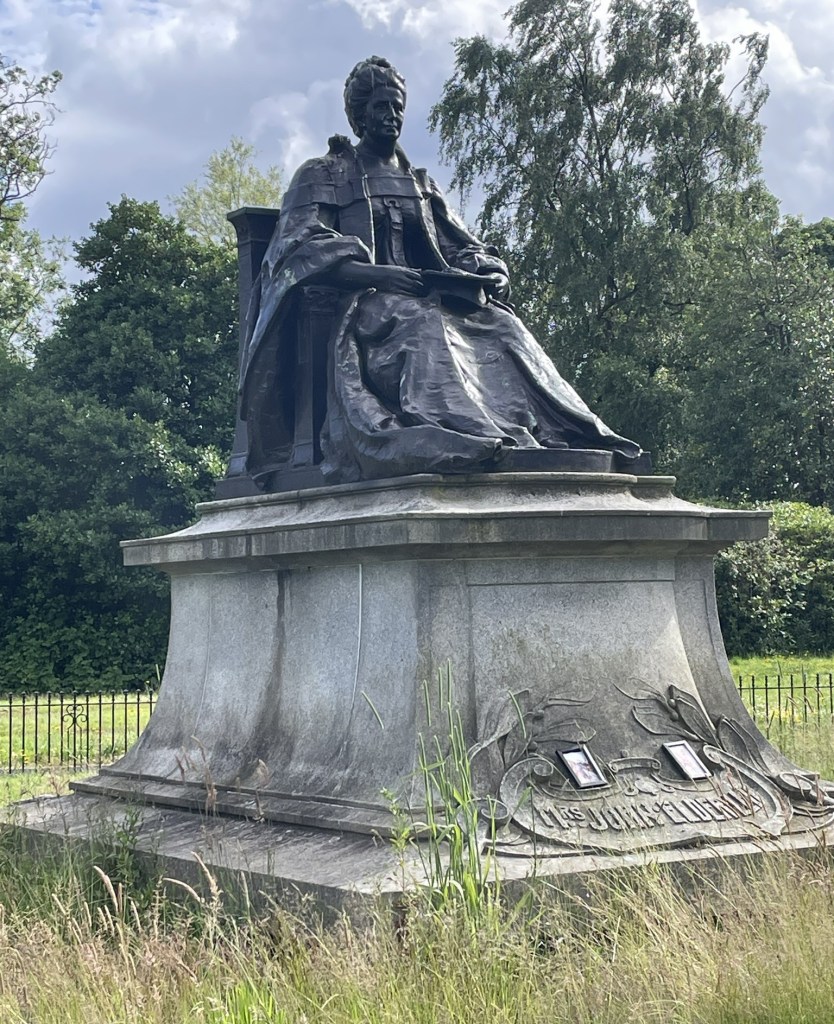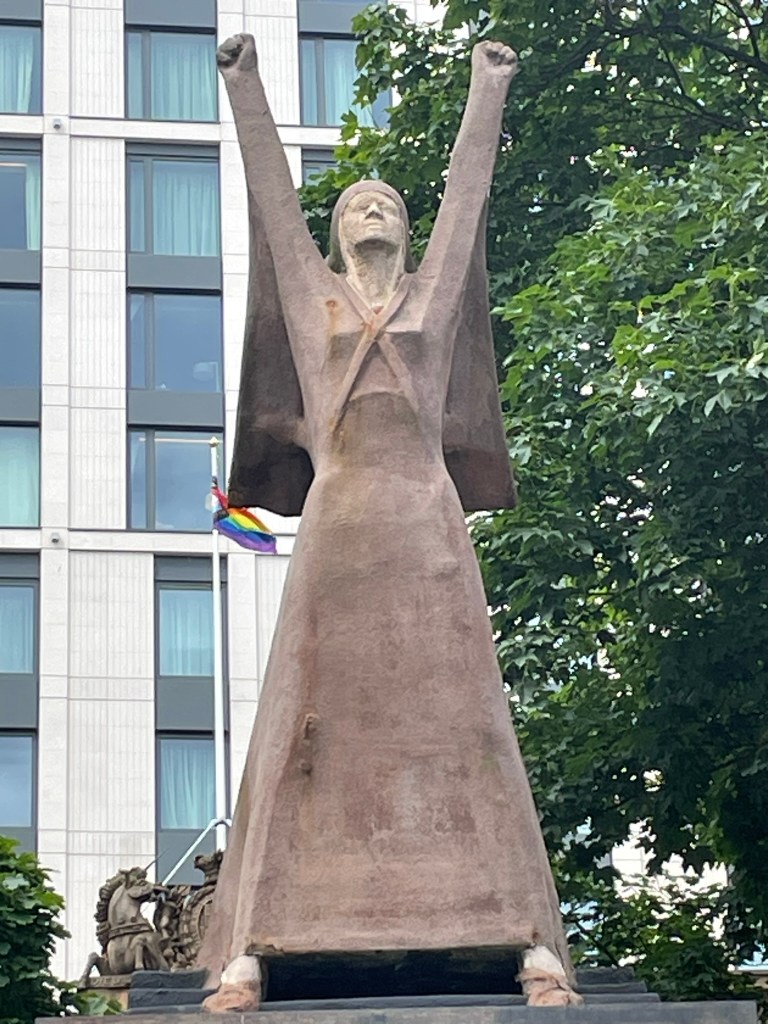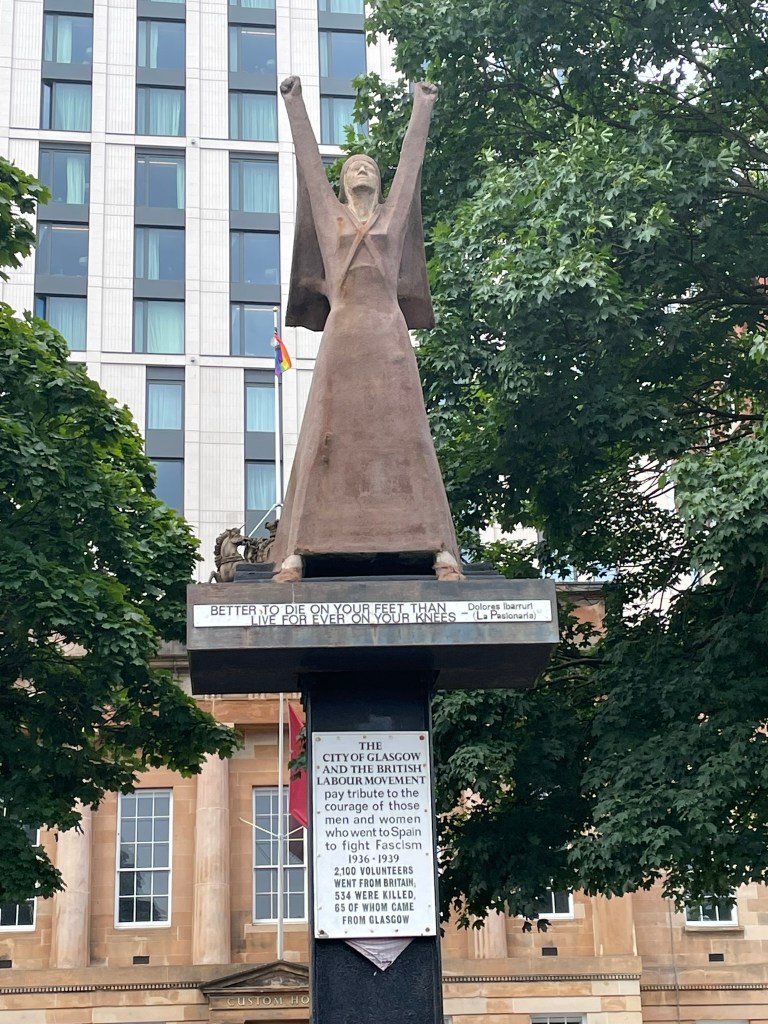
Starting statues

It started with an article in The Week Junior magazine heralding the unveiling of Dorset’s Mary Anning Statue. https://www.maryanningrocks.co.uk/press. A sidebar stated, ‘In the UK, there are 82 statues of men named John and just 128 of named women’.

Only 128?? I could visit all of them! But initial enthusiasm for a new project soon turned to dissatisfaction. There were so few women statues that it was, in actual fact, feasible to visit them all.
So who are the 128 immortalised women? What does it take for a woman to get a statue of herself? Money? Influence? Passion for a cause?
I’m ashamed to say I was struggling to recognise some of the names when I started the research, but that was all part of the journey – learning more about women that have played a special part in our history.

So I have given myself a year to visit all of them to give them the recognition they deserve and to learn more about these special women.
The start date is 29th July 2022. Please join me on this journey! Who knows, hopefully by the end of July 2023, the number of named women statues may be more than 128…..

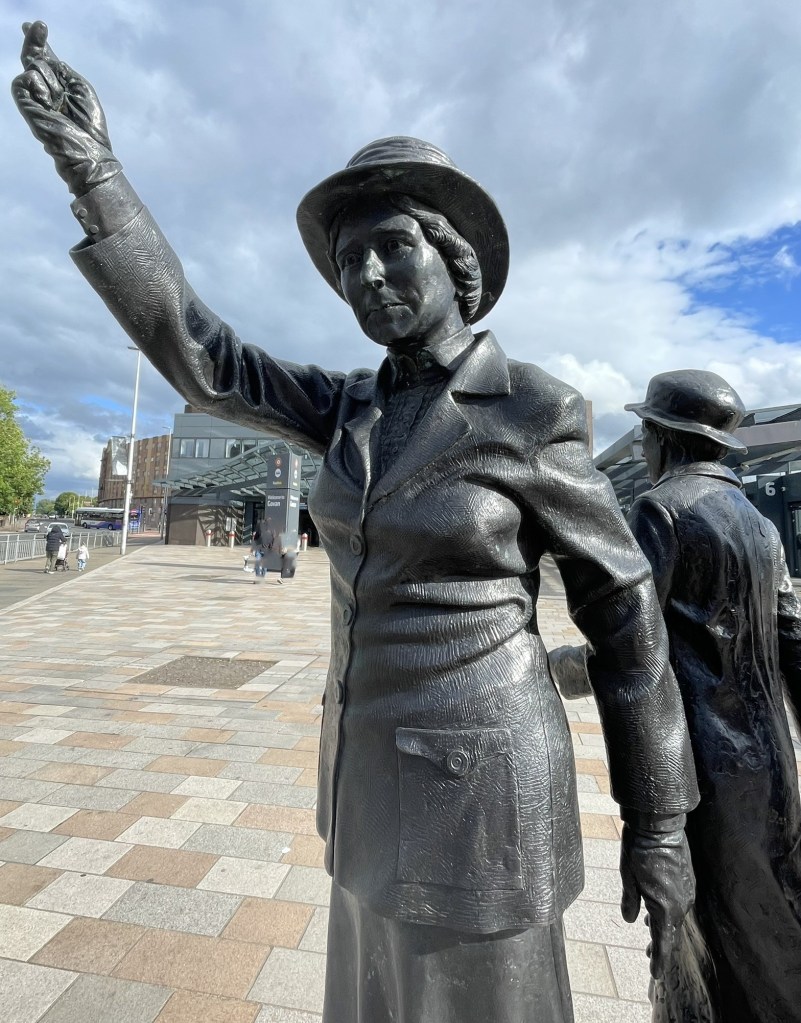
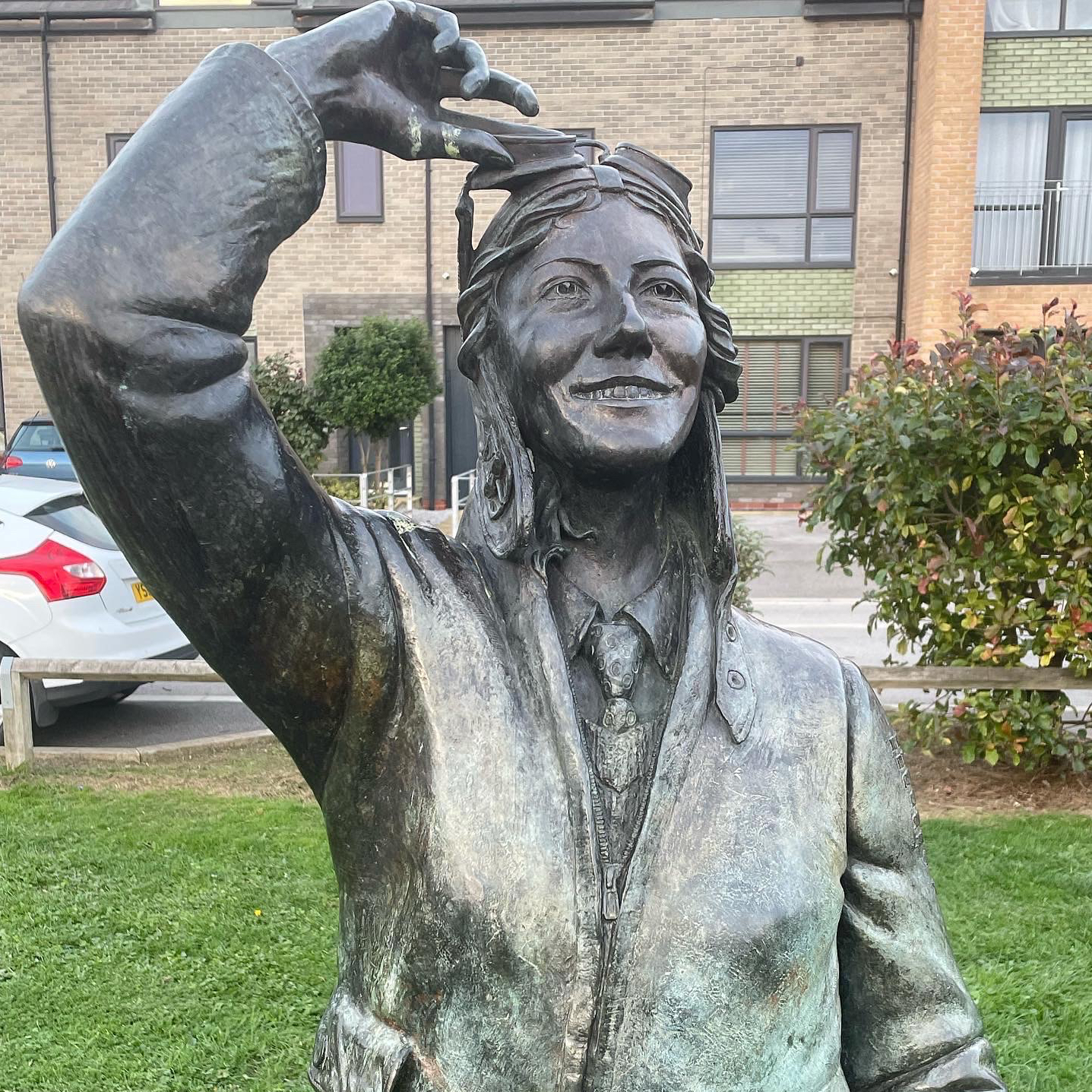
The keen eyed amongst you will know that the above picture is nothing to do with Mary Anning. It is pilot Amy Johnson who I visited in Hull. I love her gaze and besides, I’ve yet to meet Mary Anning…
https://www.instagram.com/womenstatuesuk/

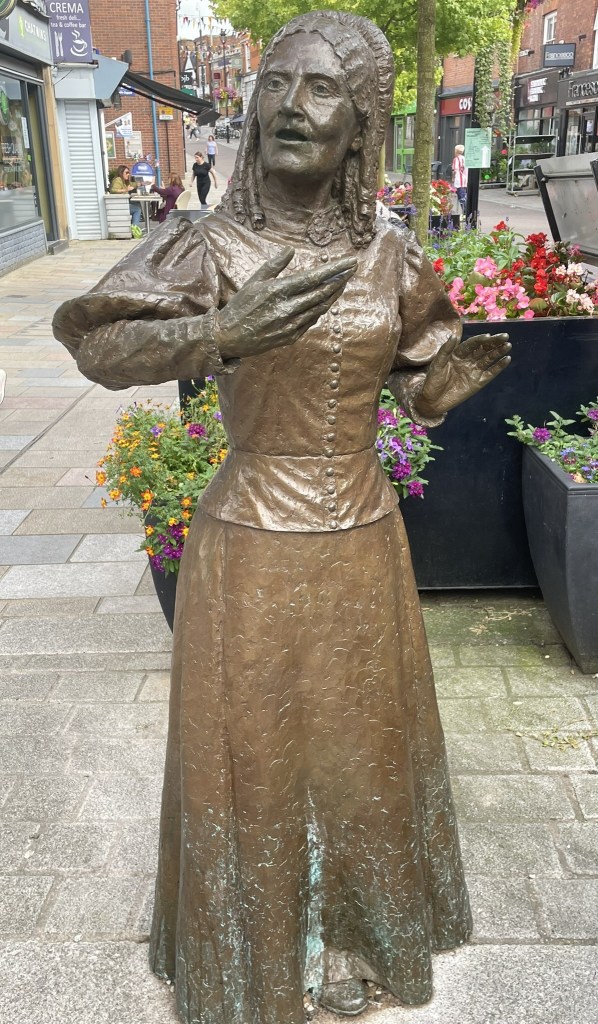
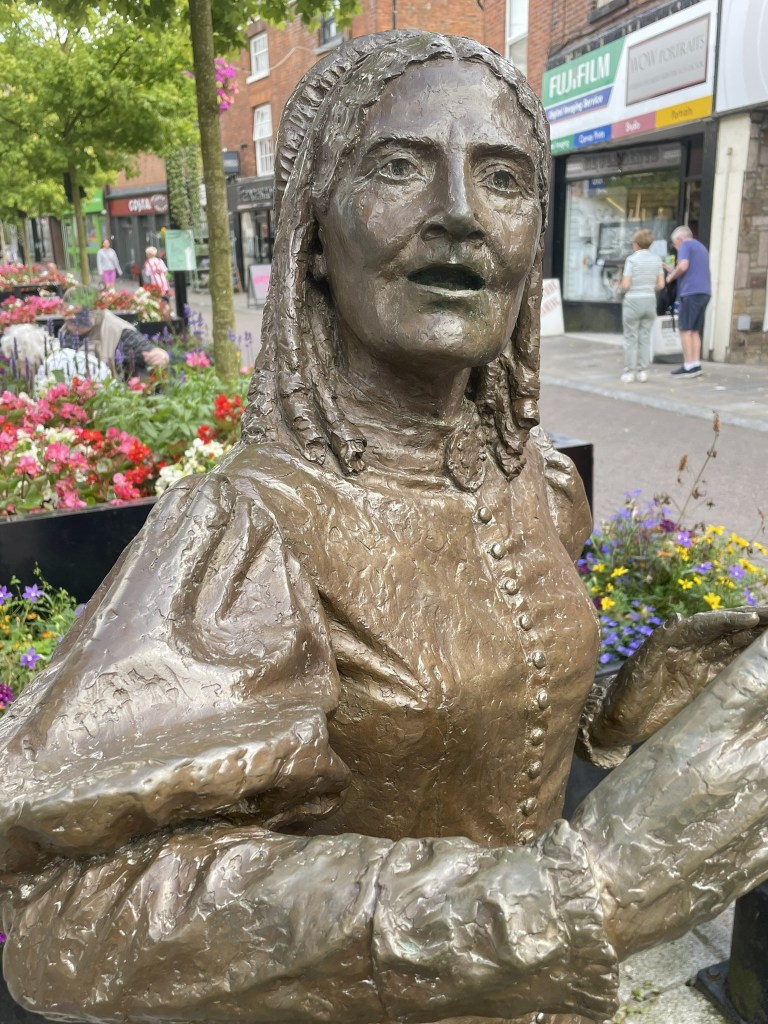
Ella Pirrie

(1857–1929)

Belfast City Hospital

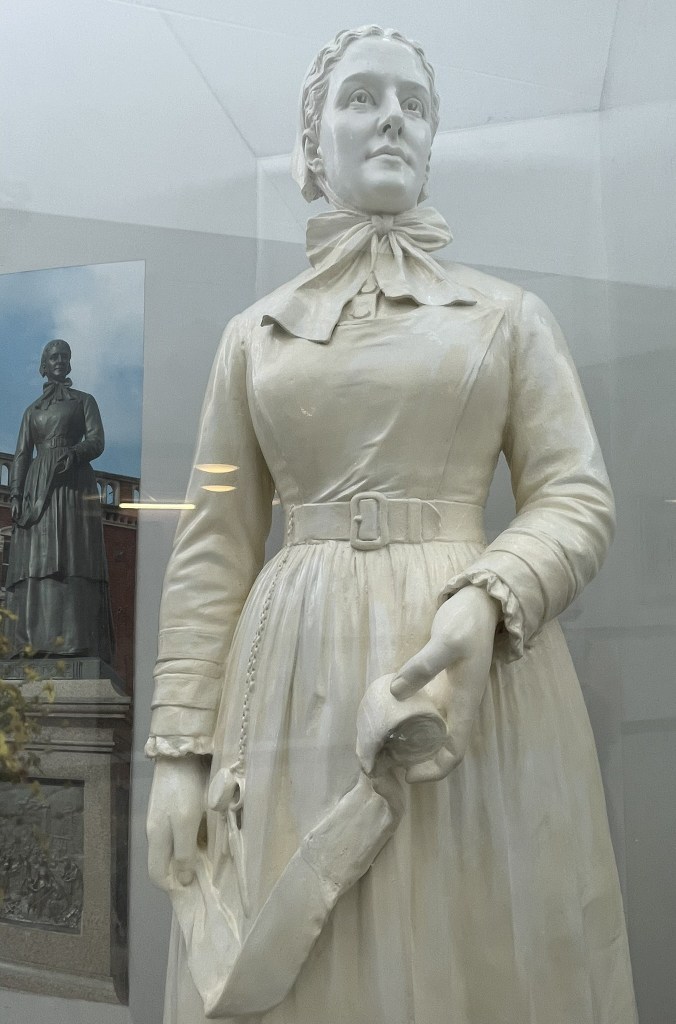
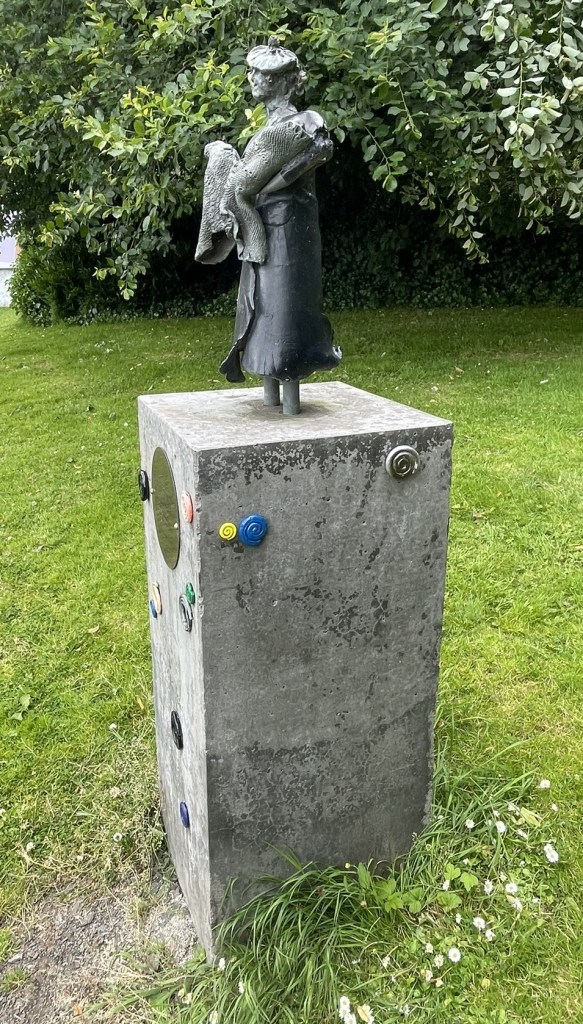
Viewed as one of Northern Ireland’s leading artist, sculptor Ross Wilson (see Amy Carmichael) is also the creator of this statue of Ella Pirrie.

Born Isabella Barbour Pirrie, Ella was the first nurse in the Belfast Union Workhouse Infirmary (now the Belfast City Hospital). Pirrie’s role was transformative and her efforts led to the establishment of a formal nursing training program in Belfast, despite facing significant resistance and challenges.  In 1894, Pirrie moved to Edinburgh to become the first matron at the Deaconess Hospital, Edinburgh (1894-1914), a training school for nurses.  Her tenure there was marked by significant advancements in nursing education, including the establishment of a community and district nursing department. By the end of her service, over 140 nurses had been trained, with many pursuing international missions.

Nightingale was a mentor for many years, writing several letters to her in Belfast. The statue shows her holding a letter from Florence Nightingale dated 1 October 1885, which reads ‘…You have already done great things. You must be the nucleus of hope for a goodly future of trained nursing staff at Belfast Infirmary …’.

Despite her resignation in 1914 due to health issues, Pirrie continued her work as the superintendent of the Deaconess Rest Home in Edinburgh until her death in 1929. 

Ella is the last of three named statues in Northern Ireland and I’m glad I’ve made an early trip to tick the nation off my list as at this point I’ve still got about 100 more to go in my journey.

A year later, Belfast erects two new women statues and I’m duty bound to do the trip all over again.  Damn you feminism.

Amy Carmichael

(1867-1951)

Hamilton Road Presbyterian Church, Bangor, Northern Ireland

Growing up in Belfast, Amy was troubled by the plight of mill girls (named, ‘Shawlies’) who were largely overlooked by the church.  She set up a Sunday class and, in 1887 she and her family opened a church for the girls to attend.  Now called the Welcome Evangelical Church it is still operating in west Belfast. 

In adulthood Amy became a Christian missionary, moving to South India in 1895.

There, she opened an orphanage rescuing hundreds of children from being exploited or sold into prostitution or slavery.  In 1901 she founded a mission in Dohnavur, and the Fellowship remains in existence to this day facilitating nurseries, a school and a hospital.  Amy served in India for 55 years earning the name, ‘Mother to the Motherless’.  In that time she wrote 35 books about her work as a missionary.

The sculpture was unveiled in 2017, the 150th anniversary of Carmichael’s birth and captures her as a 10-year-old girl.  Sculptor Ross Wilson also crafted a ‘Shawlie’ statue, unveiled in 2010 which sits on the junction between Crumlin Road and Cambrai Street (where the Welcome Church resides) in Belfast.

Mary Peters

(1939- )

Mary Peters Track, Upper Malone Road, Belfast BT9 5PR

In 1964 Mary finished 4th at the Olympics and secured 9th place in 1968.  In the 1972 Summer Olympic Games in Munich, Mary won the gold medal in the women’s pentathlon, narrowly beating the local favourite, West Germany’s Heidi Rosendahl by 10 points, setting a world record score.

After her victory, death threats were phoned into the televised channel (the BBC), but Peters insisted she would return home to Belfast*. She was greeted by fans and a band at the airport and paraded through the city streets but was not allowed back to her home for three months and, despite work offers worldwide, she insisted on remaining in Northern Ireland.  

She represented Northern Ireland at every Commonwealth Games between 1958 and 1974. In these games she won 2 gold medals for the pentathlon, plus a gold and silver medal for the shot put.

In 1975 Mary established a charitable Sports Trust (now known as the Mary Peters Trust) to support talented young sportsmen and women, both able-bodied and disabled, from across Northern Ireland in a financial and advisory capacity. The trust has made a large number of awards and has a list of well-known alumni.

I visit Northern Ireland’s premier athletics track on the outskirts of Belfast which is named after her and duly take pictures of me standing beside her at the moment when her gold medal is awarded.  I have a choice of 2nd and 3rd place as the number 1 spot is taken.  Touchingly, the artist John Sherlock offered the sculpture as a gift to the city of Belfast, its people and the future generation of athletes training at the track.

*Known as, ‘The Troubles’, Northern Ireland lived with around 30 years of deep conflict between those wanting to be part of Great Britain and those who wanted to be part of Ireland, with the boundaries between Protestant and Catholic sectors.

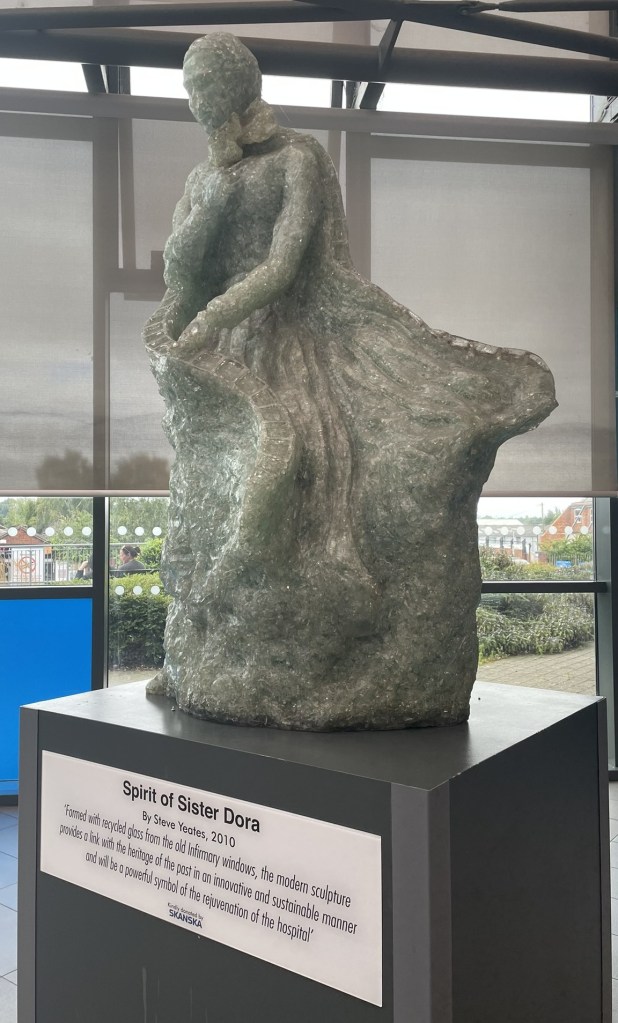
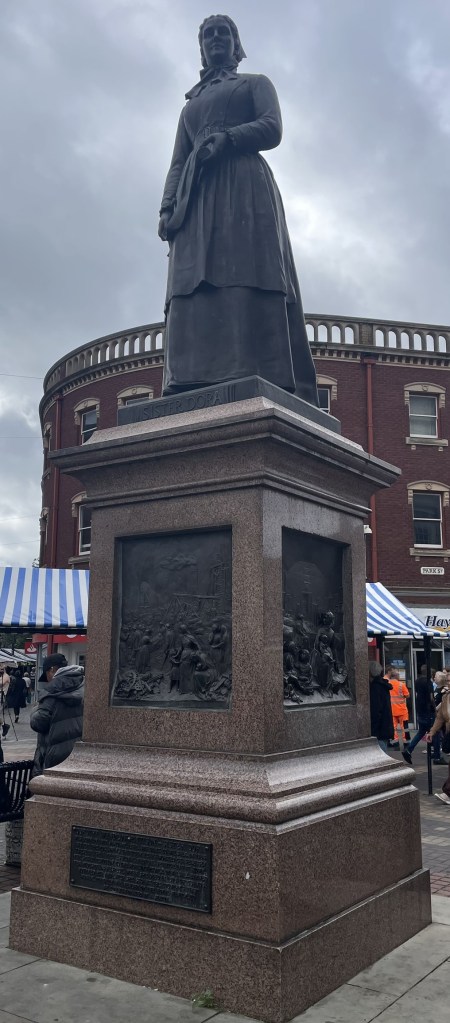
Dora Walker, ‘Skipper Dora’

(1890-1980)
West Cliff, near sunken garden, Whitby

Originally working as a nurse in World War 1, after suffering bronchial problems, doctors advised Dora to seek sea air to help.  So, she bought a cottage in Whitby, where her new found passion for fishing thrived. During WW2, Dora fished, fine-tuned her navigational skills and was adept at handling long lines and crab pots.  She qualified as a skipper and acted as a pilot for boats through the dangerous minefields.  Despite the initial scepticism of her fellow fisher folk, Dora quickly proved she was a skilled and talented worker and became affectionately known as Skipper Dora.

Dora’s impressive catches often made it to local and national newspapers and, along with her brother James, were renowned for their ability to catch Atlantic bluefin tuna (known as ‘tunny’), believed to be one of the strongest fish in the sea.  However, the popularity of tunny fishing dropped off dramatically during the Second World War, and the practice eventually led to a significant reduction in local herring and mackerel stocks, resulting in the disappearance of blue fin tuna from the coastal waters.

After the war, Dora and her brothers James and Ronald created a fish company to buy fish from local fishermen at a reasonable price and sell it at a loss to assist struggling families without them suffering a loss of pride, an act which saved much of the town from poverty in difficult times.  This was a secret kept until she died in 1980.  She was also heralded for her rescue efforts and joined other fisher folk in relentless aid missions when boats ran into trouble at sea.

During her lifetime she wrote three books, one about her experiences in WW1 and two about fishing in Whitby: They Labour Mightily and Freemen of the Sea.

Skipper Dora stands as one of the sculptures of Whitby’s Walk with Heritage trail.  Artist Emma Stothard features, get this, 6 females out of 9 sculptures!  The other women sculptures are representative of women, so not named, but they deserve a space here.  Enjoy!

Fishwife – West side of Swing Bridge next to railings
Gansey Knitter – Opposite junction of Skinner Street and Flowergate
Herring Girls – Bandstand

Catherine Booth

(1929-1890)

William Booth College, Champion Park, Denmark Hill, London SE5 8BQ and Mile End Road, London E1 4TP

Catherine received a strict evangelical upbringing with the values of piety and selflessness instilled in her.  She attended Wesleyan classes at a young age but later became dissatisfied and moved away from the faith around 1850.  A few years later she met and married William Booth and shared faith values and a passionate belief in the need for church reform. Catherine had been home educated by her mother and due to illness, she had spent many years housebound which served to make Catherine a voracious reader of the bible and other religious works, leading to an interpretation of the Bible which supported equality and challenged the precept that it was unfeminine for women to preach. 

William was at first opposed but by 1860 Catherine was speaking publicly, winning many converts which helped sway William’s opinion.  Subsequently the value of female ministry was proclaimed by The Salvation Army (established in 1865) and a statement regarding sexual equality in ministry was published in The Salvation Army’s Orders and Regulations.  For many Salvationists Catherine’s legacy is this success in advancing public roles for women in Church life and she is affectionately remembered as ‘The Army Mother’.

Catherine is also celebrated for her commitment to social reform, advocating for better conditions and pay for women workers in London’s sweated labour, notably in the match-making industry.  All this, it is written, while giving dedication to her duties as a wife and mother of eight and her commitment to The Salvation Army.  

Still, she dodged the bullet of school bun sales, World Book Day costumes and various taxiing to judo/football/swimming lessons.  Pick your hard.

The Mile End statue is a fibreglass replica of the original in Denmark Hill, donated by the women of the US Salvation Army to mark the Army’s 150th anniversary in 2015.

In each location, Catherine is stood in preaching action, adjacent to her co-founder and husband William Booth.

Still unsure if it is worth a visit?  Let’s note a Trip Advisor review from November 2023, ‘I don’t know who she is.  It’s a pretty standard statue.  It’s not worth going out of your way for’.

Anna Pavlova

(1881-1931)

Victoria Palace Theatre, Victoria Street, London SW1E 5EA

There can’t be many better accolades than having a dessert named after you.*

Born into poverty in St Petersburg, Russia, Anna trained at the city’s Imperial Ballet school culminating in her reaching top rank of prima ballerina in 1906.  Famously known for her performances, particularly The Dying Swan, she toured worldwide and set up her own dance company in 1913.  However, she settled in London and made it her adoptive home.  It was whilst she was touring that she contracted pneumonia and died at the age of 49.

The statue was erected in 1911, and it was said that Pavlova considered it unlucky for her to see it, so she avoided it at all costs.  It was taken down in 1939 for safe-keeping during the war but the original did not return, and a replica was installed in 2006, complete with head spike and netting to deter pigeons. 

Fortunately, from my angle the bird deterrent hardly plays in the shot, although I’m slightly concerned of being accused of upskirting…..

*Meringue based dessert originating in the antipodes in the early 20th century.  Apparently the Aussies and the Kiwis are still fighting over the origins.

Harriet Tubman

(1822-1913)

Huddersfield Library and Art Gallery, Huddersfield

I google women statues in the UK and get lost in sites, articles and blogs.  Then I come across the Public Statues and Sculptures Association site pssauk.org.  There, I find a list of all the 128 women in the UK with photos (mostly), brief descriptions of the figures, the artist and where they are situated.  Boom.  Who knew it would be that easy.  All that is left for me to do is to log who they are and where they are so I can create a schedule of visits.  I have my favourite method of data collection – spreadsheets, and I go about breaking the statues in to regions of the UK simply as:

Scotland and NI – an impressive list!
North West
North East
Wales and South West
Midlands
South East
London

It just takes a few hours and I marvel at technology.

Sadly, Leeds is lacking a female (non-royal) statue, but West Yorkshire has a few gems so I start heading a little southward.  The Harriet Tubman memorial was commissioned by Kirklees Council and unveiled on 1st October 2013 to mark Black History Month and the centenary of her death.  Tubman was an abolitionist and political activist.  An escaped slave, she was instrumental in the US Underground Railroad which offered hundreds of slaves a passage to safety.

I arrange to meet my friend Nic who lives in Huddersfield and relish talking about my endeavour, (despite early days) and generally catching up.  It would be great if all statue visits could be accompanied with a good natter and a pitstop at (sadly) the now defunct Humpit Hummus Café.

Annie Kenney

(1879-1953)

Parliament Square, High Street, Oldham

Born in 1879 Annie started working life in a cotton mill at the age of 10 and soon took on relentless 12-hour shifts.  She remained at the mill for 15 years, eventually getting involved in trade unionism and the suffragist movement.

After hearing Christabel Pankhurst speak about women’s rights at an Independent Labour Party meeting in 1905, Annie became involved in the campaign for women’s suffrage and was renowned for standing on an orange box ringing a bell to get attention for her speeches.  Her actions as a suffragette included her being imprisoned 13 times and taking part in several hunger strikes.

The statue was unveiled outside Oldham Town Hall in December 2018 marking the centenary of the Representation of the People Act 1918, which gave some British women the right to vote, honouring the only working-class woman to hold a senior position in the Women’s Social and Political Union. 

I learn all this after my visit, as she is one of a few statues I am journeying to throughout the northwest.  Had I learned about her losing a finger in a cotton mill accident I could have given the statue a closer inspection to see if such a gruesome detail has been added; or in this case; taken away.  Perhaps someone can let me know.

Victoria Wood

(1953-2016)

Library Gardens, Silver Street/Manchester Road, Bury

Comedian, actor, songwriter, screenwriter, producer and director.  Phew that’s a lot of roles.

Known for her own TV show as well as productions such as Acorn Antiques and Dinner Ladies, Victoria was a versatile, respected and admired entertainer.

The statue in her home town was largely fundraised by Victoria’s brother and unveiled in 2019 with a second unveiling in 2025 after being hit by a taxi leading to extensive repair work.

Gracie Fields

(1898-1979)

Town Hall Square, Rochdale

Image from the boarding surrounding the square

Born above a Rochdale fish and chip shop in 1898 Gracie spent her early life working in a cotton mill whilst also attending school and theatre groups where she graduated on to bigger stages.  Actor, comedian and singer, Gracie went on to star in films and stage productions, performing globally, making her the world’s highest-paid female in the 1930’s.  She earned honours not just for her career, but for her vast charitable work and generosity, but is best known for her work entertaining troops during the war where she travelled extensively.

Should look good when it’s finished!

But back to Rochdale.  Heralded as the first statue of a woman to be erected in Greater Manchester in more than 100 years, it was unveiled in 2016, standing proudly outside the Grade 1 listed town hall.  Phone camera at the ready I walk up to the Town Hall to be met by mass construction.  It’s a Sunday so the machines are quiet, but unbeknown to me, the area is being re-developed and I can only gaze at Gracie through the fencing.  She survives intact but surrounded by rubble – reminiscent of impromptu war time sing – a- longs with the troops perhaps?

Looking ‘Graceful’ amongst rubble

I manage to slip my phone through the fencing and grab some inadequate shots of her.  Must do better.