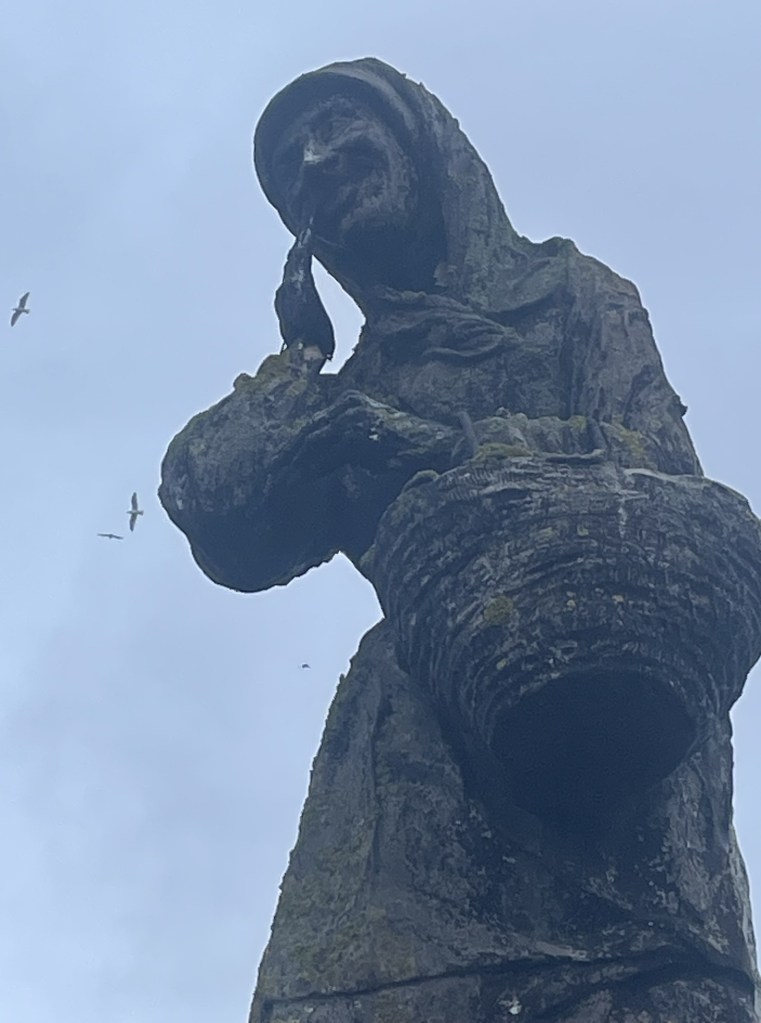
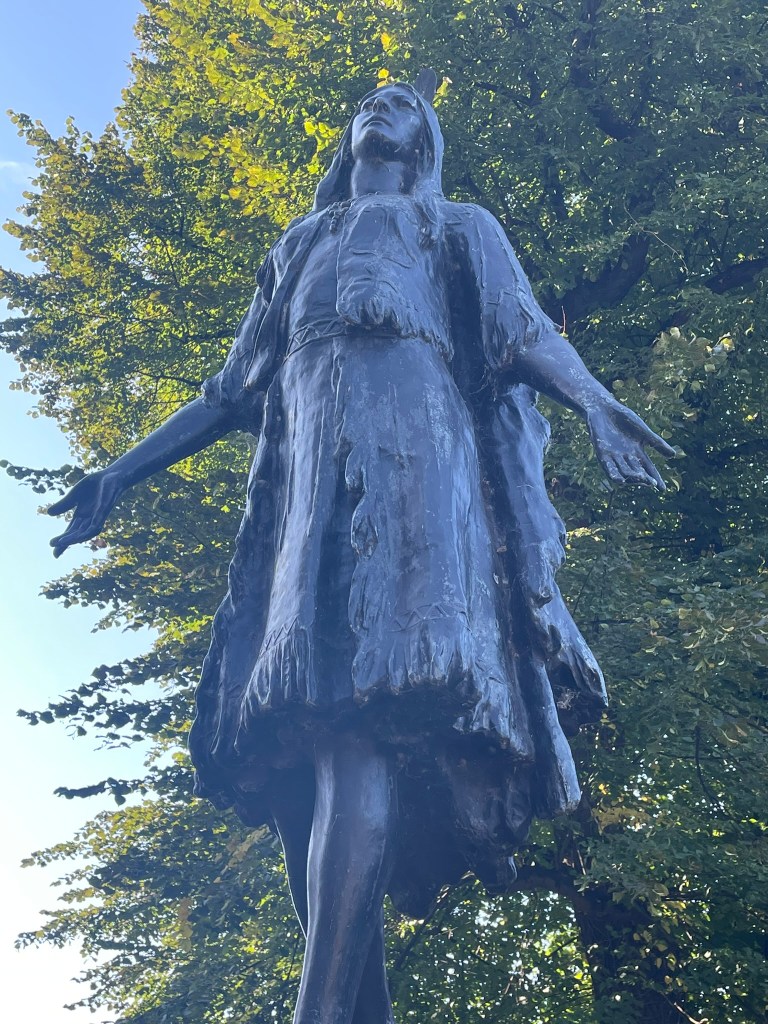
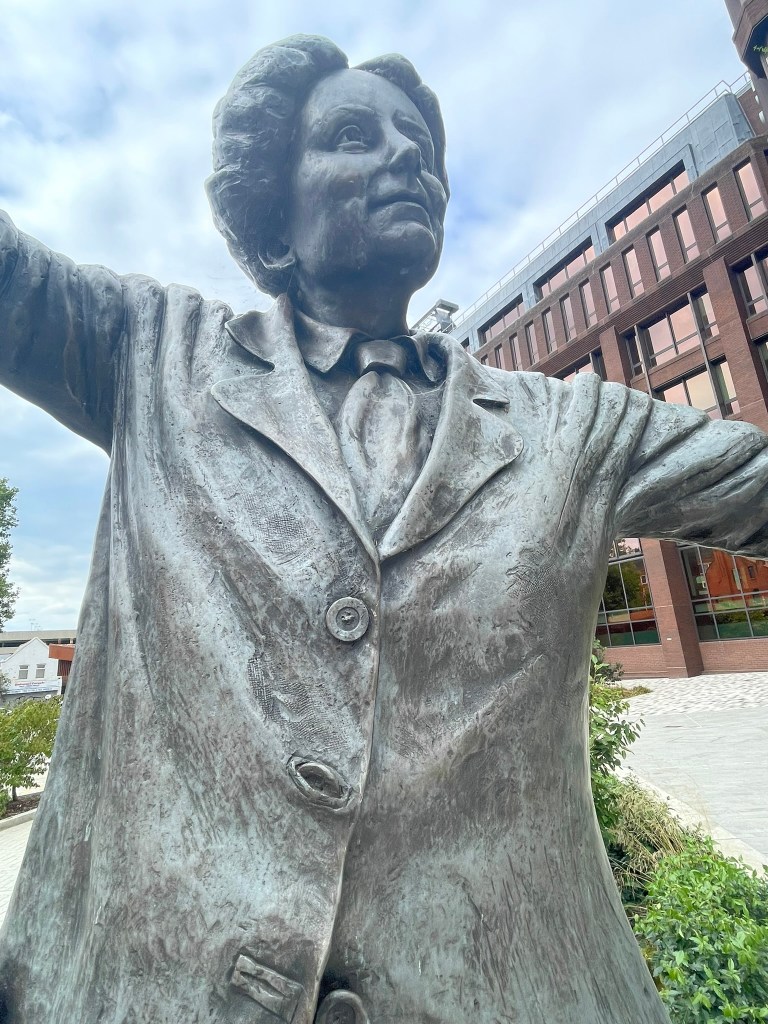
Pocahontas (Rebecca Rolfe)

(1595-1617)

Graveyard of St George’s Church, Gravesend, Kent, England

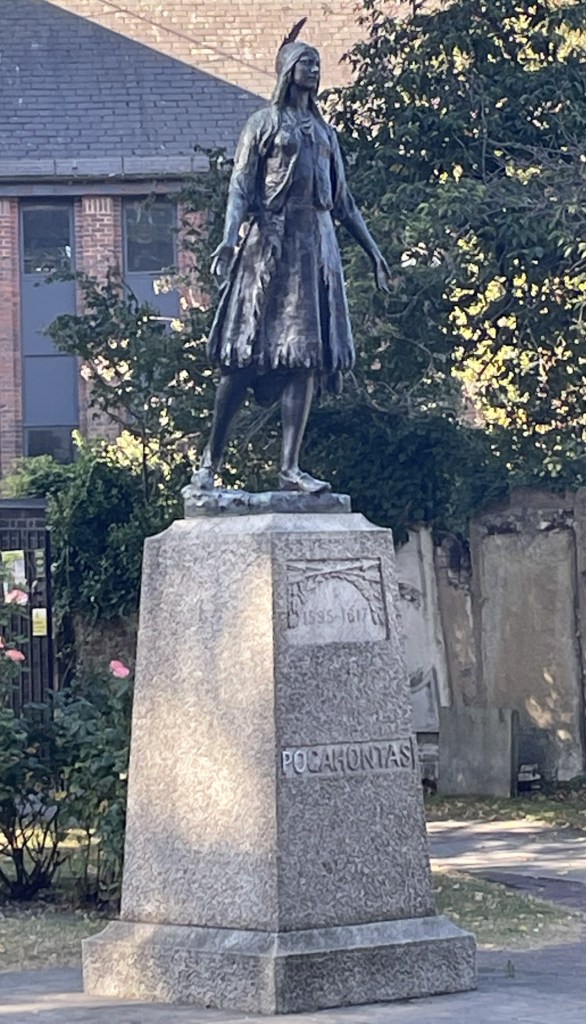
Pocahontas was a native American who intervened, at the age of 12, to save the life of colony settler Captain John Smith.  She later met Englishman James Rolfe who arrived in the newly formed Jamestown colony in 1610.  They married and travelled to England, where she changed her name to Rebecca Rolfe and converted to Christianity.

She died in 1617, around the age of 23, while making a return voyage to Virginia with her husband and son Thomas.  The ship would have stopped in Gravesend as the last place for fresh food and water for the journey.  She was buried St George’s Church, but the original building was destroyed by fire in 1727 so her exact resting place is unknown.

Folk will no doubt be familiar with the Disney interpretation of Pocahontas’s story.  In reality, her act of heroism opened her, and many other native Americans, up to new diseases that their immune systems could not fight – her cause of death in England could have been from any number of ills at the time, from smallpox to flu.

Rolfe, continued his journey back to Virginia to work his tobacco farm, leaving their son Thomas with family, believing that without his mother he was unlikely to survive the arduous journey across the Atlantic.  He never saw Thomas again but knew that his son had been brought up safely in England, married, and had children of his own. The actor Edward Norton and Edith Wilson, wife of America’s President Woodrow Wilson, are amongst those who claim to be descended from Thomas and thus from Pocahontas herself.

The Grade II listed statue was gifted by the then governor of Virginia in 1958 and is a cast of the 1907 sculpture by William Ordway Partridge on display in Jamestown, Virginia.

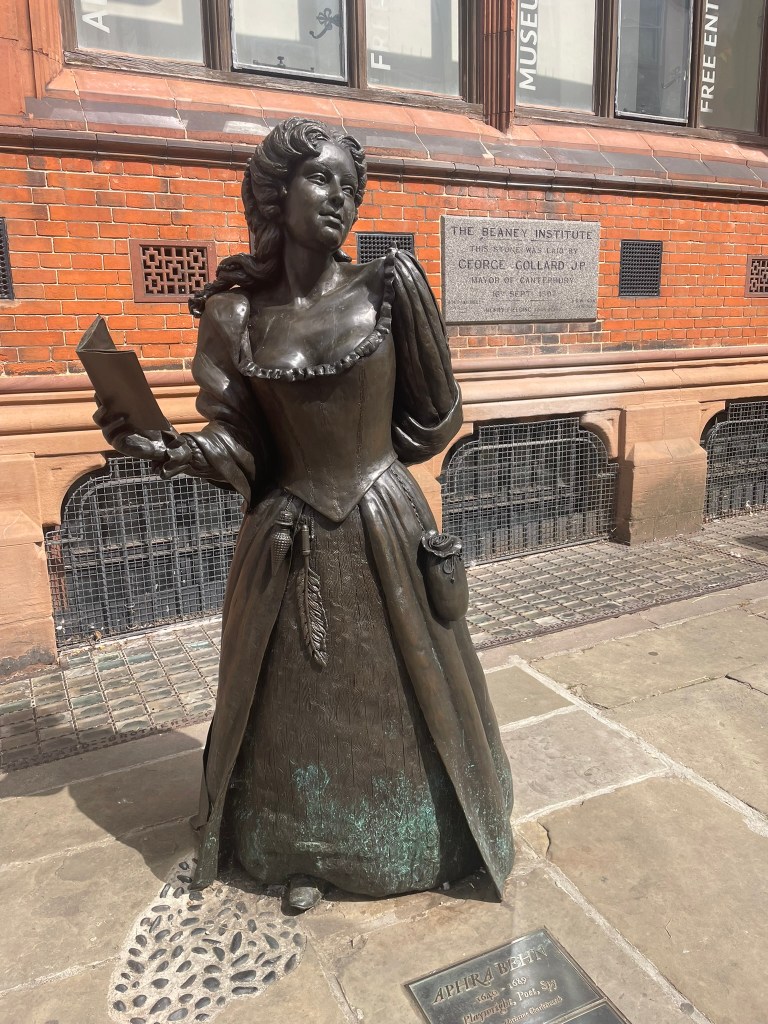
Aphra Behn

(1640-1689)

The Beaney Library and Museum, High Street, Canterbury, Kent, England

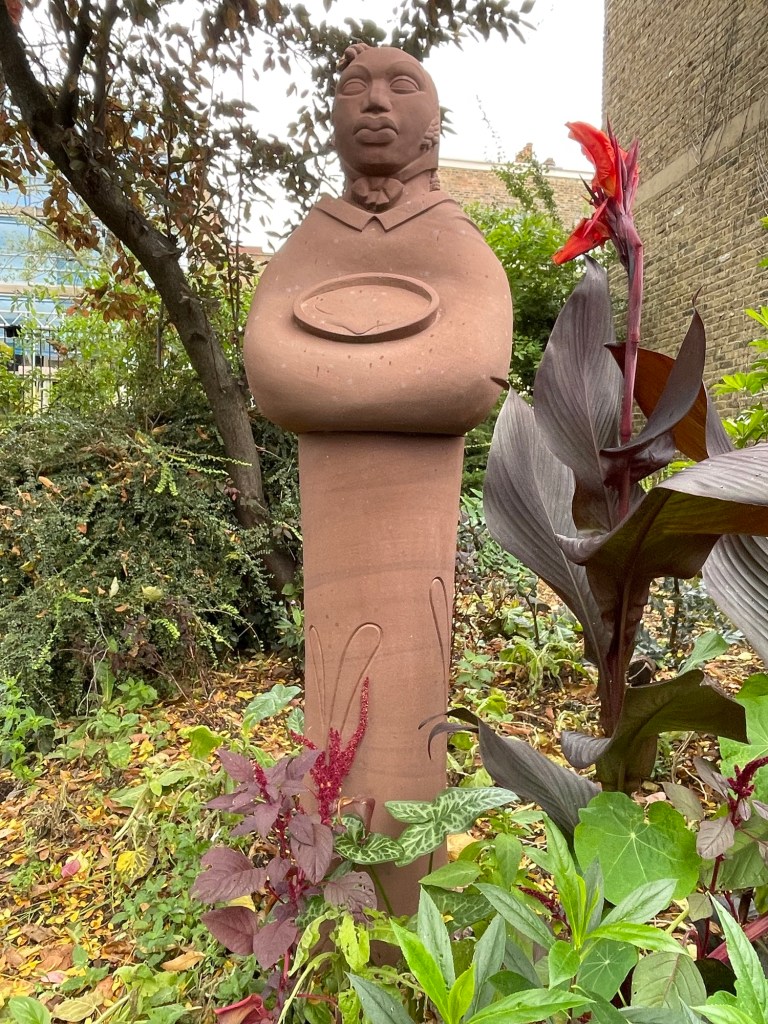
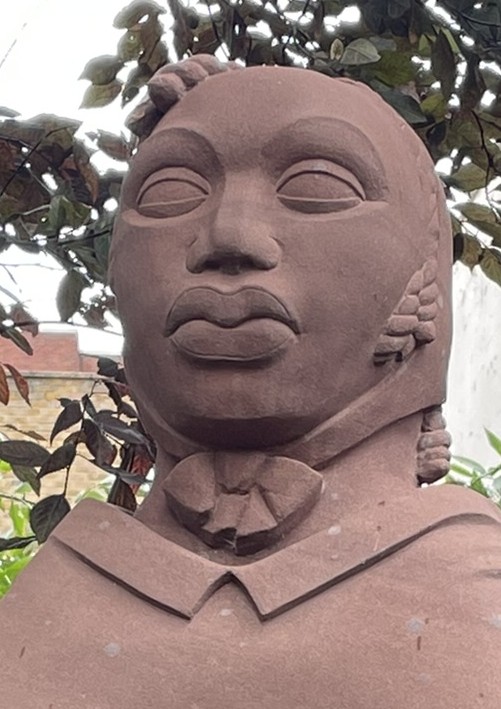
Now recognised as one of the most significant early English writers, Aphra is seen as the first paid professional woman writer in the language.  She was a leading (and prolific) playwright around the time of King Charles II (who employed her as a spy – there’s so much to learn here….) she also worked in poetry, prose and translation (French and Latin) despite being largely self-taught and coming from a modest background.  Her most famous book is the novella Oroonoko, which was likely influenced by her travel to Suriname (again, rumours of espionage here too).

Why have most people not heard of her?  Her work was pioneering and witty, but despite a burial in Westminster Abbey which demonstrates her high status in the 17th century, her bawdy literature may have fallen out of failure by the Victorian era.  Her works were re-discovered and re-energised around the 20th century, culminating in the A for Aphra campaign to put her back in the spotlight and fundraise for a statue in her birthplace.

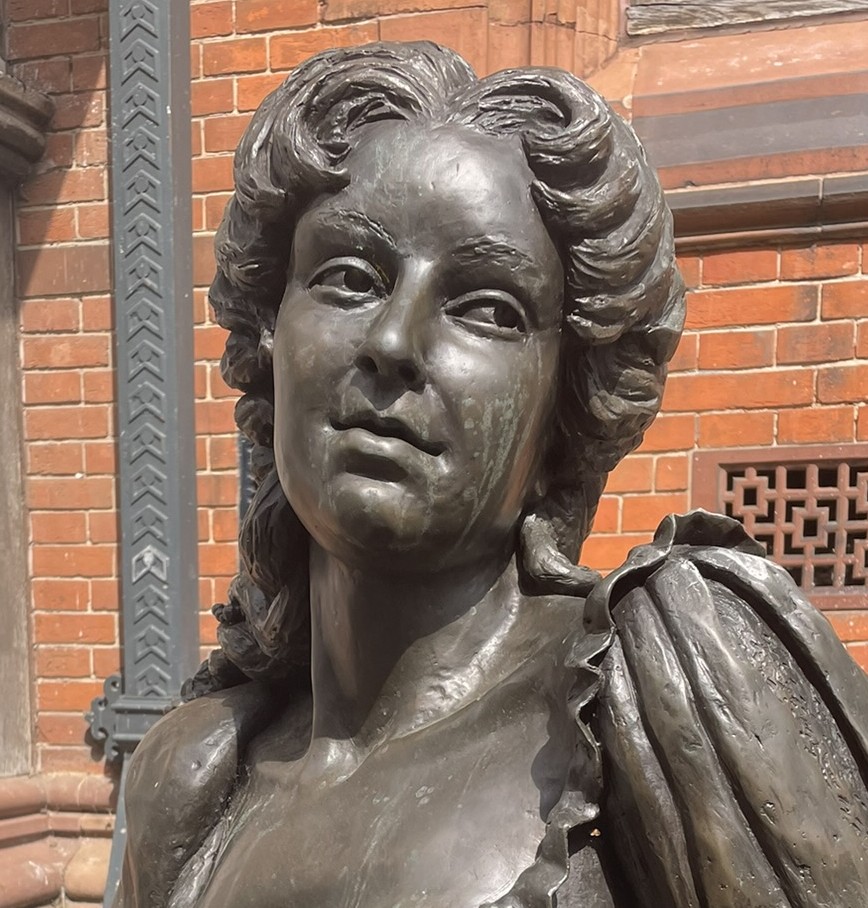
The figure depicts her around the age of sixteen at a time when she and her family moved to London (in 1650’s) after a childhood spent in Canterbury.

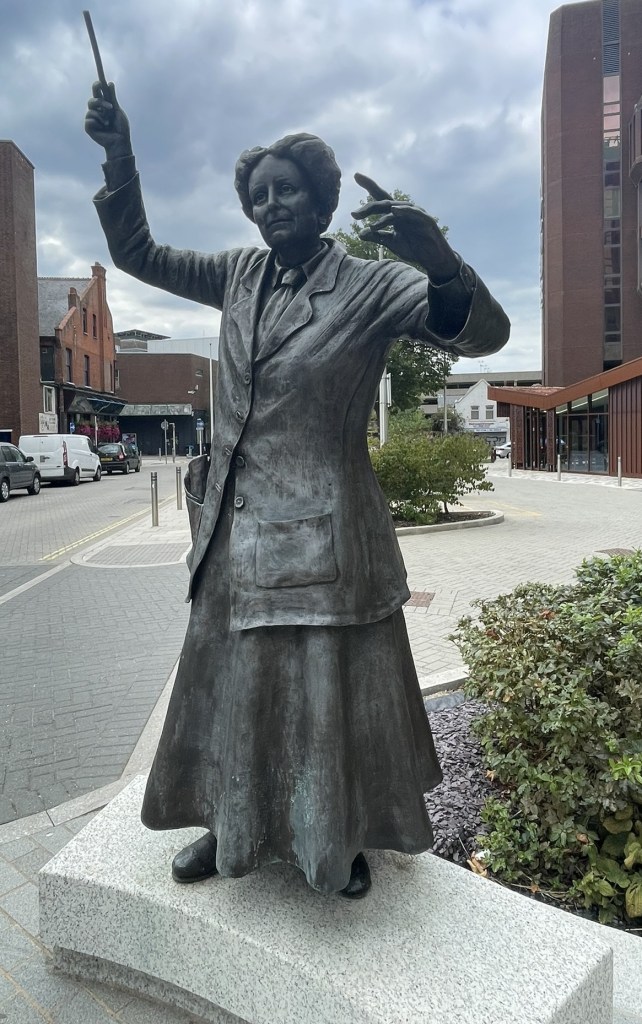
Ethel Smyth

(1858-1944)

Duke Court, Duke Street, Woking, Surrey, England

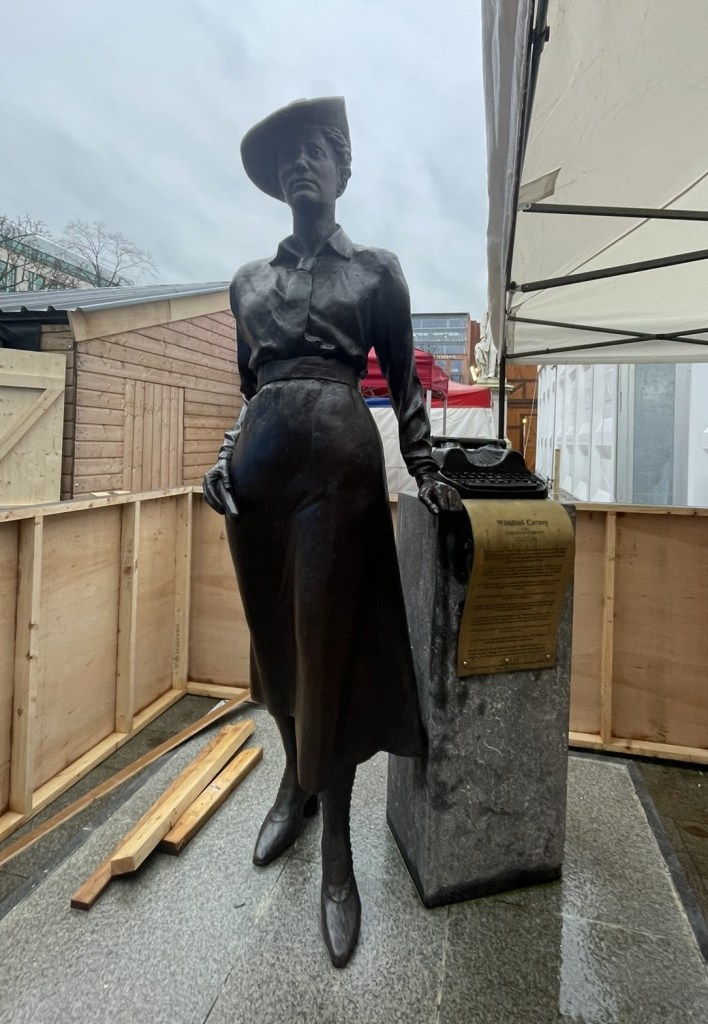
Ever get the feeling that you are underachieving? The statue’s plaque boasts Ethel as a composer, author, sportswoman and suffragette.  To be frank, it’s exhausting reading the list of it all.

Ethel wrote 6 operas in her lifetime, as well as other musical compositions in what was a very male dominated world in music.  She was the first woman to have an opera performed at the Metropolitan Opera House in New York and it wasn’t until over a hundred years later that another woman composer took her place.

Ethel composed the suffragette anthem, ‘The March of the Women’ and was a leading figure in the movement in the 1910’s.  A friend of Emmeline Pankhurst, her house was used as a ‘safe house’ for campaigners.  She loved sport and had a passion for golf.  Her sporting prowess came in handy while teaching women how to throw stones.  Along with many prominent suffragettes, she spent time in prison for the cause (this could be where the sport of ‘throwing stones at windows’ plays a part) and organised sports with fellow prisoners in her time at Holloway jail.

Sadly, Ethel began to lose her hearing in her 50’s, becoming completely deaf later in life.  At this stage, she developed her writing and went on to publish 10 books in the last 25 years of her life.

Jane Austen

(1775 –1817)

St Nicholas Church, Chawton,
Market Square, Basingstoke and
Grounds of Winchester Cathedral, Hampshire
, England

St Nicholas Church, Gosport Road, Chawton, Hampshire

Writing at the end of the 18th century, her six novels have been translated and circulated prolifically.  Her first books were published anonymously when she was around 35 years of age with her last two published posthumously.  Most of you will at least know the name of her most famous works, ‘Sense and Sensibility’, ‘Emma’, and ‘Pride and Prejudice’.

And what of her statues?  You may recall that Florence Nightingale holds the record for the most decorated woman in statues, but Jane is having a resurgence, some 200 years after her death.  It seems her work is appreciated now more than ever.

Market Square, Basingstoke, Hampshire

Up first – St Nicholas Church in Chawton where Jane attended services in her time in the village between 1809-1817.  Her gaze looks over a picturesque grazing field to where she lived.  This is not the original statue, but a maquette cast and based on the original in Basingstoke, where Jane would have attended dances near the Market Square.

Alas, when I hit Basingstoke it is market day, but not the market of Jane’s day.  Here I find her sandwiched between a bunch of crates and a dumper bin.  Poor Jane.

Market Square, Basingstoke, Hampshire

Things improve little (with me and Jane) with a move to Winchester where Jane spent her final days.  Unveiled in 2025 to mark the 250th anniversary of Jane Austen’s birth, I find Jane fenced outside the annual Christmas market as a backdrop, somewhat obscuring the cathedral’s inner close housing.  Christmas market foibles are a speciality of mine when statue hunting it seems (don’t get me started on Belfast). On this occasion my friend is reprimanded by a security guard who appears out of nowhere to chastise him for touching the sculpture.  Naughty!

Jane’s dedications don’t end here it seems – not far from Chawton a bust was unveiled just two months before my local visit but only discovered by me some 10 months later.  Don’t fret.  It’s on the list.

Katie Pianoff

‘Young Dancer’

Opposite the Royal Opera House, Bow Street, London WC2E 9DD

I curtailed this statue early on in my research as it was entitled, ‘Young Dancer’ so took it as a nameless statue.  It was in fact posed by Australian ballerina Katie Pianoff who, at the age of 17, was awarded a scholarship to the Royal Ballet Upper School in Covent Garden.  After graduating she joined and toured with the Royal Ballet Company but due to ill health she returned to Australia teaching ballet at the infamous (I guess in ballet circles) Tanya Pearson Academy in Sydney.  The sculptor Enzo Plazzotta died in 1981, so Katie must have sat for it some time before that.

After his death his estate bequeathed the statue to the City of Westminster with the unveiling in 1988.  Katie has her own Instagram account with some lovely pics of her visiting her statue whilst touring in the UK.  Check them out @katiepianoff.  I love that the sculptor captures her right foot on point, even when just tying her ribbons.

Flora Thompson

(1886-1947)

Flora was a novelist and poet, best known for her semi-autobiographical trilogy Lark Rise to Candleford centring on her childhood in English countryside and published as a collection in 1945.  The books detail her early life in the village of Juniper Hill through to her first work in a sub-post office.

Self-taught and a largely self-educated, Flora began writing in 1911 when she won an essay competition about Jane Austen.  From there she wrote articles and stories for women’s papers.  In 1916 she moved with her husband to Liphook to run the Post Office and writing in the small box room where they lived next door.  In 1921 her poetry book, Bog, Myrtle and Peat was published.  I’m astounded there isn’t yet a folk group claiming that name.

In later years her husband’s work took them west, but her bust occupies space in the Liphook Library to commemorate her time living in the village from 1916 to 1928.  Originally unveiled in 1981 outside the Post Office it was moved due to vandalism in the 1990’s to the library foyer where it remains today.

Jane and Ann Taylor

(1783–1824) and (1782–1866)

The Taylor sisters were both poets, but it is believed that Jane wrote the lyrics for the infamous lullaby, ‘Twinkle, Twinkle, Little Star’ (originally named, ‘The Star’) in 1806 and published in the poetry collection Rhymes for the Nursery.

A few years earlier the sisters had published Original Poems for Infant Minds with an extended volume published in 1805 due to its success.  Throughout the following years both worked on further children’s poetry volumes.

Jane was also a novelist.  When Ann married, Jane moved to Devon to live with her brother and wrote solo, publishing the children’s book Display: A Tale for Young People in 1814, Essays in Rhyme on Morals and Manners (1816) and Correspondence between a Mother and Her Daughter at School in 1817 – a collaboration with her own mother.  In 1819 The Family Mansion. A Tale appeared followed by Practical Hints to Young Females some time after and before her death in 1824.

After her passing many of her works were collected and published in five volumes by her brother in 1832.  However much of her output in essays, plays, stories, poems, and letters have never been published.

Margaret Haig Thomas (Lady Rhondda)

(1883-1958)

Margaret Haig Thomas, 2nd Viscountess Rhondda (aka Lady Rhondda) is the 4th out of 5 statues planned under the Monumental Welsh Women Campaign.  Before 2021 there were no statues of real women in Wales.  With just one more statue to go at the time of writing it has been a great success.

Margaret joined the Women’s Social and Political Union (WSPU) in 1908, becoming secretary of the Newport branch and taking the campaign for women’s suffrage across South Wales. Hers was an active role which saw her attend protest marches with the Pankhurst family, jumping on the Prime Minister Asquith’s car and attempting to set fire to a post box for which she was arrested and sentenced. 

The onset of war in 1914 saw suffrage action stalled to support the war effort, but Margaret remained an advocate of women’s equality, work and service, herself becoming Commissioner for Wales in the Women’s National Service Department.  She took up work with her father and on a business trip to the US, their boat was torpedoed on the return journey in 1915, claiming more than 1000 lives.  Back home and recovered, her business work continued and she sat on the board of 33 companies, chairing seven of them, overseeing empires in mining, steel, shipping and newspapers, becoming the first female president of the Institute of Directors.  In 1920 she created and edited the influential ‘Time and Tide’ paper, running it with an all-female board.

Despite her peerage, as a woman, Margaret was unable to take up a position in the House of Lords and she spent 40 years campaigning to overturn this, not just for herself, but for other women.  Sadly, she died just before the Life Peerages Act of 1958 was enacted which finally allowed women in the House.

Unveiled in 2024 the statue includes 40 hands of present-day women, all monumental in some way.

Diana Dors

1931-1984

Born Diana Mary Fluck in Swindon, Diana had high hopes for a career in film at a young age.  After entering a beauty contest in her early teens, she gained work modelling in art classes and began participating in local theatre productions.

Diana was offered a place at the London Academy of Musica and Dramatic Art at the age of 14. By lying about her age, she became the college’s youngest ever student, supplementing her weekly allowance by posing for the London Camera Club.  In her first term she was signed to an agency.  By looking older than she was, she secured a few small film roles early on in her studies and by the time she was 16 (in 1948) she had appeared in six films.

Diana took on the maiden name of her grandmother as a stage name commenting, ‘They asked me to change my name…I suppose they were afraid that if my real name Diana Fluck was in lights and one of the lights blew…’

Her career spanned all the decades of her adult life – her final film Steaming (1985) released a year after her death from ovarian cancer at the age of 52.

The statue sits outside the Swindon cinema complex. Diana is captured in a slinky evening gown and stole as she appeared in the 1956 crime drama Yield To The Night.

Betty Boothroyd

(1929 – 2023)

Betty was MP for West Bromwich and West Bromwich West from 1973 to 2000 and serving as the Speaker of the House of Commons from 1992 to 2000 – the only woman to have held the role to date.  She took up a position in the House of Lords in 2001.  

In 1994, she was appointed as the first woman Chancellor of the Open University from 1994-2006. This bronze portrait was commissioned by the university in 2001 and forms part of the sculptor Shenda Amery’s ‘Women who have made a difference’ series (see Margaret Beckett).