(1640-1689)
The Beaney Library and Museum, High Street, Canterbury, Kent, England
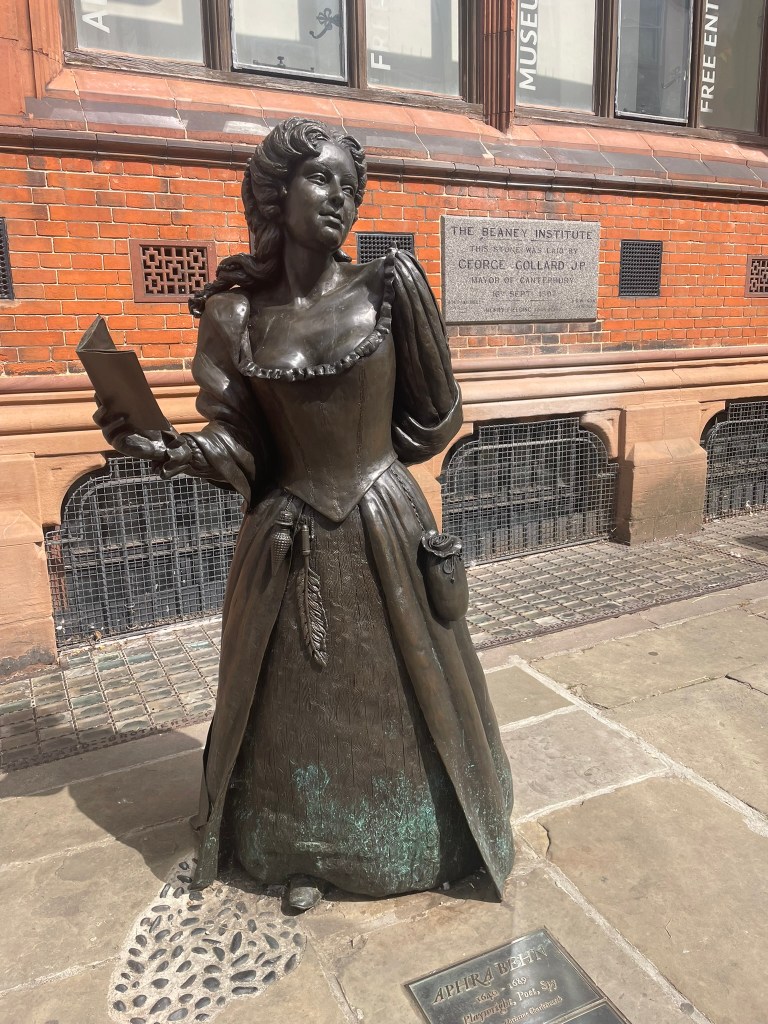
Now recognised as one of the most significant early English writers, Aphra is seen as the first paid professional woman writer in the language. She was a leading (and prolific) playwright around the time of King Charles II (who employed her as a spy – there’s so much to learn here….) she also worked in poetry, prose and translation (French and Latin) despite being largely self-taught and coming from a modest background. Her most famous book is the novella Oroonoko, which was likely influenced by her travel to Suriname (again, rumours of espionage here too).
Why have most people not heard of her? Her work was pioneering and witty, but despite a burial in Westminster Abbey which demonstrates her high status in the 17th century, her bawdy literature may have fallen out of failure by the Victorian era. Her works were re-discovered and re-energised around the 20th century, culminating in the A for Aphra campaign to put her back in the spotlight and fundraise for a statue in her birthplace.
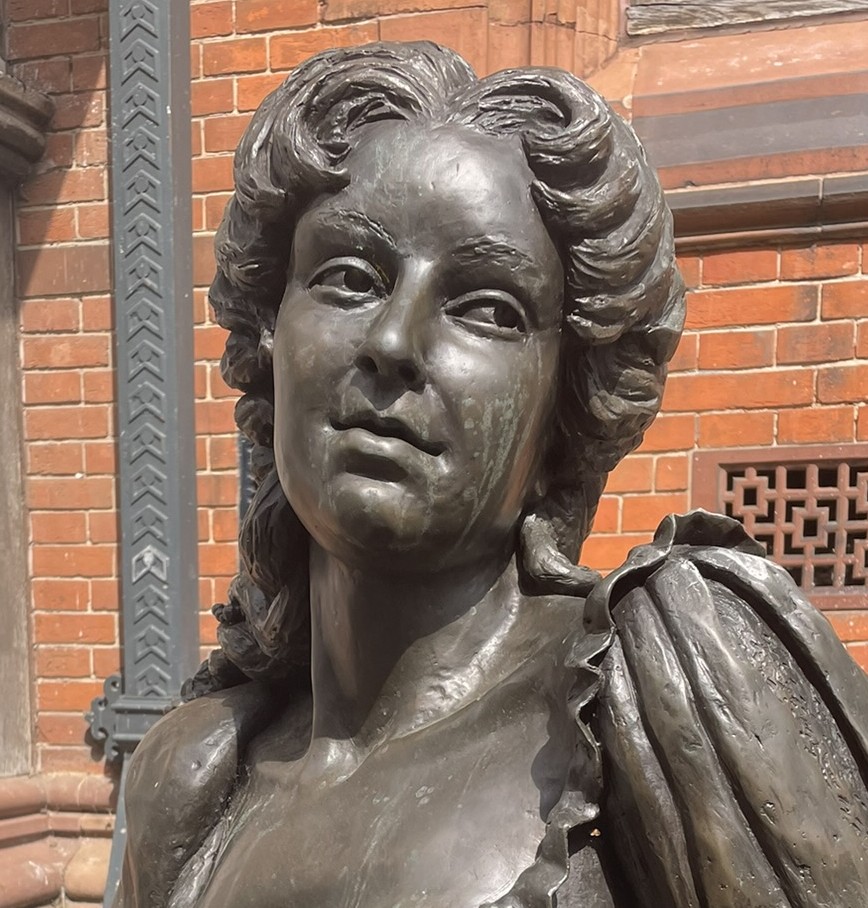
The figure depicts her around the age of sixteen at a time when she and her family moved to London (in 1650’s) after a childhood spent in Canterbury.

