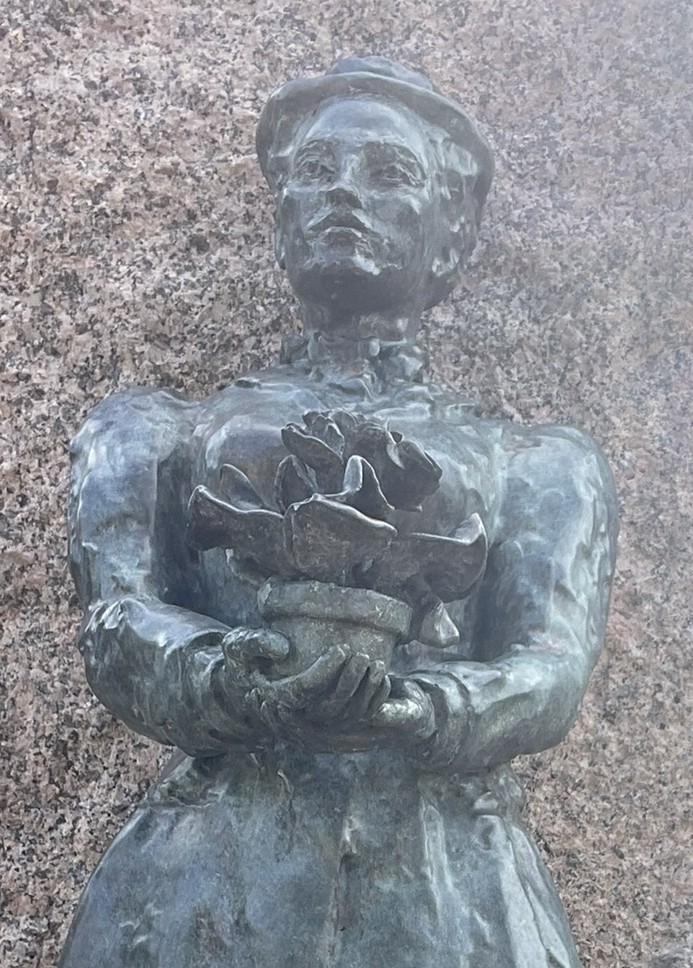
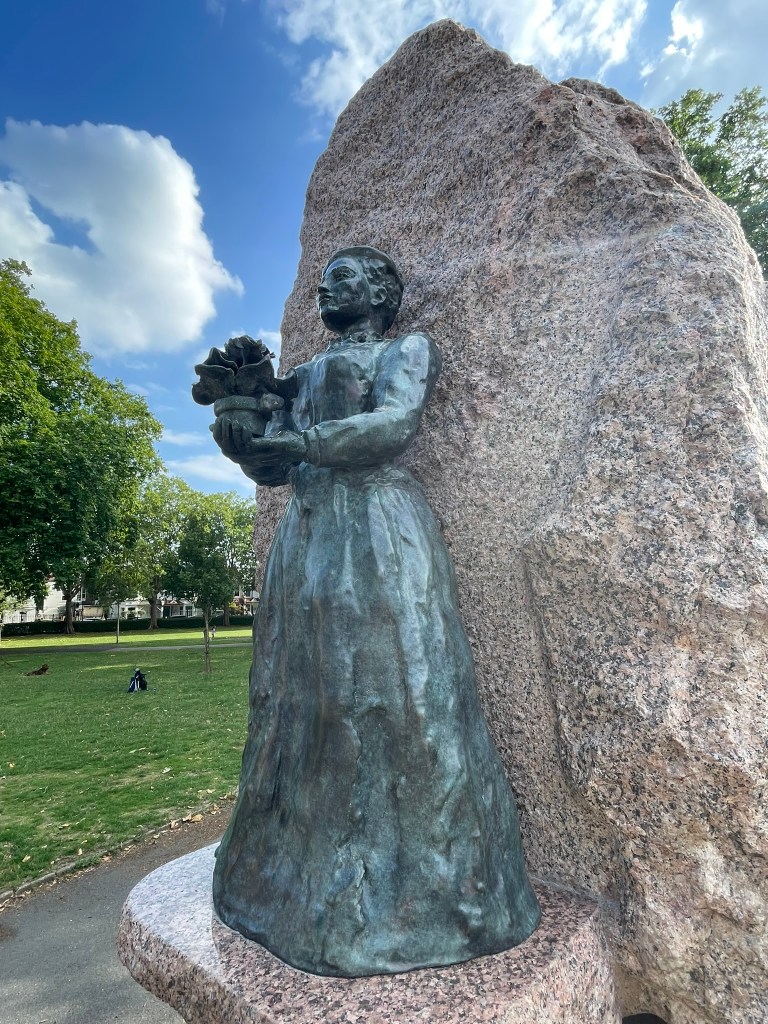
Fanny’s statuette adorns the renovated drinking fountain in one of 75 London parks that she designed.
In 1883 and after much persuasion, Fanny was the first and only woman to be accepted on a Landscape Gardening and Practical Horticulture course at the Crystal Palace School in Sydenham. A year later, she was elected as honorary gardener to the Metropolitan Public Gardens Association leading to a professional paid position two years later.
Fanny was also a suffragist, an activist in sanitary and political reform, and a supporter of women’s education and rights. In an interview in 1890 she said: “I certainly do not let myself be underpaid as many women do … I know my profession and charge accordingly, as all women should.”
The fountain was originally installed in 1904. Today, Fanny can be seen holding a plant above the tap, honouring not only her part in Coronation Gardens’ existence, but in recognition of her pioneering work as the first professional female landscape designer in Britain.
Leopold Road and Lake Road in Wimbledon, London SW19 7HBUnited Kingdom
Irish born educator, writer and champion of Indian freedom, Margaret came to the UK at an early age and found a career in teaching, living in various towns and cities in working in education, all the while studying methods of enhancing the childhood learning and experience.
By 1891 she had settled in Wimbledon and opening a new independent school, emphasising child’s play at the core of early learning.
During this Margaret had slowly become disillusioned with the Christian faith and had a growing interest of other worldly religions. She met Indian Hindi philosopher and social reformer Swami Vivekananda in 1895, striking up a relationship that culminated in his call for her to travel to India to educate a population that was struggling in what was then British India. Swami recognised that education was at the heart of bringing people out of poverty and saw that Margaret was the woman to lead.
So, in 1898, Margaret travelled to India and immersed herself in the culture, faith and way of life of India, becoming known as Sister Nivedita – meaning, ‘the dedicated one’. She set up a school and travelled extensively raising awareness and getting help for her cause, promoting the importance of education particularly for women and girls. Often Margaret was met with refusal, but her classes grew, including women and girls of all ages learning practical skills. The 1899 plague epidemic in Calcutta challenged Margaret’s calling, but she embraced nursing and medical roles, inspiring others to volunteer and support others in need, all the while struggling to raise funds by touring lectures as well as her own writing to keep the school running in the face of mortality.
At the turn of the century Margaret was a fierce advocate for Indian independence, believing it to be the only way in which Indian and its people could prosper – a cause she dedicated herself to until her death in 1911.
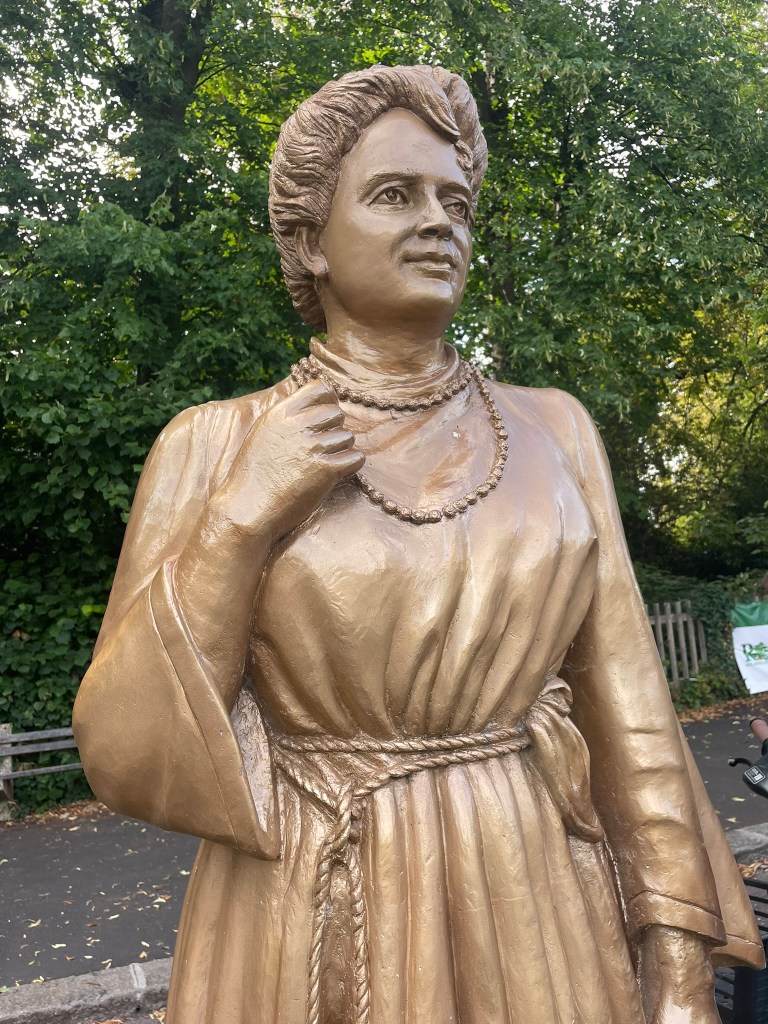
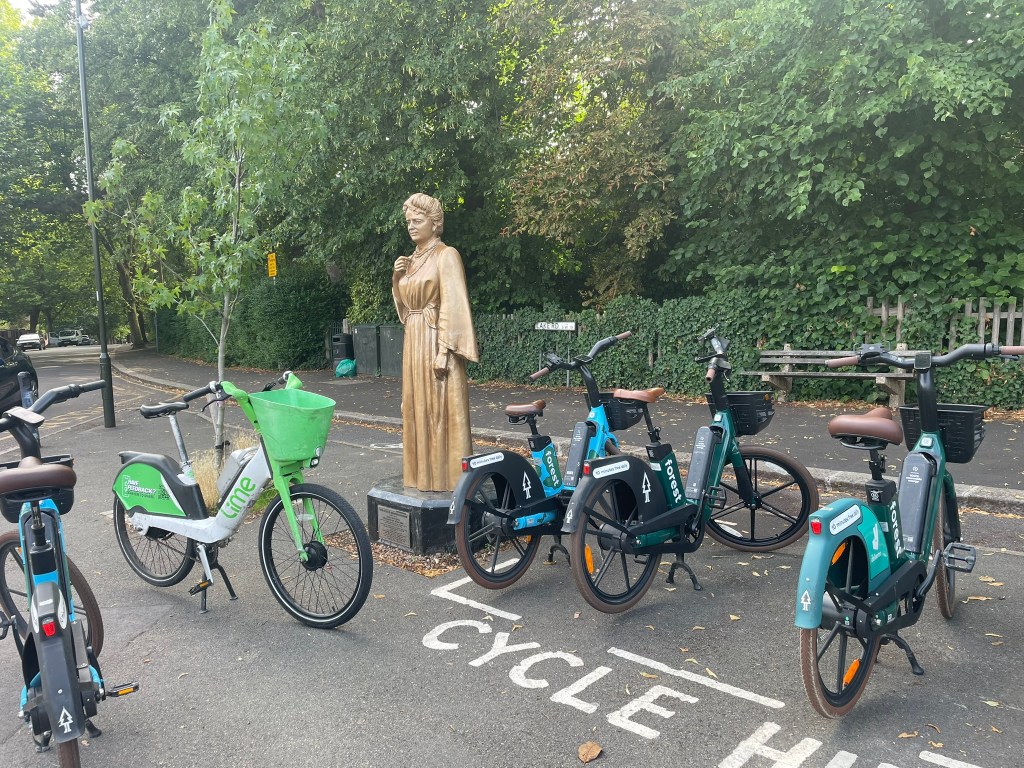
This statue was made in Bengal and created by artist Nirjan De and sculptor Biswattanandaji. It is placed facing slightly south of east, towards Bengal. A similar statue stands in the Engineering and Science University there, hopefully not also serving as a bike park.