Florence Nightingale

(1820-1910)

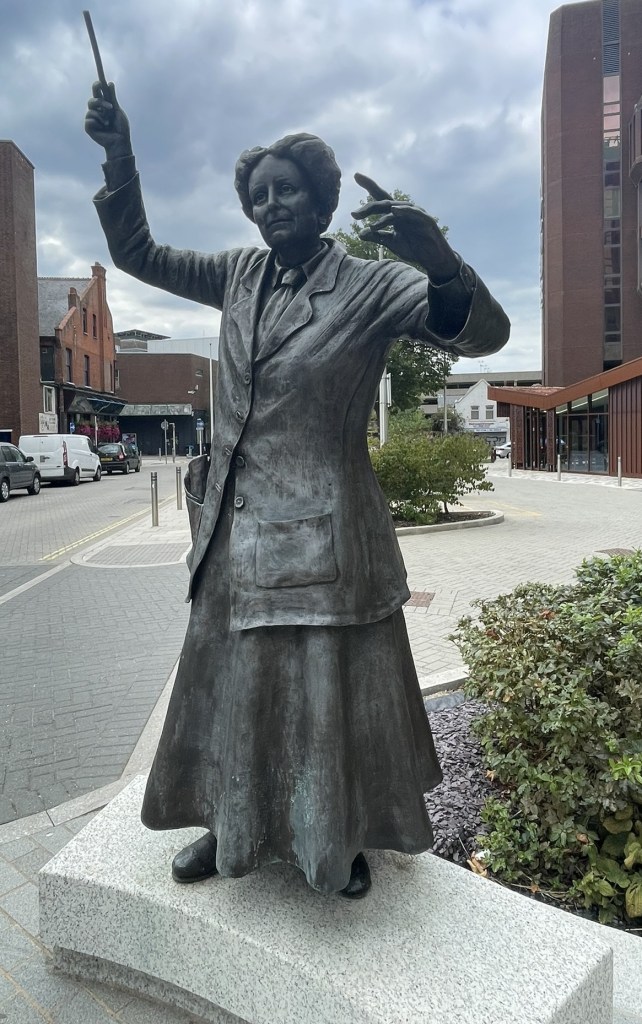
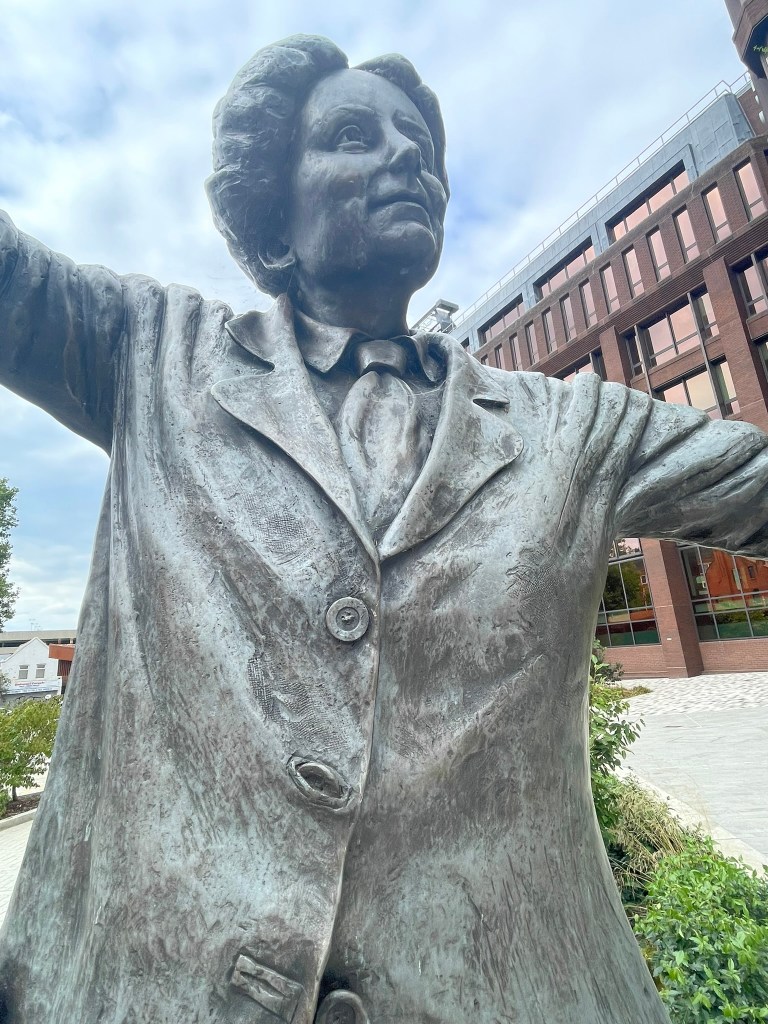
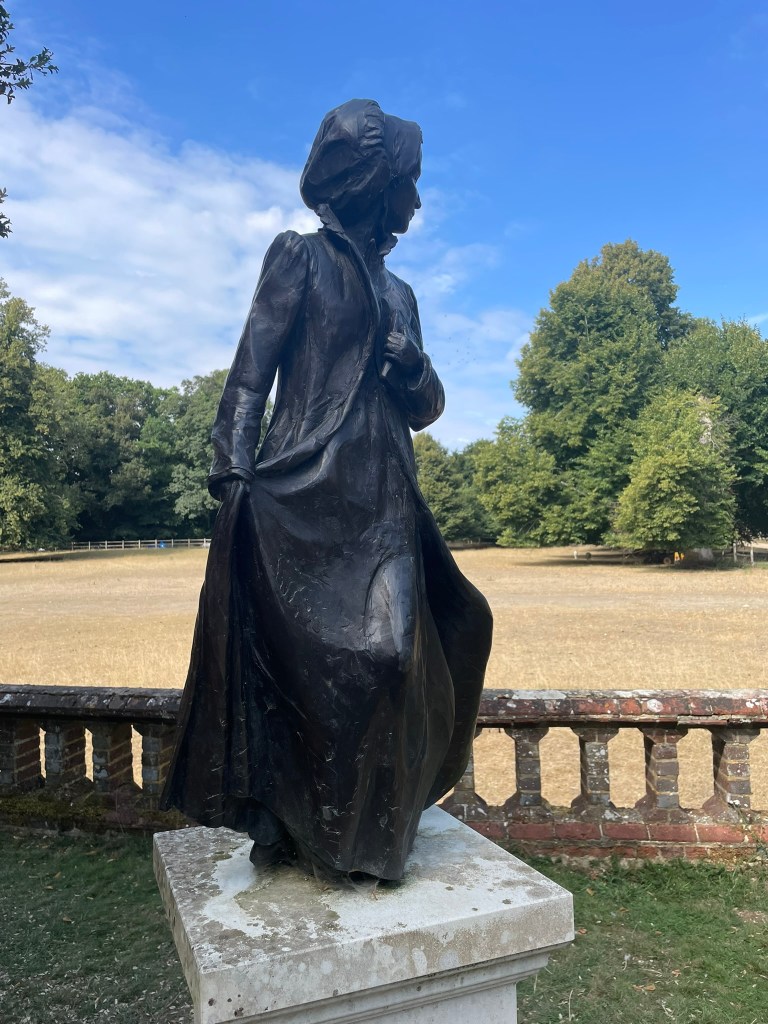
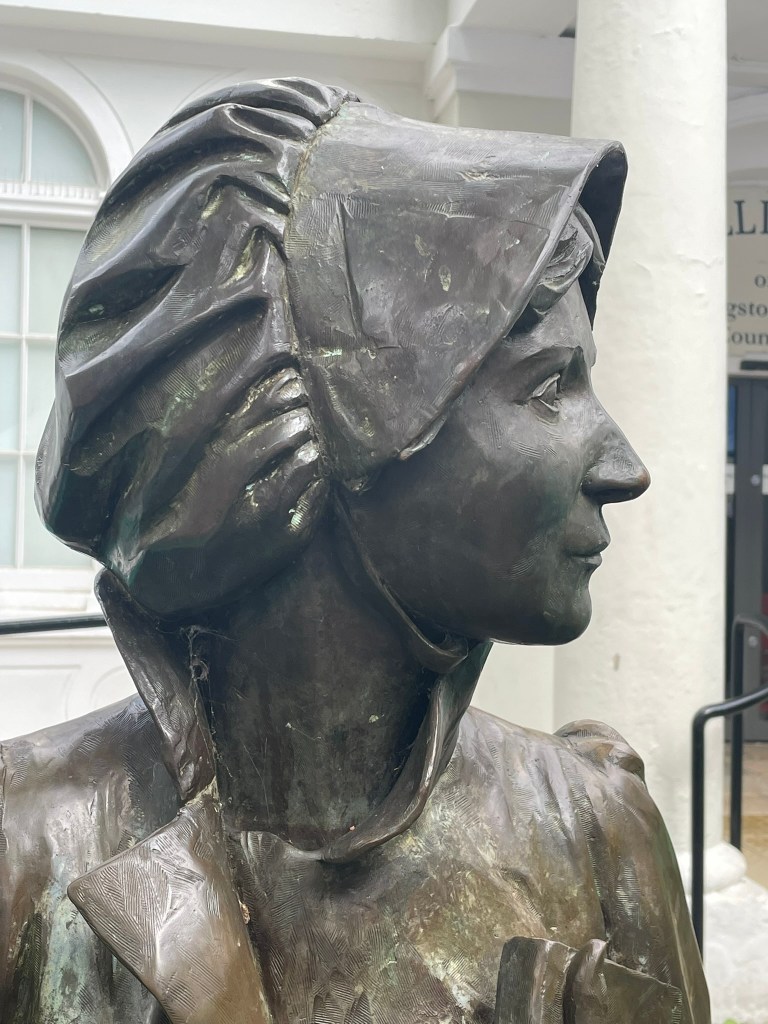
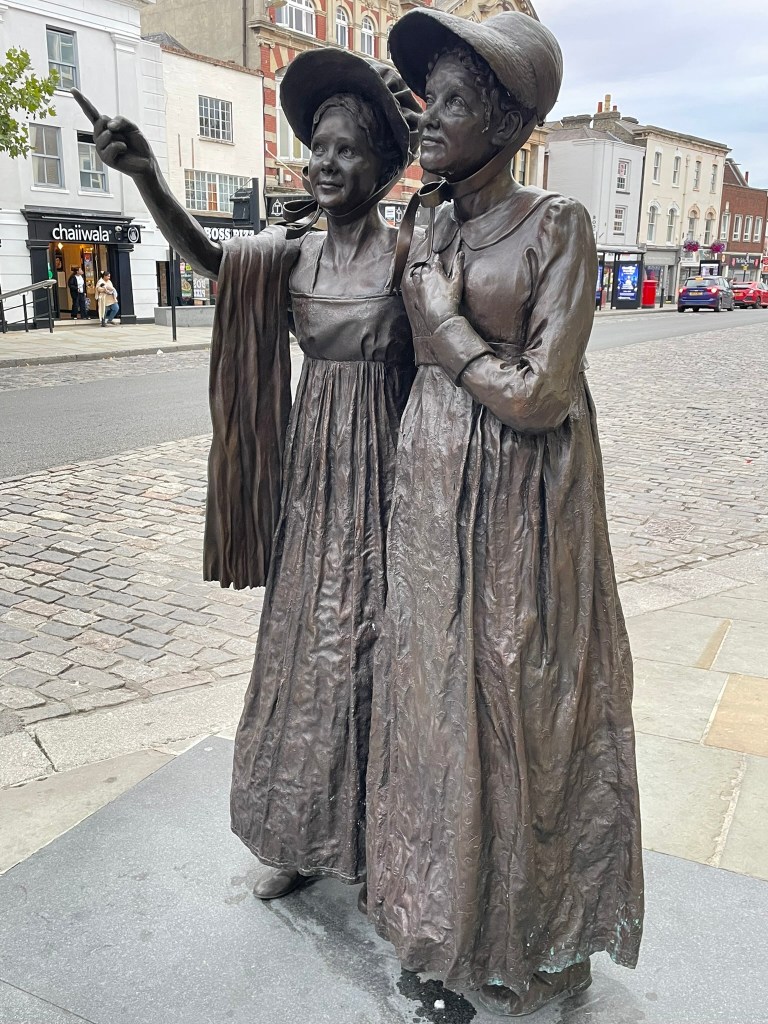
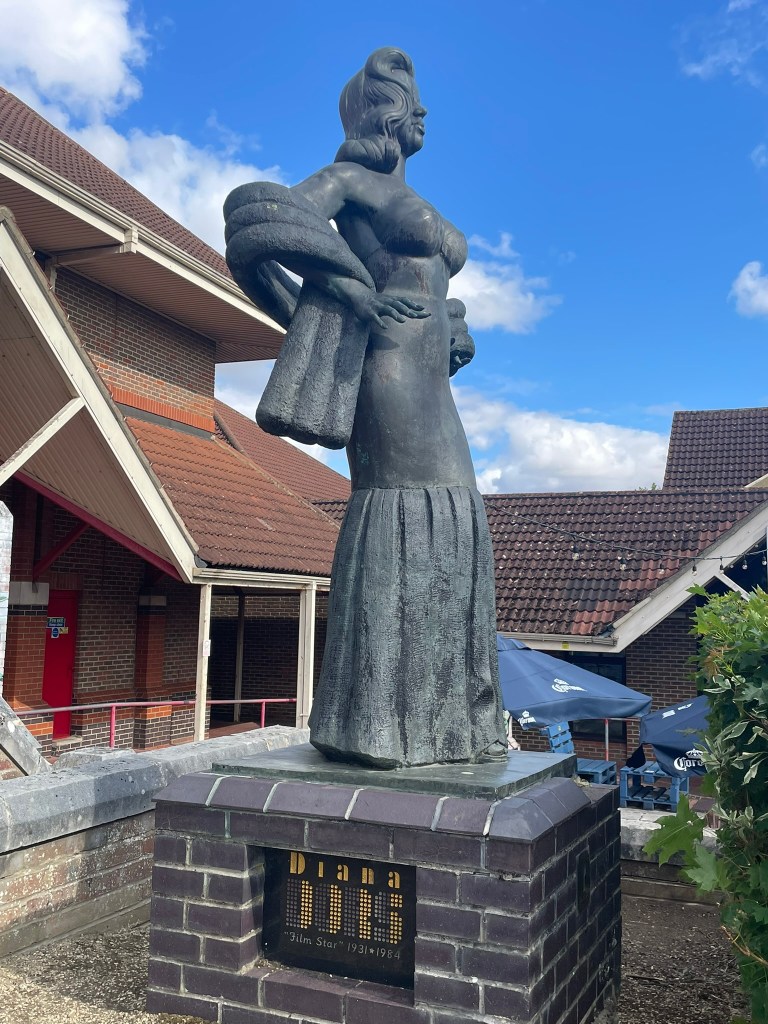
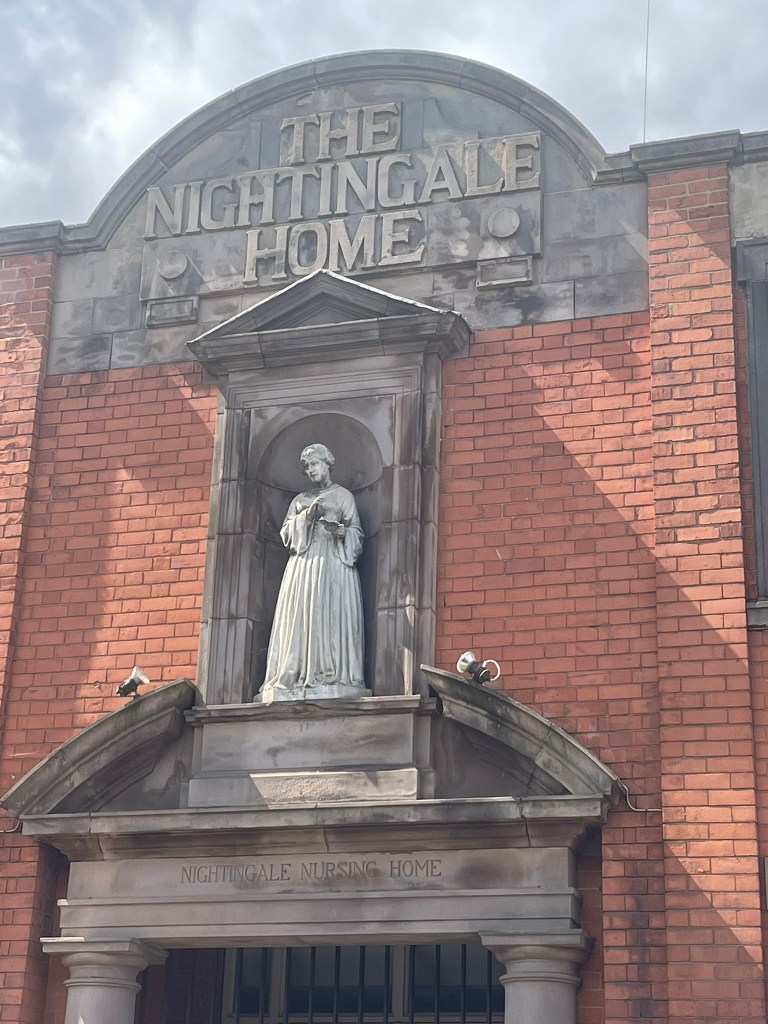
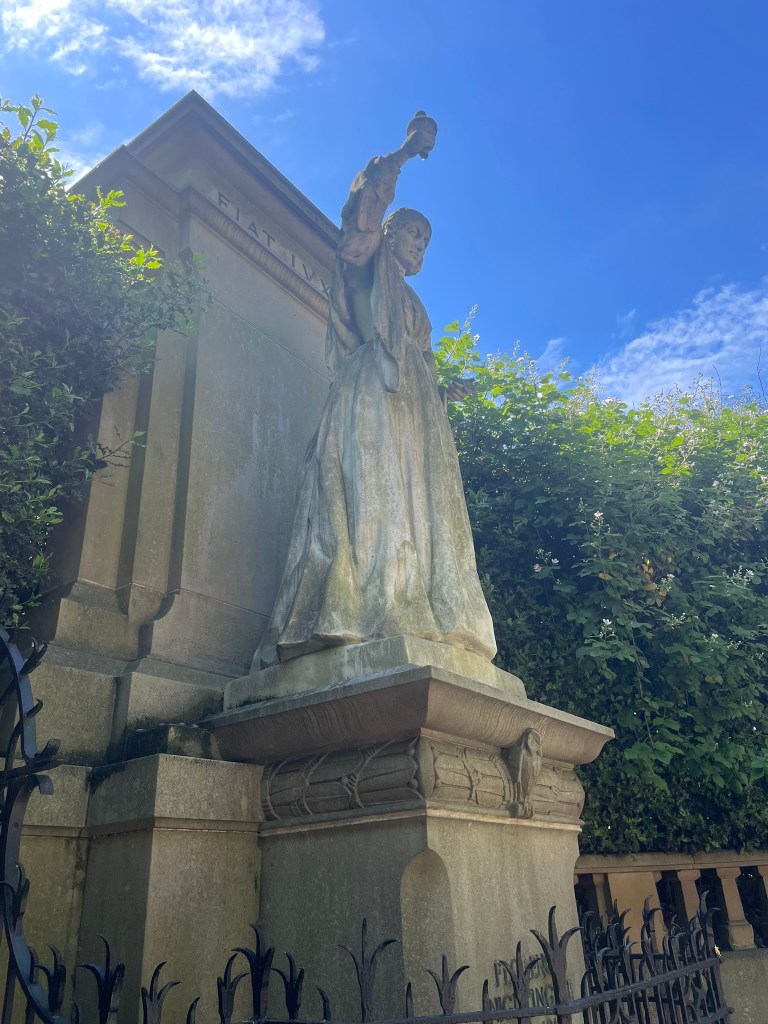
It’s a first to be able to tick off three women statues in 30 minutes but as Derby is the hometown of Florence Nightingale there are several in her honour, all within walking distance.  Enjoy!

Fun fact #1!  Although Florence lived in Derby, she was actually born in…Florence, Italy.

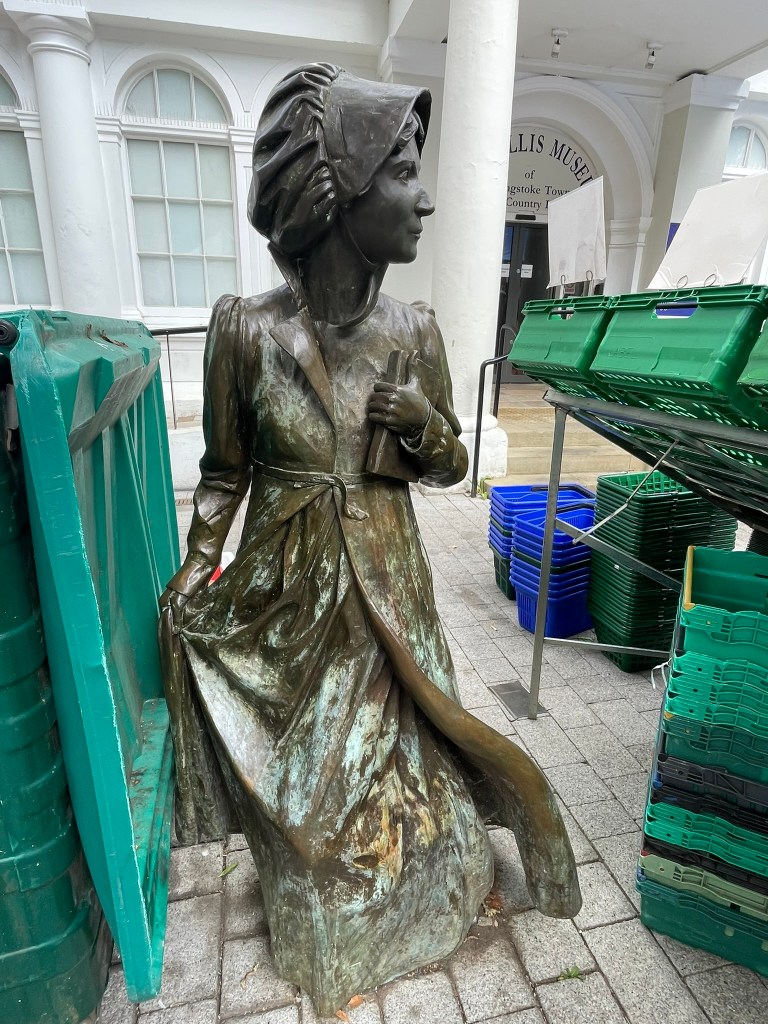
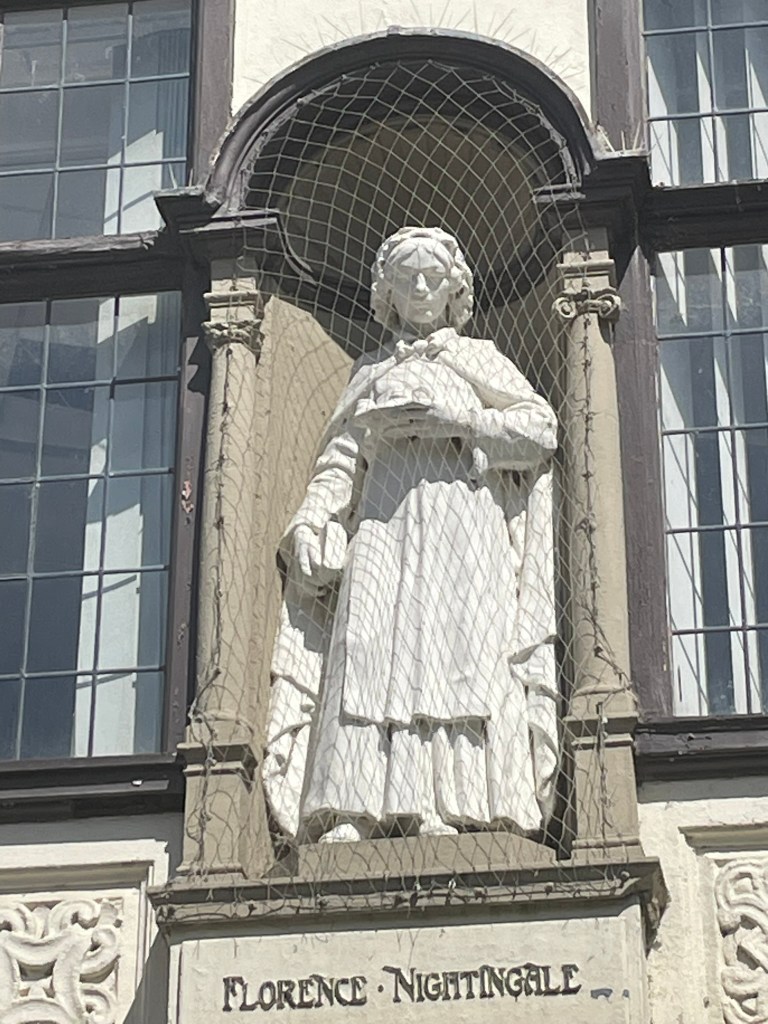
The Nightingale Home on Trinity Street was designed by architect William Smith in the 1820’s with some websites crediting sculptor Countess Feodora Gleichen as the artist of Florence here, but I’m not so sure.

Feodora is definitely the creator of London Road’s statue erected in 1914 which has her holding a lamp, Statue of Liberty ice cream style and featuring an image of Florence’s pet owl Athena, who she rescued while on a trip to Athens in 1849 (so many questions…) it stands outside the former site of the Derbyshire Royal Infirmary.

Fun facts #2! Feodora was related to Queen Victoria and was the first woman member of the Royal Society of British Sculptors (albeit posthumously in 1922).

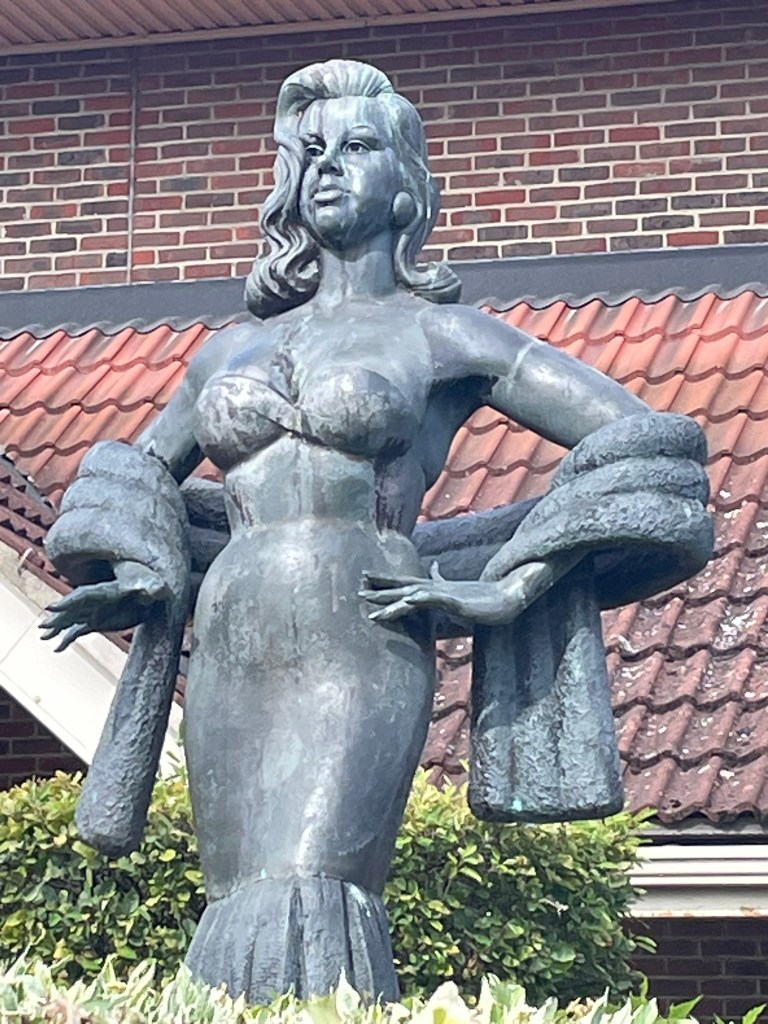
The third statue (draped in netting as a bird deterrent) stands on the rather ornate former Boots the Chemist building.  Built in 1912 in the 17th -century ‘arts and crafts’ style it was commissioned by Mr Boots himself (Lord Trent).  It remained a chemist until 1975 and is now a coffee shop – a new twist in drug of choice dispensaries.

And what of Florence herself?  Credited as the pioneer of modern health care, advocating cleanliness and hygiene in medical care (who knew?) after a stint overhauling the military hospital in the Crimean War, she founded the pioneering Nightingale School for Nurses at St Thomas’s Hospital in London in 1860.  She went on to assist in the plans for the Derbyshire General Infirmary opening in 1869.  In 1907, Florence became the first woman to receive the Order of Merit in recognition of her work.

Margaret Beckett

(1943 – )

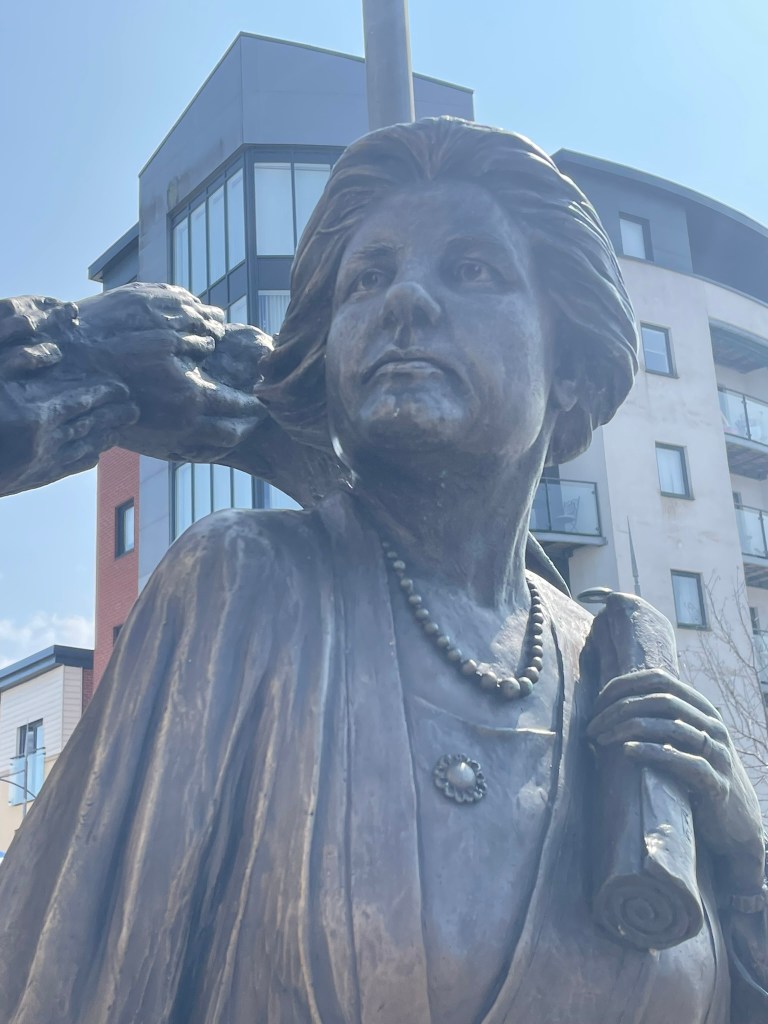
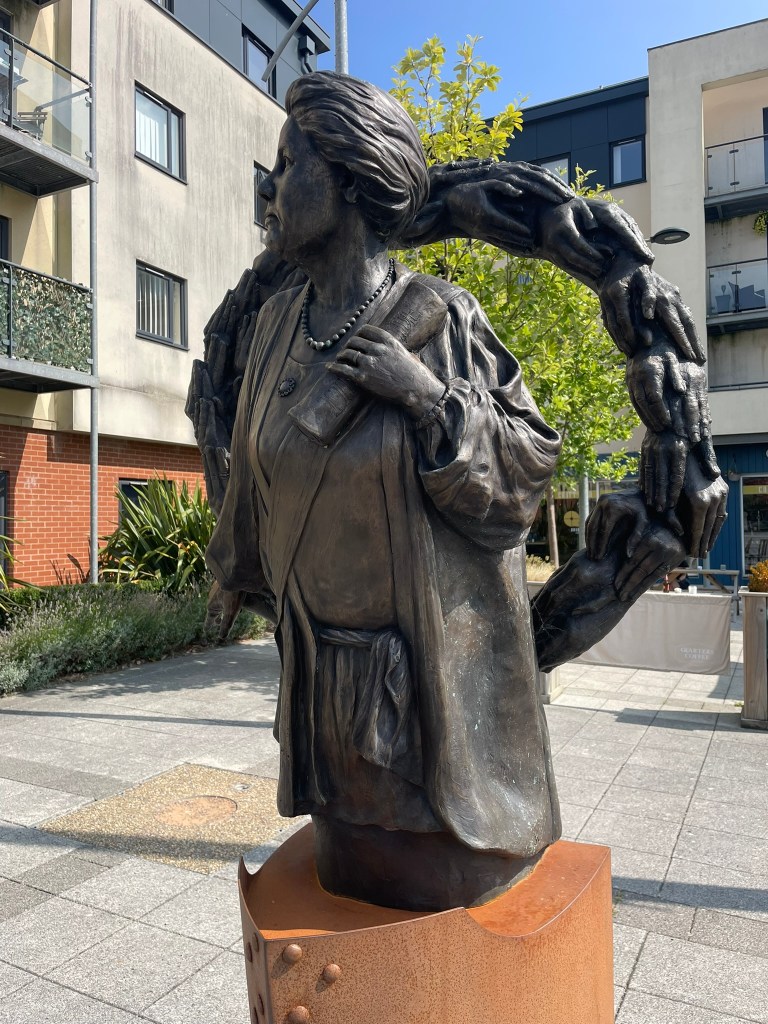
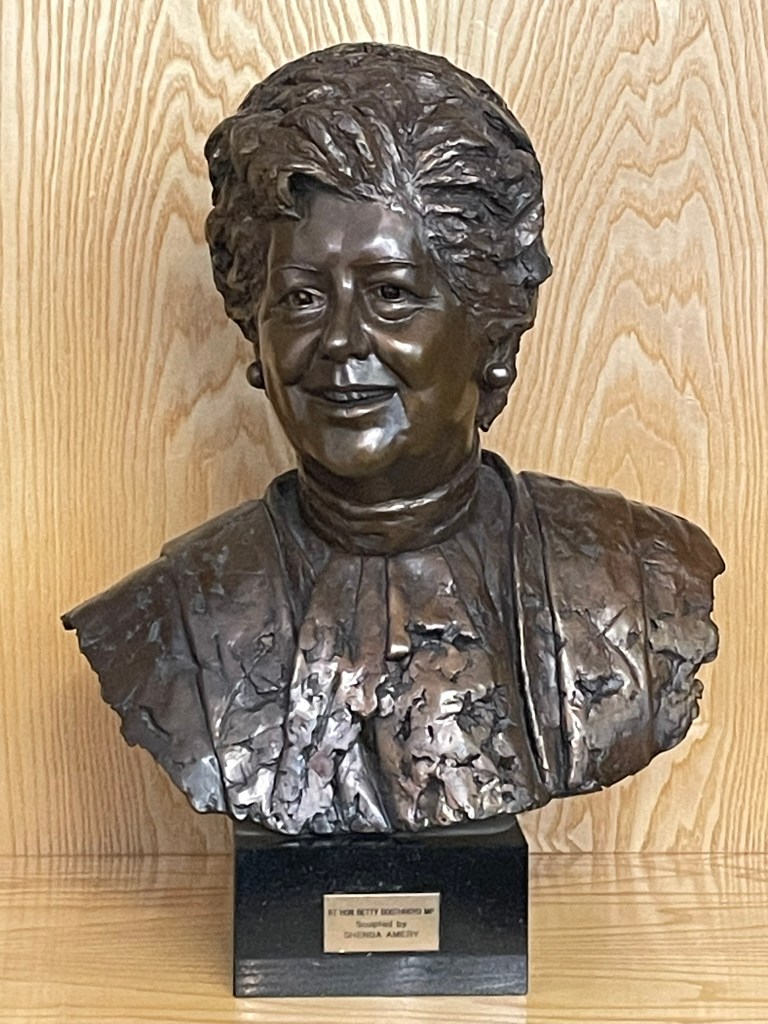
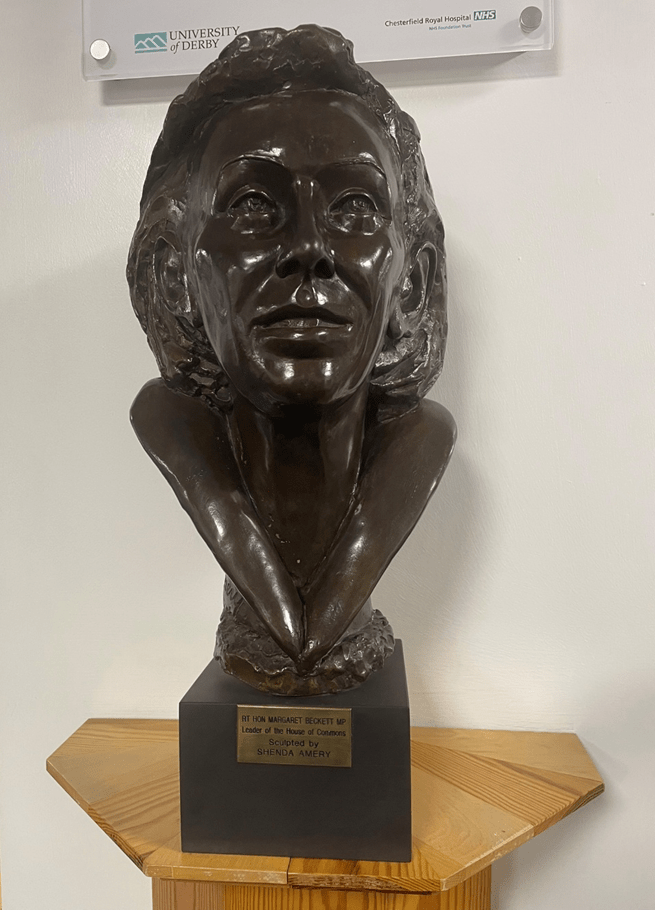
I’m sceptical of the existence of this exhibit.  It is a bust of Margaret Beckett, Labour MP, who was awarded an Honorary Degree by the University in 2017.  There is little detail of it online and very little pictorial evidence but, if it’s out there in the public realm, I’m duty bound to find it.

They say a day in politics is a long time.  Margaret served 45 years as a Member of Parliament before standing down in the 2024 election and is now doing time in the House of Lords – seemingly a sucker for a lifetime of punishment.  In 2006 she officially opened the new Clinical Skills Suite before returning in 2007 for the unveiling of the bust in the reception area.  I’m in Derby anyway – the birth town of Florence Nightingale (3 statues in one place!) so it is no hardship to drop by at the university and take a chance that the bust is still in position.  Staff are friendly as they direct me to the suite, hence I capture her thus.

Euphaim Veatch

17th Century

There’s scant detail on this latest statue, possibly given its age??  So, I gather the information that I can from the Public Statues and Sculptures Association website….

The memorial was carved by Euphaim’s husband James, a local stonemason around 1666.  I imagine the modern-day equivalent of taking selfies with your partner, but have they ever carved you in stone?

The original memorial formed part of a market cross and public well with the pedestal decorated with statues of Euphaim and her five children, all of which have sadly eroded.

The cross was replaced and made into a clock tower in 1894 and her original carved figure was removed in 1996 to prevent further weathering and is now in the local Graham Institute a short walk from the tower.  Euphaim’s figure was replaced in 2001 with a cast by Graciela Ainsworth Associates Edinburgh. 

After obligatory pics, it’s a short walk to the Institute to see the original, I guess not so public if it is in a community space, but I’m in Linton so……

I get there at 15.47.  Closing hours on Friday are 15.45.  I’ve literally missed seeing the original statue by 120 seconds.  I consider ringing the out of hours number and pleading the case but Britishness politeness and decorum take hold.  Or maybe it’s because I’m too tired.  Either way, the replica will have to suffice.  Later when I look at the pics of me grinning at the clock tower I see a man in the background Institute bound, presumably with a bunch of keys in his hand….

Mary Anning

(1799-1847)

Almost 3 years after I started my tour, I find myself essentially where I began.  An article about the unveiling of a Mary Anning statue in her hometown of Lyme Regis sparked the journey to visit every woman statue in the UK.  At the time, Mary was only one of 128 female (non royal) historical women.  Now there are around 150 and advancing.  When I finally get down to meet her I have only 27 statues left to visit.  Then what?

The campaign to raise awareness and funds for the statue was spearheaded by Anya Pearson, stating, “Mary Anning was three things you didn’t want to be in 19th-century Britain – she was female, working class and poor.” (https://www.maryanningrocks.co.uk)

Mary Anning was a pioneering palaeontologist and fossil collector.  Born into a family of nine or ten children, only Mary and her older brother, Joseph, survived to adulthood.  Born and raised in poverty, she struggled all her life financially despite selling her finds to earn a living.  She is now credited with spectacular finds, including her ichthyosaur, plesiosaur and pterosaur digs which were a first. 

Despite this she had little recognition for her pioneering work and is only now getting the credit she deserves.

Flora Macdonald

(1722-1790)

Flora’s legacy stands as the woman who helped ‘Bonnie Prince Charlie’ escape Scotland.  Prince Charles Edward Stuart, grandson of King James II of England had led the second Jacobite Uprising of 1745 to overthrow King George II.  However, after the Jacobites were defeated at the Battle of Culloden in 1746, Charles spent two months in exile before arriving at the island of South Uist where he met Flora.  Flora was an unlikely accomplice – both her step-father and her fiancée Allan MacDonald were in the Hanovarian army of King George II, but, after initial reluctance, she agreed to help Charles escape.  Due to her connections, she was able to arrange travel, taking Charles disguised as an Irish spinning maid called Betty Burke as well as two servants and a small crew.  They sailed to Skye, where Charles continued his escape securing a passage to France.

I’m aware from my scant research before arriving at Flora that there is renovation work and access is, naturally, denied.  But I’m in Scotland when I’m in Scotland (April 2025).  Things could be worse.  Along with the castle renovation, Flora herself is getting a clean-up (well, she is 126 years old) which, in weeks of the visit, means she will be scaffolded and covered.

I ponder donning a high vis and hard hat but seeing as I own neither I opt for a poorly executed photo from the entrance.  I like the way her pose looks like she is surveying the workers.  Maybe they feel her gaze as they crack on with the clean up. 

Elizabeth Grant

(1842-1925)

As visiting places go there are certainly worse places than a Scottish Distillery.

Founded in 1887, with the first drop of drink produced on Christmas Day, William Grant, along with his wife Elizabeth set out to make the best dram in the valley.  Nearly 140 years later the company is still run by the founding family, now in its fifth generation of distillers.

A search online reveals little about Elizabeth herself – we know that she gave birth to around 9 children and was involved in the founding of the distillery, but little else is captured.  Still, her recognition in the life size sculpture which welcomes visitors to the site is to be applauded when so little women at the time had any recognition for their part in history.

Mary Slessor

(1848-1915)

As statues, or even sculptures go, Dundee’s memorial is bending the remit.  Still, it’s on the PSSAUK.org website so I am duty bound etc…It also gives me the chance to visit the statue of Minnie the Minx in the city square, she’s a fictional character but has her own spirit!

Born in Aberdeen and raised in Dundee, Mary’s start in life was a difficult one.  Her father was an alcoholic and as soon as she could work (at a very young age then) she did 12 hour days at a jute mill to support the family.  Her faith was led by her mother and Mary dreamed of following in explorer David Livingstone’s footsteps, travelling the world while spreading the word of God.

Being a Missionary can be tainted with negative connotations – the stereotype of a white do-gooder ‘rescuing’ Africans.  Mary would indeed have taken up her post with every bit of the Victorian values of the time.  Nonetheless, on commencing her work it became clear that Mary’s intentions came from love and duty for humankind and she worked tirelessly to change and indeed save lives, learning the language, traditions and eating and living locally (spurning the missionary residence itself) all the while sending her wages home to support her family. 

Did she convert many to Christianity?  Probably not.  Her premise was on improving people’s lives. There was much work for her around breaking old superstitions.  It was believed at the time in the local area that twins were bad luck, with one of them being evil.  Without knowing which twin would be ‘evil’ they were often abandoned or killed and their mother banished.  Mary saved hundred of twins who had been left to die adopting 9 children throughout her 40 years there.

The memorial was unveiled in 2015 to mark 100th anniversary of her death. Outside Dundee a bust of Mary is displayed at the fabulous Wallace Monument in Stirling.

Jackie Crookston

(1768-1797)

As with so many accounts of history, the truth, particularly that of women, and most definitely of poor women is unclear and largely undocumented.  The fact that Jackie’s story (partly or wholly true) is discovered at all gives weight to her involvement in the events at the Tranent Massacre.

Weakened by conflict in Europe, the British Army, under the Militia Act, sought to forcefully conscript 6000 Scottish men to serve.  Men were to be chosen by ballot and troops were deployed to enforce consignment in Scotland.  This was met with resistance from many places across the land, not least because most places relied heavily on workers to farm land for food and work mines for coal without them families and the community faced a crippling prospect of not enough food or coal to cook or stay warm.  Tranent was one such place and the residents drew up a statement in opposition to the draft but to no avail.  When soldiers reached the town, residents had organised peaceful protests, marching through the streets.  Jackie was said to be part of the opposition, banging a drum and chanting, ‘nae militia’.  Despite accounts of peaceful protest, scenes turned with soldiers slaying what was reported as at least 12 people, but likely to be more, with many people injured.  As for Jackie, it was said her body was found in a corn field weeks after the massacre.  No one was prosecuted or held accountable for the deaths.

The statue serves as a memorial to the people killed in the Tranent Massacre of 1797, depicting Jackie with a look of determination, drum at the ready.  In stone the words, ‘nae militia’ are inscribed.

Lady Annie Jerningham

(1850-1902)

Philanthropist Annie’s first husband bequeathed her a modest fortune and Longridge Towers in Berwick (now a private school). Annie’s health suffered while living in Trinidad and Tobago as second husband Sir Hubert Jerningham (Liberal Democrat MP for Berwick 1881-1885) was colonial governor there between 1897 and 1900.  Upon returning to the UK she never fully recovered and died in 1902 aged 52.

Hubert designed this memorial to her with the help of sculptor Walter Rowlands Ingram who died soon after in 1903.  The statue was unveiled in 1908.  The Berwick site was chosen where, at certain times of year, it could just about be seen from the Longridge Towers, four kilometres to the south west.

I find little other information on Annie, but a quick online search reveals a Rowlands Ingram bust of Annie for sale around the £5k mark on a certain auction site.  100% positive reviews apparently.

Anne Lister

(1791-1840)

Often dubbed the first ‘modern lesbian’, Anne was born into a wealthy landowning family and grew up in East Yorkshire, moving to Shibden Hall in Halifax in 1815 with her Aunt and Uncle.

Also known under the pseudonym, ‘Gentleman Jack’, she was often dressed in ‘male’ attire, defying gender norms throughout her life.  Anne and her partner Ann Walker considered themselves married with their bond recognised by many as the first same sex marriage.

A prolific diarist and travel writer, upon her death in 1840 she left 26 volumes of diaries and 14 volumes of travel notes, some of which written in code.  The coded sections (what Anne called her crypt-hand) used a letter replacement code in which individual letters were replaced by symbols.  In this way Anne could keep some of her writing secret, including her relationships with other women.

Upon her Uncle’s death in 1836 she inherited the Shibden Hall estate.  She supervised building work, dealt with the business of farming and developed coal mining on her land, during the development of the Thames Tunnel she wrote about her ideas on using similar methods of excavation for her own mining business.

As her travel notes show, Anne travelled extensively, until in 1839 she caught a fatal fever, believed to be from an insect bite, and died in Georgia.

If 26 volumes of coded diaries aren’t for you, her story is depicted in the TV BBC drama, Gentlemen Jack which ran for 3 years from 2019.

She was laid to rest at the Halifax Minster and an Anne Lister Festival is held each year in the town around her birthday in early April.