Florence Nightingale

(1820-1910)

It’s a first to be able to tick off three women statues in 30 minutes but as Derby is the hometown of Florence Nightingale there are several in her honour, all within walking distance.  Enjoy!

Fun fact #1!  Although Florence lived in Derby, she was actually born in…Florence, Italy.

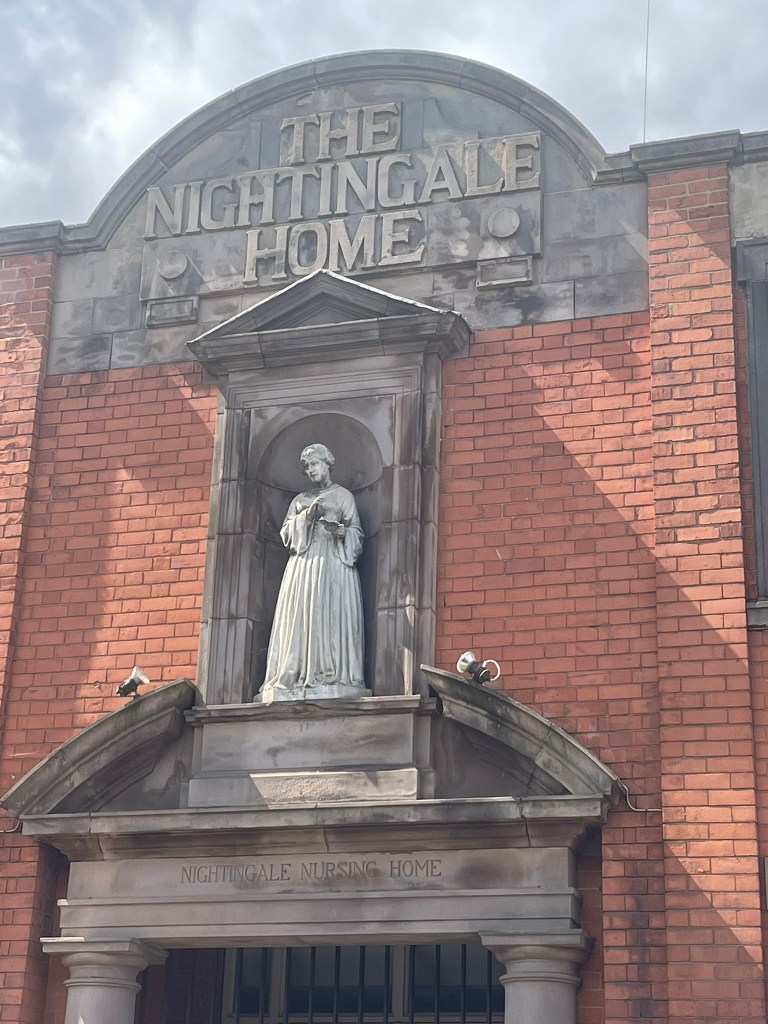
The Nightingale Home on Trinity Street was designed by architect William Smith in the 1820’s with some websites crediting sculptor Countess Feodora Gleichen as the artist of Florence here, but I’m not so sure.
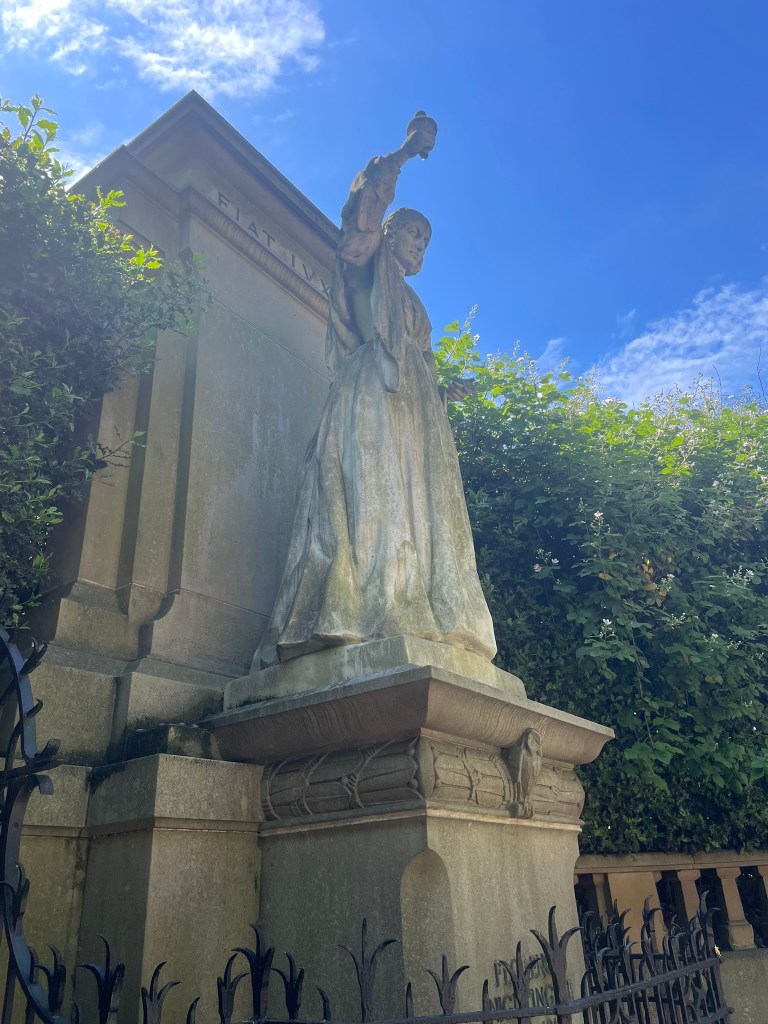
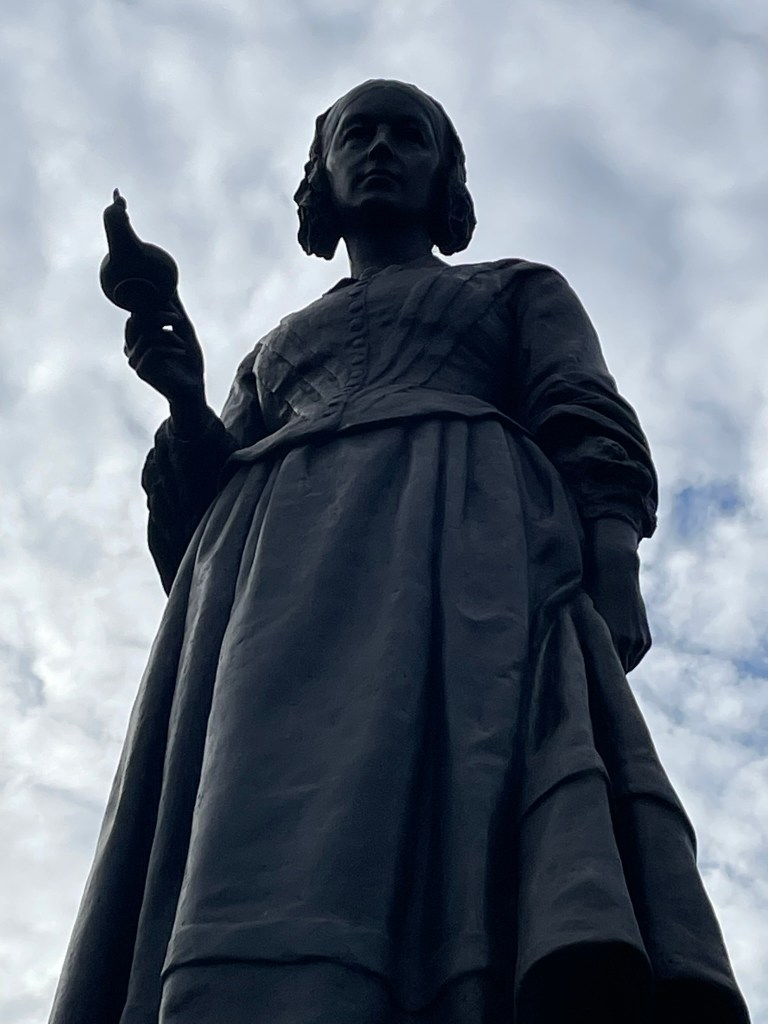
Feodora is definitely the creator of London Road’s statue erected in 1914 which has her holding a lamp, Statue of Liberty ice cream style and featuring an image of Florence’s pet owl Athena, who she rescued while on a trip to Athens in 1849 (so many questions…) it stands outside the former site of the Derbyshire Royal Infirmary.

Fun facts #2! Feodora was related to Queen Victoria and was the first woman member of the Royal Society of British Sculptors (albeit posthumously in 1922).
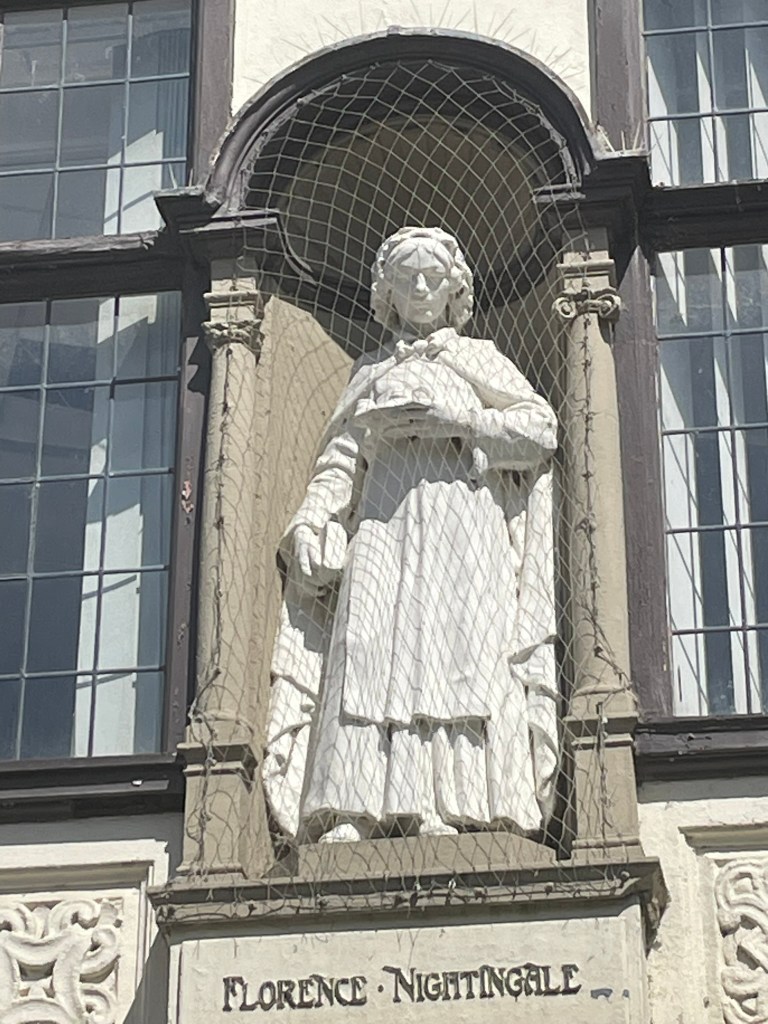
The third statue (draped in netting as a bird deterrent) stands on the rather ornate former Boots the Chemist building.  Built in 1912 in the 17th -century ‘arts and crafts’ style it was commissioned by Mr Boots himself (Lord Trent).  It remained a chemist until 1975 and is now a coffee shop – a new twist in drug of choice dispensaries.

And what of Florence herself?  Credited as the pioneer of modern health care, advocating cleanliness and hygiene in medical care (who knew?) after a stint overhauling the military hospital in the Crimean War, she founded the pioneering Nightingale School for Nurses at St Thomas’s Hospital in London in 1860.  She went on to assist in the plans for the Derbyshire General Infirmary opening in 1869.  In 1907, Florence became the first woman to receive the Order of Merit in recognition of her work.
Ella Pirrie

(1857–1929)

Belfast City Hospital

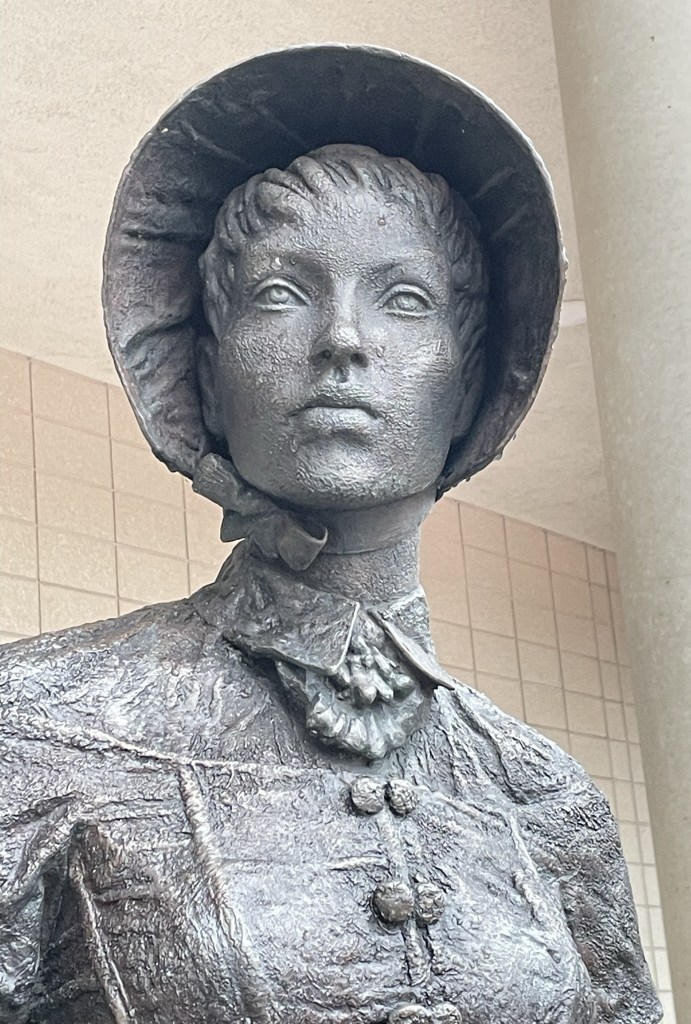
Viewed as one of Northern Ireland’s leading artist, sculptor Ross Wilson (see Amy Carmichael) is also the creator of this statue of Ella Pirrie.

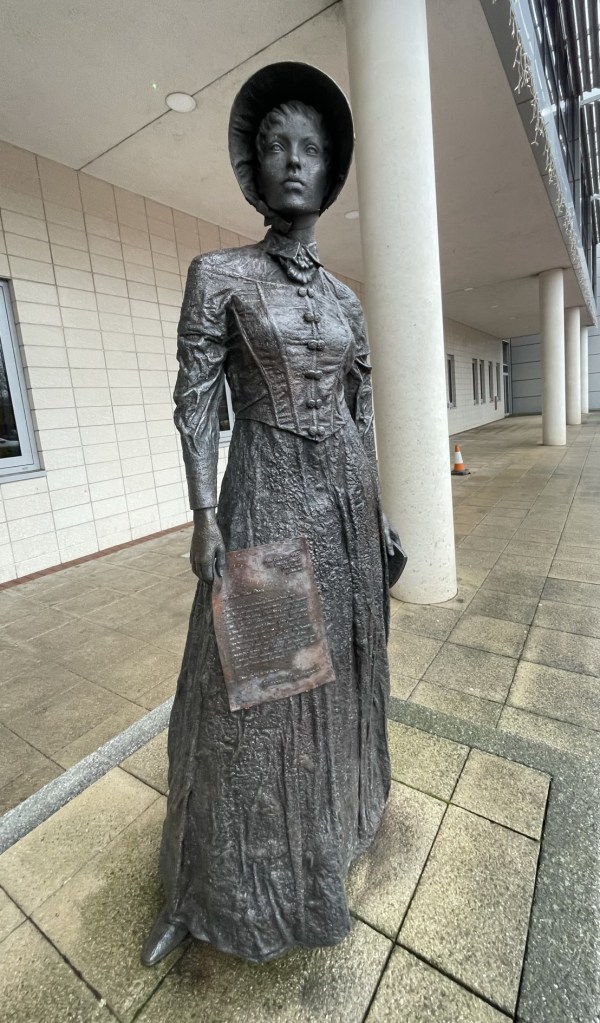
Born Isabella Barbour Pirrie, Ella was the first nurse in the Belfast Union Workhouse Infirmary (now the Belfast City Hospital). Pirrie’s role was transformative and her efforts led to the establishment of a formal nursing training program in Belfast, despite facing significant resistance and challenges.  In 1894, Pirrie moved to Edinburgh to become the first matron at the Deaconess Hospital, Edinburgh (1894-1914), a training school for nurses.  Her tenure there was marked by significant advancements in nursing education, including the establishment of a community and district nursing department. By the end of her service, over 140 nurses had been trained, with many pursuing international missions.

Nightingale was a mentor for many years, writing several letters to her in Belfast. The statue shows her holding a letter from Florence Nightingale dated 1 October 1885, which reads ‘…You have already done great things. You must be the nucleus of hope for a goodly future of trained nursing staff at Belfast Infirmary …’.

Despite her resignation in 1914 due to health issues, Pirrie continued her work as the superintendent of the Deaconess Rest Home in Edinburgh until her death in 1929. 

Ella is the last of three named statues in Northern Ireland and I’m glad I’ve made an early trip to tick the nation off my list as at this point I’ve still got about 100 more to go in my journey.

A year later, Belfast erects two new women statues and I’m duty bound to do the trip all over again.  Damn you feminism.

Florence Nightingale

(1820 – 1910)

Waterloo Place, St James’s, London SW1Y
and Glasgow Royal Infirmary

Waterloo Place, St James’s London

Social Reformer, Statistician and Founder of Modern Medicine

This is the first but certainly not the last tribute to Florence Nightingale.  According to my records (so in no way accountable) Florence is the most prolific non – royal woman immortalised in a statue with 5 to her name – way to go Flo!  In London she stands at Waterloo Place – a short walk from the Stafford Hotel (see Nancy Wake) but up so high I’m struggling to take a decent shot.  Created by Arthur George Walker, it shows her as ‘the Lady with the Lamp’, a nickname she earned on her nightly inspection rounds in the hospitals of the Crimean War. It was unveiled in the midst of the First World War in 1915, with little fanfare, as was appropriate given for the time.

Glasgow Royal Infirmary

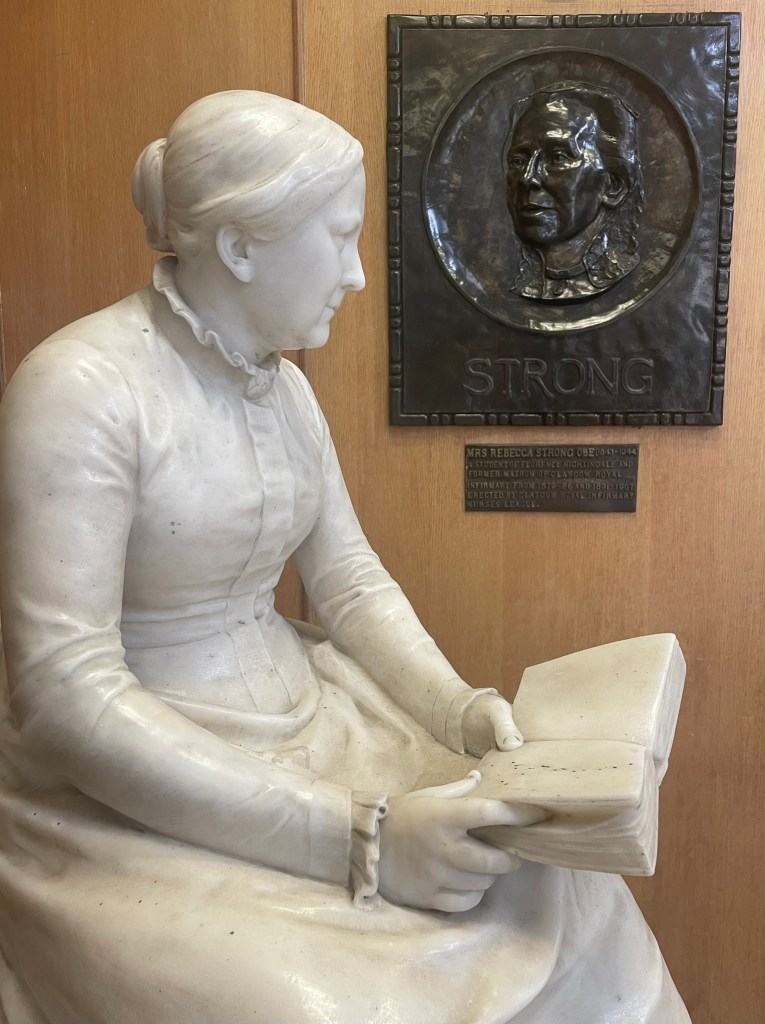
Much more up close and personal, although somewhat hidden in the labyrinth of the hospital, is a marble statue of the lady herself, taking some downtime in reading a book.  I captured her with the bronze relic as this is dedicated to Rebecca Strong (1843-1944), a student of Florence and former Matron of the Infirmary.  According to AI (and who could argue otherwise) Florence’s statue was donated by Rebecca herself.