Grand Hall, Old Bailey, London EC4M 7EH, England
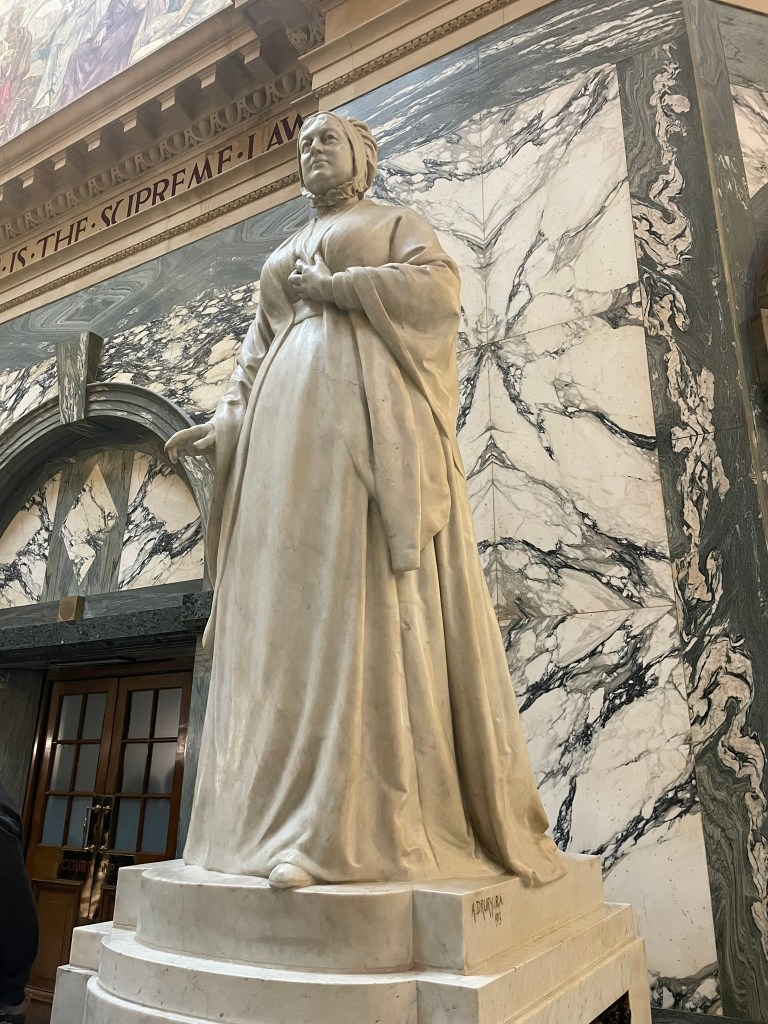
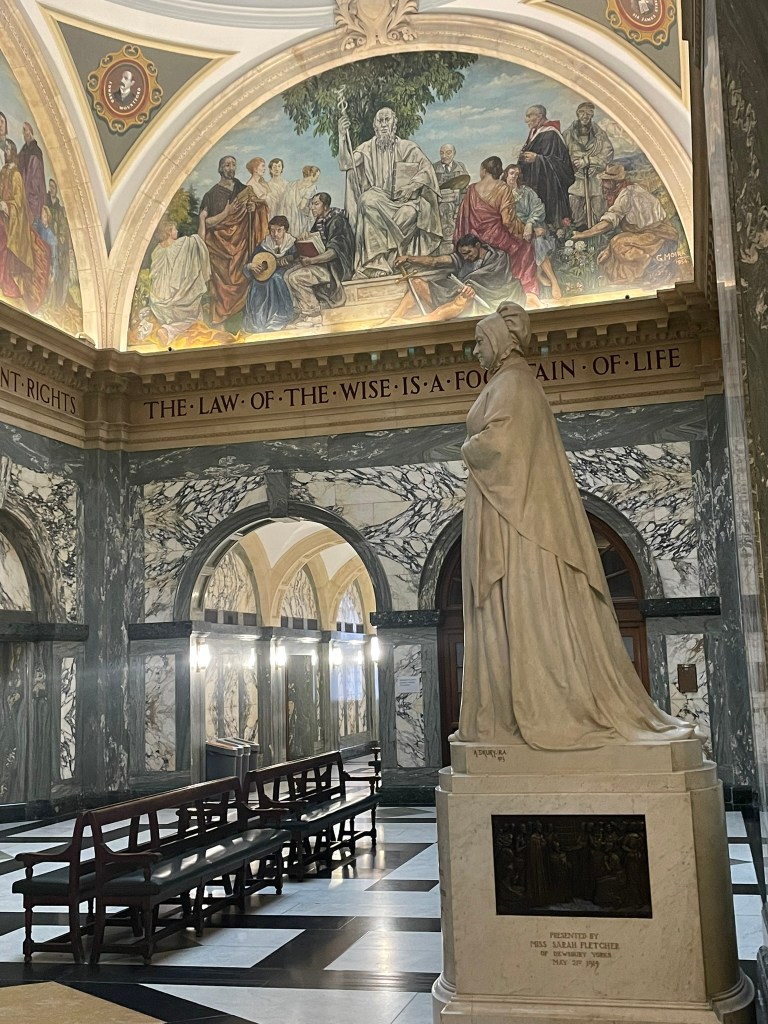
For ages I thought access to Elizabeth inside the infamous law courts was near on impossible, given I am neither a criminal nor a barrister. However, it took a friend a quick google search to find out that the Old Bailey does regular tours for the public. I’m in.
The building is impressive and I wonder what Elizabeth would have made of it all. Prison and social reformer, as well as a philanthropist, if you think she looks vaguely familiar it could be because you spotted her as the woman on the old £5 note (the ‘other’ woman). First issued in 2002, the notes ceased to be legal tender 15 years later.
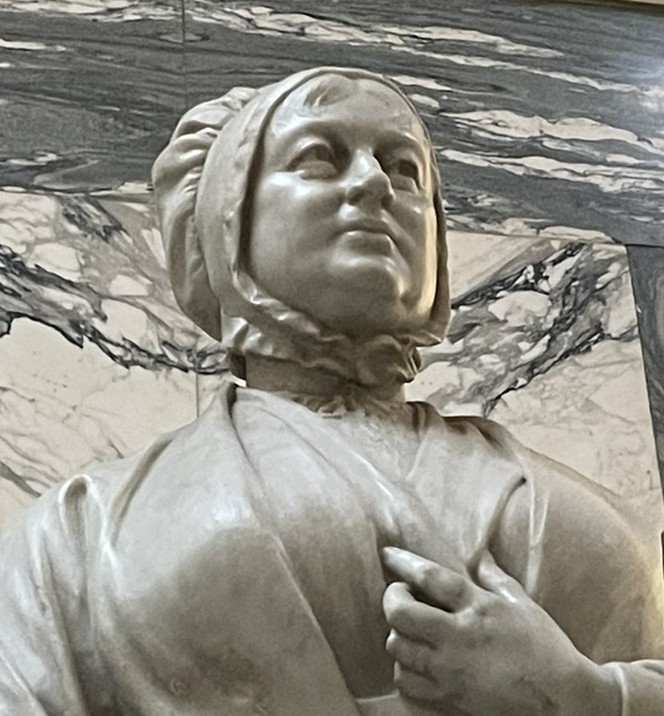
But back to the slums. On visiting Newgate Prison in 1814, Elizabeth was devasted by the conditions she found. Diseased, cold and dirty, even children were sent there if their mother was deemed a criminal. Often the prisoners were there for the least of crimes – stealing food to eat (see Sophie Constable) and areas were mixed, leaving women and children particularly vulnerable. Elizabeth set about changing this, launching education and skills into prisons, healthier warmer conditions and separate areas for male and female inmates including female guards for the women and children areas. In 1818 she became one of the first women to speak to a parliamentary committee with her proposals forming the 1823 Gaols Act.
Fun fact! Elizabeth’s mother, Catherine, was a member of the Barclay family, who were among the founders of Barclays Bank. Oh and she had 11 children- maybe a fact but maybe not so fun.

