(c935-c1005)
St Peter’s Church, Wolverhampton
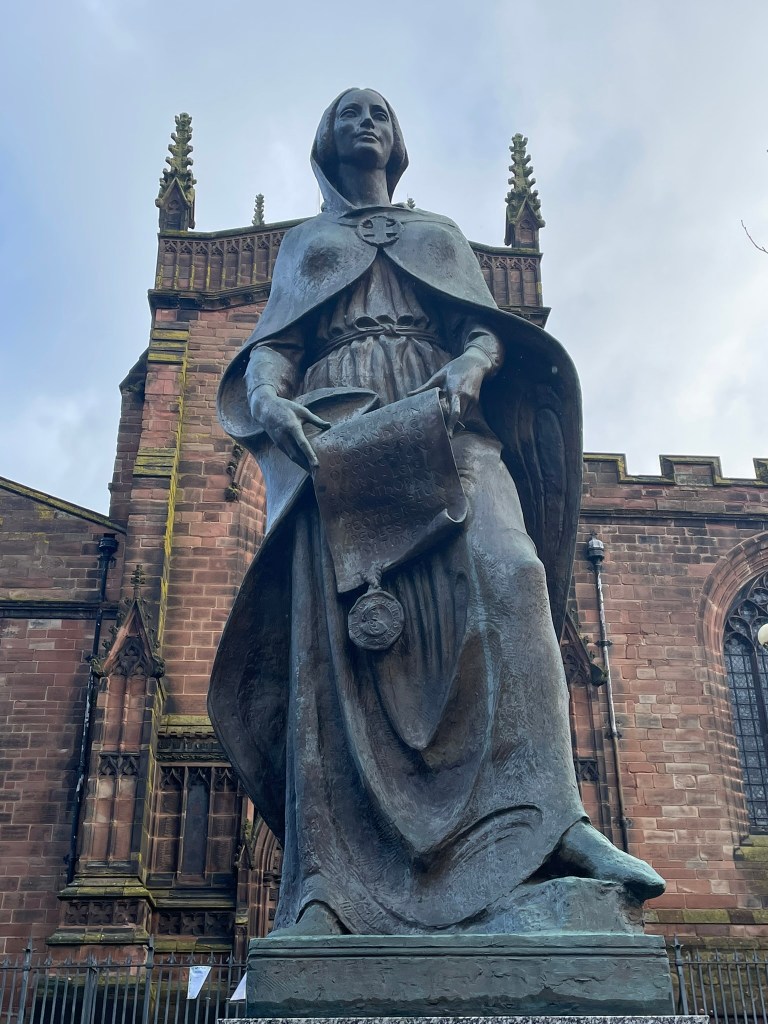
My 101st statue visit and I’m on the home stretch, with around two thirds of women done. I wonder round the statue taking shots at various angles, including mandatory selfie, when a man offers to take my picture. I readily hand over my phone and then panic while he walks away with it. As it happens, he is only stepping back to get the full picture, but he captures me part smile/part look of terror whilst I reason with myself that he’s just a citizen doing a good turn. Speaking of which…
In 985 King Ethelred II (Ethelred the Unready) gave a considerable amount of land to Wulfruna by royal charter. The land contained livestock, farms, mills, other buildings and, of course, residents.
This isn’t to say it was all plain sailing for her up to that point. In her lifetime the nation was divided into seven kingdoms, with Mercia in constant battle with other kingdoms and the odd invasion by the Vikings. Wulfruna was a member of the ruling Mercian family and already had land, property and wealth in her own right. So far so cosy. Enter the Danes hellbent on capturing land and money who saw an opportunity to kidnap someone of high importance to be held to ransom. Wulfruna’s story in all this is not clear, but thanks to the 985 royal charter we find her in good enough health to set up the place we now call Wolverhampton (a mix of her name and the Anglo-Saxon word ‘heatun’ meaning ‘high land’).
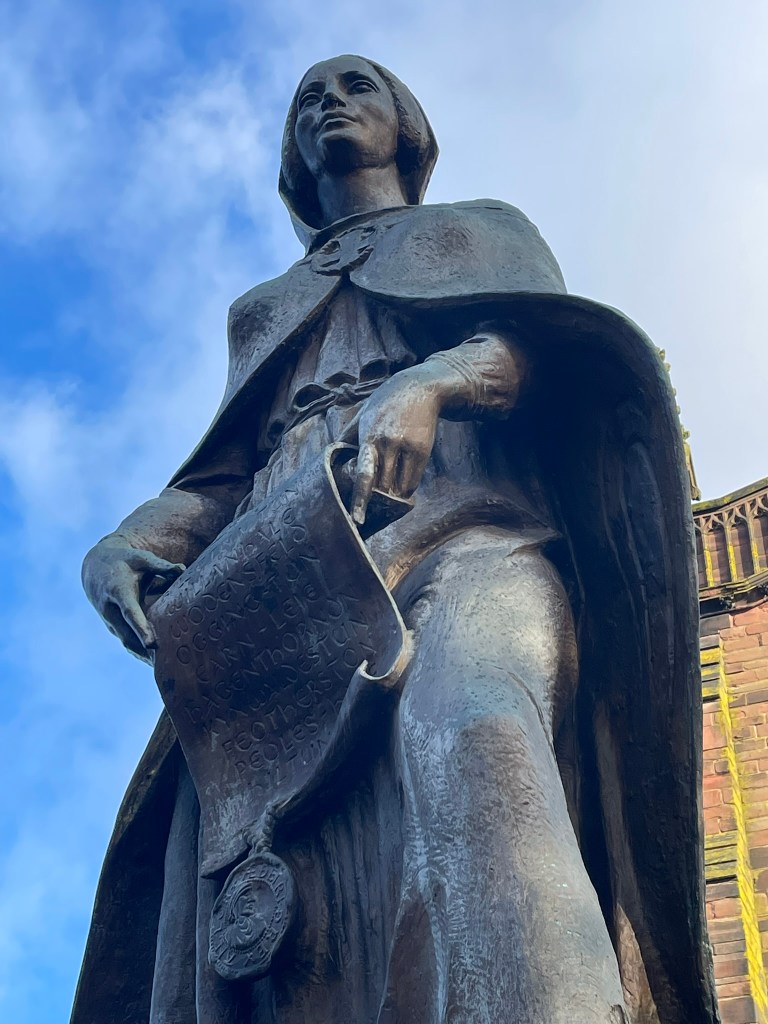
Here, in 994, she founded a monastery and was known as a generous benefactor to the area. The site is now occupied by St Peter’s Church, which dates from 1425 and where her statue now stands, depicting a young Lady Wulfrana holding the Royal Charter (although this wasn’t bequeathed to her until much later). This sculptor was to be Charles Wheeler’s last commission and was unveiled after his death.
 WomenstatuesUK