(1920-1951)
Royal Fort House Gardens, Tyndall Avenue, University of Bristol

It’s not usual to start with death, but this is where Henrietta’s legacy begins. Her cause of passing was a particularly aggressive form of cancer and during her treatment a section of her tumour was taken and sent to a laboratory. Her family and indeed Henrietta at the time were unaware of this. But there was something unique in Henrietta’s samples. Unlike previous human cells, Henrietta’s continued to grow and divide outside the human body, making them the first human immortal cell line. This meant that they could be kept indefinitely and thus play a vital role in science.
Henrietta remains, to many, an unknown contributor to worldwide research. So unique were the cells and so crucial to Biomedical science, they were attributed their own name – HeLa cells (after the first letters of her name) and have been pioneering in medical advances including the polio vaccine, chemotherapy, Sars and COVID-19.
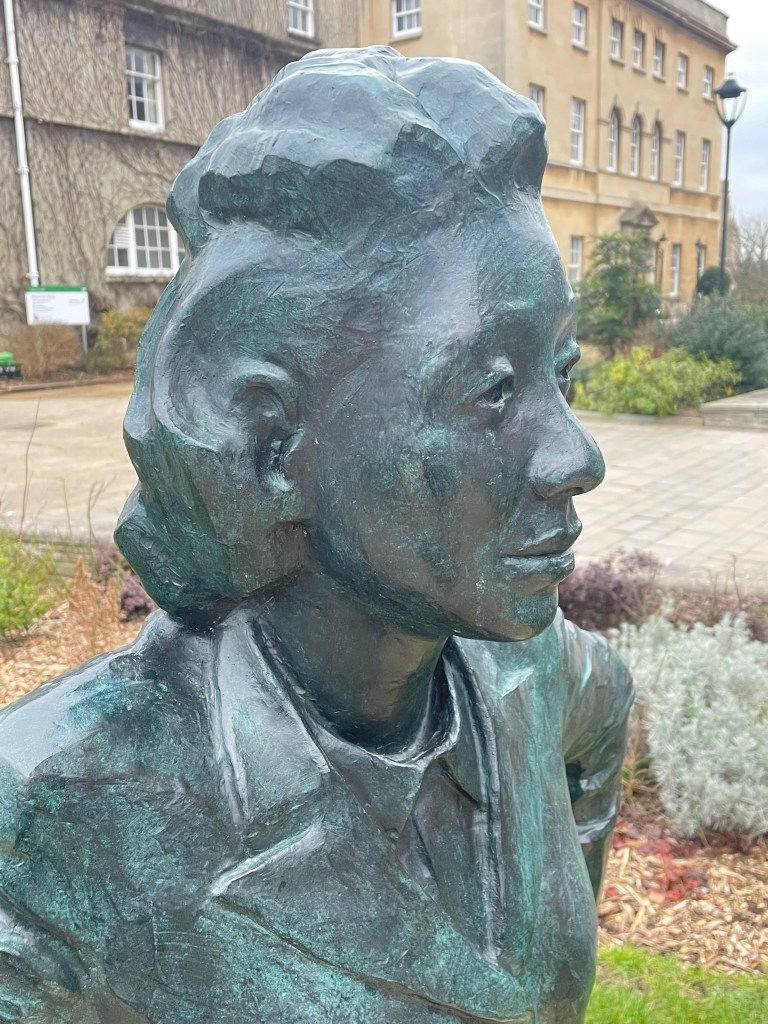
Behind all this, let’s not forget there was a family orientated woman, described as hard-working and loving. One of ten children, she went on to have five of her own, leaving a young family when she passed at just 31 years old.
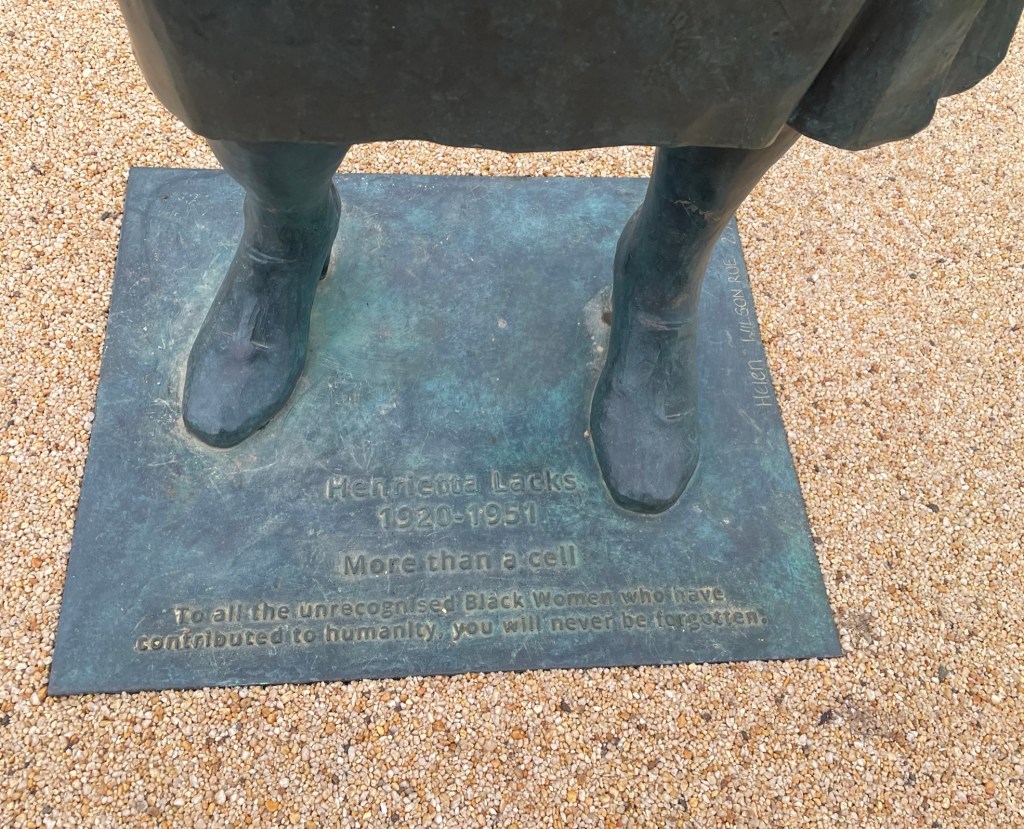
In this creation, Bristol artist Helen Wilson-Roe heralds the first public statue of a Black woman made by a Black woman in the UK. Members of Henrietta’s family were present at the unveiling and now involved in keeping Henrietta’s legacy alive.
Henrietta’s cells survive today in countless laboratories, helping to continue to make groundbreaking discoveries in medicine.
 WomenstatuesUK