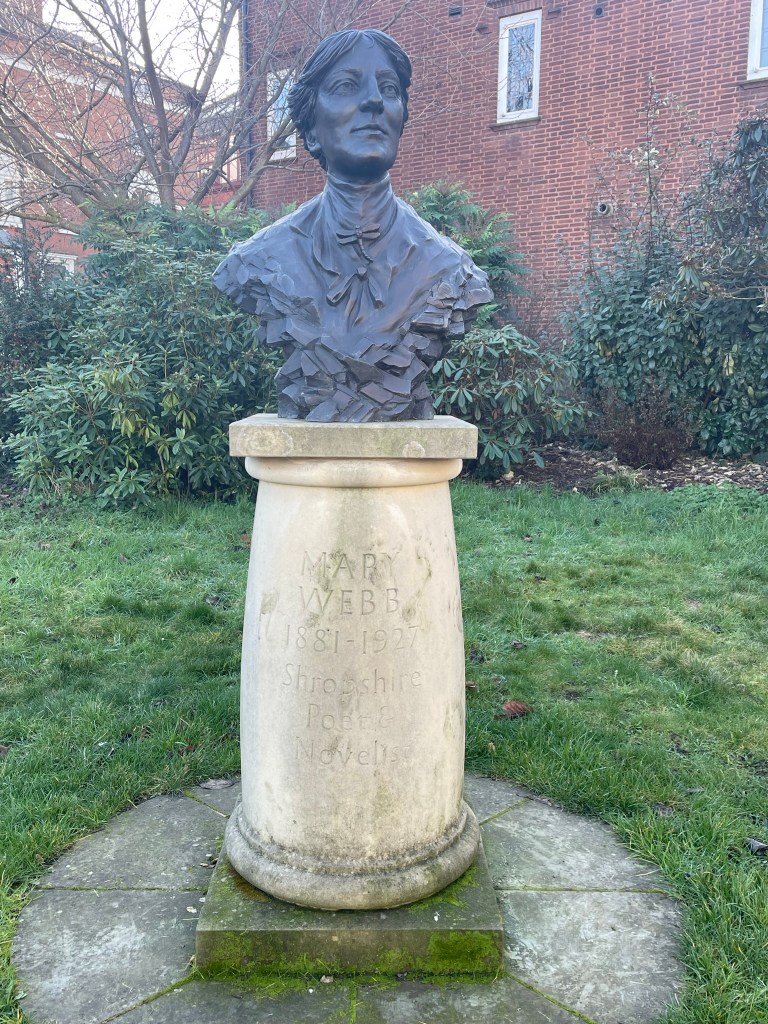
Mary Webb

(1881-1927)
Shrewsbury Library

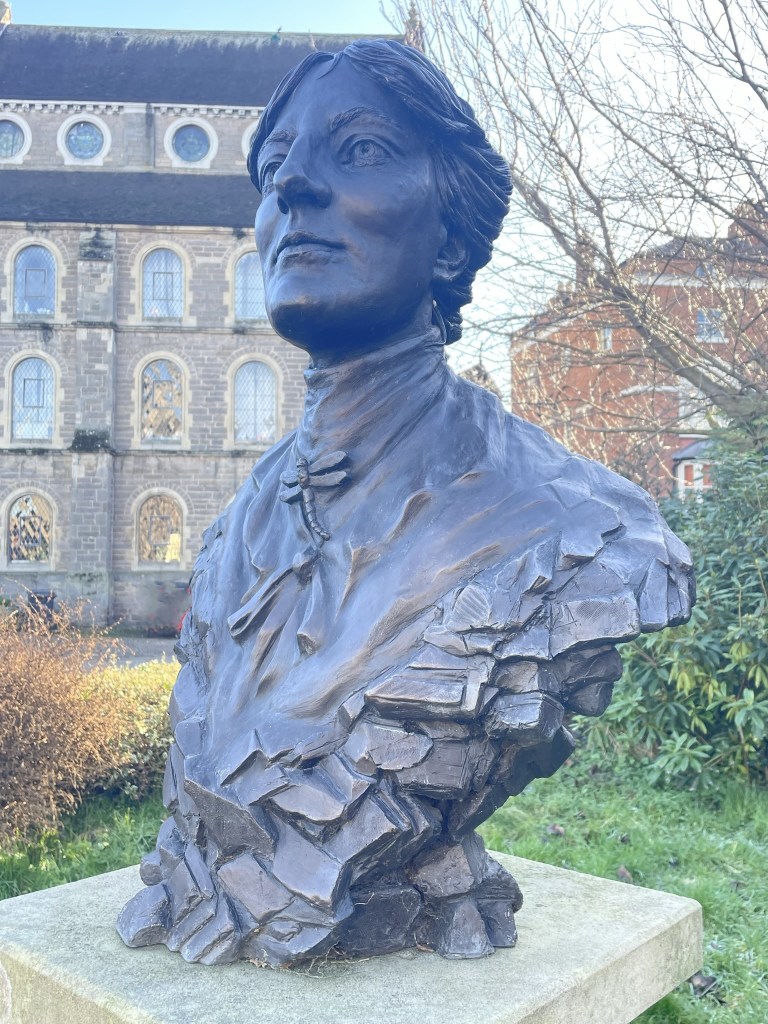
Author and poet, Mary wrote 6 novels as well as poems, short stories and nature essays.  Growing up and spending most of her time around Shropshire she gained inspiration from her countryside surroundings with her work centring around her home county.  The Mary Webb Society states, ‘She developed an extraordinary perception for minute detail in nature and this is reflected in the richness of her poetry and prose.’

As most things happen around late 19th/early 20th century; things weren’t always easy.  She developed Graves’ Disease (a thyroid disorder) at the age of 20, which was to cause her ill health for much of her life and lead to her premature death. She became very self-conscious due to the disfiguring features of the disease and began to retreat into her own solitary world, taking solace in writing.

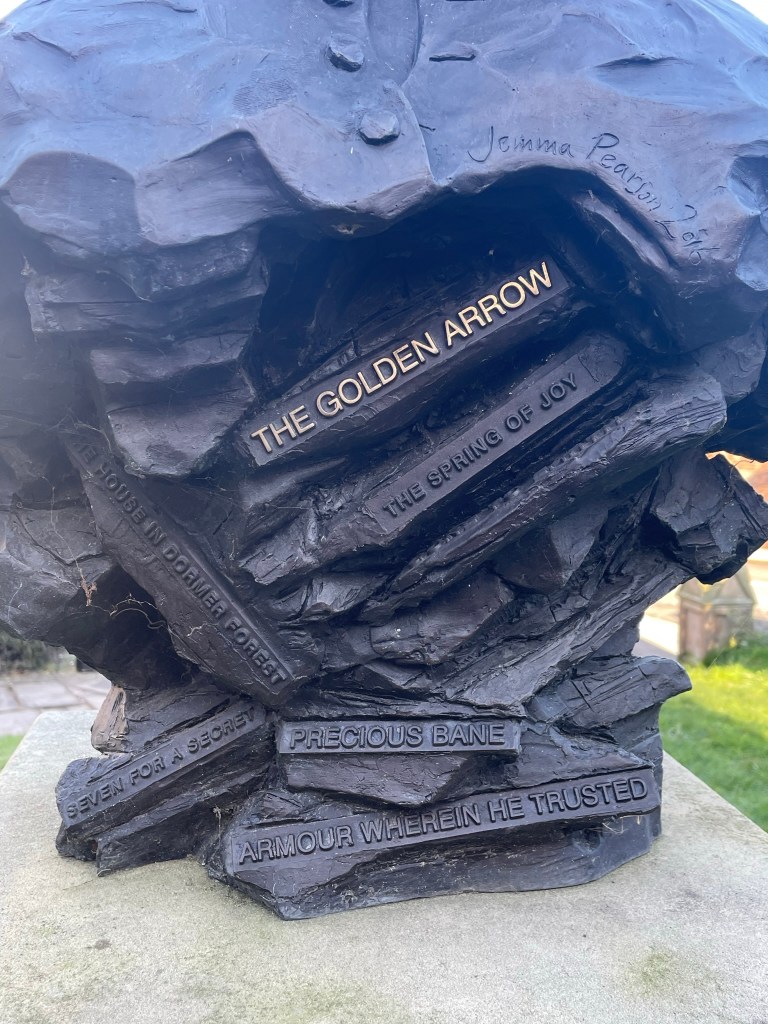
Her first book was published in 1916, The Golden Arrow, but her most famous work is Precious Bane (1924).  Her health deteriorated soon after this, leaving a novel unfinished when she died aged 46.

The back of Mary’s bust reveals a pile of her books and is situated outside Shrewsbury Library.  Nice touch.

Charlotte Mary Yonge

(1823-1901)

Eastleigh Train Station

Another weekend, another visit.  This time to Hampshire where I can visit friends as well as family.  I’m packing a lot in this summer.  While work occupies me during the week, my boys are away so filling my weekends up with my statue pursuits is a much needed distraction.

On the road back to Leeds I can take in three women.  There’s an ongoing rail dispute which isn’t to be resolved until much later.  Ironically, the first visit is to Charlotte Mary Yonge who was an important benefactor to the immigrant workers and their families that arrived in Eastleigh to toil in the railway industry.   It doesn’t seem much to ask that people are paid fairly and kept safe while doing their jobs.  To think the struggle has continued through generations is disheartening to say the least. 

On this occasion, having a car and being able to do a quick pit stop between the models has proved useful.  Due to said strike, I can rock up at Eastleigh train station and there is room in the car park.  At the station a few people walk into the forecourt and walk out again looking dazed and confused, somehow missing the strike information.  This means I have the statue to myself.

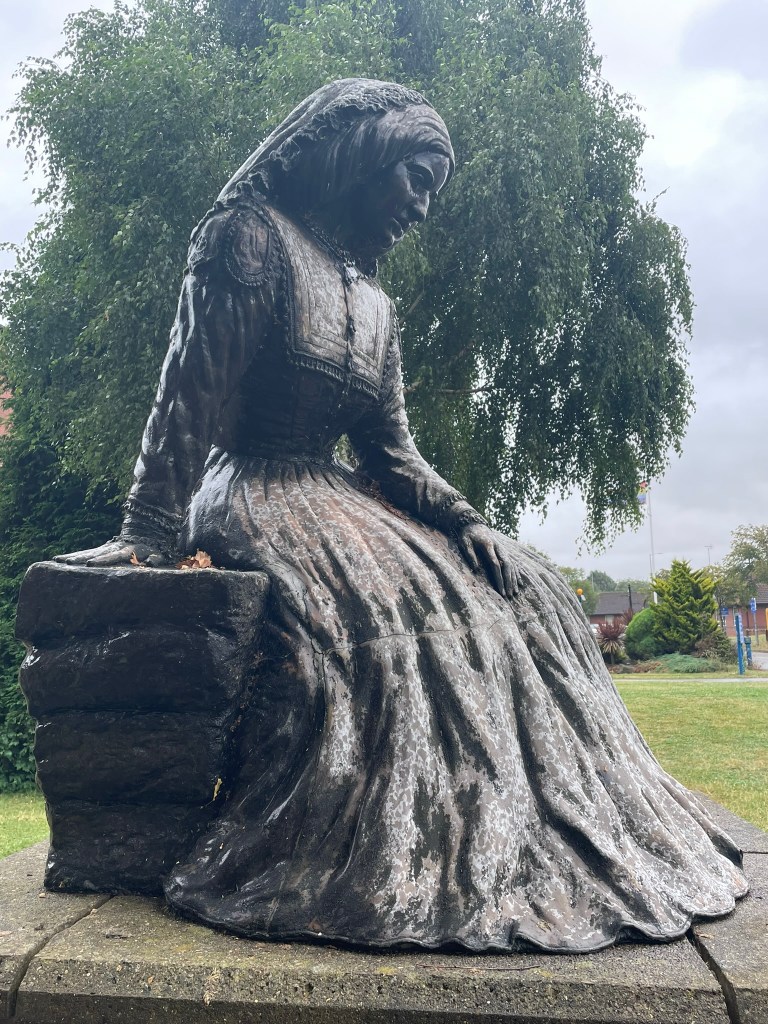
Situated outside the station, taking a seat on a bench with room for company, sits local author and teacher Yonge who gave Eastleigh its name.  I love the invitation to sit awhile with a local public figure.  Statues all too often feel unrelatable and intangible.  Having a bench is an opportunity to look up close at artwork and almost be at one with it.  It is a style that has really taken off, if statues have a fashion….