Annie Kenney

(1879-1953)

Parliament Square, High Street, Oldham

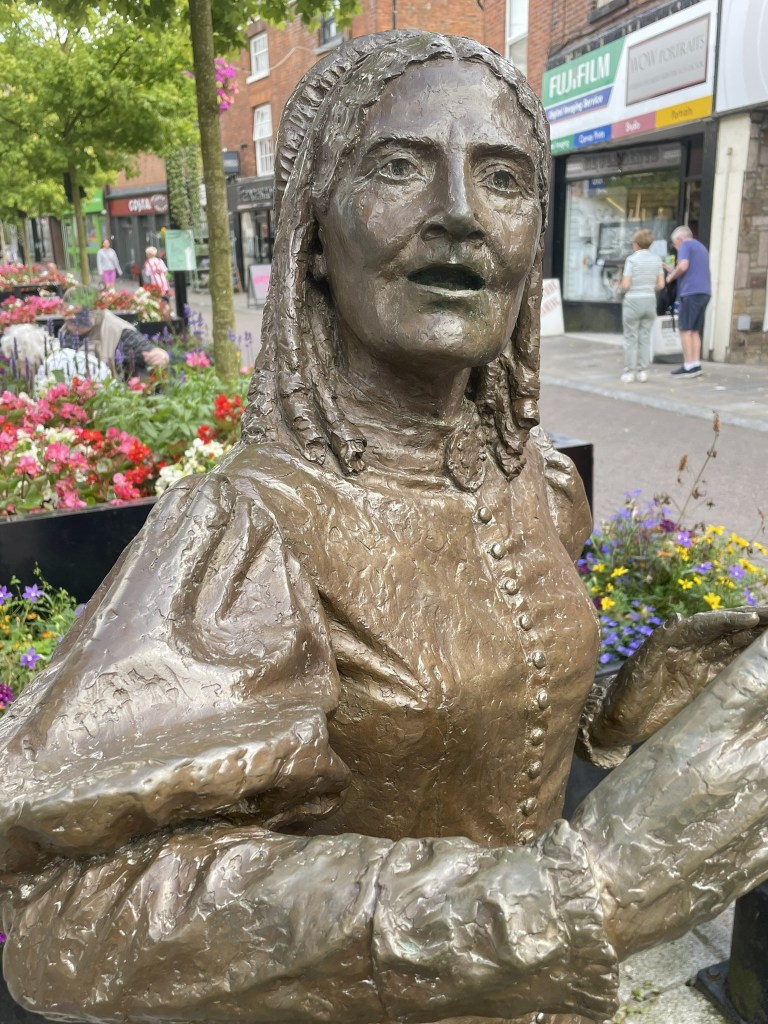
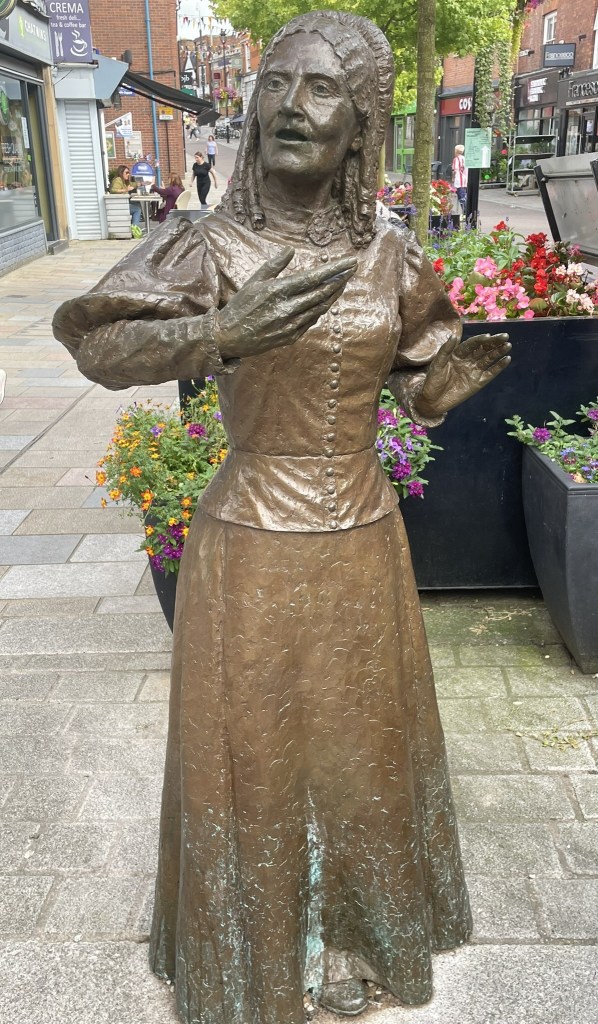
Born in 1879 Annie started working life in a cotton mill at the age of 10 and soon took on relentless 12-hour shifts.  She remained at the mill for 15 years, eventually getting involved in trade unionism and the suffragist movement.

After hearing Christabel Pankhurst speak about women’s rights at an Independent Labour Party meeting in 1905, Annie became involved in the campaign for women’s suffrage and was renowned for standing on an orange box ringing a bell to get attention for her speeches.  Her actions as a suffragette included her being imprisoned 13 times and taking part in several hunger strikes.

The statue was unveiled outside Oldham Town Hall in December 2018 marking the centenary of the Representation of the People Act 1918, which gave some British women the right to vote, honouring the only working-class woman to hold a senior position in the Women’s Social and Political Union. 

I learn all this after my visit, as she is one of a few statues I am journeying to throughout the northwest.  Had I learned about her losing a finger in a cotton mill accident I could have given the statue a closer inspection to see if such a gruesome detail has been added; or in this case; taken away.  Perhaps someone can let me know.

Emmeline and Christabel Pankhurst

(1858 – 1928) + (1880 – 1958)

Victoria Tower Gardens South, Westminster, London SW1

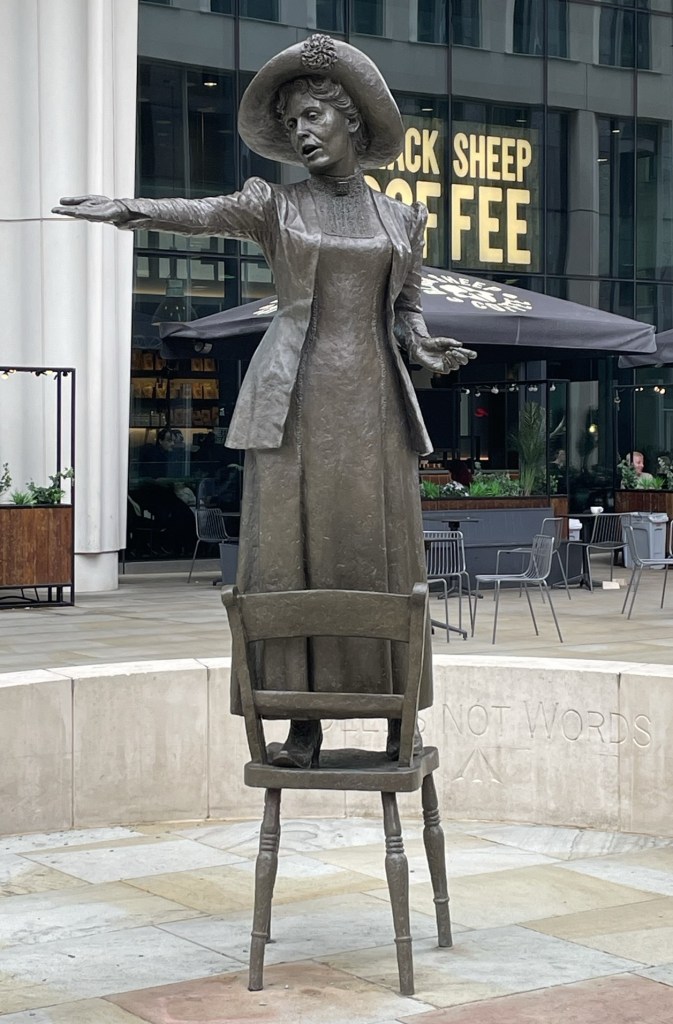
This is the memorial to Emmeline Pankhurst, the leader of the suffragettes who campaigned for women’s right to vote, including a relief to her daughter Christabel, both poignantly erected in the shadows of the Houses of Parliament.

Born in Manchester, in 1903 Emmeline was one of the founders of the Women’s Social and Political Union (WSPU). Along with her daughters Christabel and Sylvia they were active in demonstrations and direct action to fight for the right to vote.  Like many suffragettes, Emmeline was arrested on numerous occasions over the next few years and went on hunger strike herself, resulting in violent force-feeding.

The outbreak of war of World War Two in 1914 meant many activists, including Emmeline focused on the war effort.  By 1918 the Representation of the People Act gave voting rights to women over 30.  Emmeline died on 14 June 1928, a month before all adult women could finally vote in elections (then at the age of 21).

Millicent Garrett Fawcett

(1847-1929)

Parliament Square Garden, London SW1P, UK

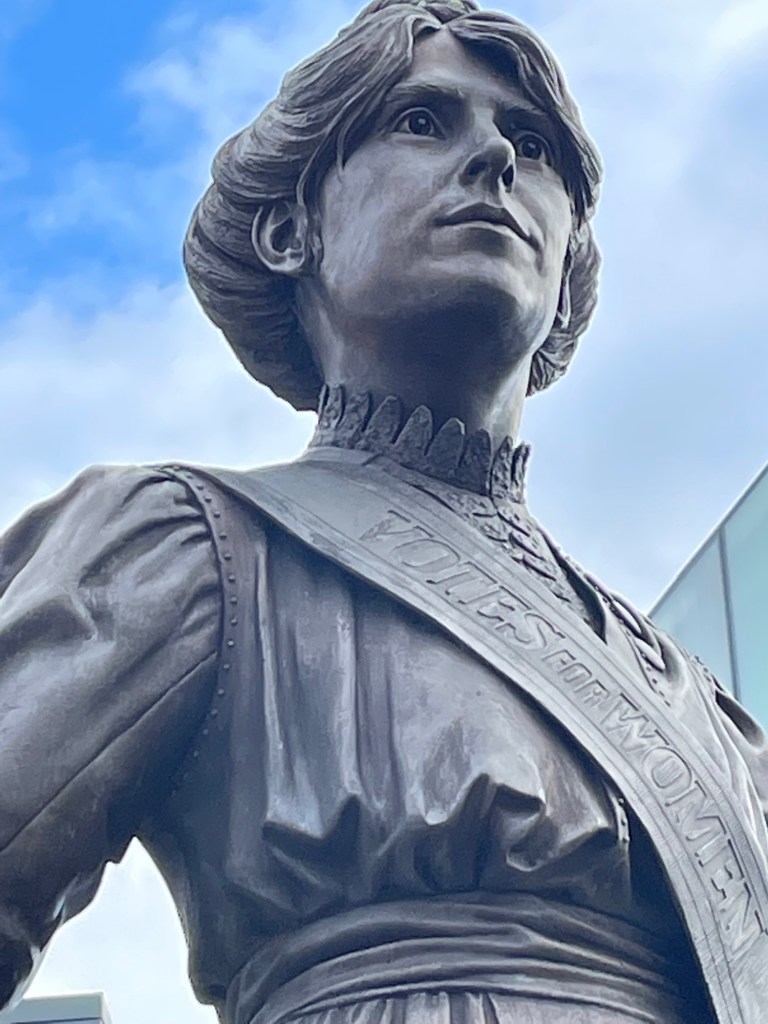
It is a pleasure to meet suffragist Millicent Garrett Fawcett in Parliament Square whose statue was the first woman to be included in an area consisting of 11 male statues.

The campaign was led by writer and activist Caroline Criado Perez who, by pointing out there were 98 statues of men called John, and only 128 named women statues in the UK, inspired me to take this journey of statues in the first place.

Commissioned as part of the centenary year of the 1918 Representation of the People Act (which gave some women over 30 the right to vote), the plinth includes photos of other prominent suffragettes and suffragists, hence, in essence, the presence of noted women in the Square now exceeds that of men.

Leader of the National Union of Women’s Suffrage Societies (NUWSS) Fawcett was sister to Elizabeth Garrett Anderson – the first woman to qualify as a doctor in 1865.  Fawcett co-founded Newnham College, Cambridge – one of the first colleges for women – as part of her efforts to improve women’s access to higher education. She died in 1929, one year after all women were permitted to vote on the same terms as men.

I love this statue, although every time I see it, the cloth that bears such a poignant statement, ‘Courage calls to courage everywhere’ always reminds me of a newly ironed tea towel.  Go figure. 

I spend time nearby watching other people’s interaction with it, selfies, poses, all of it.  It’s also intriguing to watch folk just sit down next to it, seemingly oblivious to it, contented to be part of the photos of passers-by.  On this occasion I have managed to dodge them all. Result.