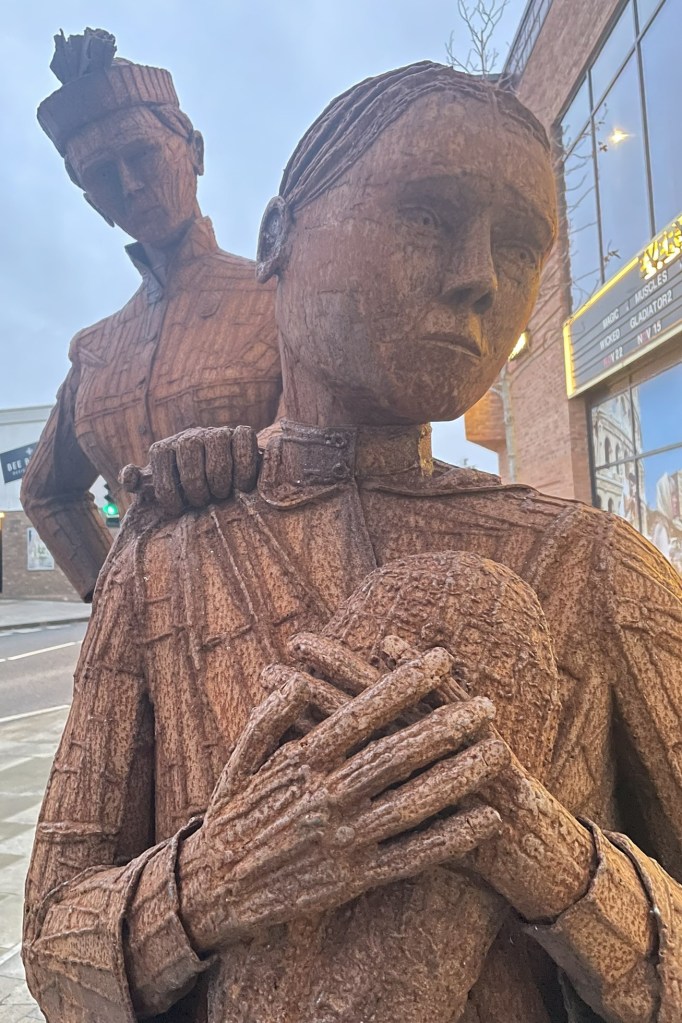
We would probably not be aware of the year Sophie was born if it wasn’t for the fact she was an eleven-year-old girl when she was sent to Northallerton Prison in 1873, making her the youngest female ever to be incarcerated in the prison. Sentenced to three weeks hard labour for stealing a loaf of bed from a shop in Whitby, her defence of only stealing the threepenny loaf of bread because she was hungry just didn’t cut it. Following her sentence Sophie the next four years at a reformatory school.
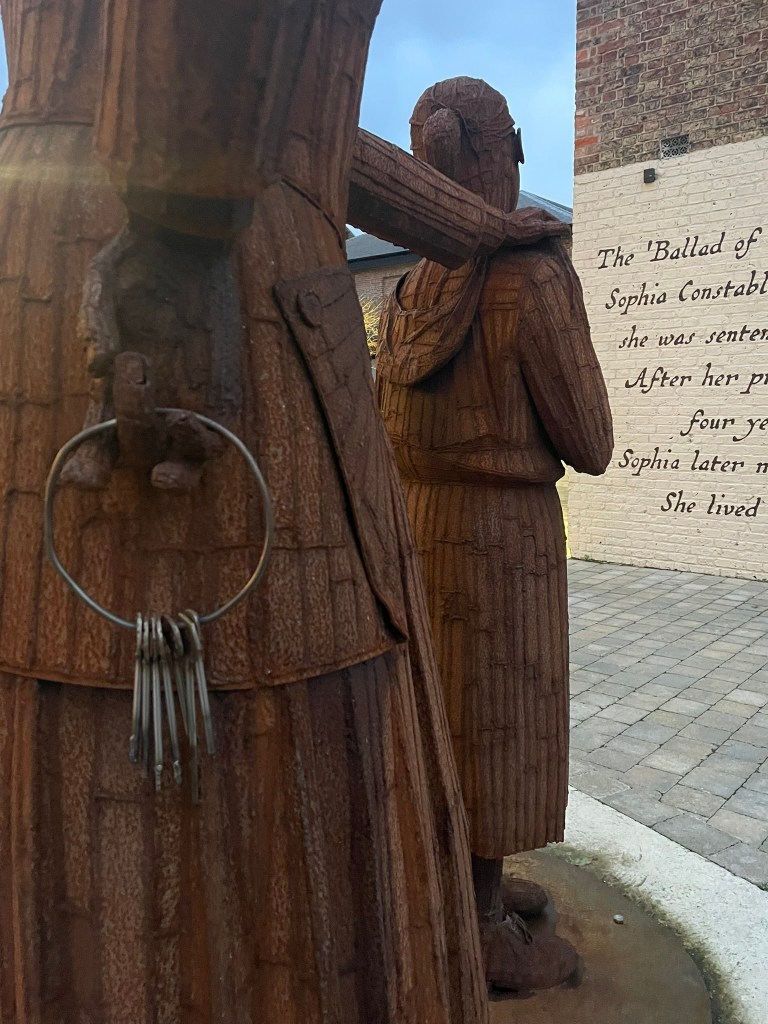
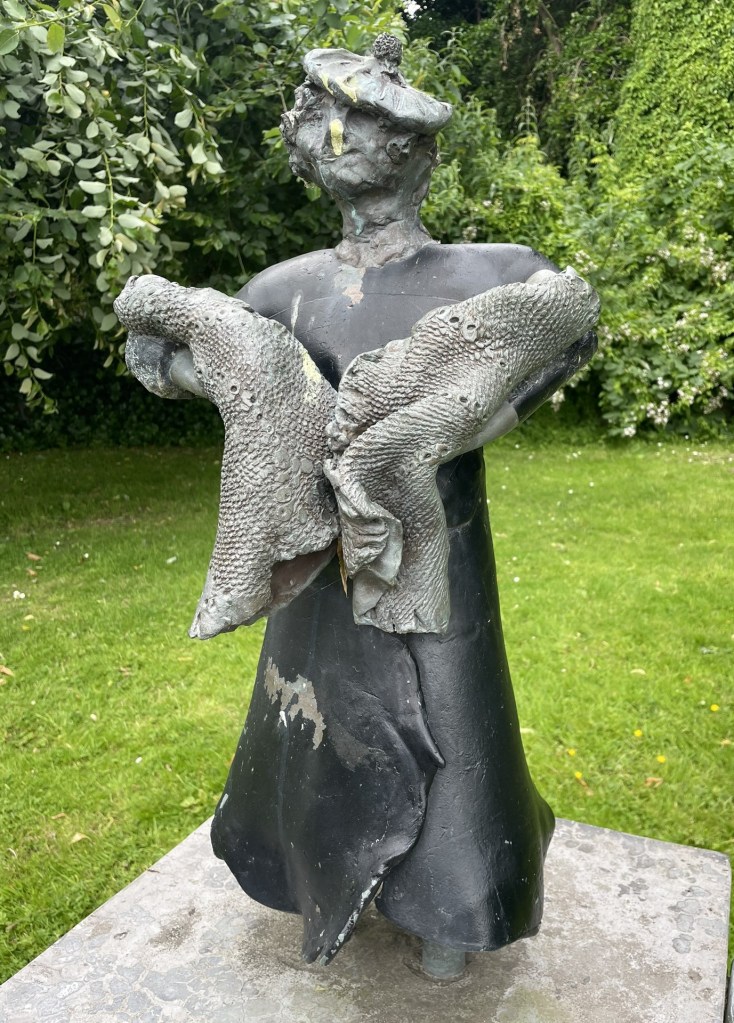
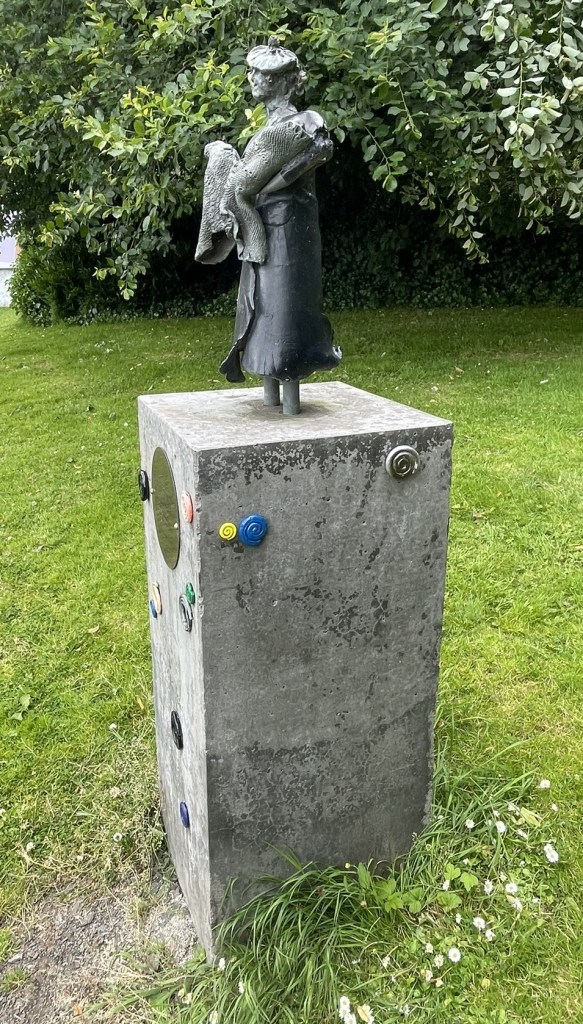
Entitled The Ballad of Sophie Constable, it was unveiled 150 years after her sentence, and has these words at its base:
A life without choice, a future restricted but all the same found guilty – convicted. Guilty of stealing by ‘devious deception’ and the law to be followed without exception. Sophia and her mild transgression, Sophia Constable, aged eleven.
It wasn’t all bad – the wall Sophia faces states that she went on to work as a nurse, marry, have children and lived her life to the age of 70.
Northallerton Prison closed in 2013, and Sophie’s statue now stands close to where the women’s wing of the prison was situated.
Little is known about Eleanor. From what we do know, she was a widow who ran a tobacconist business in the late 1600’s, bought a farm in Wallsend and, when sold, used the proceeds to establish a school. The school was named after her and opened a year after her death in 1709. Originally set up to provide education for ‘40 poor boys and 20 poor girls, the Dame Allan School now commands school fees of around £15k per year. Check out the current term fees and judge for yourself if perhaps the original intention may have deviated somewhat (bursaries and scholarships are available).
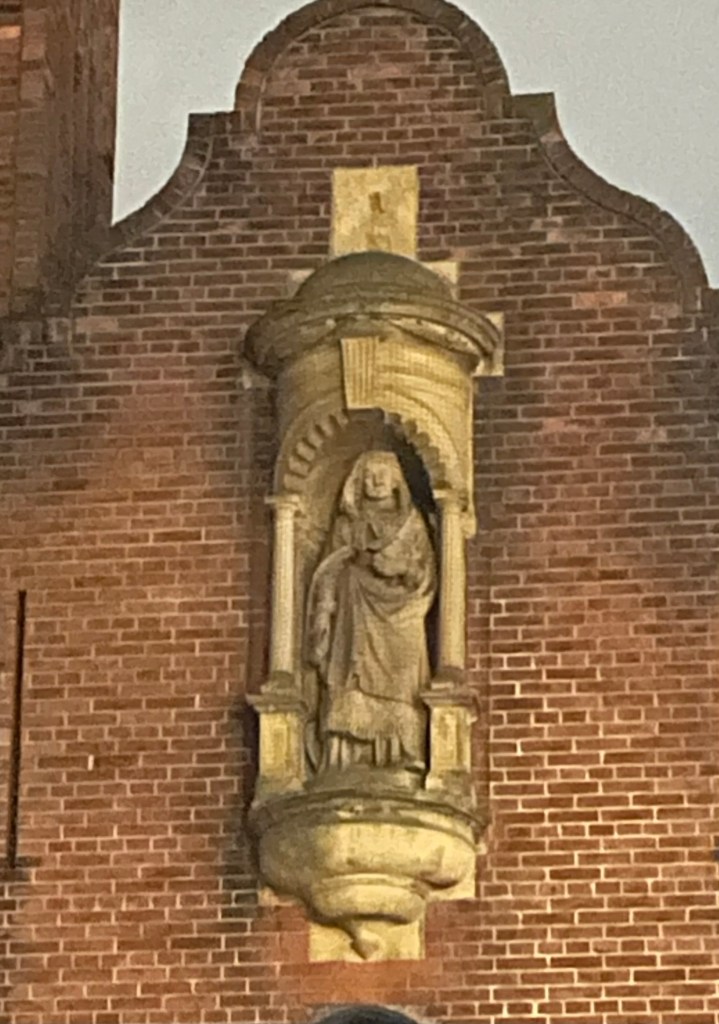
The figure of Eleanor stands high on the gable end wall of College House wearing a mediaeval cloak and holding a book. It is thought the statue was installed around the time the building was put up in 1882, when the school transferred there.
As with many historical figures of that time, Eleanor’s fortune had links with the slave trade with a large part of her wealth formed on the back of slave labour in American tobacco plantations. Newcastle’s only other woman statue is, you may have guessed, Queen Victoria, whose extravagant effigy stands proud outside the Cathedral.
I reach the statue at 9.30 on a November evening. The façade is covered in netting to deter those pesky pigeons but with such poor light it’s a miracle I got any exposure at all. Maybe visit it during the day.
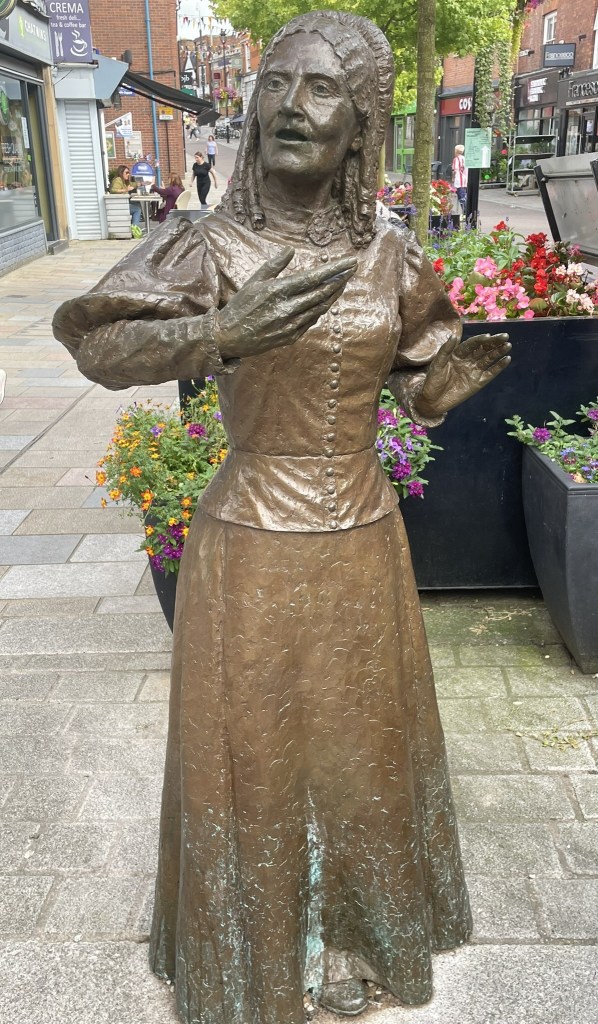
Often overlooked in the history of the suffragette movement (perhaps because her name is so long), Elizabeth was a teacher, writer, poet as well as a suffragette. Born in 1833, she was given just two years of schooling while her brother was afforded a full education, progressing to professor of mathematics at Cambridge University. Elizabeth, however, was academic in her own right and despite a limited formal education she became a governess before opening her own private girls school and running it as headmistress. Elizabeth was committed to improving access and standards of education for women and girls and regularly lobbied on this issue with her work facilitating the foundation of Newnham College. She gave up her school in 1871 and moved to London to work for the women’s movement, becoming the first paid woman lobbying Parliament on laws detrimental to women including child custody, equal rights within marriage and owning property. In 1877, the women’s suffrage campaign was centralised as the National Union of Women’s Suffrage Societies and in 1889, Elizabeth was a founding member of the Women’s Franchise League. From there she moved on to found the Women’s Emancipation Union in 1891.
In 1903, Elizabeth was invited onto the executive committee of Emmeline Pankhurst’s WSPU (Women’s Social and Political Union), finding a fresh movement for emancipation. She was at the time supportive of militant action and took part in the WSPU Hyde Park rally in 1908 at the age of 75, leading the ‘North country’ procession but 1912, her stance on the WSPU’s militant action had changed and she reverted to more constitutional methods.
Elizabeth died on 12 March 1918 in Manchester, six days after the Representation of the People Act received the royal assent granting the vote to some women.
Dora arrived in Walsall from north Yorkshire in 1865 – at the height of the industrial revolution. For the next 13 years she worked tirelessly to establish and run a professional medical service for the people of Walsall at a time when disease, epidemics, abject poverty and dangerous working conditions were commonplace. She looked after relatives of victims of the Pelsall mining disaster in 1872, in which 22 men and boys were killed, with 13 survivors. She formed a particular bond with the local railway company. Many workers, at some point in their working life, required medical treatment due to working hazards and Dora created a bond with them. In 1873, in recognition of her devotion, workers saved up their meagre wages to buy a pony and carriage to assist with her home visits to ailing patients. In 1875 an explosion occurred in a local iron foundry. Sister Dora was at the heart of emergency medical care which saw around 16 men seriously or fatally injured in the accident. That same year Walsall was hit by smallpox. Dora worked directly with the patients, risking her own life to help them.
When she died in 1878 thousands lined Bridge Street in the town centre to pay their respects with her coffin borne by eighteen railwaymen, engine drivers, porters and guards, all in working uniform.
The respect for Dora is still present in the town, with not one, but three statues attributed to her.
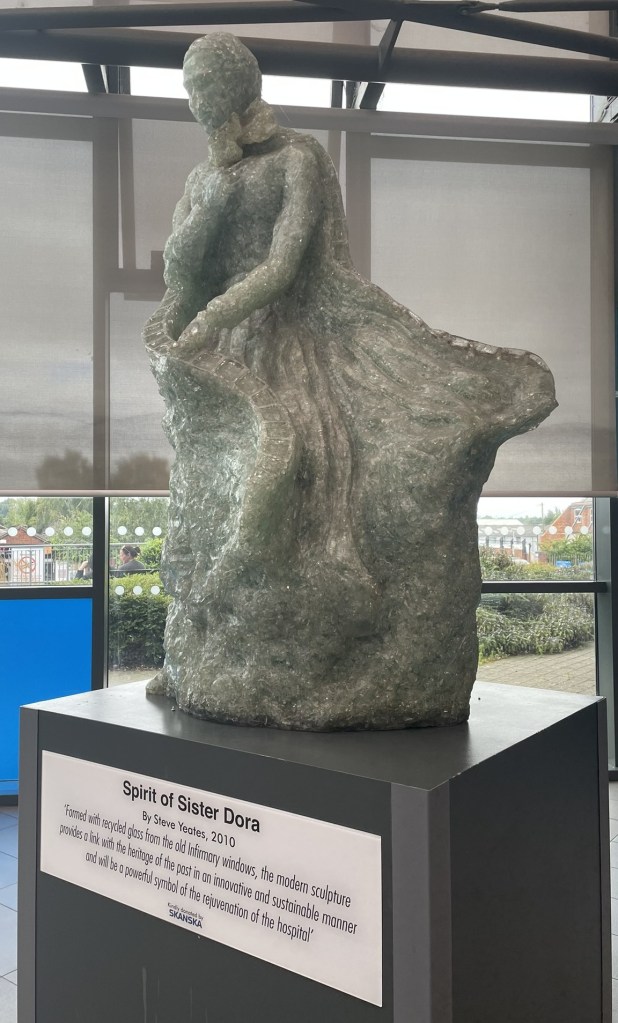
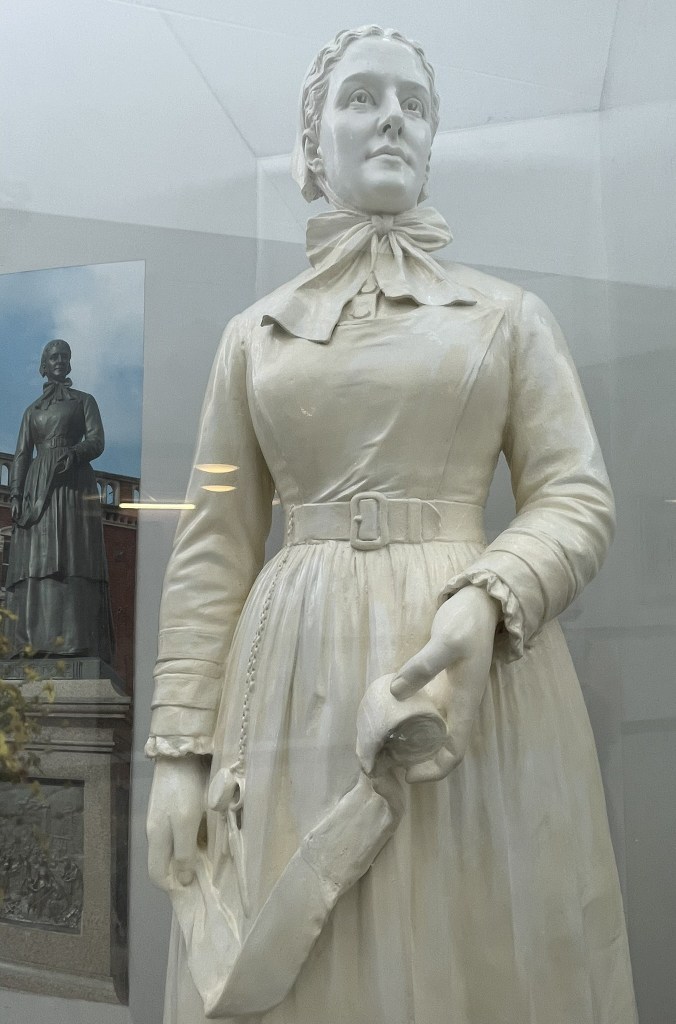
The first stop is the Walsall Manor Hospital. Parking is tight, so I stunt roll out of a moving car to take in the first and most recent tributes on the ground floor reception – a glass figure made from the old Infirmary windows, bringing old into new. Upstairs in a glass case is a plaster cast used to make the original 1886 statue. Known as the first non-royal woman to receive a public statue in the UK, the original was carved in white Sicilian marble, but, due to erosion, was replaced in 1956. This cast was given to the council in 1921 by the daughter of the original sculptor (F J Williamson).
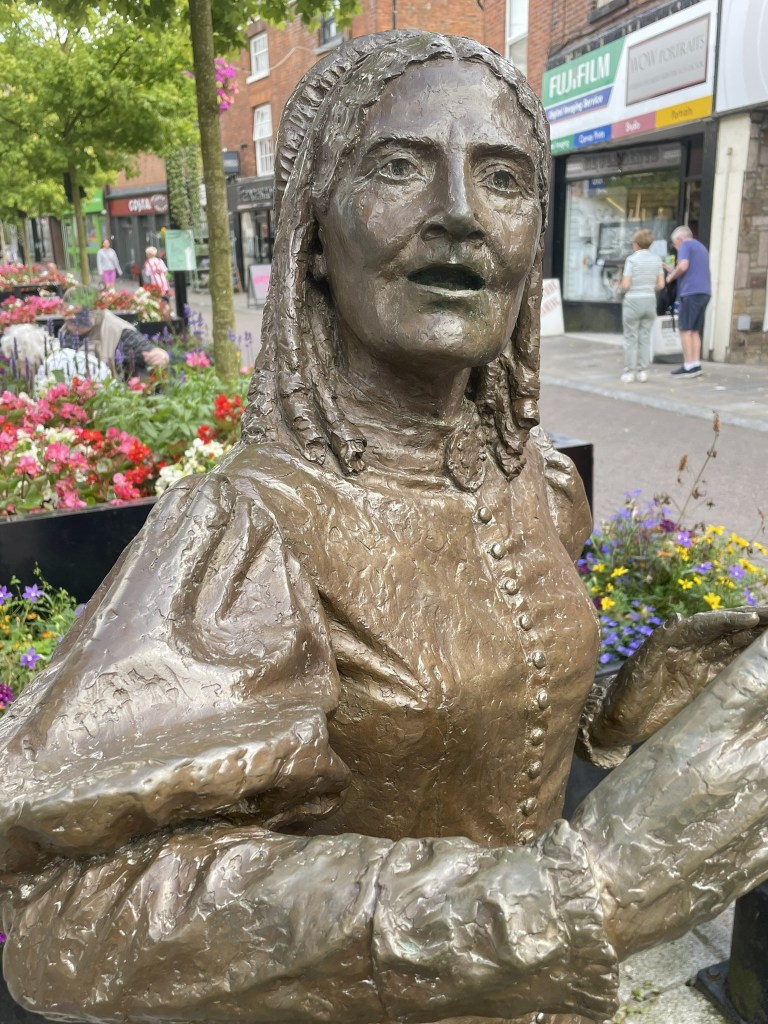
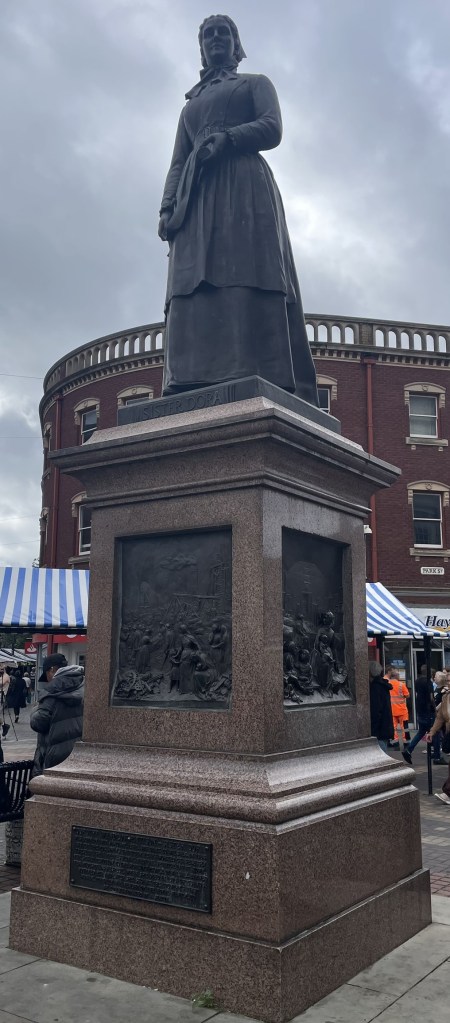
Today, the bronze statue of Dora stands proud on The Bridge in Walsall town centre.
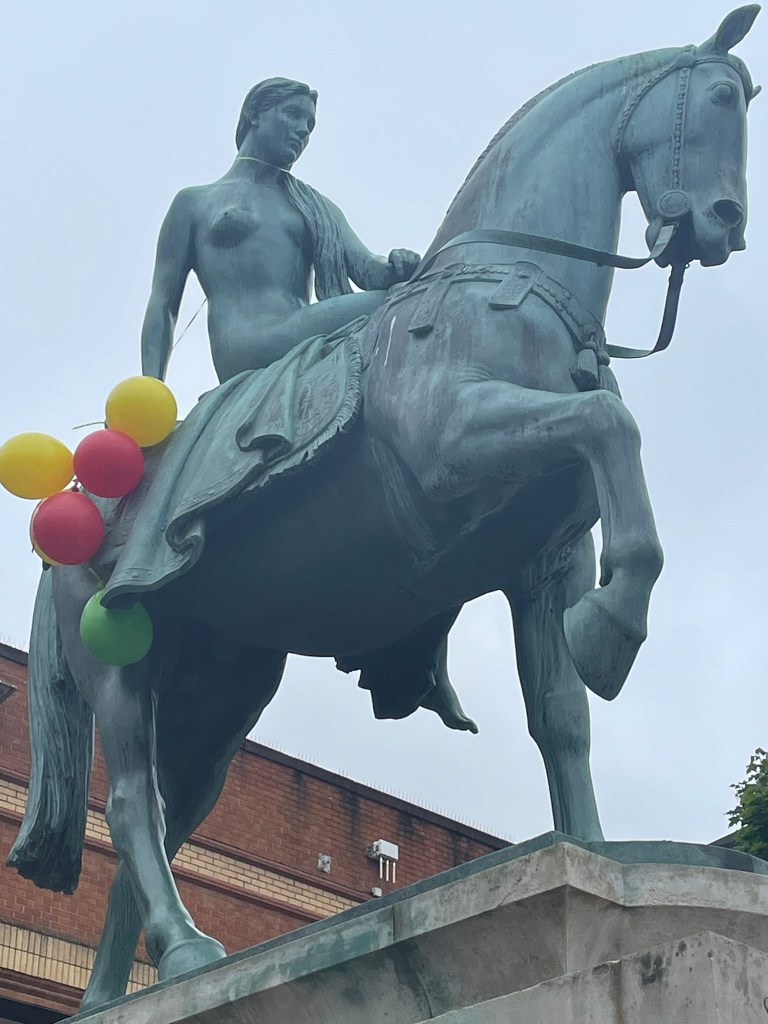
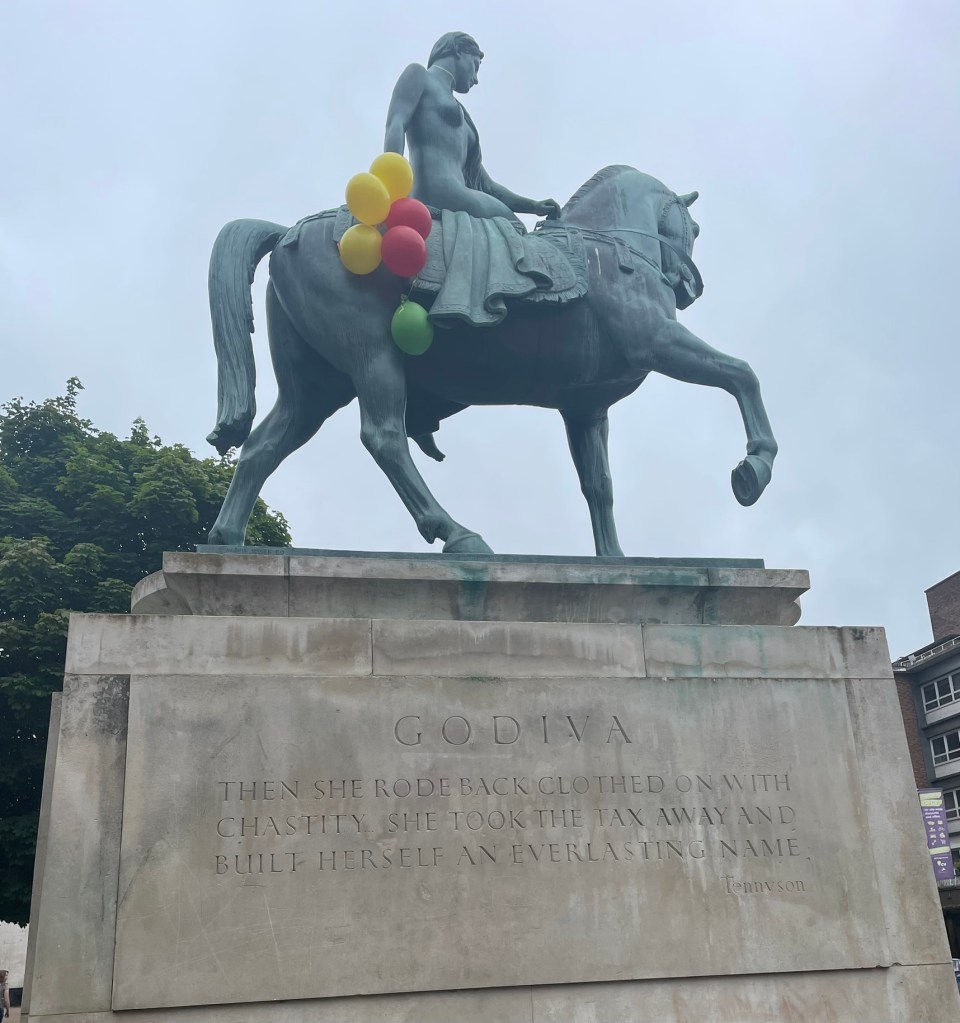
How far would you go for social injustice? Lady Godiva was a religious woman renowned for her generous gifts to churches and abbeys. Her birth date is unknown, but her marriage to Leofric, Earl of Mercia around 1035 is recorded. She was a wealthy noblewoman in her own right, but, seeing the plight of ordinary people, she pleaded with her husband – Lord of Coventry – to ease their burden of taxes. So far, so straightforward. However, he suggested, legend has it, that she ride naked through the town for the cause (party balloons optional). As the day approached, folk were ordered to stay indoors, windows barred and she rode through the town having only her long her covering her. Of course, one cheeky fella stole a look and was rendered blind, hence the turn of phrase, ‘Peeping Tom’. Still, Lord Coventry could have revoked taxes without his wife having to conduct a ride of shame. If only tax decreases were that simple, eh?
Fun fact! Lady Godiva’s original Anglo-Saxon first name was Godgifu(or sometimes spelled Godgyfu), which translates to “gift of God”. ‘Godiva’ is the Latinised version.
The statue actually goes by the title, ‘Self Sacrifice’. Sculpted by William Reid-Dick, it was commissioned in the 1930’s by another William (Bassett-Green) who was a wealthy Coventry businessman fascinated by the Godiva story. The project was stalled by the second World War and when the artist came to finish the work some 10 years later, the cost of creation had increased. However, Basset-Green refused to pay for any additional costs. After an anonymous donor making up the difference the unveiling happened in 1949.
“It is never too late to become what you might have been”
– George Eliot
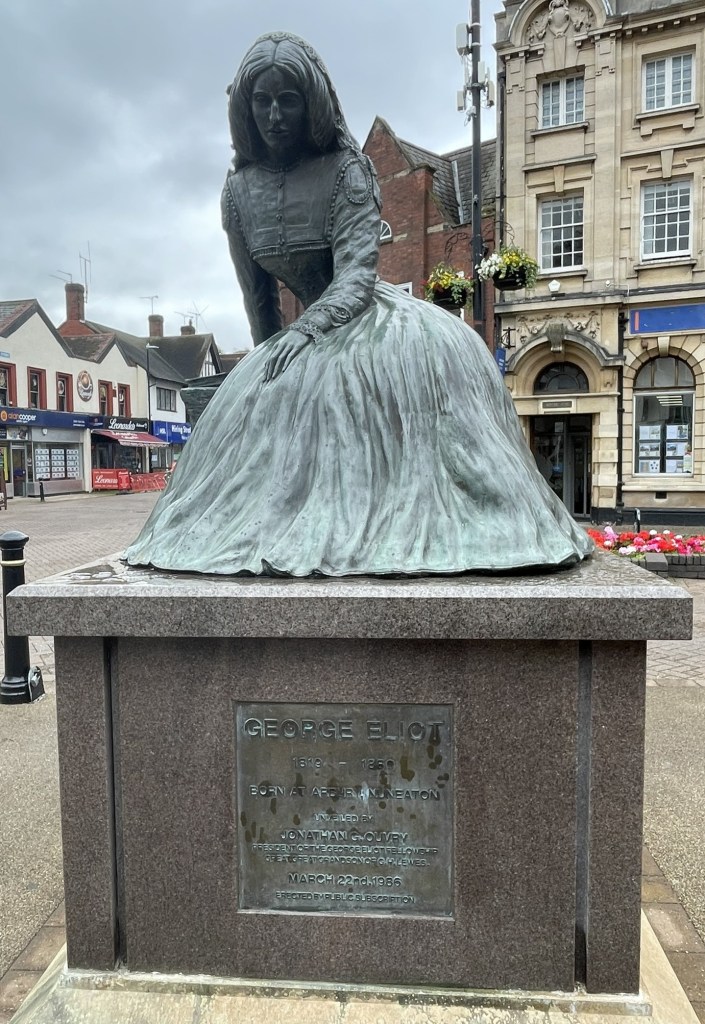
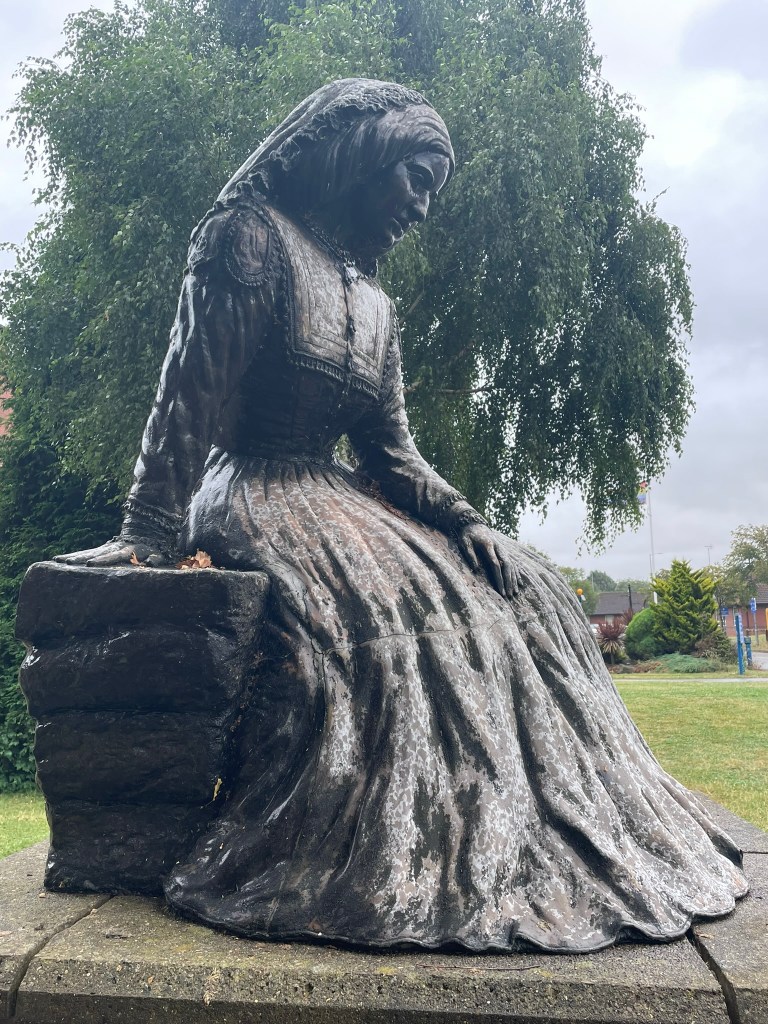
First dilemma of the day – shall we call her by her real name of Mary Ann Evans? Known by her pen name George Eliot, she was an English novelist, poet, journalist, translator, and one of the leading writers of the Victorian era in the 19th century. Using a male pseudonym ensured her works were taken seriously in an era when female authors were usually associated with romantic novels. She wrote seven novels over her lifetime, mostly notably The Mill on the Floss (1860), and Middlemarch (1872). Middlemarch in particular has been heralded as one of the greatest literary works ever written.
I can’t claim to have read any of her works, but I was interested in reading that she met and moved in with her partner George Henry Lewes, despite the fact he was already married and living with his wife and children. Scandal! Nevertheless, she lived with him until his death in 1878. After that she married a friend, John Cross, who was 20 years her junior. If all this happened in a TV soap opera you wouldn’t believe it.
The original statue stands in Nuneaton town centre, with a second bronze cast unveiled at George Eliot Hospital ten years later.
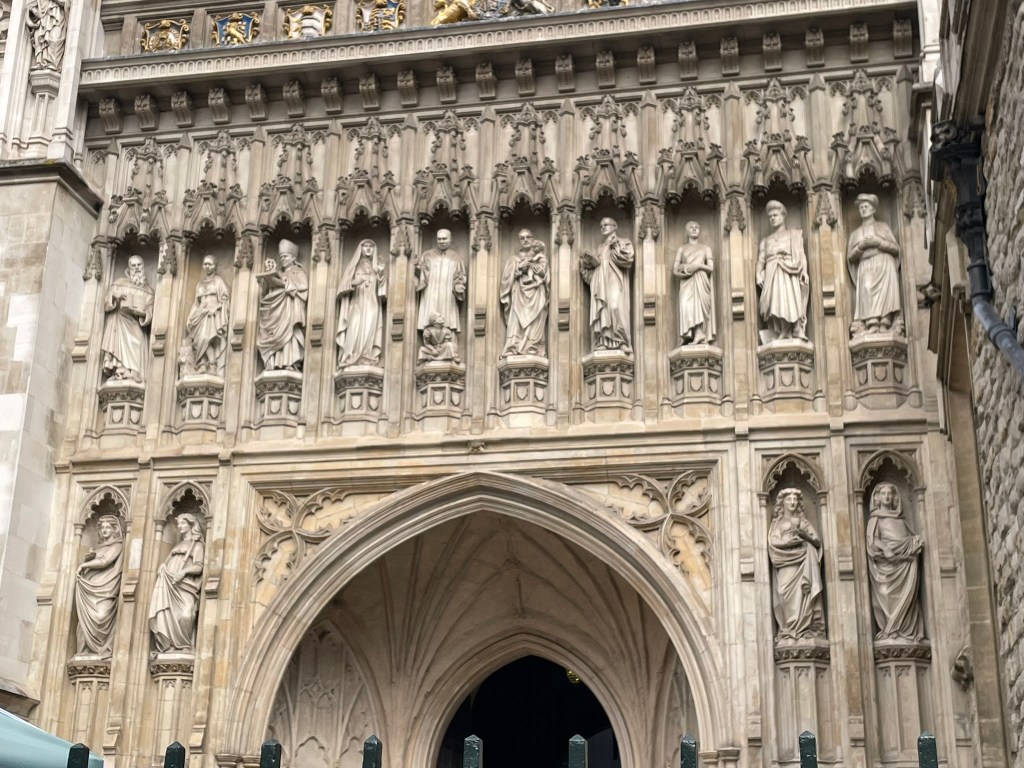
Manche Masemola, Esther John and Grand Duchess Elizabeth
West Entrance, Westminster Abbey, London SW1P 3PA
Above the Abbey’s Great West Door stand ten statues to modern martyrs – Christians who gave up their lives for their beliefs. The martyrs are drawn from every continent and many Christian denominations and represent all who have been oppressed or persecuted for their faith. WARNING – it doesn’t end well for any of them.
Of these 10, 3 are women: Manche Masemola, Esther John and, squeezing in precariously due to her royal roots abandonment, Grand Duchess Elizabeth.
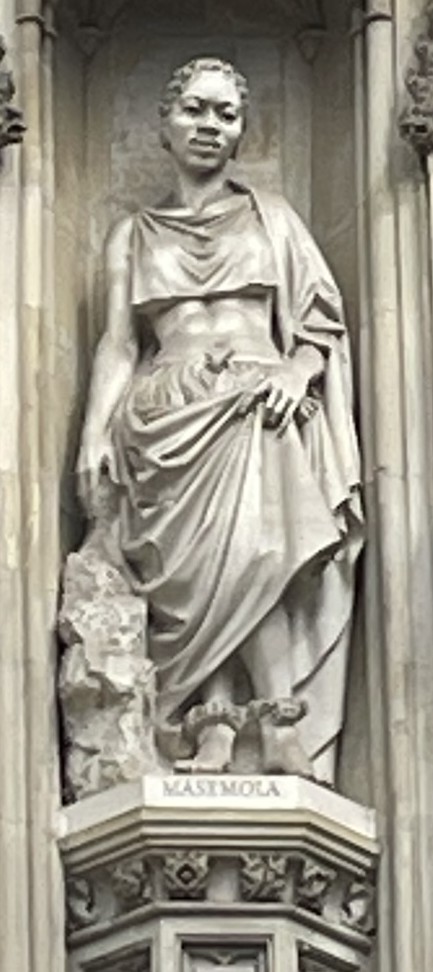
Manche Masemola
Manche’s short life makes for a sad, if not rather baffling, story. Born in 1913, Manche lived northeast of modern-day Johannesburg and became interested in the Christianity through the missionaries working nearby. Against her parents’ wishes she continued to attend religious classes until one day her parents took her away to be killed. She was 15 years old. After several years, her burial site became a place of Pilgrimage and in 1969 – this is the bizarre part – Manche’s mother was baptized into the church.
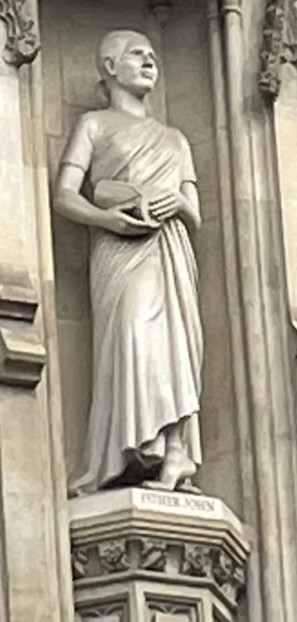
Esther John
Born Qamar Zia in India in 1929, Esther John converted her faith secretly at first before running away and changing her name. In 1955 she moved to work in a mission hospital and a year later entered the United Bible Training Centre for teacher training. Completing her studies in 1959 she moved to Chichawatni and worked evangelising local villages, teaching women to read and working with them in the cotton fields. A year later, Esther John was found murdered in her bed.
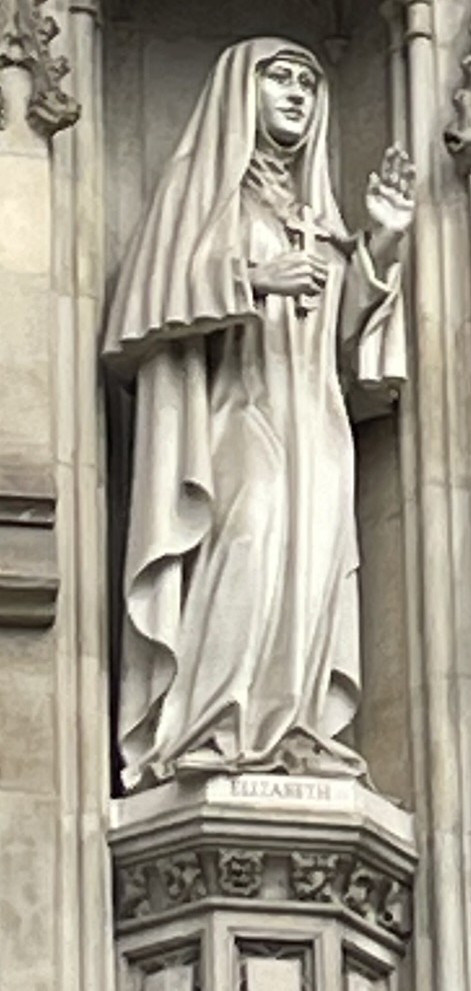
Grand Duchess Elizabeth
Granddaughter of Queen Victoria, it is fair to say that Elizabeth had privileged beginnings. In 1884 Elizabeth married Grand Duke Sergei Alexandrovich, the fifth son of Tsar Alexander II of Russia and in 1891 she adopted the faith. Amongst the rise of a country in revolution, Elizabeth’s husband was assassinated in 1905, after which point Elizabeth gave away her wealth and possessions and proceeded to open the Martha and Mary home in Moscow – a place of prayer and charity for devout women. By 1917 the Tsarist state had collapsed and the Bolshevik party set about eradicating the Orthodox Church, including those who followed it. A year later Elizabeth was therefore duly eliminated along with fellow religious sisters.
Despite visiting the Abbey three times, on all occasions I arrive when it is shut, hence sub standard photos from a distance. You can take better ones when you go.
Any lawyers in the house? You will be familiar with the internationally renowned ‘Donoghue v Stevenson’ case taught on Day 1 of how to be a sh*t hot solicitor. The case lay the foundation for modern law on negligence and ‘Duty of Care’ and became known as ‘the snail in the bottle’ case.
Of course, while May was sipping her ginger beer she had no idea about the turn of history and the change of law this brought about. While drinking with a friend at a cafe, May noticed part of a decomposing snail in her bottle. Understandably this caused distress and May later reported a stomach upset. She began legal action against the drinks company Stevenson’s, but, as her friend had bought her the drink, the company argued that, as she was not the purchaser, they had no legal obligation to her and the case was dismissed.
It could have ended there, and May could have walked quietly away. As a working-class woman and a single parent, she had little recourse for further litigation, but she recognised that regardless of what the law stated, the company had a responsibility and by whatever means she had she wanted to prove this. Fortunately, a law firm agreed with her and took her case on free of charge. The case led to discussions in Parliament which ultimately sought answers in the Bible, with the parable of the Good Samaritan and the question ‘who is my neighbour?’ acting as the benchmark for setting out responsibility to and for others. And so, The House of Lords’ decision was made which became the cornerstone of modern tort law: a person owes a duty of care to their “neighbour”— the people who are so closely and directly affected by your actions that you ought reasonably to have them in contemplation when you act.
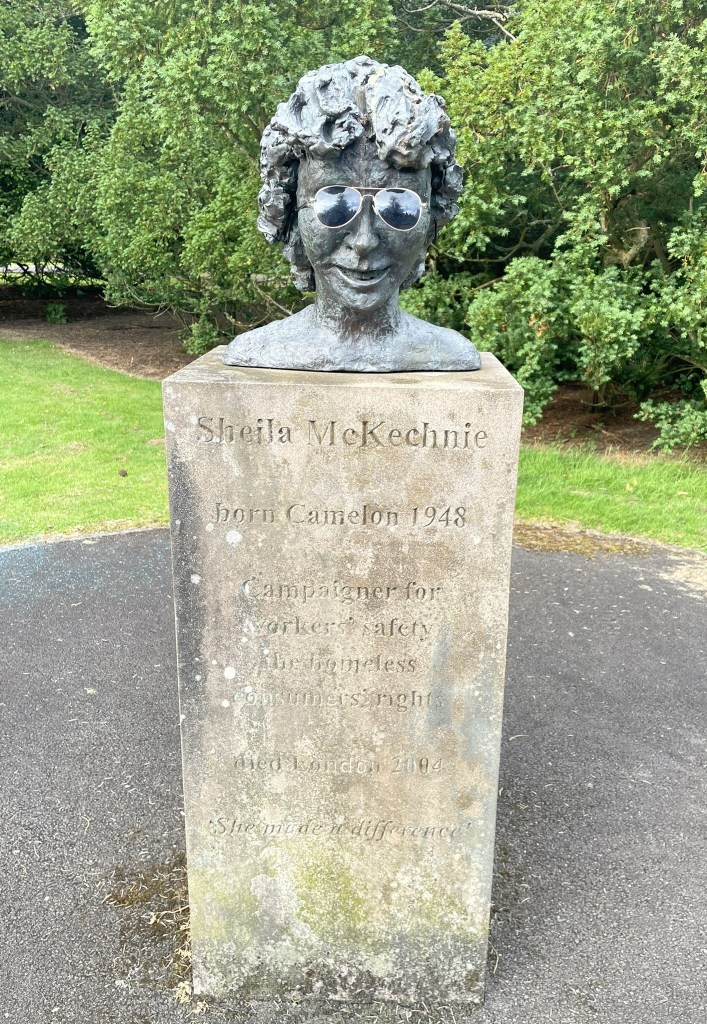
I reach Dollar park on an early summer’s evening and find the walled garden where I believe her statue to be is locked up for the night. I peer through the railings trying to spot her, whilst checking out the height of said railings in the event of me having to scale them. It’s not the getting over I’m worried about but getting back out again. I have visions of the park ranger finding me in the morning dew half eaten by badgers. But something isn’t quite right. And not just my flesh enticing small mammals. I go through images I’ve collected on screen of Sheila’s sculpture to check the background and….I believe she may be placed elsewhere in the park. No feast for you tonight badgers!
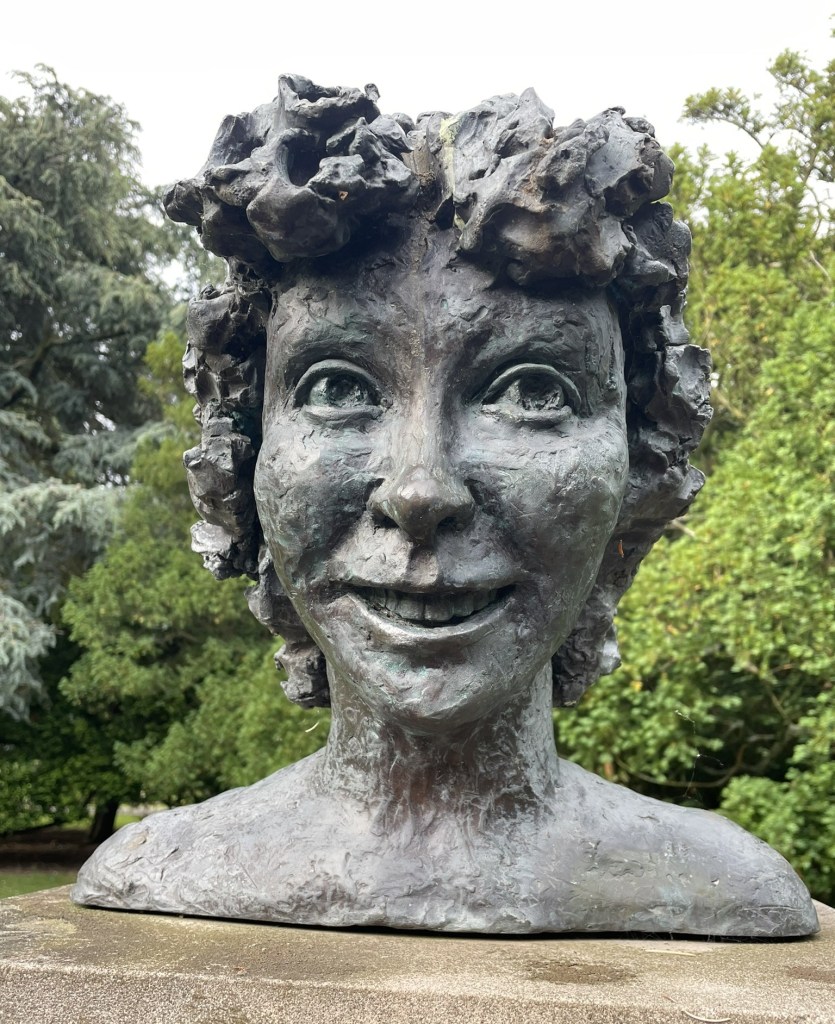
Sheila, as the inscription says, was a campaigner for workers’ safety, the homeless and consumers’ rights. Erected a year after her death her memorial was designed and sculpted by a by a woman: Susanna Robinson. Susanna in an interview explains that although Sheila’s partner (who commissioned the work) to be smiling, it is very difficult to cast teeth, hence most sculptors are straight faced. Who knew? Still, Sheila apparently described herself as, “fully paid-up member of the awkward squad” so her pose seems fitting.
Sheila was born not far from Dollar Park (hence the bust’s location) and began a trade union career in the 1970s, becoming Assistant General Secretary of the Wallpaper Workers’ Union. She went on to the Workers’ Educational Association, and in 1976 joined the Association of Scientific, Technical and Managerial Staffs as National Health and Safety Officer. She was instrumental in turning health and safety issues into major concerns. In the 80’s she became the Director of the homeless charity Shelter, before moving to become Director of the Consumers’ Association (now known as Which?). Her work there lead to a huge campaign around standards in the food industry and was influential in the setting up of the Food Standards Agency in 2000.
Sheila died at the age of 55 from cancer. With the help of her partner, the Sheila McKechnie Foundation was set up a year later to continue championing the right to campaign.
The end inscription perhaps sums her up the best; ‘She made a difference’.
I find Sheila in the park wearing a pair of sunglasses and think about the person who put them there – a kind citizen who found them and wanted to place them somewhere easy to find for the owner. I diligently move them for photos and then, after a thought, I put them back on her. I think Sheila would have approved of a good deed done.
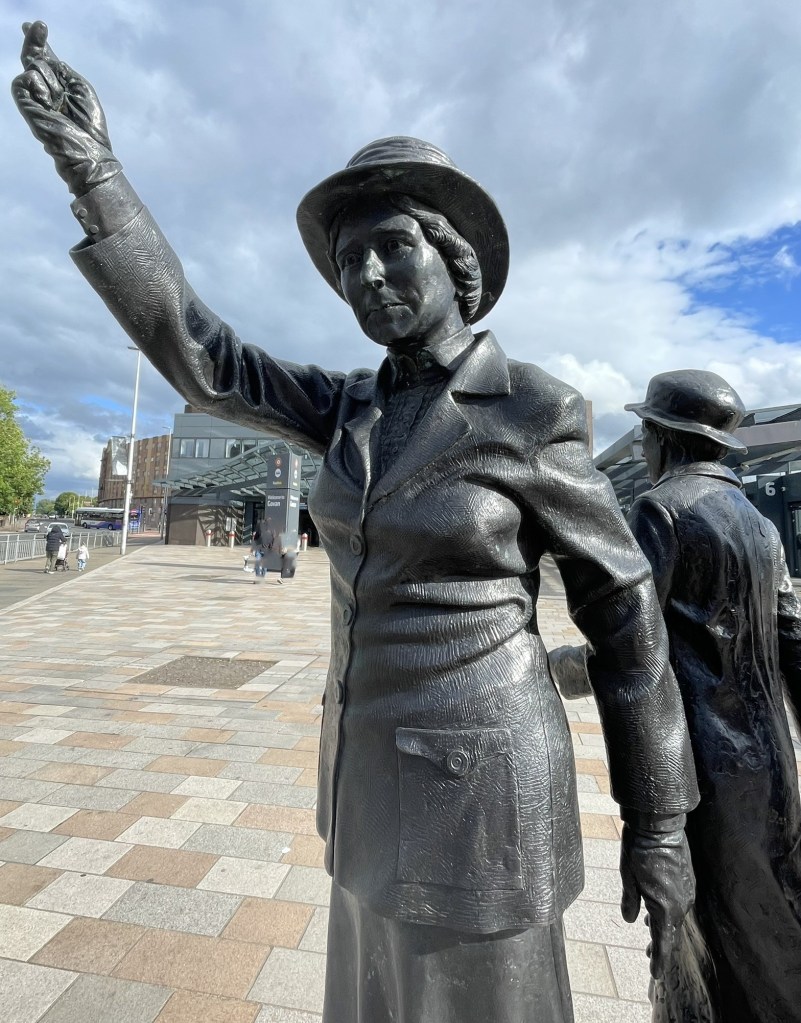
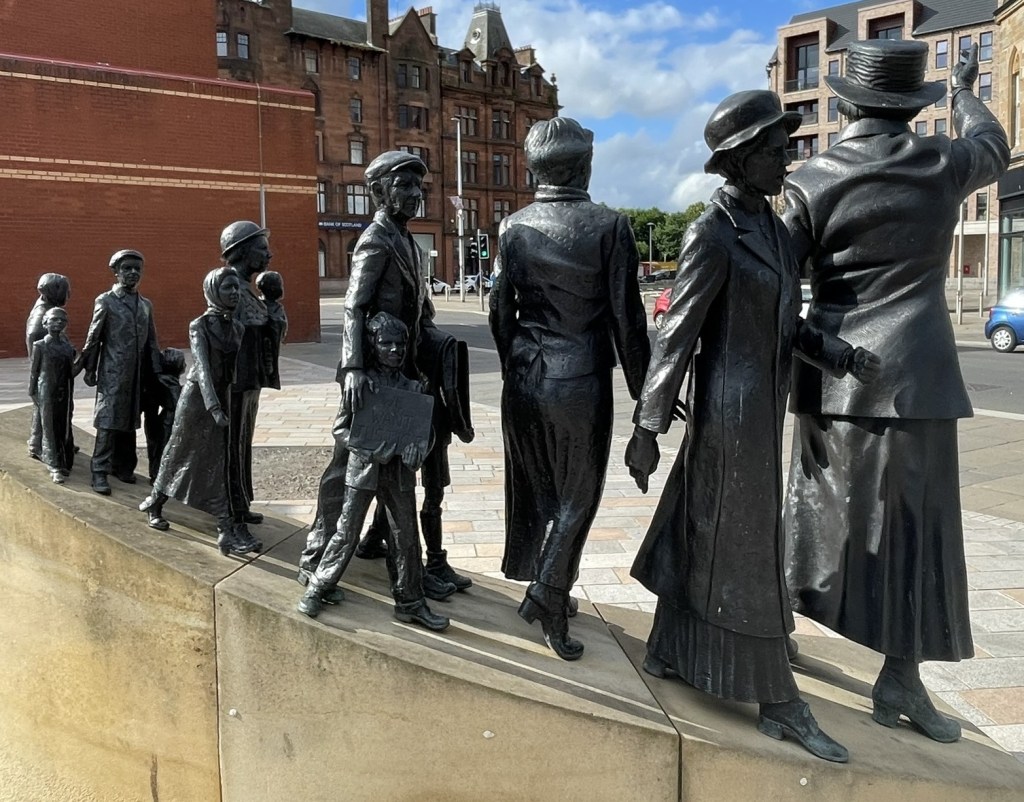
Community activist and leader, Mary was pivotal in leading Glasgow’s rent strike of 1915 which saw as many as 20,000 tenants taking action. She rallied residents to protest against unscrupulous landlords hiking up rent and evicting tenants no longer able to pay for their homes. The campaign was so successful it led to the Rent Restriction Act in the same year.
Mary went on to be elected as one of Glasgow’s first women councillors in 1920, championing issues such as maternity benefit, education and equal voting rights as well as establishing Glasgow’s first family planning clinic.
In 1924 she became Glasgow Corporation’s first Bailie (civic officer in Scotland’s local government). She was also appointed as one of the first female magistrates in the city. Mary was also one of the founders of the Women’s Peace Crusade, which became one of the fastest growing and largest peace movements in the UK during the war.
Unveiled on International Women’s Day in 2018, the statue has Mary leading ‘Mrs Barbour’s Army’ (as they were called) into action against rent hikes.

 WomenstatuesUK