(1875 – 1958)
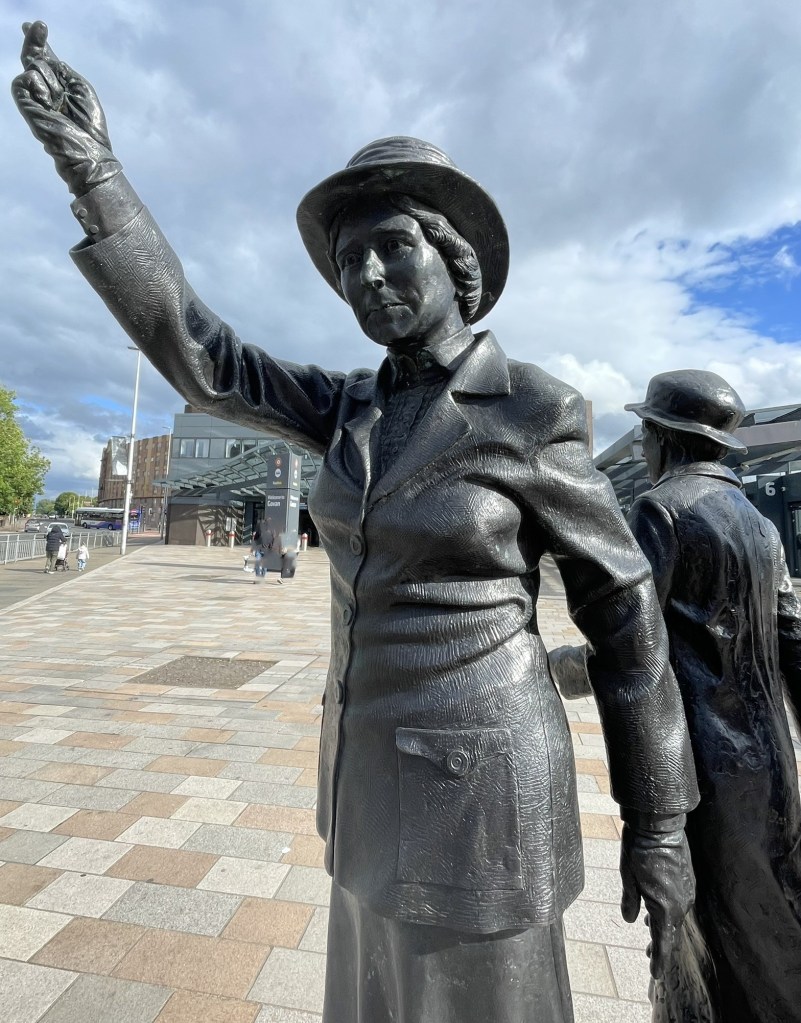
Community activist and leader, Mary was pivotal in leading Glasgow’s rent strike of 1915 which saw as many as 20,000 tenants taking action. She rallied residents to protest against unscrupulous landlords hiking up rent and evicting tenants no longer able to pay for their homes. The campaign was so successful it led to the Rent Restriction Act in the same year.
Mary went on to be elected as one of Glasgow’s first women councillors in 1920, championing issues such as maternity benefit, education and equal voting rights as well as establishing Glasgow’s first family planning clinic.
In 1924 she became Glasgow Corporation’s first Bailie (civic officer in Scotland’s local government). She was also appointed as one of the first female magistrates in the city. Mary was also one of the founders of the Women’s Peace Crusade, which became one of the fastest growing and largest peace movements in the UK during the war.
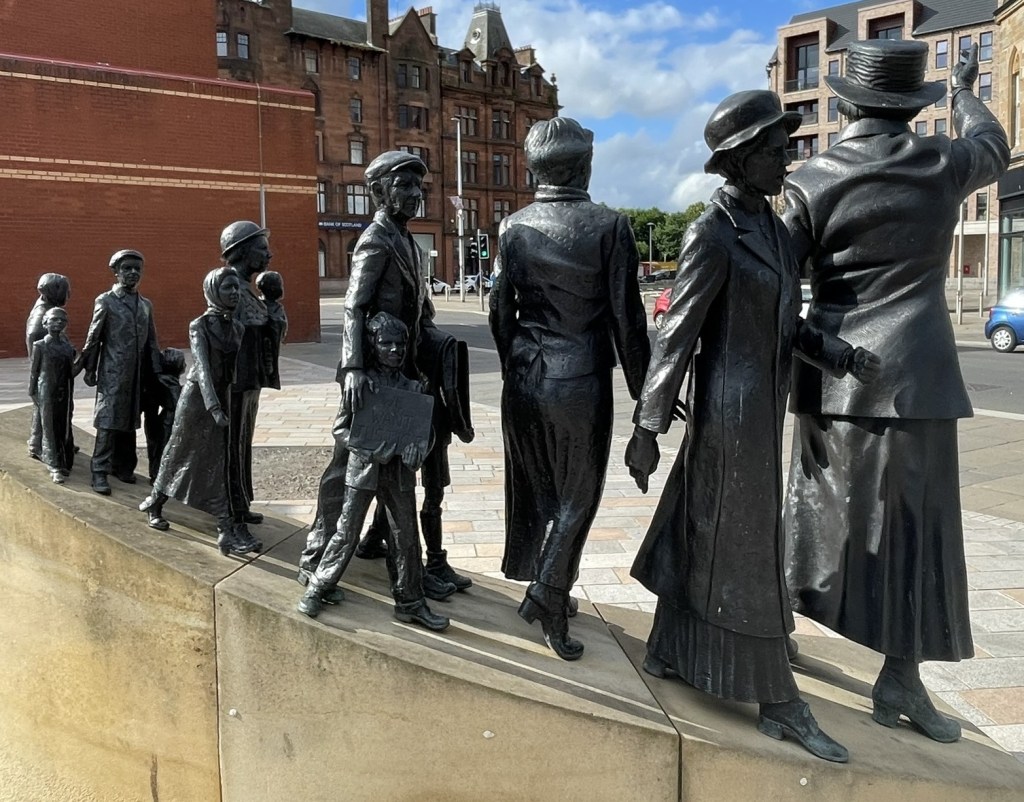
Unveiled on International Women’s Day in 2018, the statue has Mary leading ‘Mrs Barbour’s Army’ (as they were called) into action against rent hikes.
 WomenstatuesUK