Manche Masemola, Esther John and Grand Duchess Elizabeth
West Entrance, Westminster Abbey, London SW1P 3PA
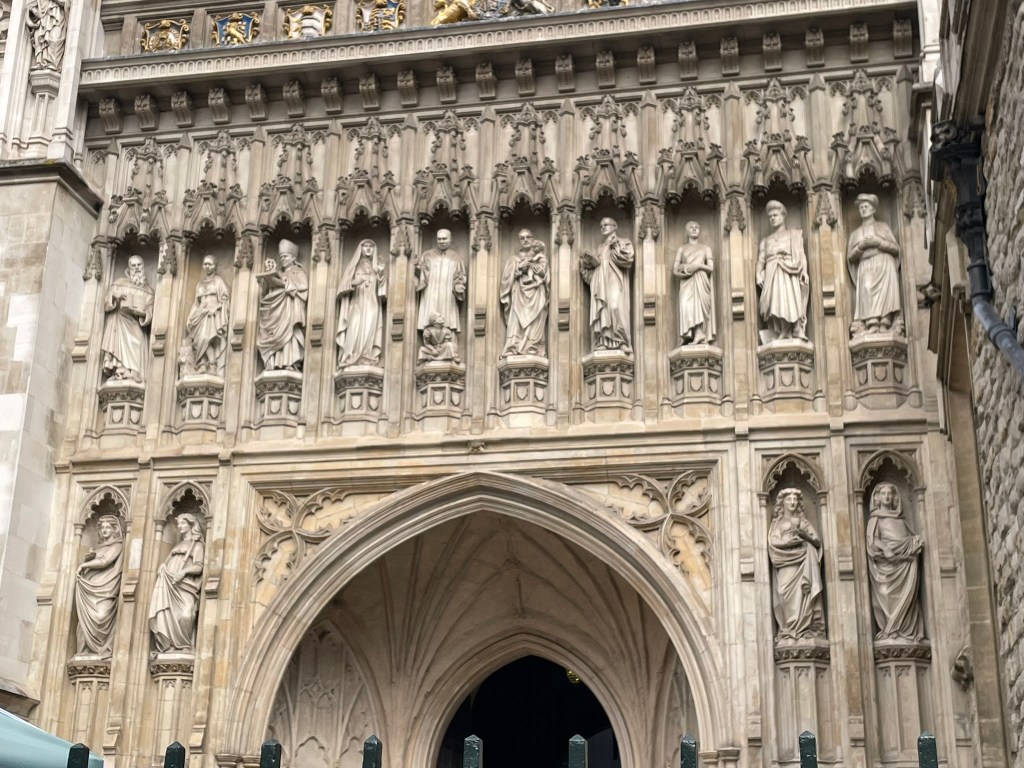
Above the Abbey’s Great West Door stand ten statues to modern martyrs – Christians who gave up their lives for their beliefs. The martyrs are drawn from every continent and many Christian denominations and represent all who have been oppressed or persecuted for their faith. WARNING – it doesn’t end well for any of them.
Of these 10, 3 are women: Manche Masemola, Esther John and, squeezing in precariously due to her royal roots abandonment, Grand Duchess Elizabeth.
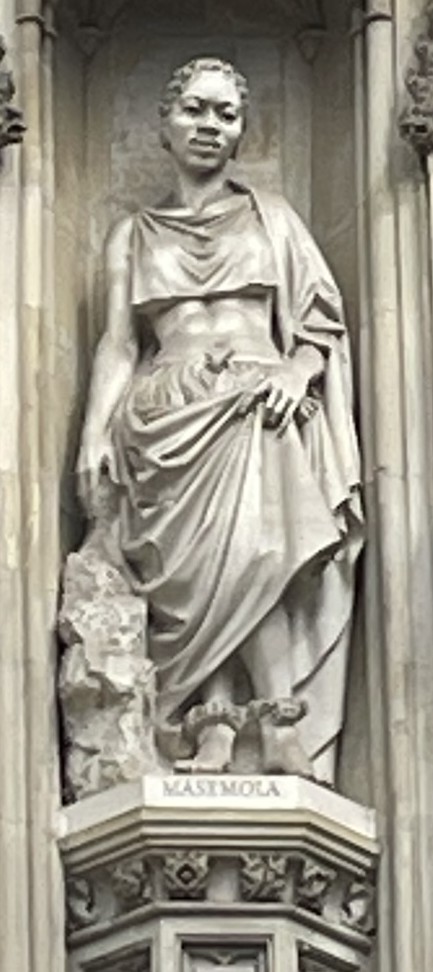
Manche’s short life makes for a sad, if not rather baffling, story. Born in 1913, Manche lived northeast of modern-day Johannesburg and became interested in the Christianity through the missionaries working nearby. Against her parents’ wishes she continued to attend religious classes until one day her parents took her away to be killed. She was 15 years old. After several years, her burial site became a place of Pilgrimage and in 1969 – this is the bizarre part – Manche’s mother was baptized into the church.
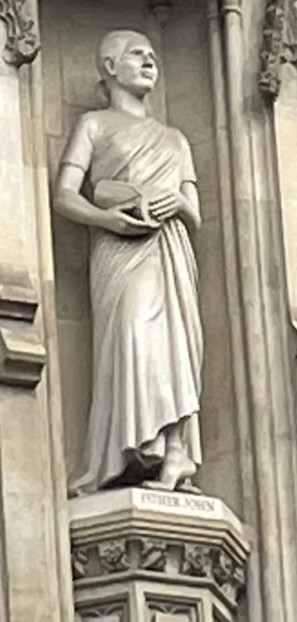
Born Qamar Zia in India in 1929, Esther John converted her faith secretly at first before running away and changing her name. In 1955 she moved to work in a mission hospital and a year later entered the United Bible Training Centre for teacher training. Completing her studies in 1959 she moved to Chichawatni and worked evangelising local villages, teaching women to read and working with them in the cotton fields. A year later, Esther John was found murdered in her bed.
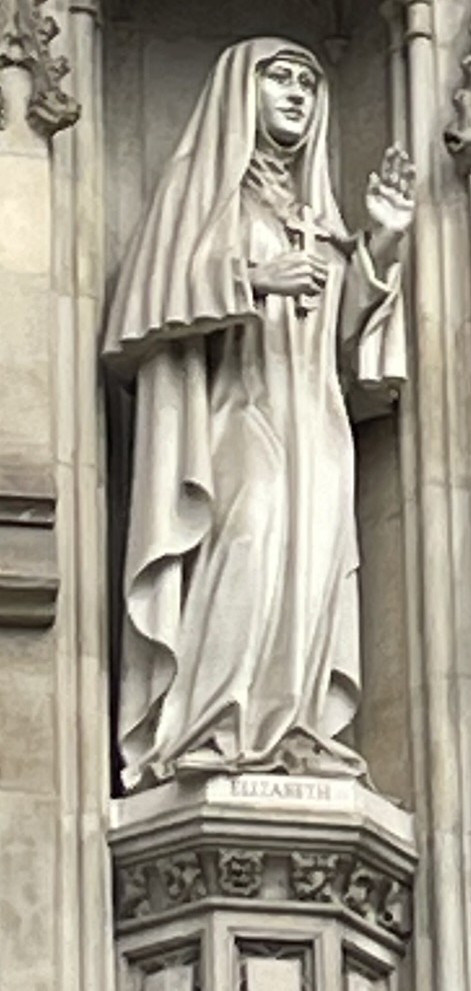
Granddaughter of Queen Victoria, it is fair to say that Elizabeth had privileged beginnings. In 1884 Elizabeth married Grand Duke Sergei Alexandrovich, the fifth son of Tsar Alexander II of Russia and in 1891 she adopted the faith. Amongst the rise of a country in revolution, Elizabeth’s husband was assassinated in 1905, after which point Elizabeth gave away her wealth and possessions and proceeded to open the Martha and Mary home in Moscow – a place of prayer and charity for devout women. By 1917 the Tsarist state had collapsed and the Bolshevik party set about eradicating the Orthodox Church, including those who followed it. A year later Elizabeth was therefore duly eliminated along with fellow religious sisters.
Despite visiting the Abbey three times, on all occasions I arrive when it is shut, hence sub standard photos from a distance. You can take better ones when you go.
 WomenstatuesUK