‘Cranogwen’ (1839 –1916)
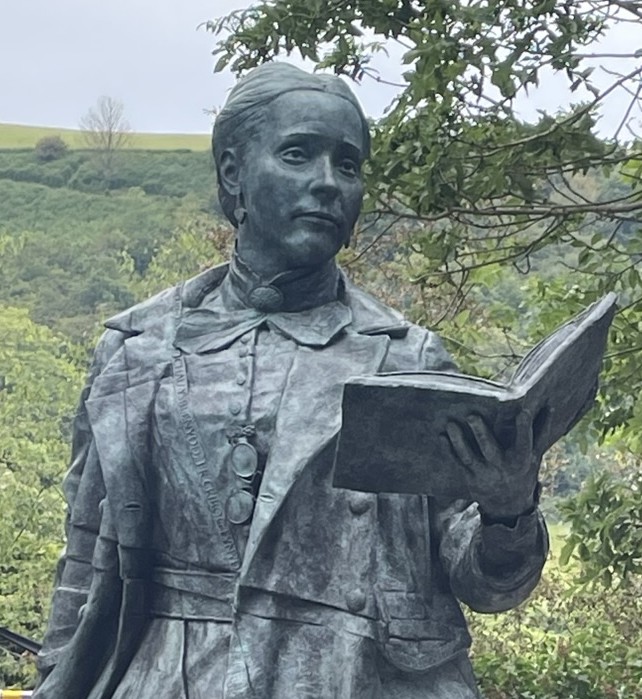
It’s fair to say that I am pretty excited for most of the statues I visit, but this one is particularly special as I’m planning to make the unveiling.
Welsh teacher, poet, editor, master mariner and temperance campaigner. That all sounds pretty deserving of a statue.
Part of the Monumental Welsh Women campaign (see Betty Campbell and Elaine Morgan) this is number 3 of 5 planned.
Born in the village of Llangrannog and spurning a life of dressmaking, Sarah (better known for her Bardic name, Cranogwen) was destined for a life on the seas. She worked with her father as a sailor on cargo ships between Wales and France before gaining a master mariner’s certificate – allowing her to command a ship in any part of the world.
She became a head-teacher at 21, educating the children of the village, while teaching navigation and seamanship in the summer months.
In 1865 she became the first woman to win a poetry prize at the Welsh poetry and music festival National Eisteddfod. From there she went on to be one of the most popular poets in Wales publishing her first collection of poems in 1870 exploring themes from Welsh patriotism to shipwrecks.
In 1879 she became the first woman to edit a Welsh-language women’s magazine, Y Frythones, running it for 13 years. Featuring stories, poems and features, it campaigned for girls’ education and even had a ‘problem page’. If only I could subscribe.
Her talent for the written word went hand in hand with her talent for the spoken word. An ardent believer in the Temperance movement, she visited America twice as a campaigner and preacher, thus further breaking boundaries for women’s roles in Victorian times.
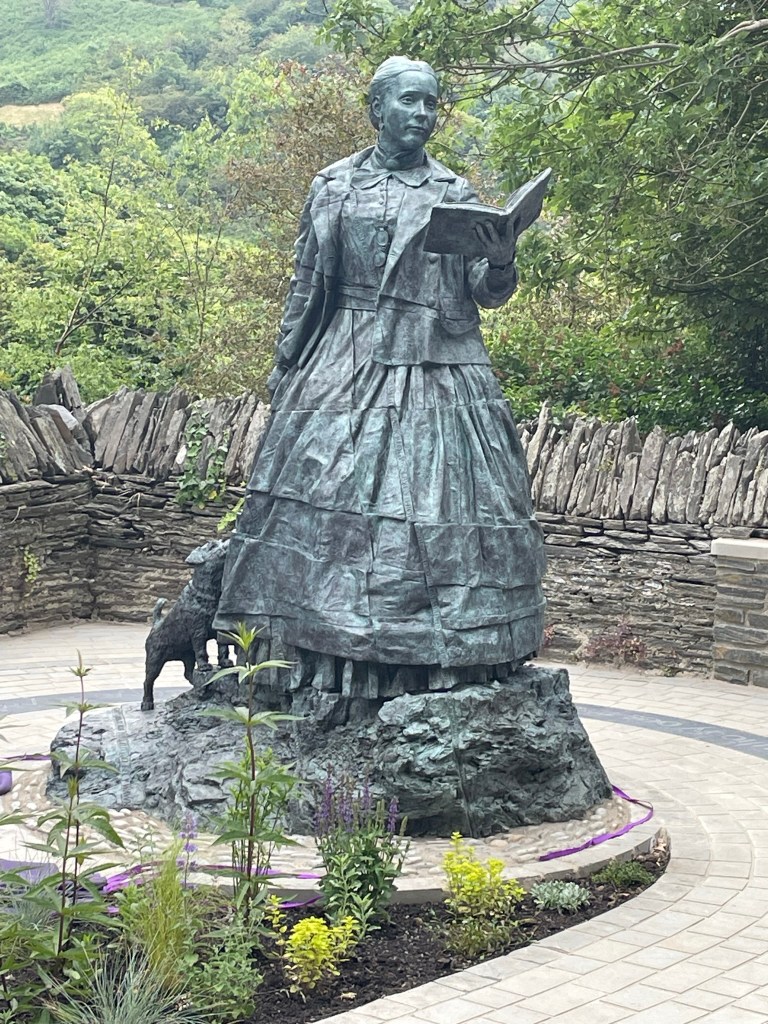
Which brings us to her big reveal. Shrouded in purple and applauded with justified reverence the revealed statue captures her reading her most famous poem, The Wedding Ring accompanied by her dog Fan. Marvellous.
She is buried nearby at St Carannog’s Churchyard.
 WomenstatuesUK