(1810-1865)
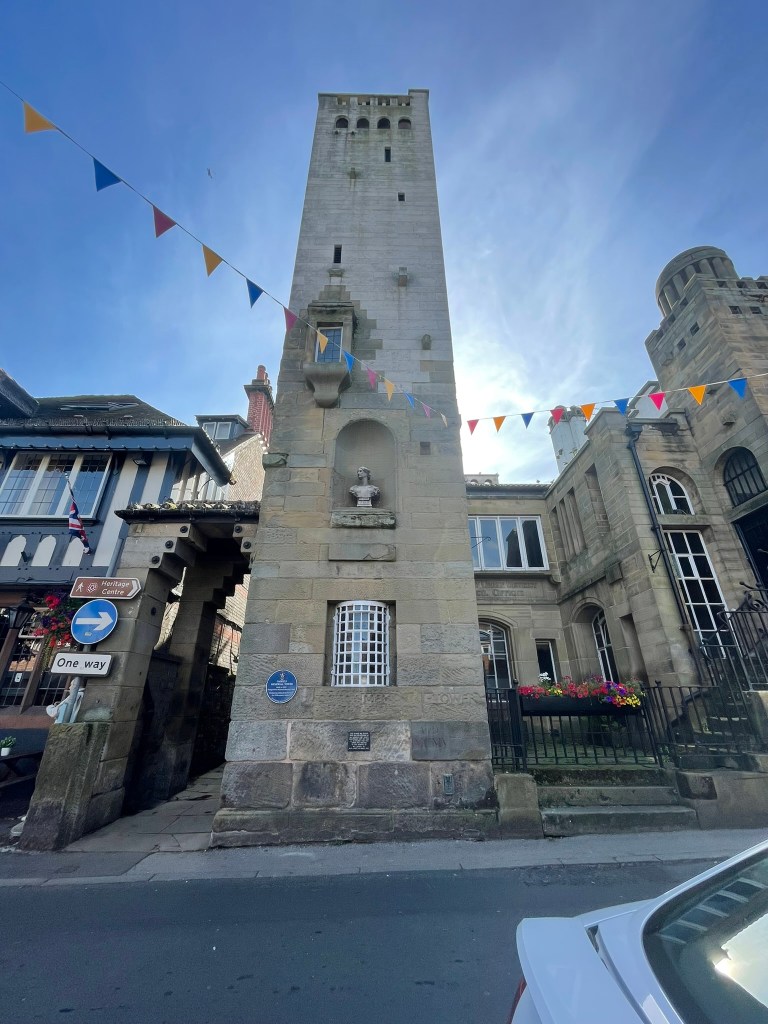
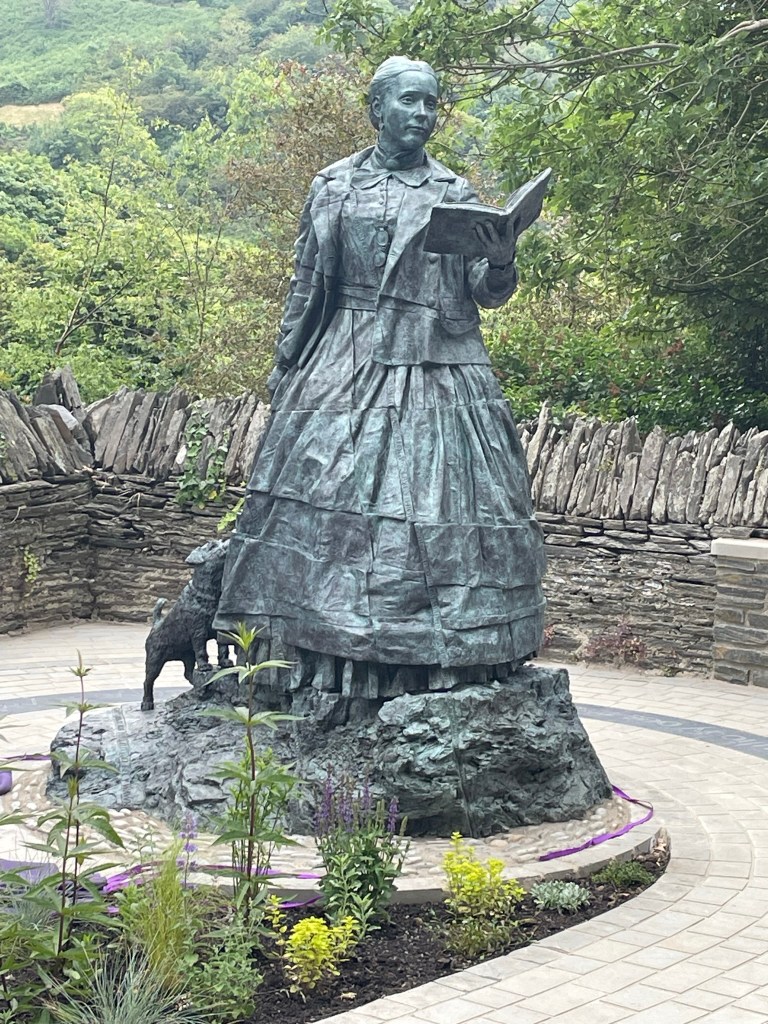
This is the kind of thing that keeps me awake at night. I’m visiting women statues, I’m counting busts in this, and quite frankly, any sculptor listed on the Public Statues and Sculpture Association (PSSA) website, but a memorial tower? Should I check it out? Well, reader, by this entry you can guess that I did. With so few monuments honouring women in history, I guess I have to take all I can get.
And Elizabeth Gaskell is a case in point. Like Elizabeth Wolstenholme Elmy who was yesterday’s visit, this Elizabeth too appears to have been rather ignored through time.
Born in London, upon her mother’s death she moved to Knutsford to live with her aunt. Her early years there were happy, and she used the place as the backdrop to her novels Cranford and the place called Hollingford in Wives and Daughters.
She married Reverend William Gaskell in 1832 and moved to Manchester that same year. They worked amongst the poor of Manchester during a period of great social and industrial upheaval. Religion was at the heart of her life, and this drove her strong sense of duty in helping others. She took on roles as a volunteer teacher and charity worker, whilst writing and raising children. For the first 16 years of her married life, Elizabeth bore several children. While four daughters survived, her first child was still born and her only son, William, died at ten months of scarlet fever. As a distraction from her grief, her husband suggested that she write a novel. It was out of this sorrow that her first novel Mary Barton was born. Published anonymously in 1848, the novel scandalised much of Victorian society, partly through its bare account of the grim realities of everyday life and highlighting societal issues in the newly industrialised landscapes. Her work was deemed unconventional as its sympathies lay so squarely with the working class, but this turned out to be pivotal in their popularity.
Elizabeth was a prolific writer, with 8 novels under her belt alongside shorter works and her biography of Charlotte Bronte which was written as a request from Charlotte’s own father after Charlotte’s death. She also wrote ghost stories and had work published in Charles Dickens’ magazine Household Words.
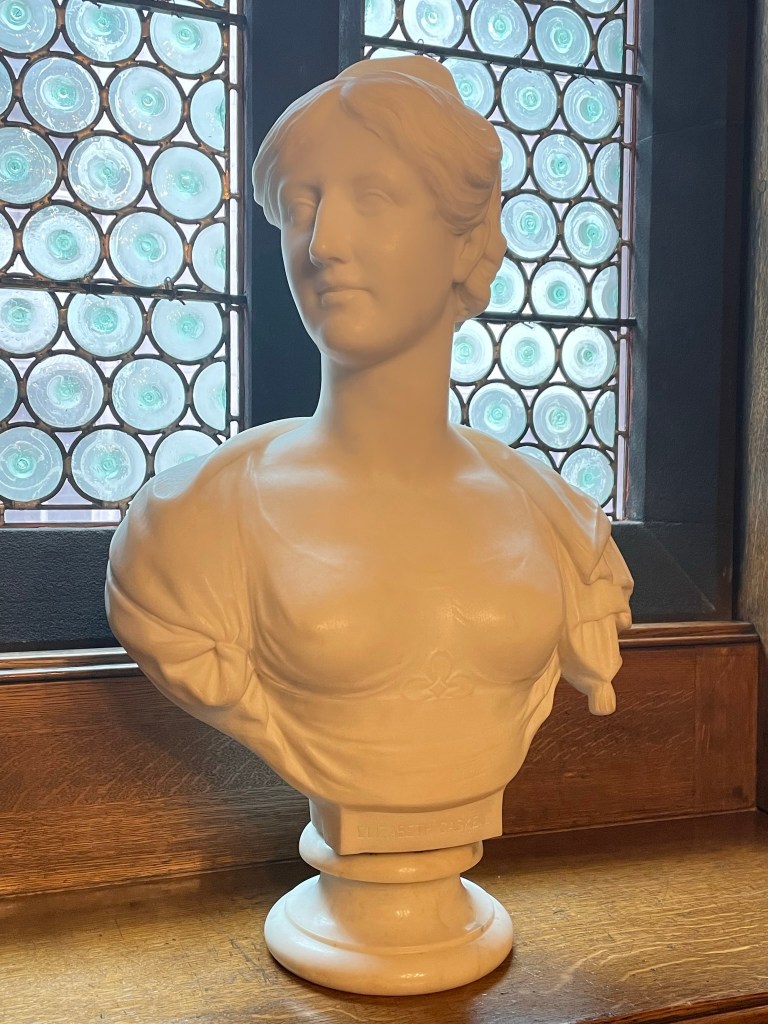
The John Ryland’s Library in Manchester (cast your mind back or turn back the pages to Enriqueta Ryland) holds the world’s most important collection of literary manuscripts by Elizabeth Gaskell, including the only complete manuscript of Wives and Daughters – her last and unfinished novel and her celebrated biography of her friend Charlotte Brontë.
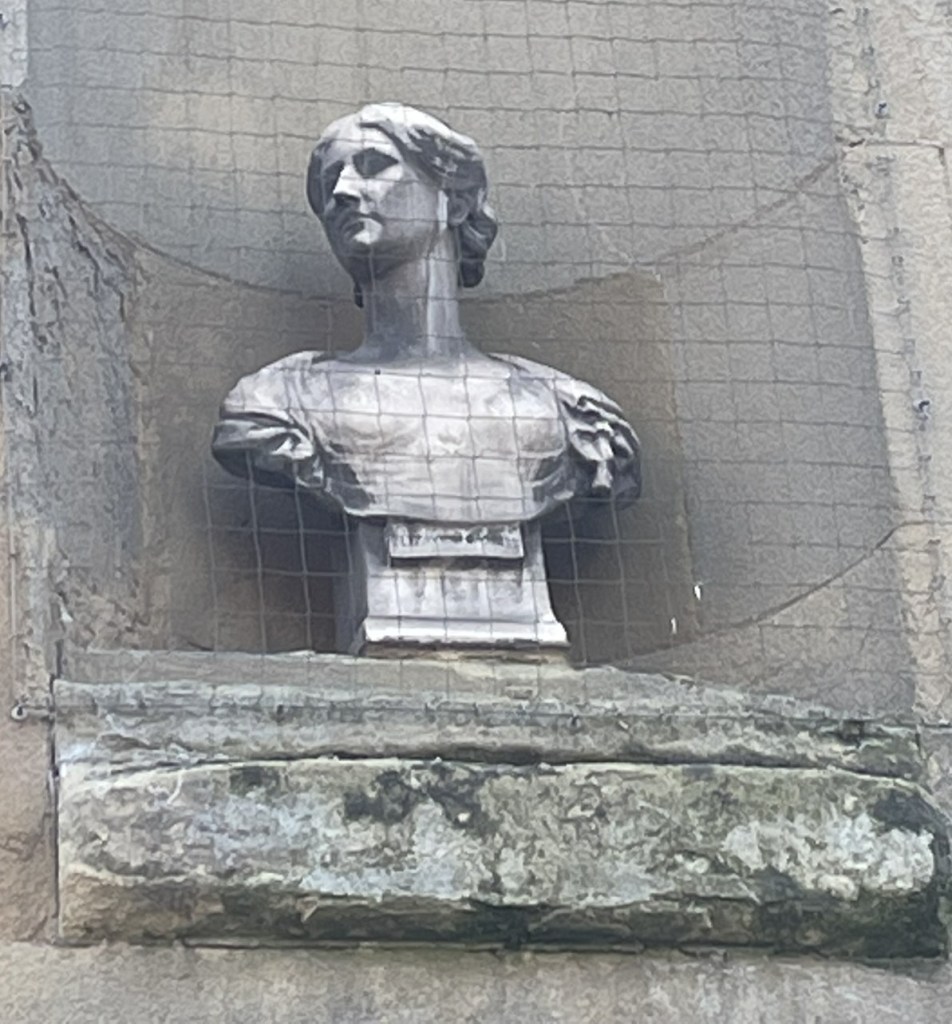
Oh, and on my previous visit to the Library I get a private viewing of a bust of Elizabeth, hidden away in a side room. Hopefully it makes up for the blurred and netted shot of the memorial tower.
 WomenstatuesUK