(1948 – 2004)
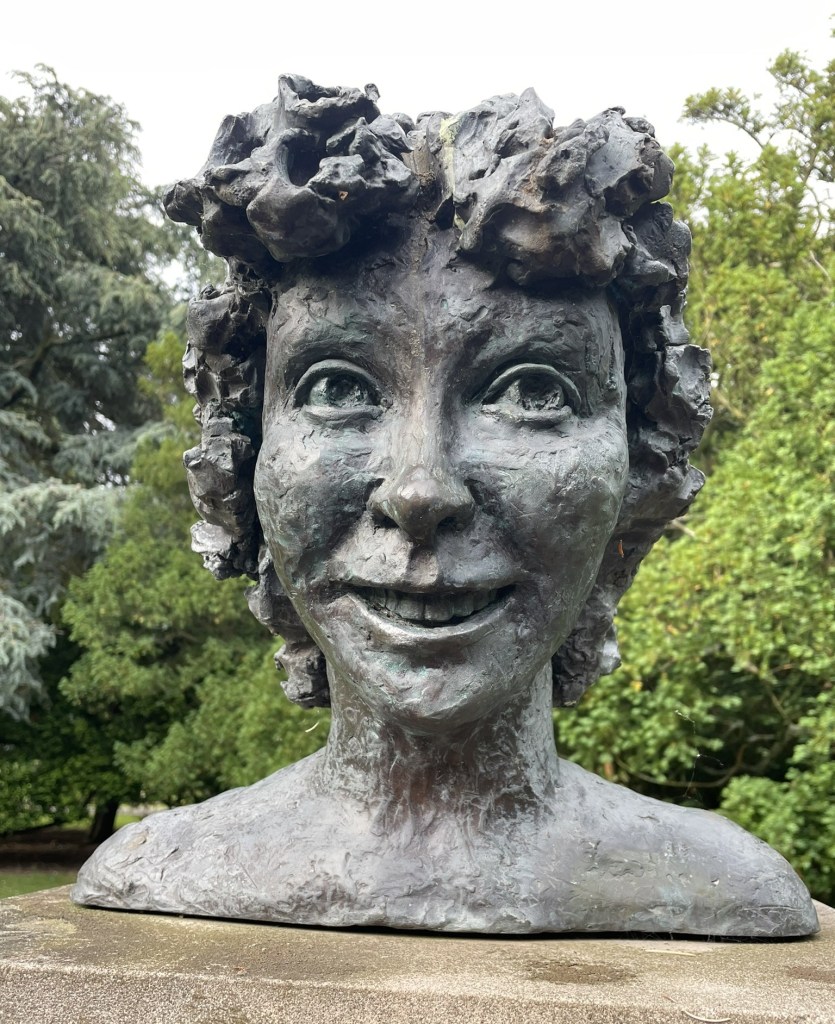
I reach Dollar park on an early summer’s evening and find the walled garden where I believe her statue to be is locked up for the night. I peer through the railings trying to spot her, whilst checking out the height of said railings in the event of me having to scale them. It’s not the getting over I’m worried about but getting back out again. I have visions of the park ranger finding me in the morning dew half eaten by badgers. But something isn’t quite right. And not just my flesh enticing small mammals. I go through images I’ve collected on screen of Sheila’s sculpture to check the background and….I believe she may be placed elsewhere in the park. No feast for you tonight badgers!
Sheila, as the inscription says, was a campaigner for workers’ safety, the homeless and
consumers’ rights. Erected a year after her death her memorial was designed and sculpted by a by a woman: Susanna Robinson. Susanna in an interview explains that although Sheila’s partner (who commissioned the work) to be smiling, it is very difficult to cast teeth, hence most sculptors are straight faced. Who knew? Still, Sheila apparently described herself as, “fully paid-up member of the awkward squad” so her pose seems fitting.
Sheila was born not far from Dollar Park (hence the bust’s location) and began a trade union career in the 1970s, becoming Assistant General Secretary of the Wallpaper Workers’ Union. She went on to the Workers’ Educational Association, and in 1976 joined the Association of Scientific, Technical and Managerial Staffs as National Health and Safety Officer. She was instrumental in turning health and safety issues into major concerns. In the 80’s she became the Director of the homeless charity Shelter, before moving to become Director of the Consumers’ Association (now known as Which?). Her work there lead to a huge campaign around standards in the food industry and was influential in the setting up of the Food Standards Agency in 2000.
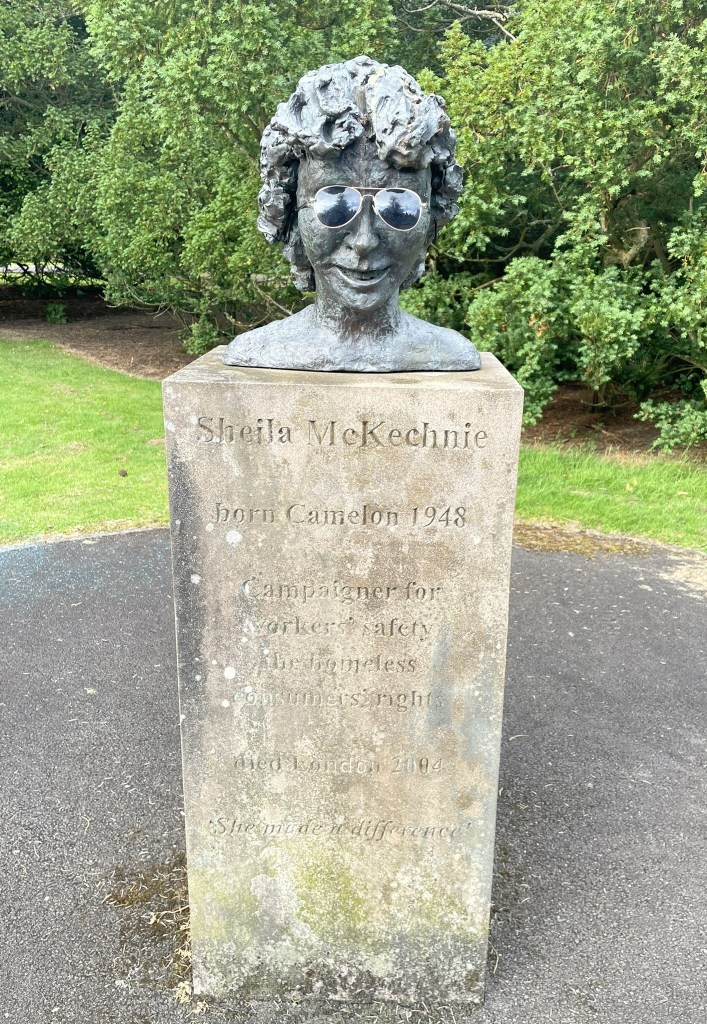
Sheila died at the age of 55 from cancer. With the help of her partner, the Sheila McKechnie Foundation was set up a year later to continue championing the right to campaign.
The end inscription perhaps sums her up the best; ‘She made a difference’.
I find Sheila in the park wearing a pair of sunglasses and think about the person who put them there – a kind citizen who found them and wanted to place them somewhere easy to find for the owner. I diligently move them for photos and then, after a thought, I put them back on her. I think Sheila would have approved of a good deed done.
 WomenstatuesUK