Bessie Braddock

(1899 – 1970)

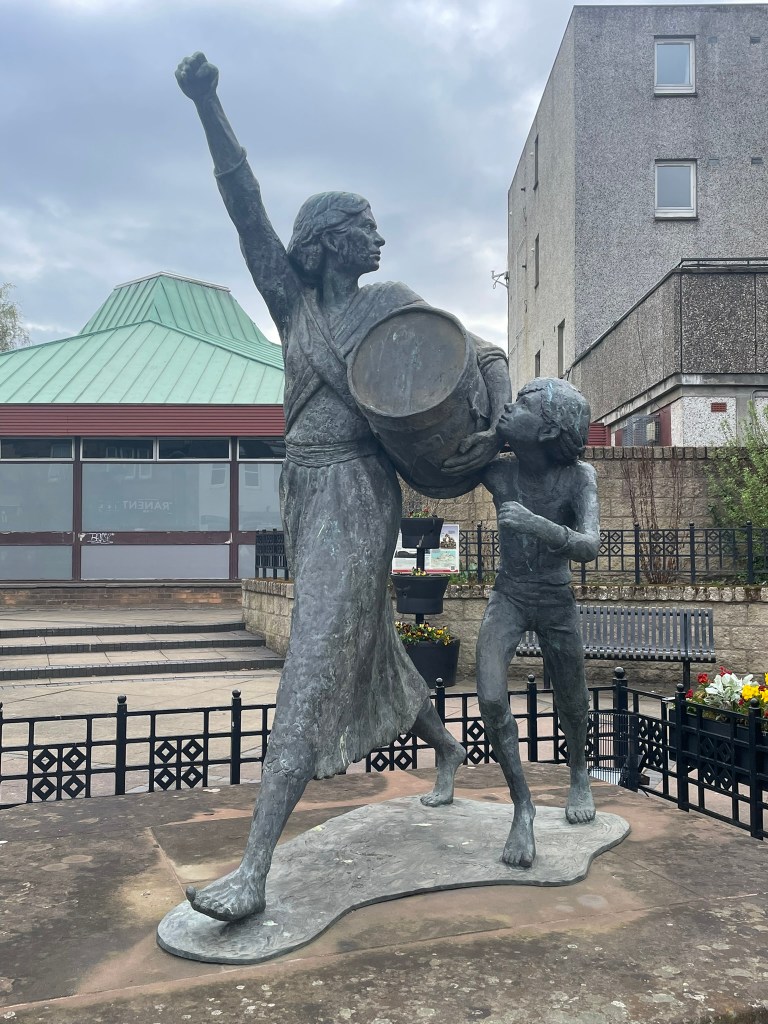
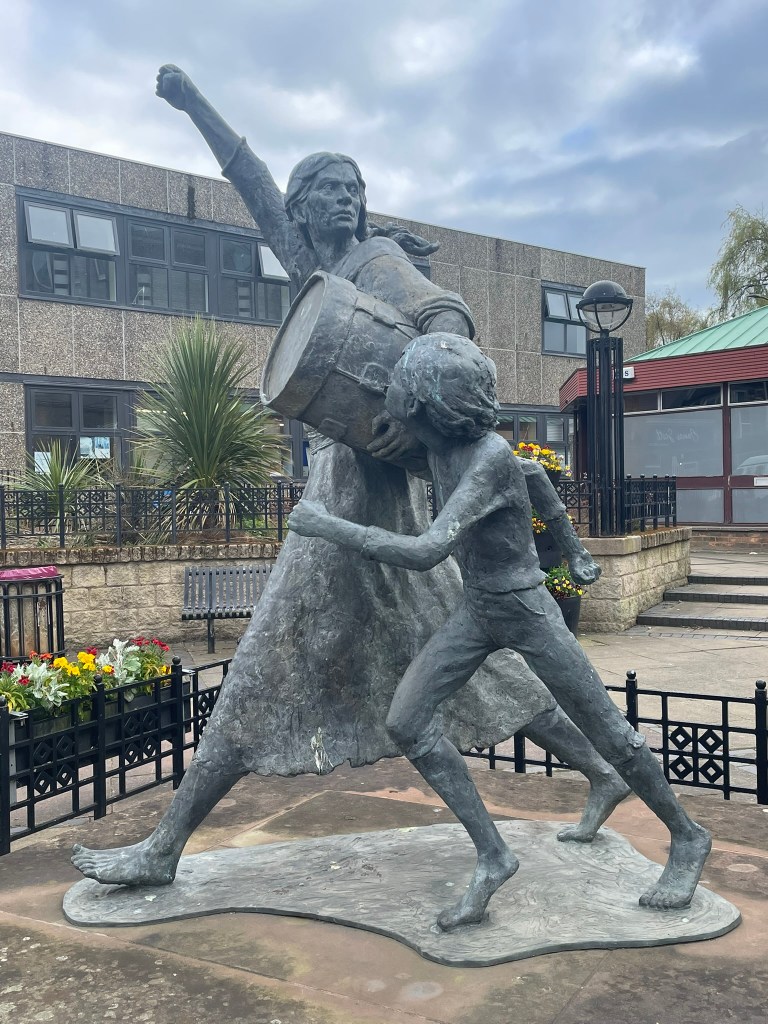
Hailed as one of the most distinctive political personalities of the century and earning the name of ‘Battling Bessie’, she was believed to have inherited much of her campaigning spirit from her mother Mary Bamber; an early socialist and trade union activist.

A member of the Liverpool County Borough Council from 1930 to 1961 and a Labour Party Member of Parliament from 1945 to 1970 Bessie was described as being frequently at odds with her party while pursing social reform.  She won a national reputation for her forthright campaigns in housing, public health and other social issues such as child welfare, maternity care and youth crime.  She was a staunch supporter of the establishment of the National Health Service in 1948 and served on the Royal Commission for Mental Health, leading the way for the 1959 Mental Health Act.  By the time of Labour’s victory at the 1964 general election her health was deteriorating, and her work took a back seat.  Towards the end of her life she became Liverpool’s first woman freeman.

She is placed next to fellow Liverpudlian and comedian Ken Dodd. The statue depicts Bessie clutching an egg, as she was the politician responsible for the implementation of the Lion Quality Mark on British products. I’ll leave you to ponder if you would like to be immortalised holding an egg.

Cathernine ‘Kitty’ Wilkinson

(1788 – 1860)

It’s a habit of mine to just rock up at a venue and expect direct passage to the statue I need to see.  I’m finding this often causes problems but I’m somehow unable to plan ahead for such eventualities.  This is the case when I go to visit Kitty and the venue is closed to the public.  Fortunately, the receptionist and volunteer takes pity on me and the volunteer allows my sons and I access to the hall where Kitty stands, giving me a fantastic insight to the venue and to Kitty.  None of which I write down at the time.

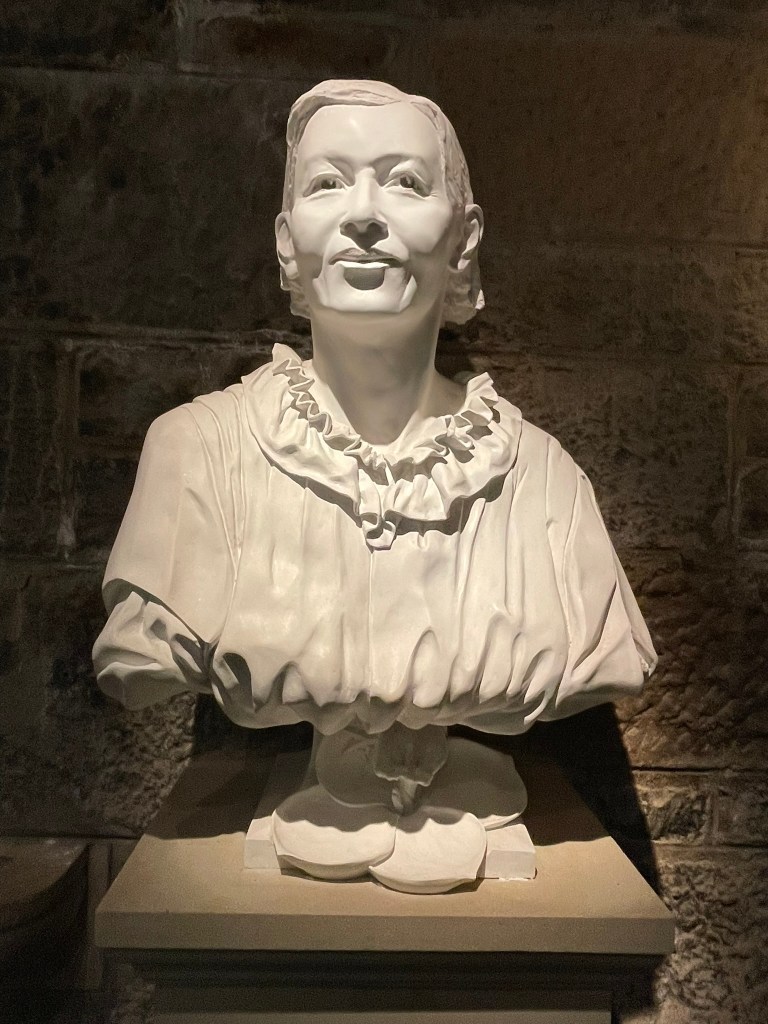
Commissioned to be the first statue to be placed in the Hall for more than 100 years, and the first woman to be represented, Kitty certainly earns pride of place.

Kitty’s life – as we may expect for the time – was a hard one.  Born in 1786 in Londonderry, her family set sail for Liverpool to start a new life in 1795.  Tragically, her father and sister were swept away at sea on the journey.  From around aged 11-18 she worked in a Lancashire mill before returning home to her mother in Liverpool and taking up domestic service work.  She married a sailor in 1812 and had two children before her husband was lost at sea.  You may be sensing a difficult trajectory by now.

By 1832 a cholera epidemic was sweeping through Liverpool.  Kitty worked by taking in washing to earn money, owning the only boiler in the neighbourhood.  To help combat the disease she turned her home into a washhouse, allowing neighbours to boil wash clothes and bedding as the only way to fight the spread.  Her benevolence did not end there, and she was renowned for taking in orphans and widows off the street and making sure they were cared for at a time of abject poverty.

Convinced of the importance of cleanliness in combating cholera, Kitty pushed for the introduction of public baths so the poor could keep themselves clean and in 1842 she opened Britain’s first public washhouse, earning her title, ‘the Saint of the Slums’.

St George’s Hall opened its doors in Kitty’s lifetime in 1854.  Imagine what Kitty would have made of it knowing she would have her own statue inside it.  It was unveiled by Kitty’s great great great niece.  I love her stance of rolling up her sleeves and the gaze of determination.  The statue, as does the venue, has Grade 1 listed status, so no touching when you visit.

Cilla Black

(1943 – 2015)

Born as Priscilla White in Liverpool, Cilla Black was a singer, actress and television presenter. 

Determined to become an entertainer, Black gained a part-time job as a cloakroom attendant at Liverpool’s Cavern Club, best known for its connection with The Beatles.  Her impromptu performances impressed The Beatles and John Lennon suggested a try-out with their manager Brian Epstein.  The audition did not go well, but, seeing her perform later, Epstein recognised her talent and she was signed to his management as his only female vocalist.

Her career in music spanned 19 UK ‘Top 40’ singles (including two number one hits), and 15 studio albums.  Before his death, Epstein had already paved the way for a TV career for Cilla.  She then ran her own variety series, ‘Cilla’ until 1976.  In the 1980’s Cilla went on to host other TV entertainment series such as ‘Blind Date’ and ‘Surprise Surprise’ over the next 20 years, amassing more than 500 television shows of her own in her lifetime.

So how did Priscilla White become Cilla Black?  The story goes that the music paper ‘Mersey Beat’ misprinted her surname as Black.  And there you have it.

The statue features images from the singer’s life and lyrics in the fabric of her dress.

Commissioned by Cilla’s sons, the sculptor Emma Rodgers describes a beautiful moment:
When they were looking around Liverpool for a suitable site, there was an alarm going off in Mathew Street. When Ben stood in the spot by the old Cavern entrance the alarm stopped, and they took that as a sign of approval.

So that’s why Cilla is where she is: exactly where she should be.

Enriqueta Augustina Rylands

(1843 – 1908)

Born in Cuba to British merchant family, Enriqueta was raised in New York, London and Paris (quite an education) before settling in England when her parents died.

Sometime after 1860, Enriqueta became companion to Martha, the wife of wealthy Manchester merchant John Rylands.  In 1875, eight months after Martha’s death, Enriqueta married John Rylands, then aged 74.  When he died in 1888, Enriqueta inherited his estate, becoming a major shareholder of his family’s textile firm and the Manchester Ship Canal.

In memory of her husband, Enriqueta founded the John Rylands Library.  She admired the design of the library at Oxford’s Mansfield College library and commissioned the architects for something similar, albeit more lavish.  In 1899 John Rylands Library was formally dedicated to the public by Enriqueta on what would have been their wedding anniversary.  On the same day, Enriqueta was awarded the honorary Freedom of the City of Manchester – the only woman to be honoured this way until the 1950s.  Enriqueta continued to donate large sums of her fortune, often in secret, until her death.  Despite Enriqueta’s fame and achievements, not much is known about her private life, as she asked for her personal correspondence to be destroyed when she died.

A full-length statue of her stands in the library, commissioned by supporters and was unveiled a few months before her death.  The literature alongside the statue explains the link between the family’s wealth and the cotton slave industry.

Irinma Bell

(1965 – ) and Yomi Mambu

Now part of the family support centre Chrysalis, Erinma works as part of an inspirational network of community leaders and volunteers active across south Manchester, working towards a socially inclusive community.

The sculpture – a one and a half life-sized bust – is made from 50 lethal firearms seized by police or surrendered during gun amnesties. The weapons were melted down by Manchester-based artists’ collective ‘Guns to Goods’ and turned into the sculpture by artist Karen Lyons.

When I pay a visit, the Town Hall is closed for refurbishment, but some helpful Mancunians point me in the direction of the Central Library where she is temporarily displayed.

By chance, I stumble across another bust temporarily housed here.  Sierra Leone born Yomi Mambu, was the first Black person born outside of the UK to hold the position of Lord Mayor of Manchester.  Yomi served as one of the first Black councillors of the city before her stint as Lord Mayor 1989-1990.  Other than these details I struggle to find out much more about her.

Lady Anne Clifford

(1590 – 1676)

Born at Skipton Castle and the only surviving child of George Clifford, 3rd Earl of Cumberland, you’d think it was a safe bet that Anne would have inherited on her father’s passing.  Unfortunately, life wasn’t that easy.  George’s titles and estates passed to his brother Francis.  Deprived of her inheritance, Anne fought a long and complex legal battle culminating in King James I, judging in favour of her Uncle Francis.  When her Uncle’s son died without a male heir, Anne finally inherited the Clifford estates, covering some 90,000 acres across northern England.  Careful what you wish for. 

As a devout Christian, with her wealth she restored many churches and was a generous benefactor, taking her Estate Owner role seriously.  She was deemed to be a creative person, with a passion for art, architecture and sculpture.  Her own statue depicts her bare footed as a nod to her free spiritedness.

Emily Wilding Davison

(1872 – 1913)

Emily Wilding Davison was a suffragette whose efforts for women’s right to vote made her one of the most prominent figures in the movement.  Joining the Women’s Social and Political Union (WSPU) in 1906 she became an officer and a chief steward during marches.  Three years later she gave up her job as a teacher and went to work full-time for the suffragette cause.  In this time, she was arrested nine times, went on hunger strike seven times and was force-fed on forty-nine occasions.  An ardent campaigner, her tactics included breaking windows, throwing stones, setting fire to post-boxes, planting bombs and hiding overnight in the Houses of Parliament – including on the night of the 1911 Census, making her address, ‘The House of Commons’ therefore affording the same voting rights as men.  She died after being hit by King George V’s horse at the 1913 Derby when she walked onto the track during the race.  Mystery still surrounds the circumstances.  She gave no prior explanation for what she planned to do at the Derby with historians noting she had bought a return train ticket.  Theories include the suggestion she was attempting to pin a suffragette flag to the king’s horse.

The statue in Epsom sets out the dates for emancipation:

1918 – property owning women over the age of 30
1928 – all women over the age of 21
1968 – all women over the age of 18

Both statues have her seated (and Ray Lonsdale’s depiction is a favourite of mine) but given her history it is hard to imagine her being that sedentary.  Still, the detail in both depictions are worthy of a visit.

Margot Fonteyn

(1919 – 1991)

Regarded as the UK’s first homegrown prima ballerina, Margot was born in Reigate and began ballet lessons aged four before her family moved to China.  Returning to the UK aged 14 she joined Sadler’s Wells School in 1934 (later renamed the Royal Ballet).  When the company’s first prima ballerina left, many of the roles were inherited by Margot (by then aged 16).

In 1949, she led the company in a tour of the United States and became an international celebrity.  She became president of the Royal Academy of Dancing in 1954 and, largely due to her international fame and many guest artist requests, the Royal Ballet allowed Fonteyn to become a freelance dancer in 1959.

She was reaching the end of her career when she first performed with Nureyev in Giselle in1962; a role she was reluctant to take on due to a 19 year age difference.  Still, their partnership became one of the most famed in ballet’s history.  Fonteyn retired in 1979 at the age of 60 but continued to be involved in the world of dancing until she died.

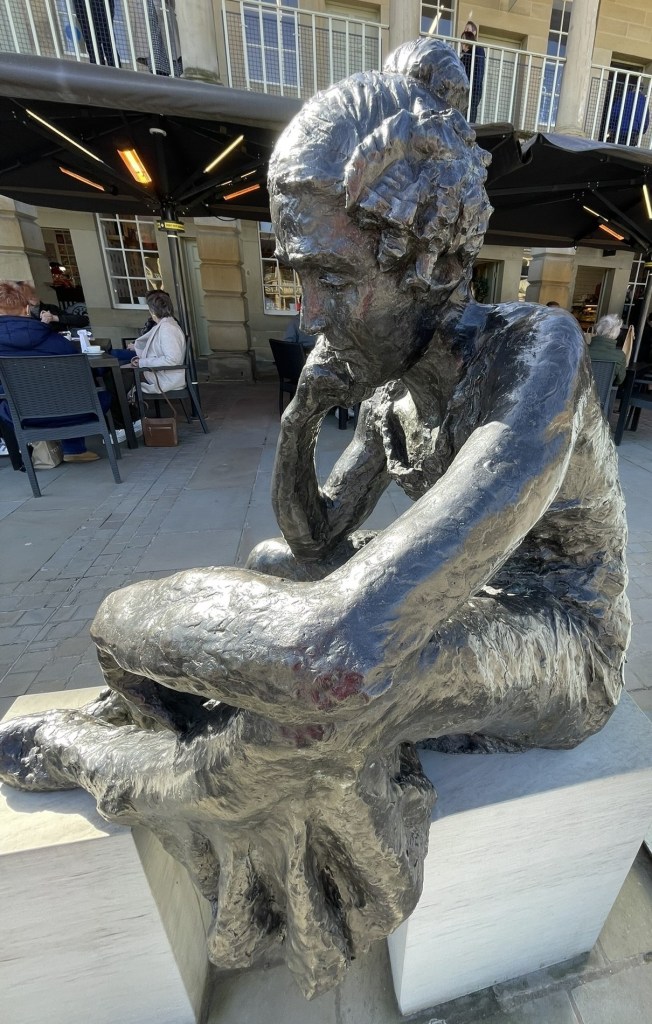
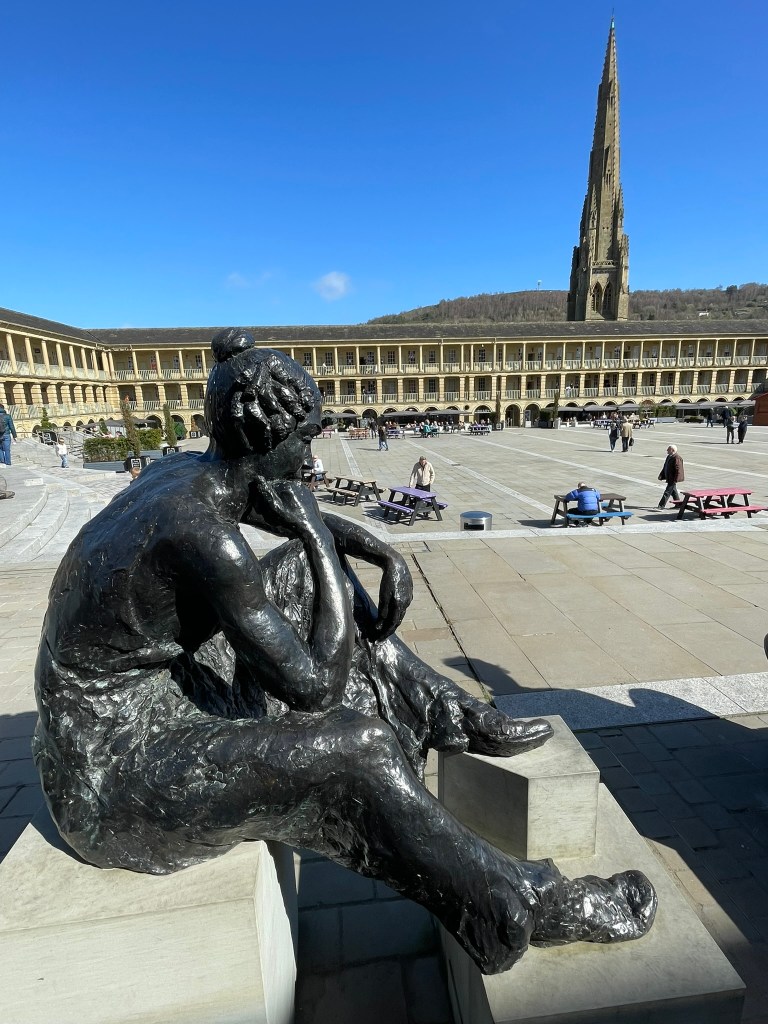
The bronze was unveiled by Margot herself in 1980 and was commissioned by fans from around the globe.  The statue depicts her as the water sprite, Ondine, which was her favourite role.

Shirley Bassey

(1937 – )

Buoyed up by yesterday’s statue unveiling in south Wales, I take a detour home via north Wales.  I’m in the country anyway, so why not saunter along the west coast and take in a Shirley Bassey sculpture while I can?

I take the jaunt along the A487, happily coasting behind Owen Jones’ Landscape Gardener’s truck.  His vehicle design features successful project pictures and lists his contact details.  By the time he turns off some 100 miles later I feel I know him well enough to do his accounts.

Born in Tiger Bay, Cardiff, Shirley began performing as a teenager in 1953.  By 1959 she was the first Welsh person to get a number one hit in the UK Singles Chart and over the next 40 years has accumulated 27 hits in the Top 40 Charts and sold over 140 million records worldwide.  She is the only singer who has recorded more than one James Bond film theme song (bonus points if you can name all three).

The sculpture took artist Marc Rees around 600 hours to create, and is based on Queen Boudicca, complete with power pose, spear and a hollow heart symbolising art as the beating heart of the community.

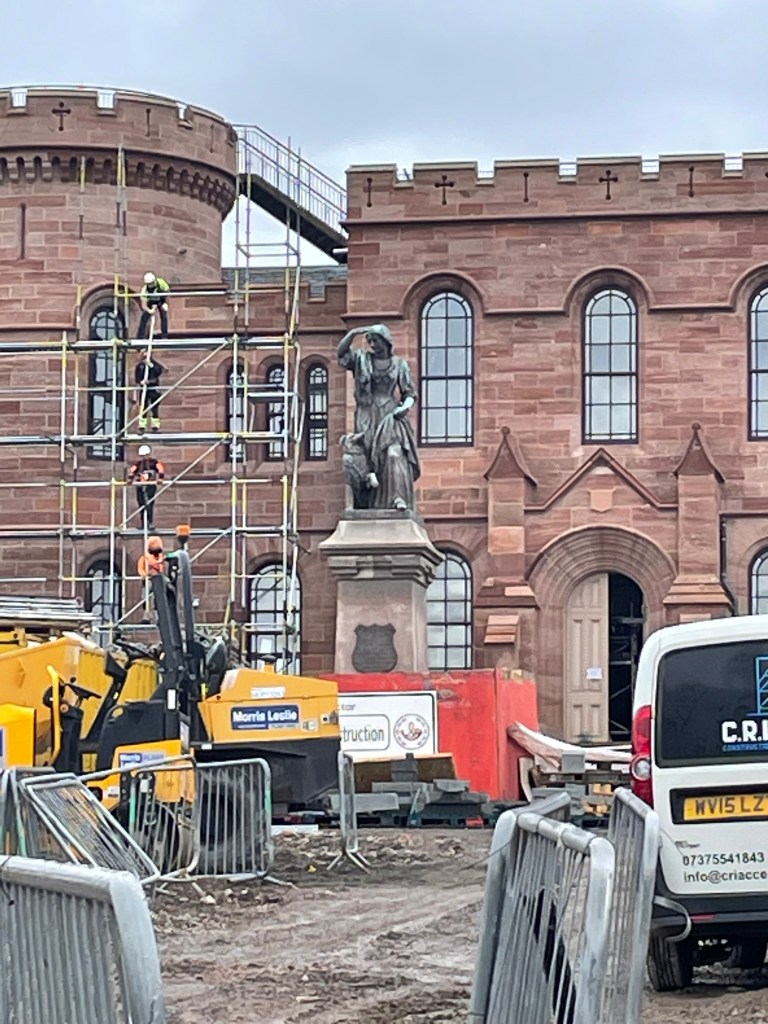
I park up at the castle on a sleepy Sunday morning to the spot where Shirley should be.  Accept she isn’t there.  I walk round its perimeter in case I have mistaken the balcony and approach a few strangers for direction, all to be met with a blank.  When the castle opens, I finally get somewhere when the receptionist tells me that the sculptor was only temporary and hadn’t been there for years.

David Lloyd George may well shake his fist.

And so this weekend we gained a statue and lost a statue.  Maybe the statue will turn up again one day.  And if it is sitting in your back garden or your own castle, drop me a line…

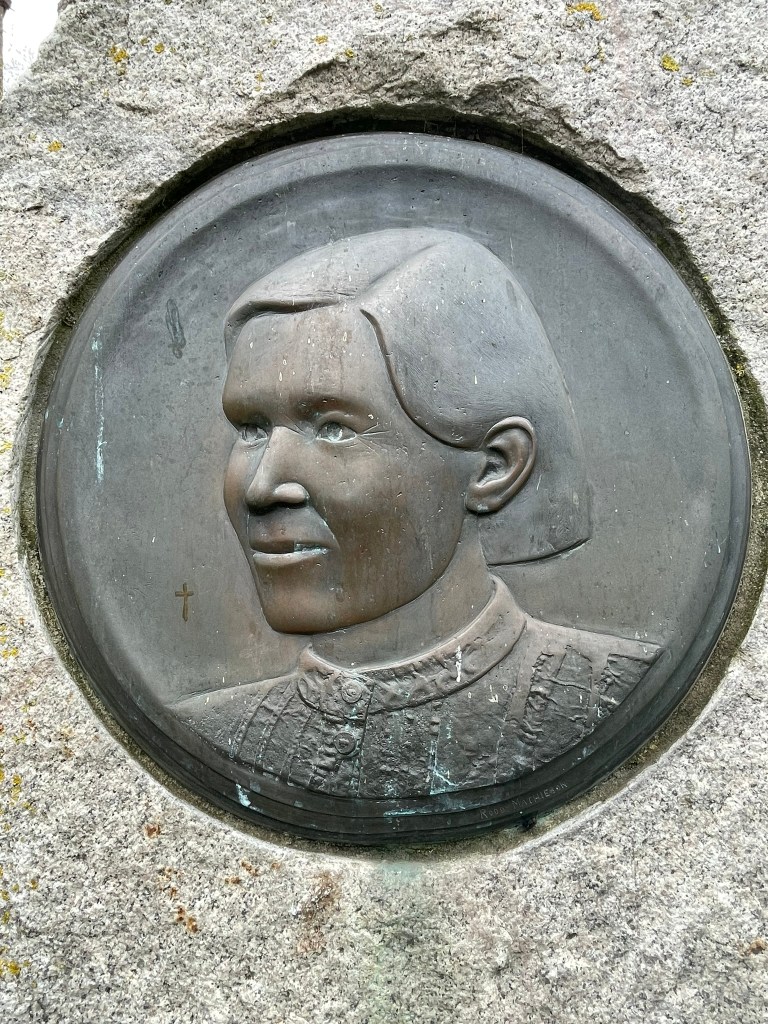
Sarah Jane Rees

‘Cranogwen’ (1839 –1916)

It’s fair to say that I am pretty excited for most of the statues I visit, but this one is particularly special as I’m planning to make the unveiling.

Welsh teacher, poet, editor, master mariner and temperance campaigner.  That all sounds pretty deserving of a statue.

Part of the Monumental Welsh Women campaign (see Betty Campbell and Elaine Morgan) this is number 3 of 5 planned.

Born in the village of Llangrannog and spurning a life of dressmaking, Sarah (better known for her Bardic name, Cranogwen) was destined for a life on the seas.  She worked with her father as a sailor on cargo ships between Wales and France before gaining a master mariner’s certificate – allowing her to command a ship in any part of the world.

She became a head-teacher at 21, educating the children of the village, while teaching navigation and seamanship in the summer months.

In 1865 she became the first woman to win a poetry prize at the Welsh poetry and music festival National Eisteddfod.  From there she went on to be one of the most popular poets in Wales publishing her first collection of poems in 1870 exploring themes from Welsh patriotism to shipwrecks.

In 1879 she became the first woman to edit a Welsh-language women’s magazine, Y Frythones, running it for 13 years.  Featuring stories, poems and features, it campaigned for girls’ education and even had a ‘problem page’.  If only I could subscribe.

Her talent for the written word went hand in hand with her talent for the spoken word.  An ardent believer in the Temperance movement, she visited America twice as a campaigner and preacher, thus further breaking boundaries for women’s roles in Victorian times.

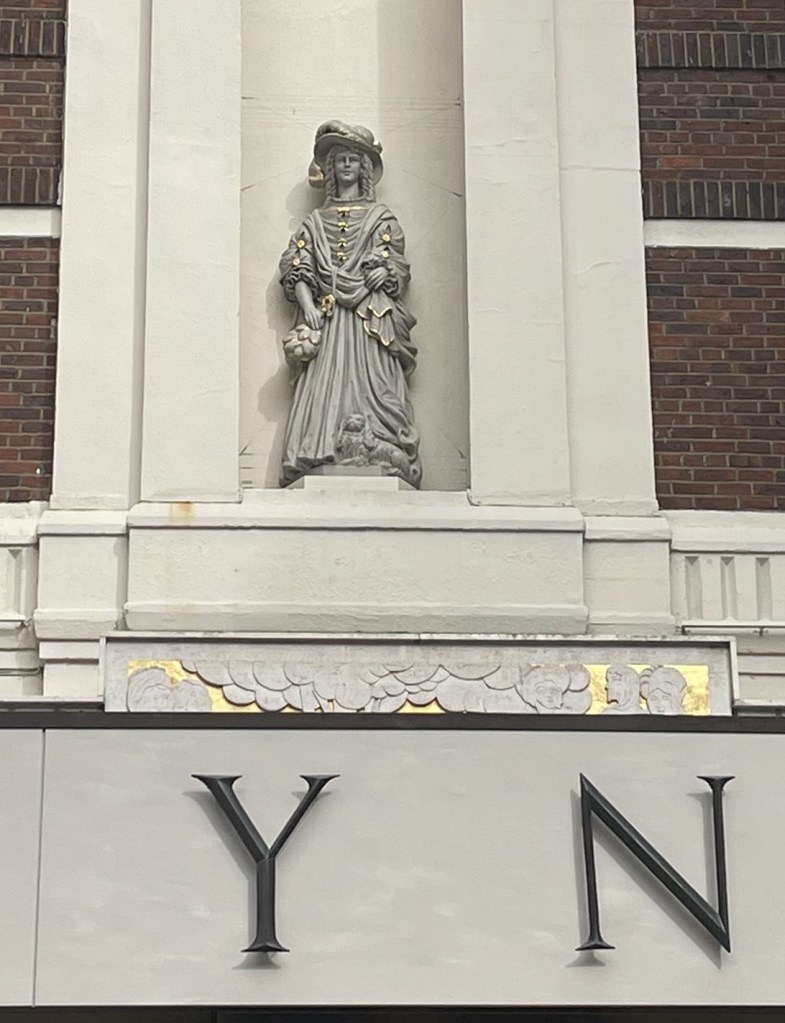
Which brings us to her big reveal.  Shrouded in purple and applauded with justified reverence the revealed statue captures her reading her most famous poem, The Wedding Ring accompanied by her dog Fan.  Marvellous. 

She is buried nearby at St Carannog’s Churchyard.