Margaret MacDonald

Lincoln’s Inn Fields, London WC2

“Took no rest from doing good”

I hovered around Margaret’s statue a while as there was a couple on the seat enjoying lunch (and possibly each other).  Their exit may have been quickened by my loitering, but it’s great to see folk interacting with history, art and Kentucky Fried Chicken.

Margaret (1870-1911) was a social reformer.  She was involved in the suffragist movement and took part in voluntary social work supporting and highlighting the need for reform in women’s welfare. This led to her playing a key role in establishing the first trade schools for girls in 1904. A noticeboard in the park says she was devoted to her 6 children.  It seems she packed a lot in to her relatively short life. Do I feel a little envious of this? Sure I do.

At the front of the statue are the words, ‘This seat is placed here in memory of Margaret MacDonald who spent her life in helping others’.  The inscription at the rear reads, ‘She brought joy to those with whom and for whom she lived and worked. Her heart went out in fellowship to her fellow women & in love to the children of the people whom she served as a citizen and helped as a sister. She quickened faith and zeal in others by her life and took no rest from doing good.’

Margaret and her family lived on Lincoln’s Inn Fields, so it was fitting for her husband Ramsay Macdonald to design the statue and have it erected in the park after her death in 1914.  Margaret supported socialism and financed Ramsay’s early career in politics.  He went on to become Labour’s first Prime Minister. Sculptor: Richard R Goulden https://en.wikipedia.org/wiki/Richard_Reginald_Goulden

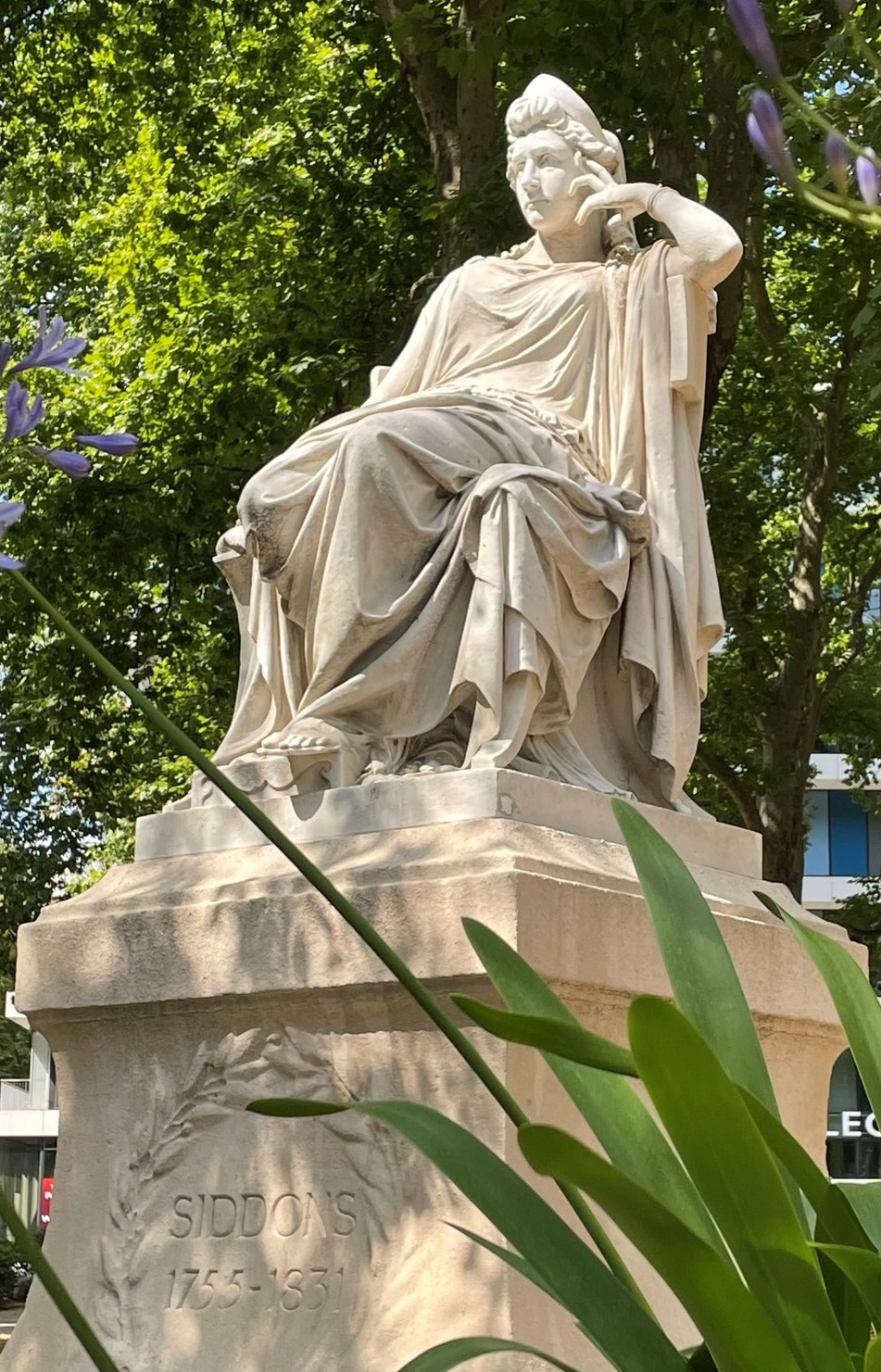
Sarah Siddons

Paddington Green, London W2

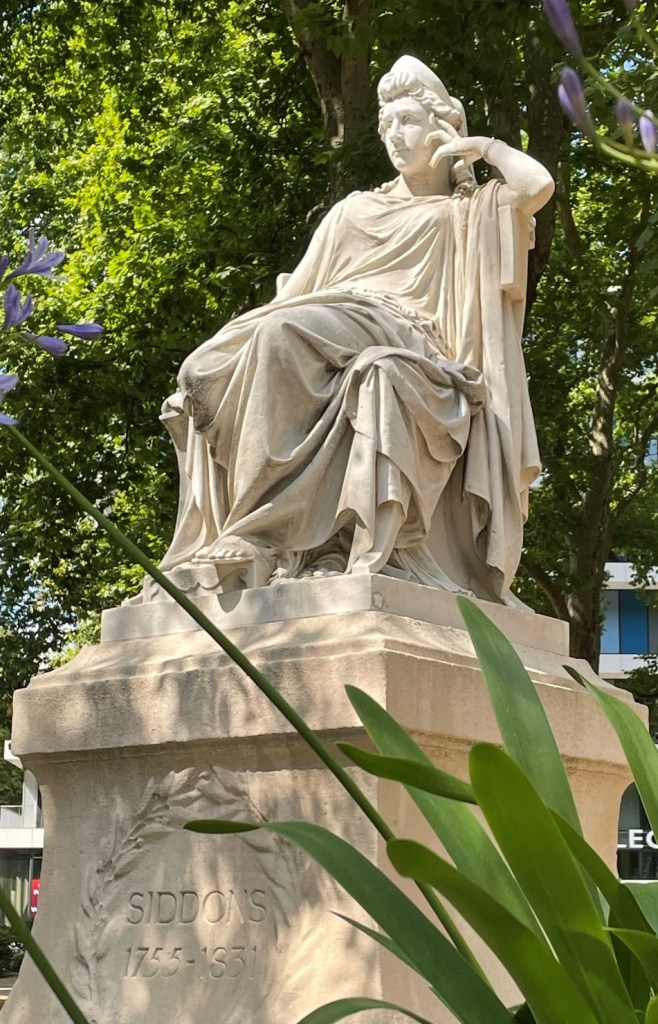
Who knows what Sarah would have made of the view from her statue. She faces the Marylebone Flyover on Harrow Road but she sits gracefully in a leafy park which offers respite from the bustle of the dual carriageway into London.

Welsh born in 1755 into a family of travelling theatre actors, her profession as a ‘tragedy’ actor meant she took on many high profile roles including Hamlet, but notably that of Lady Macbeth.  She had a successful career before retiring from stage in 1812.

To the north of the park lies St Mary’s Churchyard where Sarah is buried.  I only find her tomb due to a google search as it is worn and neglected.  Protected with fencing, and erased through time, it is difficult to read the inscription.  Before taking a photo I dutifully remove a plastic coke bottle from one of the vertical spikes surrounding the stone.  Sarah appears to have been long forgotten here, but at least a statue keeps the memory of her alive.

Mary Seacole

St Mary’s Terrace, London W2

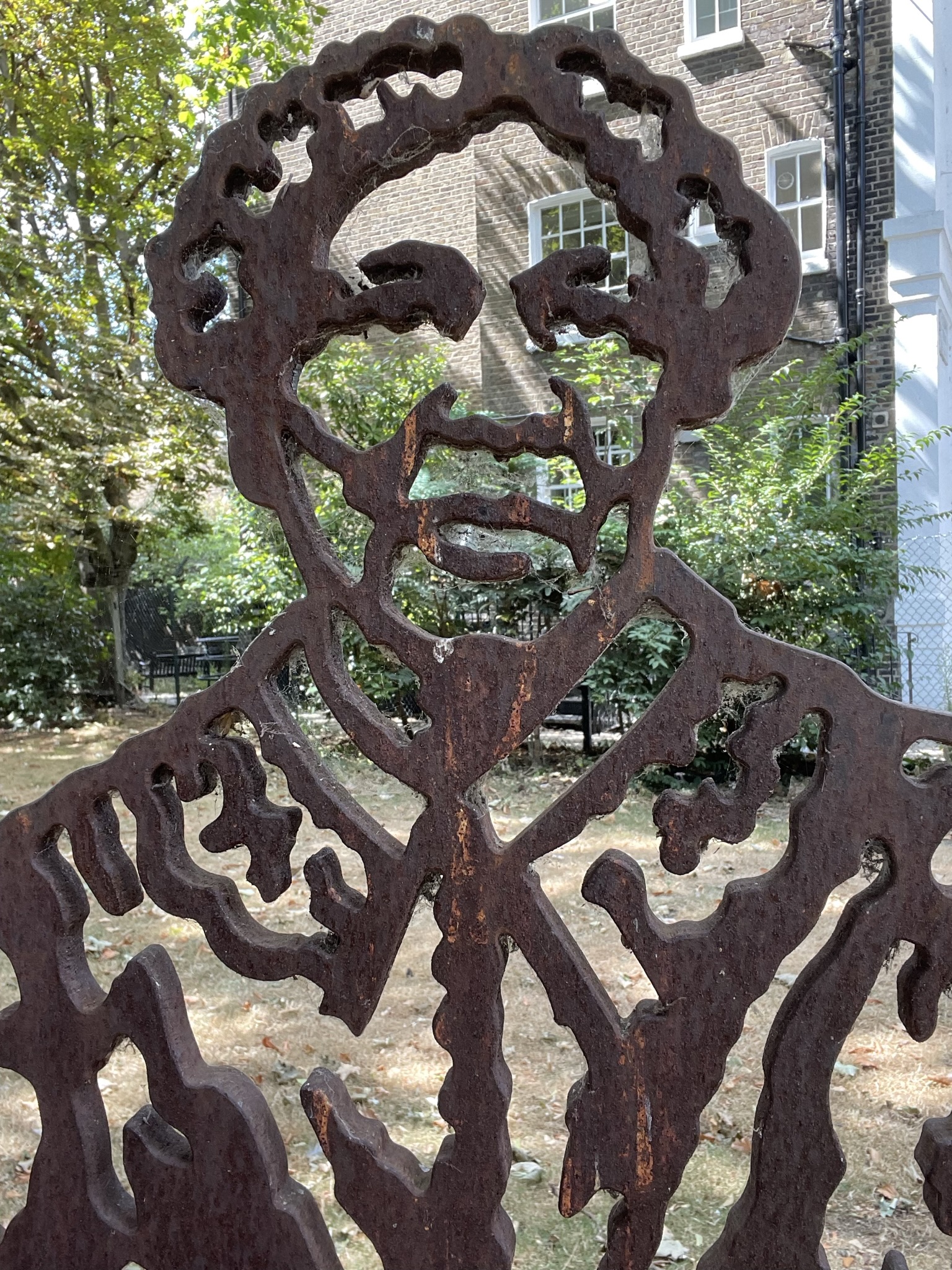
Mary turns out to be a surprise find on my way to my first ‘official’ statue…

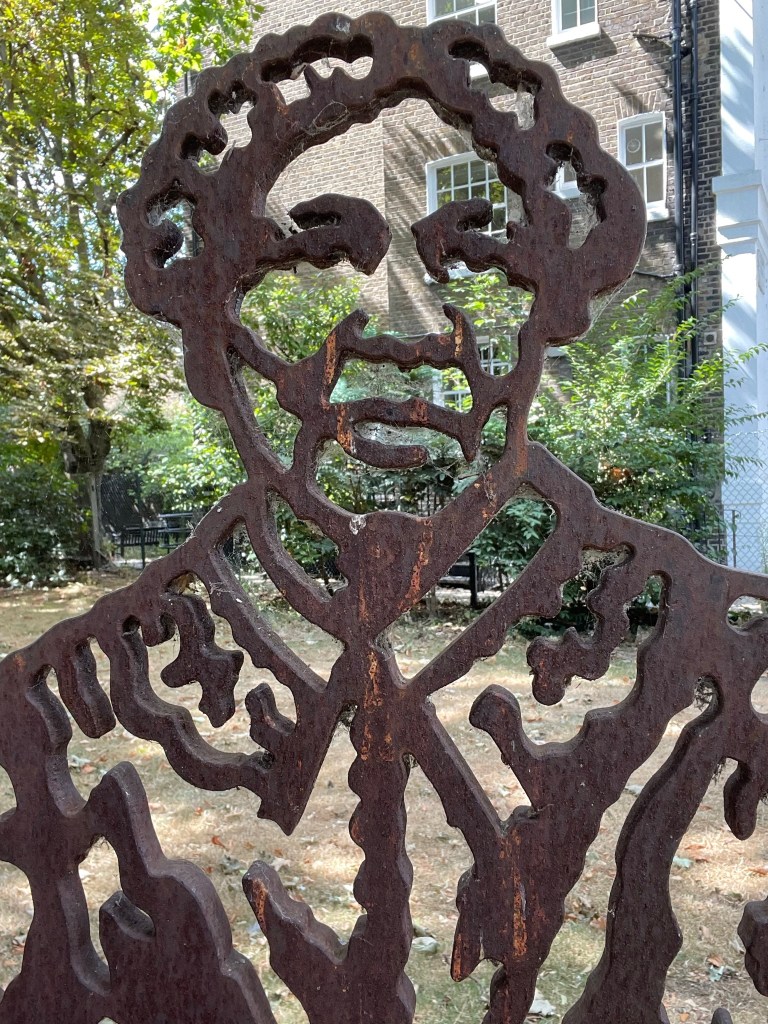
Part of three steel portraits, Mary stands with scientist Alan Turing and author Michael Bond (Paddington Bear creator) and was voted for by local people as part of Sustrans’ Portrait Bench 2007 campaign https://www.sustrans.org.uk/.  Assuming Sustrans has more portraits, I could be visiting much more than the original 128 women statues listed by the UK Public Statues of Women list https://pssauk.org/women/.

Born in 1805, Mary was a business woman who went on to study diseases and nursed in various countries.  At the outbreak of the Crimean war, she was refused a place in the effort to care for the wounded, so she paid her own way and helped first hand on the battlefields.  She returned destitute and died relatively unknown to those outside of Crimean war.  Until recently, history has largely ignored her work, particularly in the light of Florence Nightingale whose military hospital was stationed hundreds of miles from the frontline. https://www.maryseacoletrust.org.uk/

Mary is also honoured with another statue in London, but more of that later.

Starting statues

It started with an article in The Week Junior magazine heralding the unveiling of Dorset’s Mary Anning Statue. https://www.maryanningrocks.co.uk/press. A sidebar stated, ‘In the UK, there are 82 statues of men named John and just 128 of named women’.

Only 128?? I could visit all of them! But initial enthusiasm for a new project soon turned to dissatisfaction. There were so few women statues that it was, in actual fact, feasible to visit them all.
So who are the 128 immortalised women? What does it take for a woman to get a statue of herself? Money? Influence? Passion for a cause?
I’m ashamed to say I was struggling to recognise some of the names when I started the research, but that was all part of the journey – learning more about women that have played a special part in our history.

So I have given myself a year to visit all of them to give them the recognition they deserve and to learn more about these special women.
The start date is 29th July 2022. Please join me on this journey! Who knows, hopefully by the end of July 2023, the number of named women statues may be more than 128…..

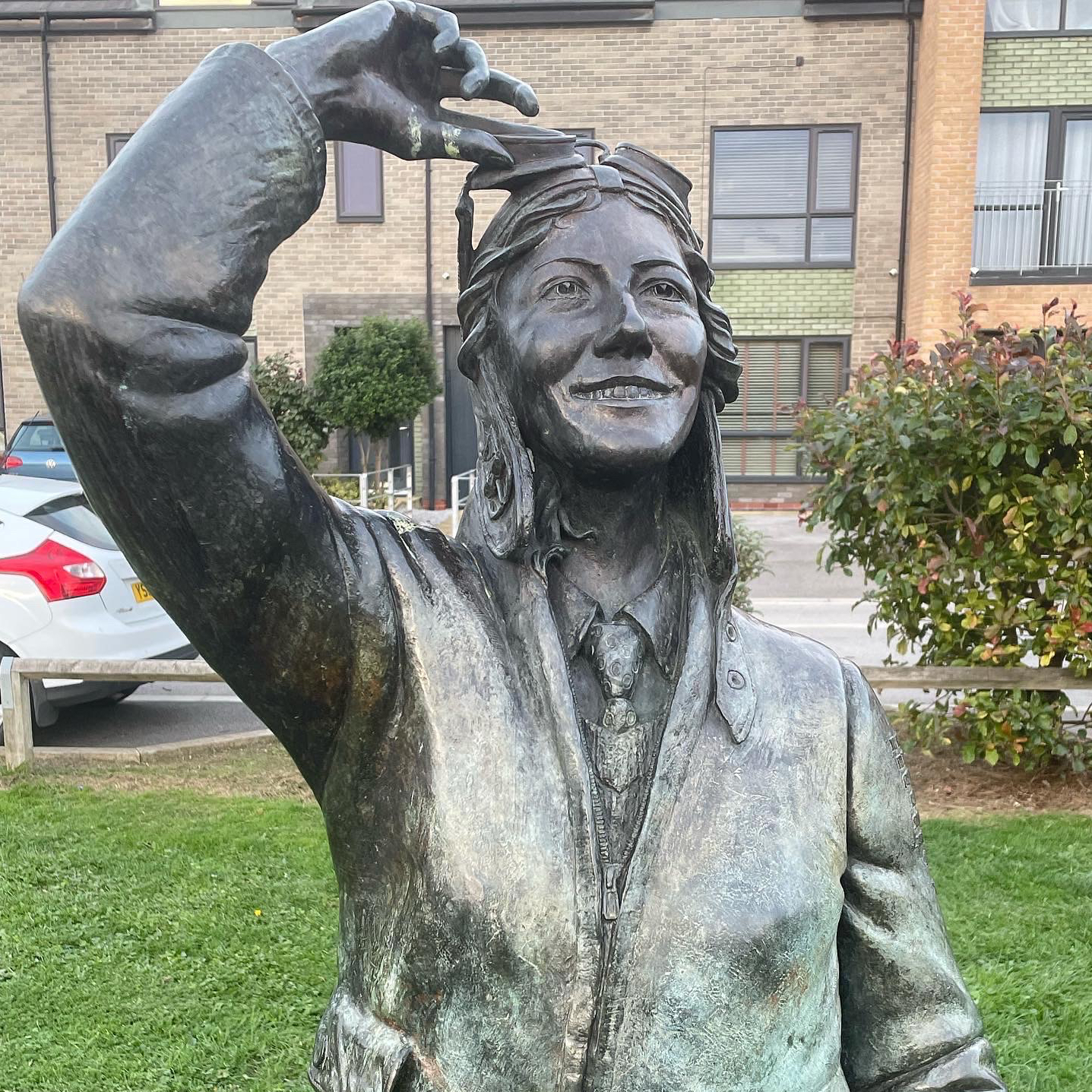
The keen eyed amongst you will know that the above picture is nothing to do with Mary Anning. It is pilot Amy Johnson who I visited in Hull. I love her gaze and besides, I’ve yet to meet Mary Anning…

https://www.instagram.com/womenstatuesuk/