“It is never too late to become what you might have been”
– George Eliot
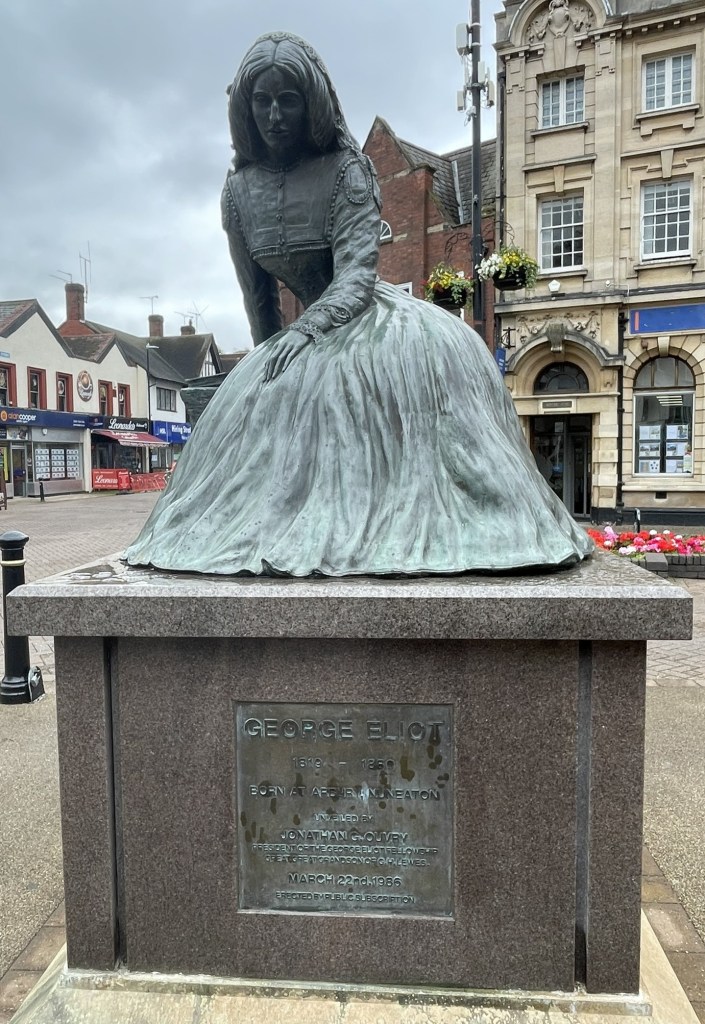
First dilemma of the day – shall we call her by her real name of Mary Ann Evans? Known by her pen name George Eliot, she was an English novelist, poet, journalist, translator, and one of the leading writers of the Victorian era in the 19th century. Using a male pseudonym ensured her works were taken seriously in an era when female authors were usually associated with romantic novels. She wrote seven novels over her lifetime, mostly notably The Mill on the Floss (1860), and Middlemarch (1872). Middlemarch in particular has been heralded as one of the greatest literary works ever written.
I can’t claim to have read any of her works, but I was interested in reading that she met and moved in with her partner George Henry Lewes, despite the fact he was already married and living with his wife and children. Scandal! Nevertheless, she lived with him until his death in 1878. After that she married a friend, John Cross, who was 20 years her junior. If all this happened in a TV soap opera you wouldn’t believe it.
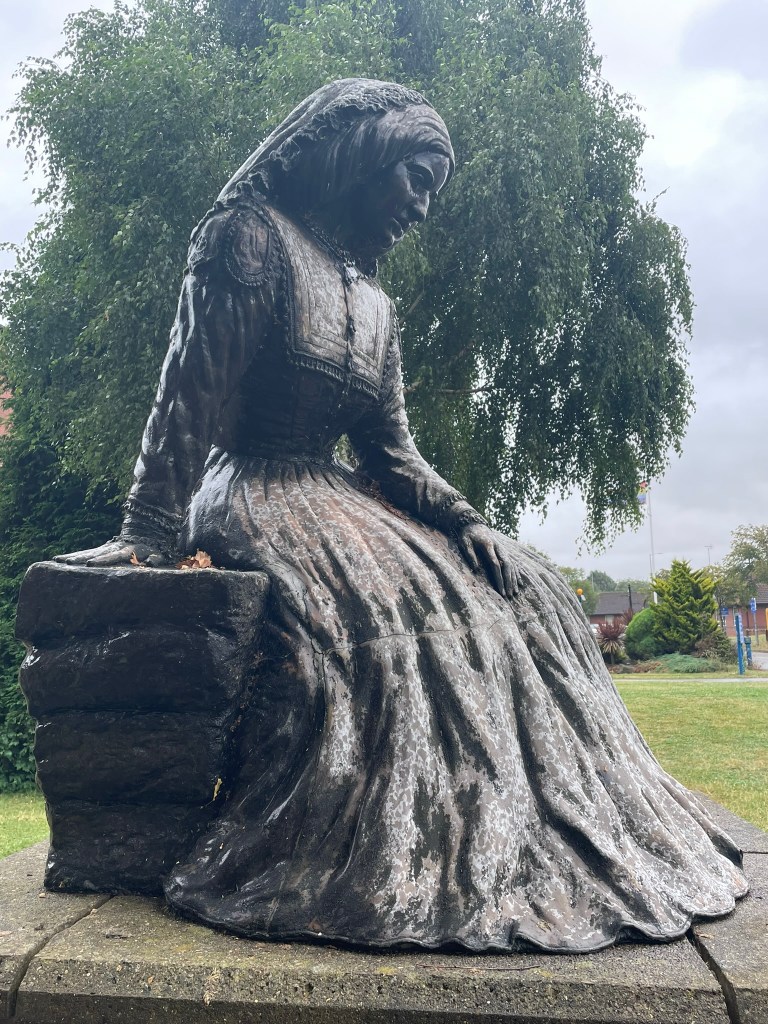
The original statue stands in Nuneaton town centre, with a second bronze cast unveiled at George Eliot Hospital ten years later.
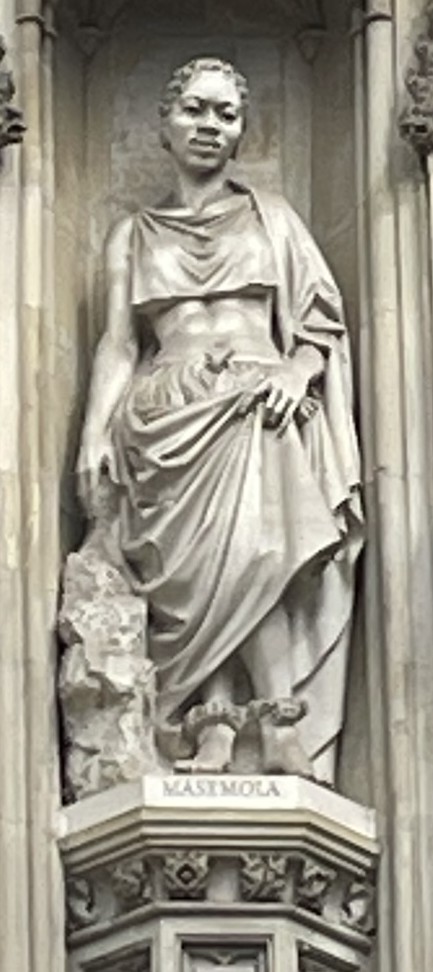
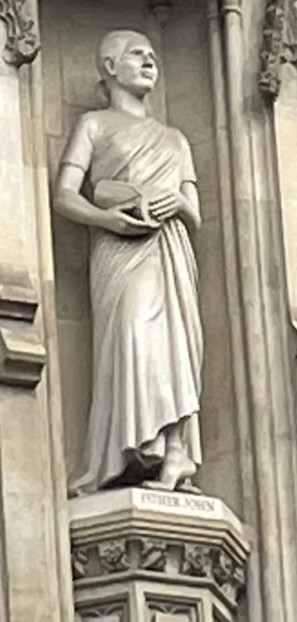
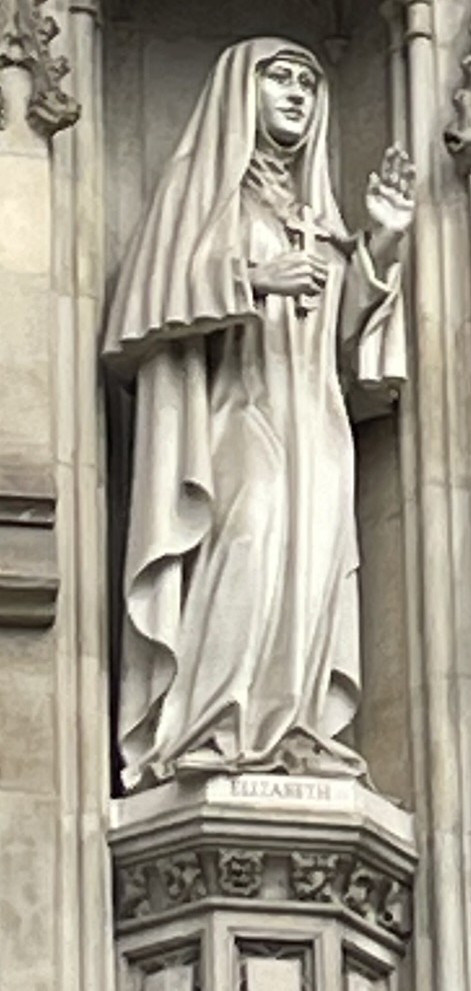
Manche Masemola, Esther John and Grand Duchess Elizabeth
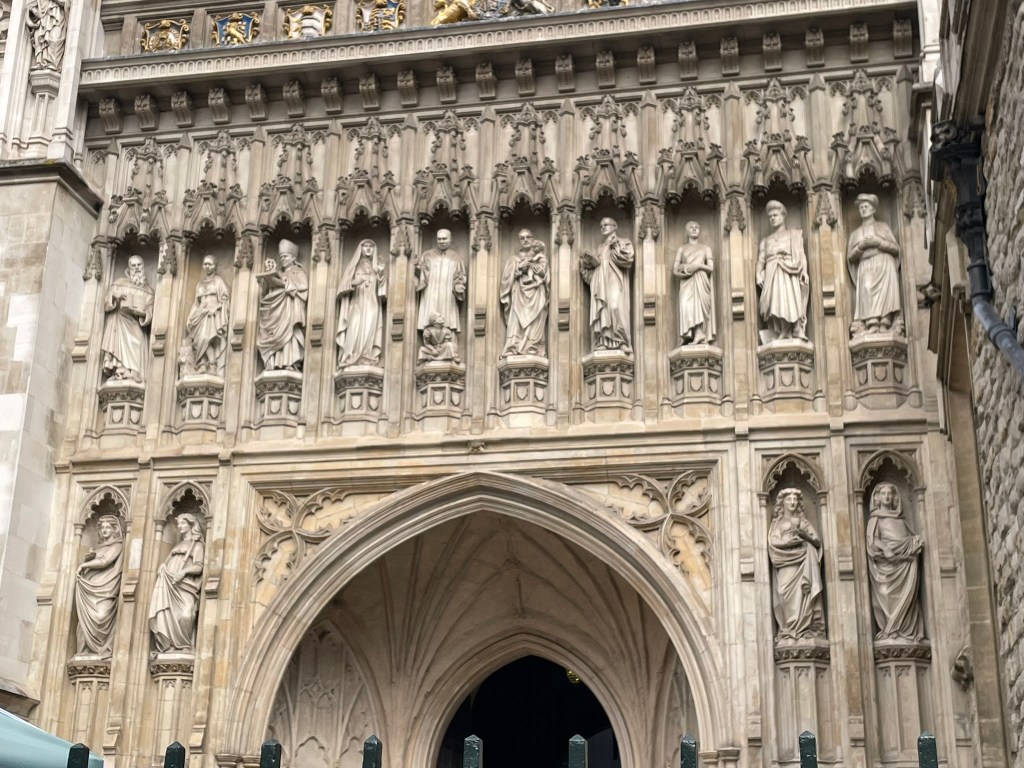
West Entrance, Westminster Abbey, London SW1P 3PA
Above the Abbey’s Great West Door stand ten statues to modern martyrs – Christians who gave up their lives for their beliefs. The martyrs are drawn from every continent and many Christian denominations and represent all who have been oppressed or persecuted for their faith. WARNING – it doesn’t end well for any of them.
Of these 10, 3 are women: Manche Masemola, Esther John and, squeezing in precariously due to her royal roots abandonment, Grand Duchess Elizabeth.
Manche Masemola
Manche’s short life makes for a sad, if not rather baffling, story. Born in 1913, Manche lived northeast of modern-day Johannesburg and became interested in the Christianity through the missionaries working nearby. Against her parents’ wishes she continued to attend religious classes until one day her parents took her away to be killed. She was 15 years old. After several years, her burial site became a place of Pilgrimage and in 1969 – this is the bizarre part – Manche’s mother was baptized into the church.
Esther John
Born Qamar Zia in India in 1929, Esther John converted her faith secretly at first before running away and changing her name. In 1955 she moved to work in a mission hospital and a year later entered the United Bible Training Centre for teacher training. Completing her studies in 1959 she moved to Chichawatni and worked evangelising local villages, teaching women to read and working with them in the cotton fields. A year later, Esther John was found murdered in her bed.
Grand Duchess Elizabeth
Granddaughter of Queen Victoria, it is fair to say that Elizabeth had privileged beginnings. In 1884 Elizabeth married Grand Duke Sergei Alexandrovich, the fifth son of Tsar Alexander II of Russia and in 1891 she adopted the faith. Amongst the rise of a country in revolution, Elizabeth’s husband was assassinated in 1905, after which point Elizabeth gave away her wealth and possessions and proceeded to open the Martha and Mary home in Moscow – a place of prayer and charity for devout women. By 1917 the Tsarist state had collapsed and the Bolshevik party set about eradicating the Orthodox Church, including those who followed it. A year later Elizabeth was therefore duly eliminated along with fellow religious sisters.
Despite visiting the Abbey three times, on all occasions I arrive when it is shut, hence sub standard photos from a distance. You can take better ones when you go.
Any lawyers in the house? You will be familiar with the internationally renowned ‘Donoghue v Stevenson’ case taught on Day 1 of how to be a sh*t hot solicitor. The case lay the foundation for modern law on negligence and ‘Duty of Care’ and became known as ‘the snail in the bottle’ case.
Of course, while May was sipping her ginger beer she had no idea about the turn of history and the change of law this brought about. While drinking with a friend at a cafe, May noticed part of a decomposing snail in her bottle. Understandably this caused distress and May later reported a stomach upset. She began legal action against the drinks company Stevenson’s, but, as her friend had bought her the drink, the company argued that, as she was not the purchaser, they had no legal obligation to her and the case was dismissed.
It could have ended there, and May could have walked quietly away. As a working-class woman and a single parent, she had little recourse for further litigation, but she recognised that regardless of what the law stated, the company had a responsibility and by whatever means she had she wanted to prove this. Fortunately, a law firm agreed with her and took her case on free of charge. The case led to discussions in Parliament which ultimately sought answers in the Bible, with the parable of the Good Samaritan and the question ‘who is my neighbour?’ acting as the benchmark for setting out responsibility to and for others. And so, The House of Lords’ decision was made which became the cornerstone of modern tort law: a person owes a duty of care to their “neighbour”— the people who are so closely and directly affected by your actions that you ought reasonably to have them in contemplation when you act.
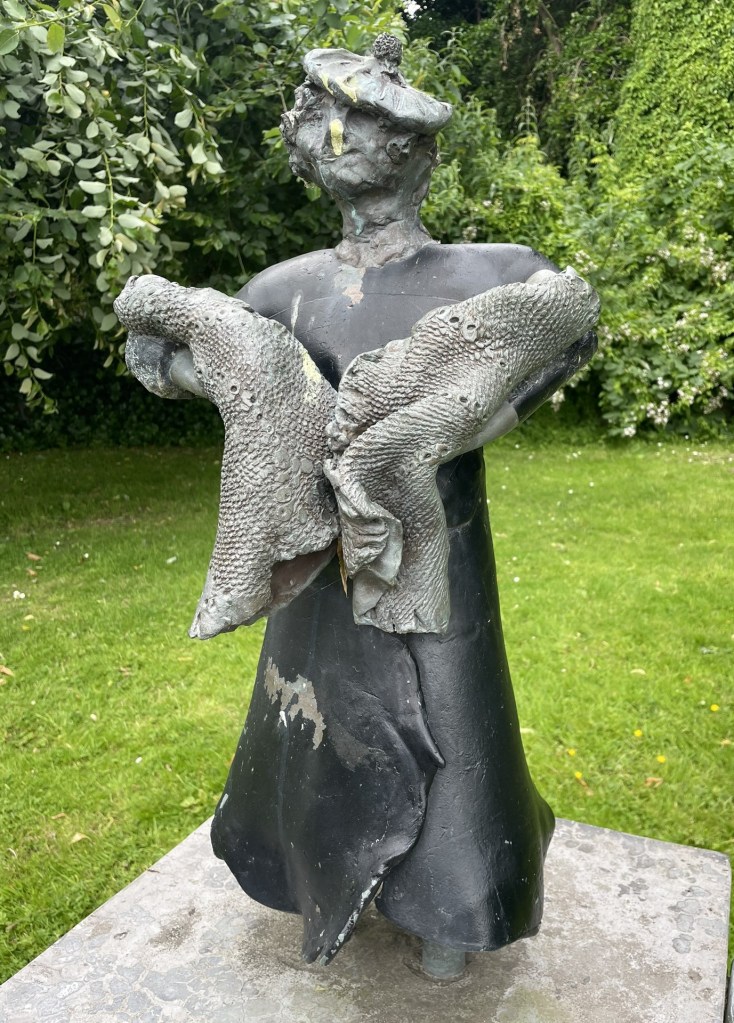
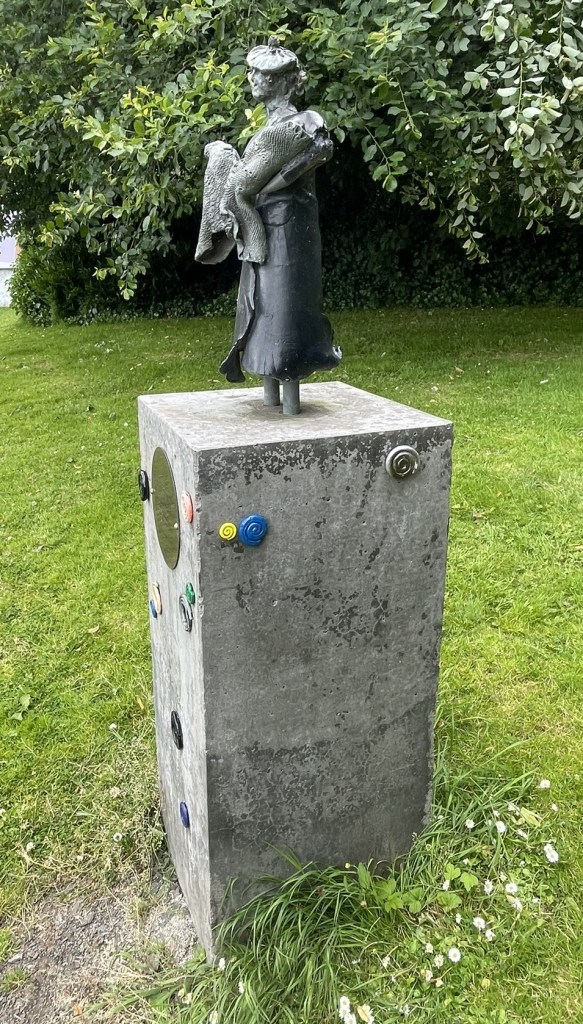
I reach Dollar park on an early summer’s evening and find the walled garden where I believe her statue to be is locked up for the night. I peer through the railings trying to spot her, whilst checking out the height of said railings in the event of me having to scale them. It’s not the getting over I’m worried about but getting back out again. I have visions of the park ranger finding me in the morning dew half eaten by badgers. But something isn’t quite right. And not just my flesh enticing small mammals. I go through images I’ve collected on screen of Sheila’s sculpture to check the background and….I believe she may be placed elsewhere in the park. No feast for you tonight badgers!
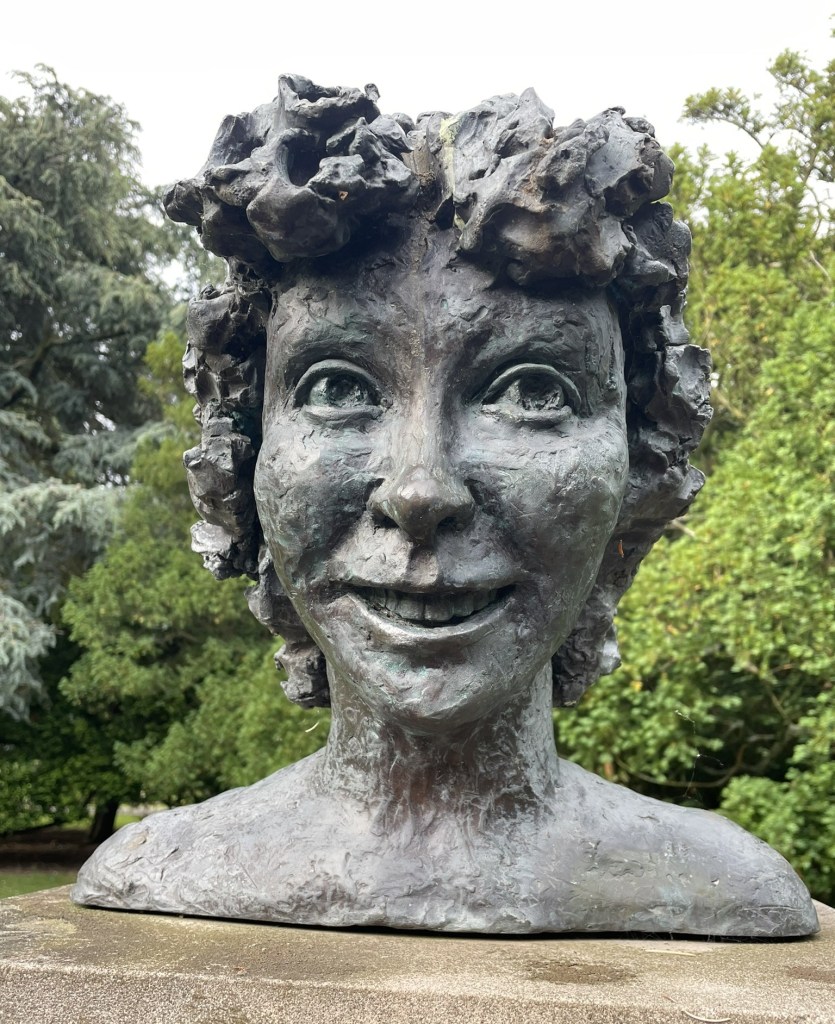
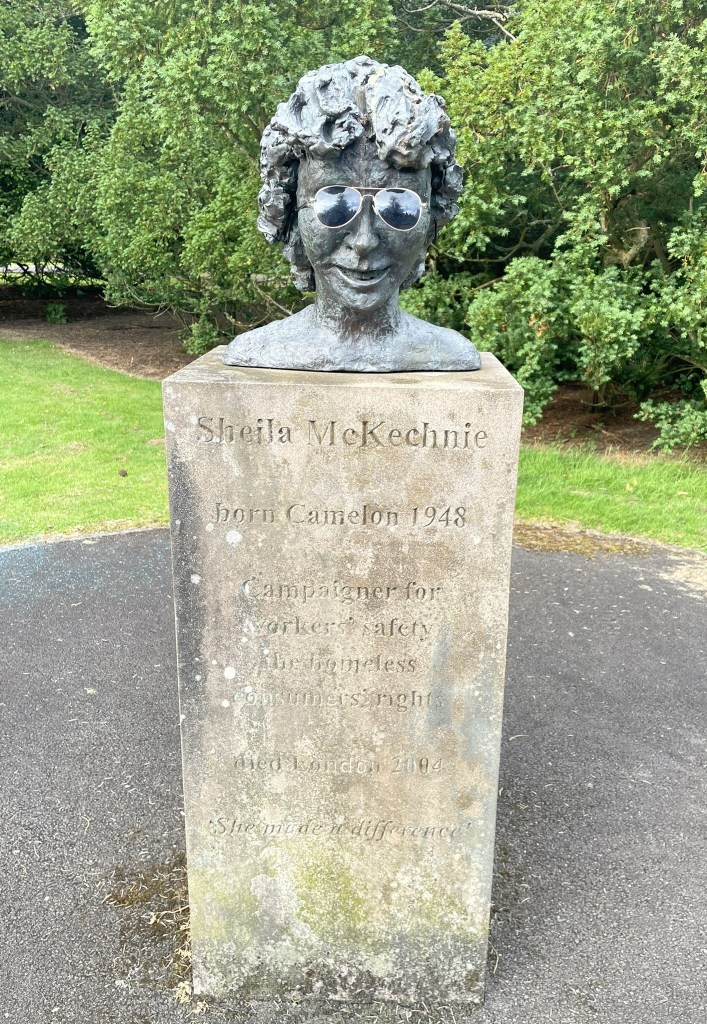
Sheila, as the inscription says, was a campaigner for workers’ safety, the homeless and consumers’ rights. Erected a year after her death her memorial was designed and sculpted by a by a woman: Susanna Robinson. Susanna in an interview explains that although Sheila’s partner (who commissioned the work) to be smiling, it is very difficult to cast teeth, hence most sculptors are straight faced. Who knew? Still, Sheila apparently described herself as, “fully paid-up member of the awkward squad” so her pose seems fitting.
Sheila was born not far from Dollar Park (hence the bust’s location) and began a trade union career in the 1970s, becoming Assistant General Secretary of the Wallpaper Workers’ Union. She went on to the Workers’ Educational Association, and in 1976 joined the Association of Scientific, Technical and Managerial Staffs as National Health and Safety Officer. She was instrumental in turning health and safety issues into major concerns. In the 80’s she became the Director of the homeless charity Shelter, before moving to become Director of the Consumers’ Association (now known as Which?). Her work there lead to a huge campaign around standards in the food industry and was influential in the setting up of the Food Standards Agency in 2000.
Sheila died at the age of 55 from cancer. With the help of her partner, the Sheila McKechnie Foundation was set up a year later to continue championing the right to campaign.
The end inscription perhaps sums her up the best; ‘She made a difference’.
I find Sheila in the park wearing a pair of sunglasses and think about the person who put them there – a kind citizen who found them and wanted to place them somewhere easy to find for the owner. I diligently move them for photos and then, after a thought, I put them back on her. I think Sheila would have approved of a good deed done.
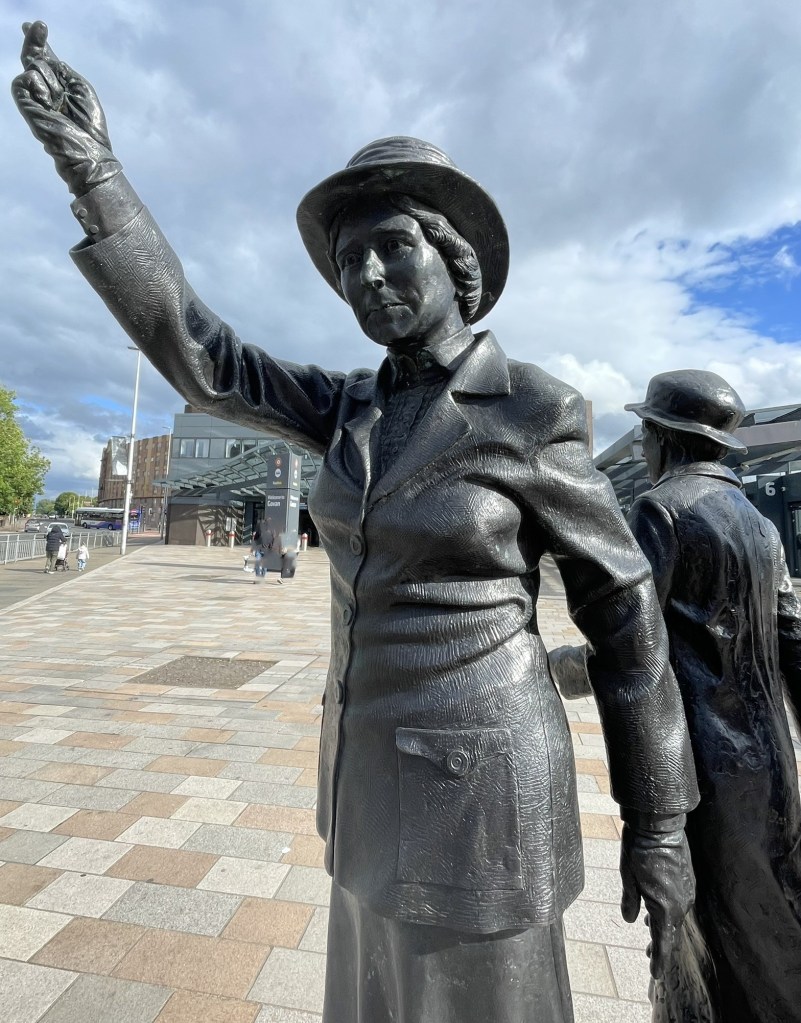
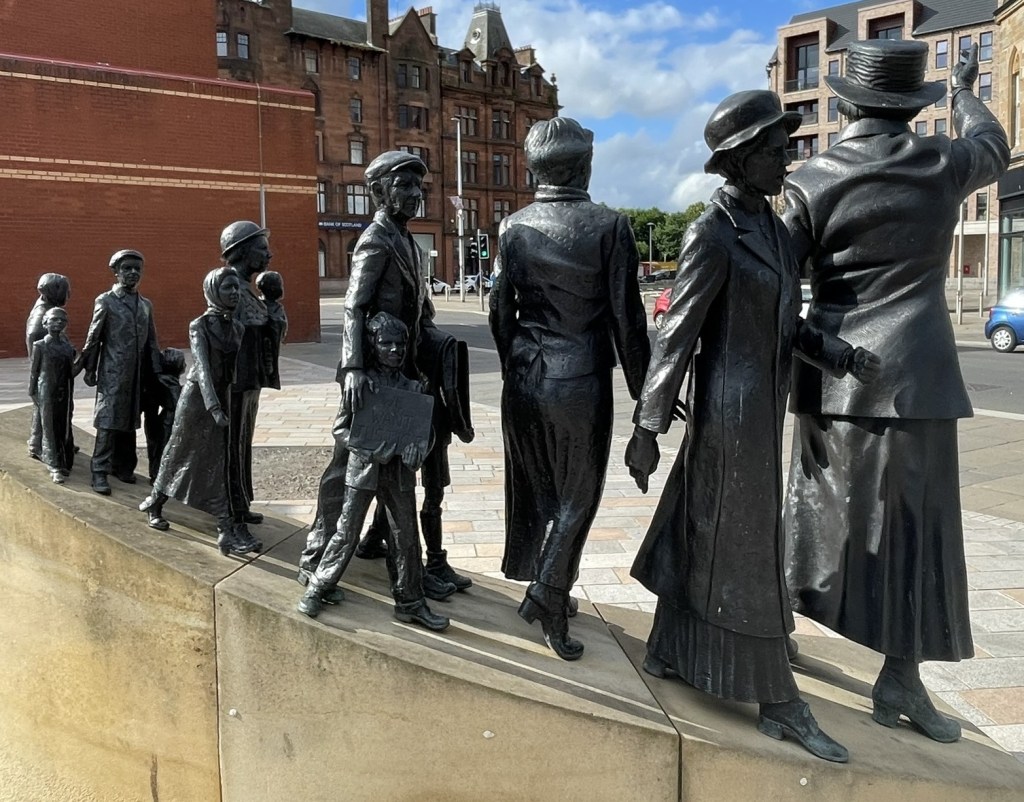
Community activist and leader, Mary was pivotal in leading Glasgow’s rent strike of 1915 which saw as many as 20,000 tenants taking action. She rallied residents to protest against unscrupulous landlords hiking up rent and evicting tenants no longer able to pay for their homes. The campaign was so successful it led to the Rent Restriction Act in the same year.
Mary went on to be elected as one of Glasgow’s first women councillors in 1920, championing issues such as maternity benefit, education and equal voting rights as well as establishing Glasgow’s first family planning clinic.
In 1924 she became Glasgow Corporation’s first Bailie (civic officer in Scotland’s local government). She was also appointed as one of the first female magistrates in the city. Mary was also one of the founders of the Women’s Peace Crusade, which became one of the fastest growing and largest peace movements in the UK during the war.
Unveiled on International Women’s Day in 2018, the statue has Mary leading ‘Mrs Barbour’s Army’ (as they were called) into action against rent hikes.
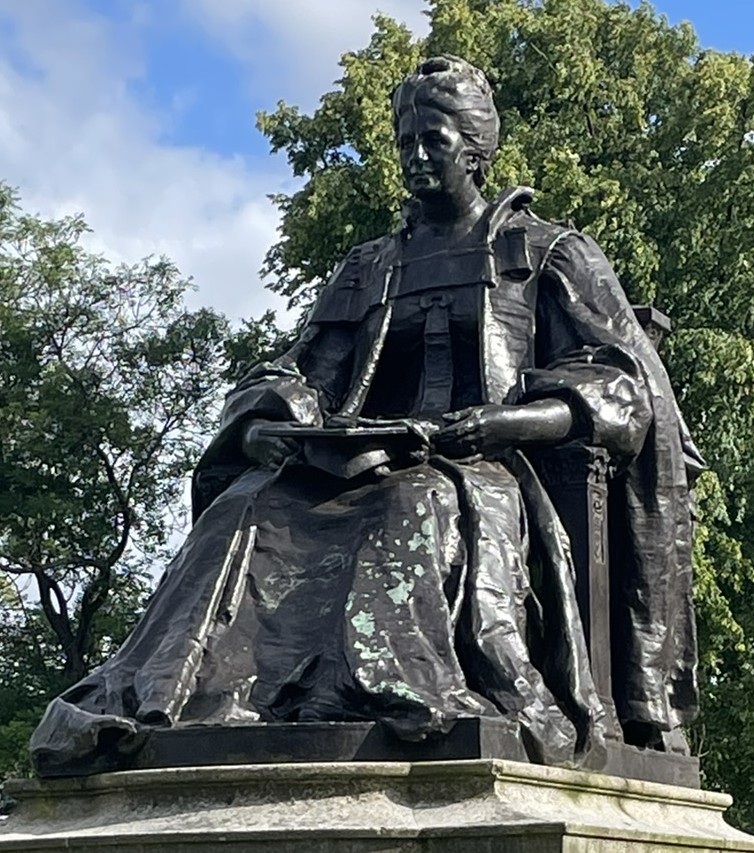
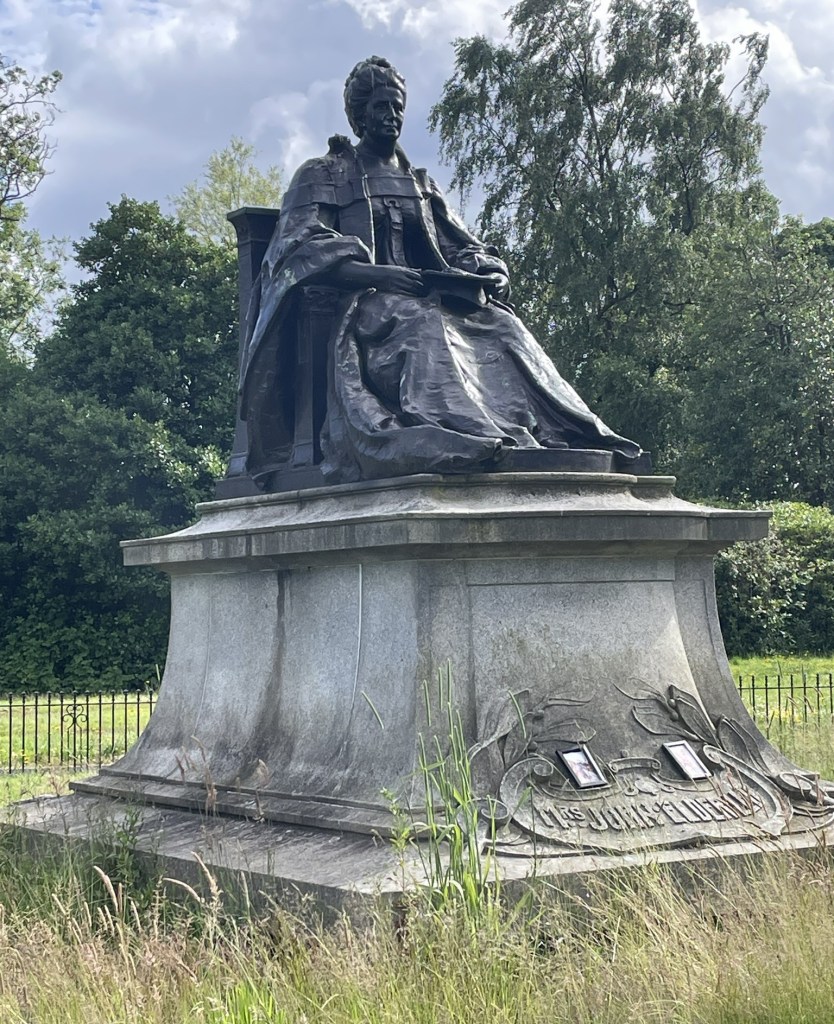
Born in the Gorbals district of Glasgow, Isabella married John Elder in 1857. Upon his death in 1869 she inherited his thriving shipyard, Randolph, Elder & Co, regarded at the time as one of the world’s leading shipbuilding companies. Isabella became the sole owner and ran it successfully for the next nine months until it was transferred to a partnership led by her brother.
Isabella put her wealth to good use, becoming a major philanthropist in Glasgow with a particular interest in education, especially of women, and in the welfare of the people of Govan where her husband’s shipyard was located. She donated to the University of Glasgow and the Technical College (now Strathclyde University. She was particularly passionate about higher education for women and gifted Queen Margaret College a large sum for this purpose, later meeting the cost for the inclusion of female medical students at the school. She also bequeathed North Park House to the College on the provision that teaching provided to women was equal to that of men, leading to the first women in medicine graduating in 1894.
In Govan alone, Isabella was responsible for creating Elder Park (opened in 1885) and the Elder Park Library, with the insistence that it should be open on Sunday so that ordinary working people could access it. She also funded a School for Domestic Economy, a Cottage Hospital (which trained women in nursing and midwifery) and the Cottage Nurses Training Home.
Isabella died at home in 1905. The physician that facilitated her death certificate was Dr Marion Gilchrist – the first woman to graduate from the University of Glasgow and the first woman in Scotland to graduate in medicine.
Giving to the last, her will left more than £125,000 for charitable purposes including the Ure Elder Fund for Indigent Widows of Govan and Glasgow.
The statue was unveiled in Elder Park in 1906 making it the first non-royal statue of a woman in the city. The £2,000 cost was raised by public subscription, much of it from the ordinary people of Govan. She is depicted wearing the academic robes of the University of Glasgow which had awarded her an honorary degree in 1901.
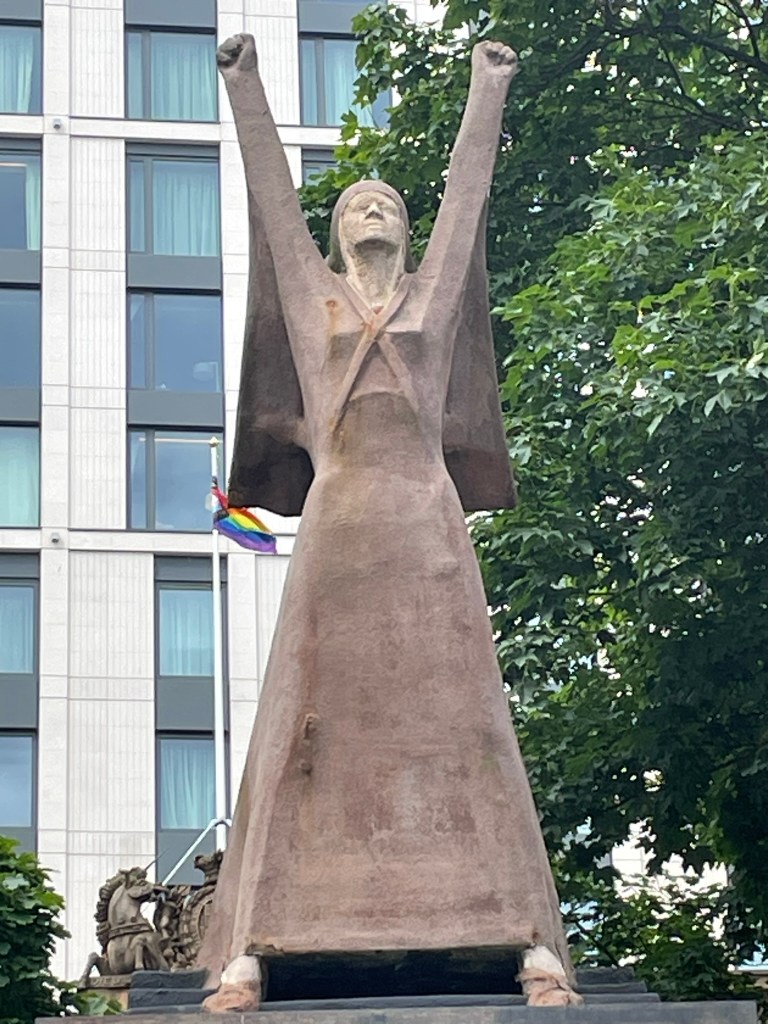
Let’s get you up to speed on the Spanish Civil War so you don’t feel as foolish as I did standing at the foot of ‘La Pasionaria’. Europe in the 1930’s saw a rise in fascism while Spain appeared to be moving in the opposite direction. A democratic republic was peacefully elected in 1931 but by 1934, politics in the country had become increasingly polarized leading to a breakout of civil war in 1936 with most democrats, left wing voters, liberals, socialists and communists as the Republic and more fascist leaning supporters as the rebels, led by General Franco. Some 40,000 volunteers went to Spain to fight, mainly in the International Brigades but the Republic was vastly outnumbered by more foreign soldiers who fought on Franco’s side, leading to Franco’s victory and subsequent dictatorship for 36 years until his death in 1975.
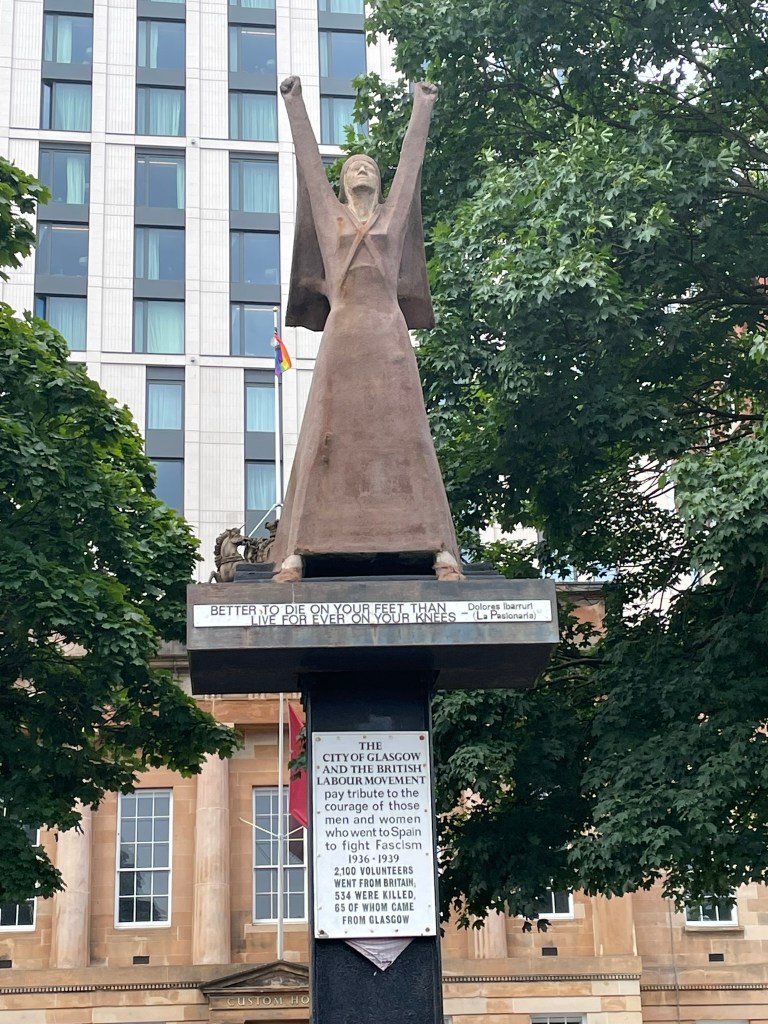
Known as La Pasionaria’, (the Passionflower) Dolores was a Republican activist, who fought hard against Franco’s regime. She is most famous for her “No pasaran” (they shall not pass”) speech in 1936. Other rallying cries were, ‘You fight and make sacrifices for the freedom and independence of Spain. But Spain is sacrificing herself for the whole world. To fight for Spain is to fight for freedom and peace in the whole world.’ Throughout the civil war she tirelessly campaigned, not only giving rousing speeches, but by supporting soldiers on the frontline and their families at a time of food scarcity, insecurity and massive political upheaval.
The plinth bears Ibarruri’s slogan, ‘Better to die on your feet than live forever on your knees’. It was first used in a speech in Paris in 1936 and gained her international attention.
The 1979 statue was commissioned by the International Brigade Association of Scotland as a memorial to the 2,100 British volunteers who fought for the Republican cause in the Spanish Civil War. Of these, 534 Scottish men and women were killed, 65 of whom were from Glasgow.
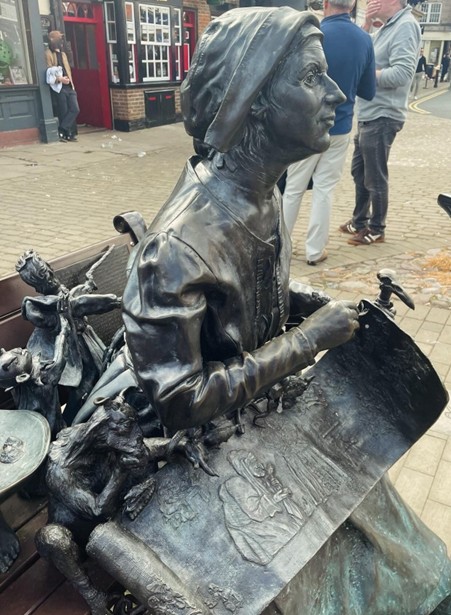
It’s both exhilarating and terrifying when I stumble across a statue not on my list. Today is one of those days and whilst there I vaguely recall a friend at the start of my journey telling me there was one of Mother Shipton in Knaresborough which I flatly refused to believe at the time. Sorry Nic.
Ursula was a soothsayer and prophet. Believed to have been the child of an unmarried young teenager, she was born and raised in a cave in the woods for the first few years of her life before the abbot of Beverley intervened and sent her mother to a convent, while Ursula went to live with a local family. As the story goes, she had a crooked back and needed to use a stick, her nose was hooked and she had a very prominent chin. Typical that the woman was judged on her looks eh? Still, as a result, she kept mostly her own company and spent time alone learning about plants and their healing properties. She married a carpenter called Tom Shipton in 1512 but when he died 9 years later she moved back to the woods. Locals would go to her for spells, potions and remedies.
In later life, she claimed she could see the future and began to make prophesies such as the invention of iron ships, the Great Fire of London in 1666, and the defeat of the Spanish Armada in 1588. Whether she saw her own death coming at the age of 73 is anyone’s guess.
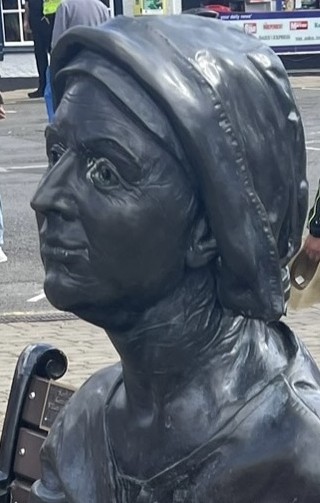
Funds for the statue were raised through public donations, with the sculptor giving her a younger more sympathetic appearance than the one she is often portrayed as in her later years.
Concerned I somehow missed Ursula off my original list, I go back to my source of the Public Statues and Sculptures Association website which originally listed 128 women statues. It has now been increased to 144, with Ursula sneaking in there. Damn you feminism.
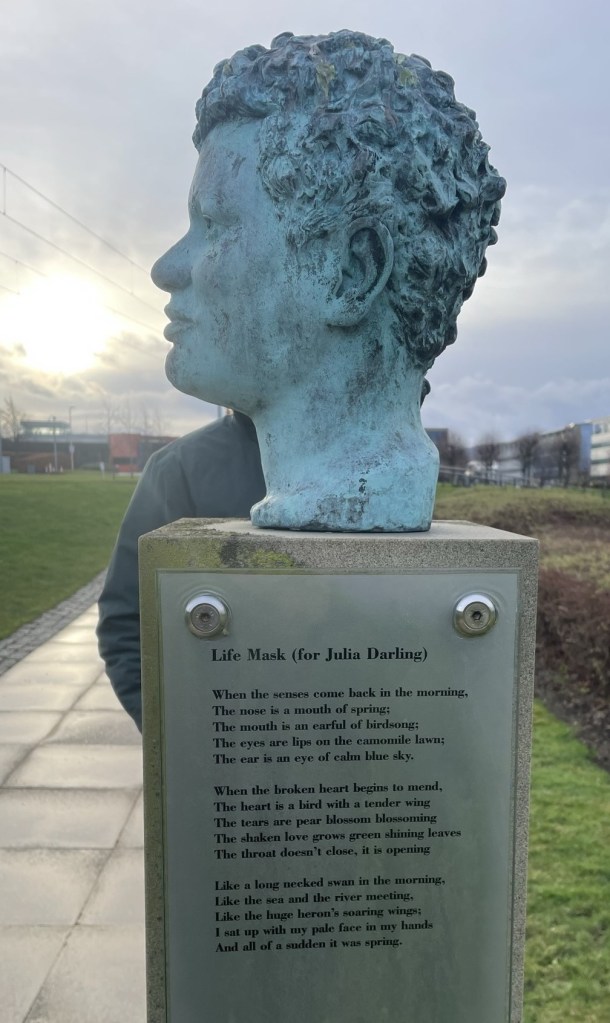
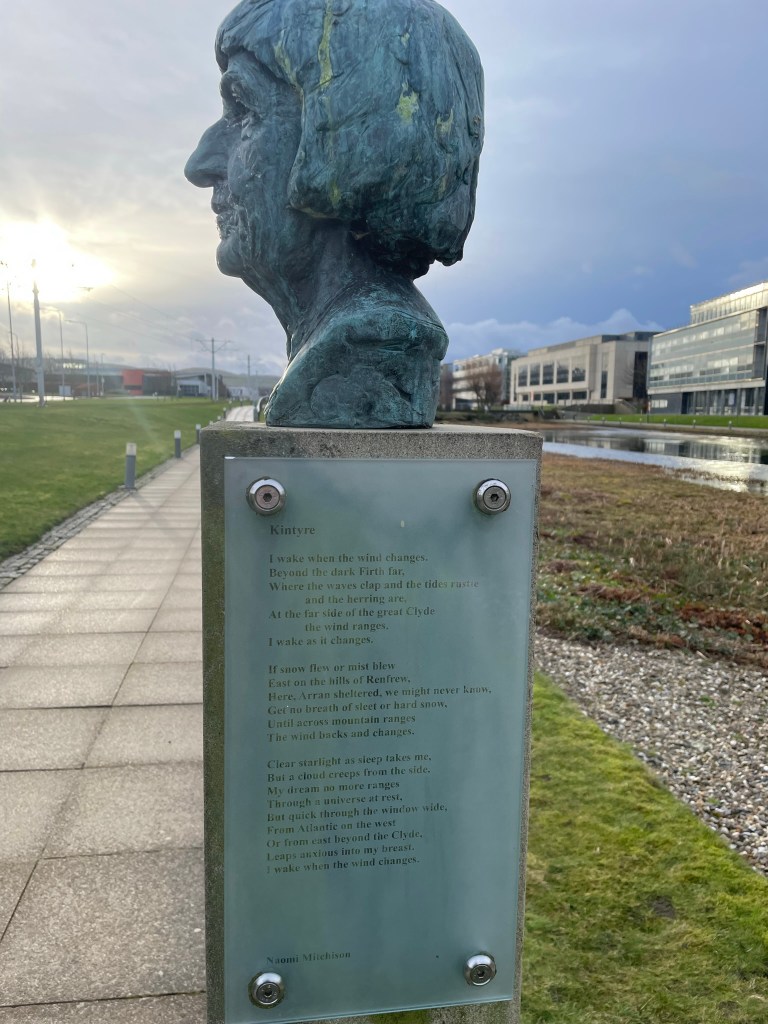
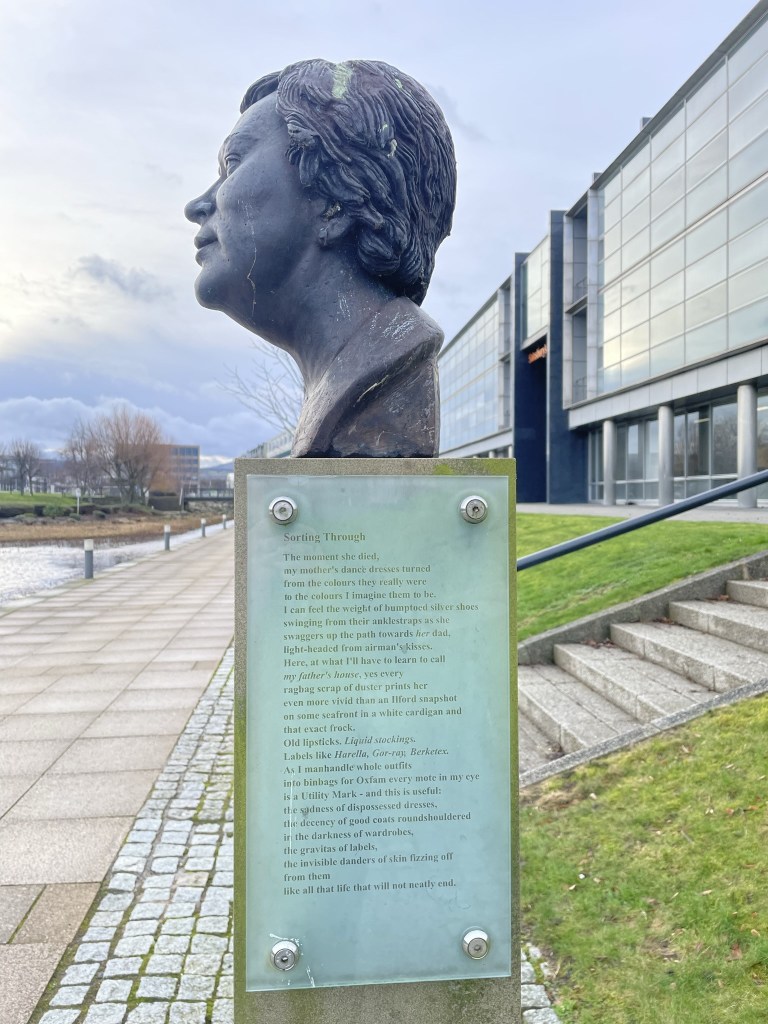
In the early 2000’s, a set of 12 busts were created and unveiled along the Lochside Walkway in Edinburgh, 3 of which are female poets.
Jackie Kay
Jackie is a poet, playwright and novelist and Scotland’s Makar (Poet Laureate) between 2016-2021. She was adopted by a Glaswegian couple and grew up in Bishopbriggs, with her autobiographical account of her upbringing and search for her birth parents laid out in her 2010 publication Red Dust Road. Other books include the award winning, The Trumpet, a biography on the blues singer Bessie Smith and several children’s books and short story collections.
Naomi Michison
Naomi was born to a well-off, well-connected family. Her student years were destined to be in science at Oxford, although the war took her into nursing. She was an ardent campaigner in politics, feminism and socialist issues. She was a prolific writer, with she herself not knowing how many books she had written, guessing at around 70 (it’s 90). Her work covers many genres – historical and science fiction, travel writing and autobiography as well as poetry. She was also JRR Tolkien’s proof-reader for Lord of the Rings. Her final book was published at the age of 100 and she died a year later.
Liz Lochead
Liz is a poet, playwright, translator and broadcaster. She was Scotland’s Maker between 2011 and 2016, having previously served as Makor for Glasgow between 2005 and 2011. Her career began in art, but she had a flair for poetry. Whilst studying Art in 1971 she won a BBC Scotland Poetry Competition. Her first poetry collection was published a year later. Since then she has published several collections alongside her playwright work, with her first performance, Blood and Ice in 1982.
The 12 busts of Scottish poets were created by 7 artists, none of them women. Just sayin’…
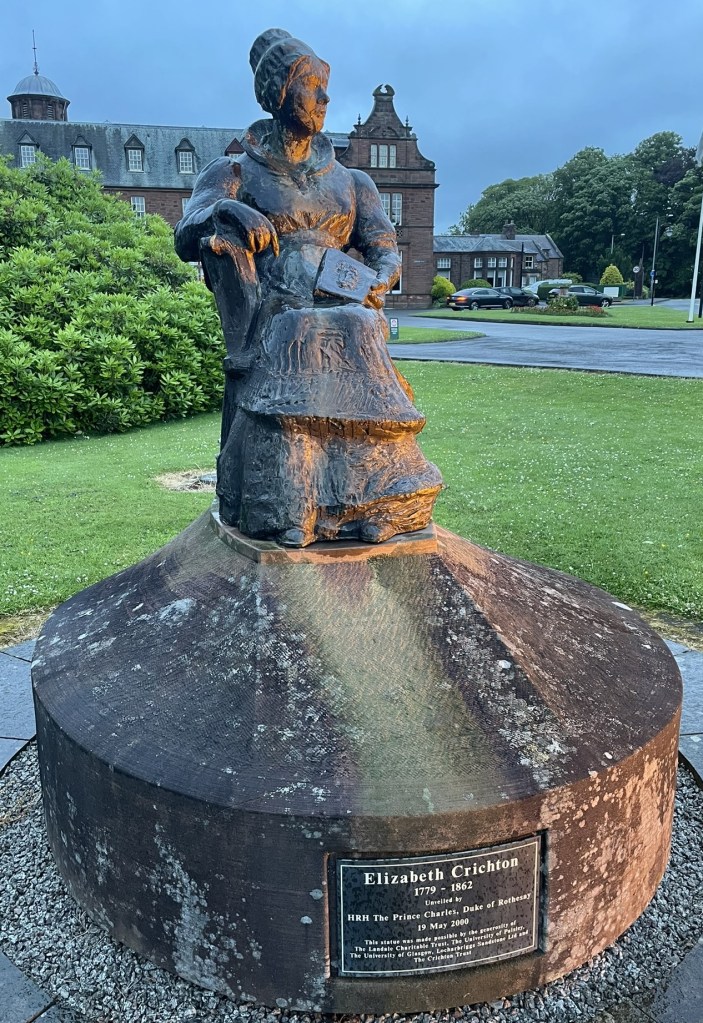
In 1810, Elizabeth married Dr James Crichton, a doctor who was said to have made his fortune both as a physician and as a trader in the East India Company, with the odd speculation about his dealings in the opium trade. Naturally Elizabeth has always denied this, insisting his riches originated from an honest trade. Regardless, upon his death in 1823, he left £100,000 to her for charitable purposes, and, once the courts deemed her the rightful benefactor after the will was contested by her brother in law, she set about trying to establish a college in Dumfries. This too ran into opposition, largely from the four established Scottish universities, but, with a change of government also not keen, the plan was thwarted and she turned all her efforts in establishing a ‘lunatic asylum’ a term in those days being perfectly acceptable.
Elizabeth didn’t do things by halves. Once the education plan was dead in the water she threw all her weight to making the hospital a reality and despite opposition from local newspaper the Dumfries Times in 1834 (who knows what the Daily Mail would have made of it) she head hunted Dr William Browne to run the place. Browne came from a stance of ‘moral treatment’ for patients, advocating kindness and care. His aim for patients to have extensive hospital grounds and rooms for music, arts and activities was at the time pioneering and probably absurd when normal mental health institutions of the day ran a prison like system.
The Crichton Hospital opened its doors in 1839 and ran for some 150 years, renowned for its enlightened treatment and upmost care of its patients. Elizabeth remained closely involved with the running of the hospital throughout her life.
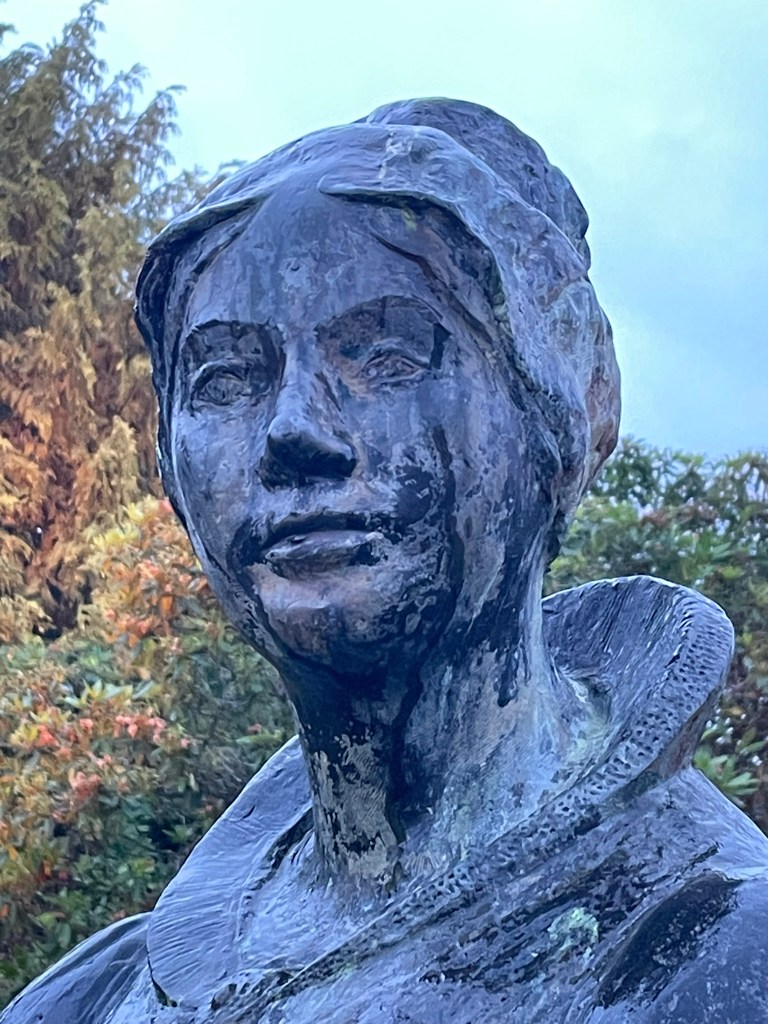
By the 1980’s, the ‘value’ of the institution was questioned (let’s not get too political here) and in 1995 the local authority bought the site from the Health Board to protect the buildings and grounds as an important public asset to be protected. From there, the proposal for a University Campus was devised and in 1999 the first cohort of students started their courses as part of the University of the West of Scotland, thus fulfilling Elizabeth’s dream, some 170 years later. Careful what you wish for. The following year Elizabeth had her statue unveiled on the campus.
 WomenstatuesUK