Ouida (Marie Louise de la Ramee)

(1839 – 1908)

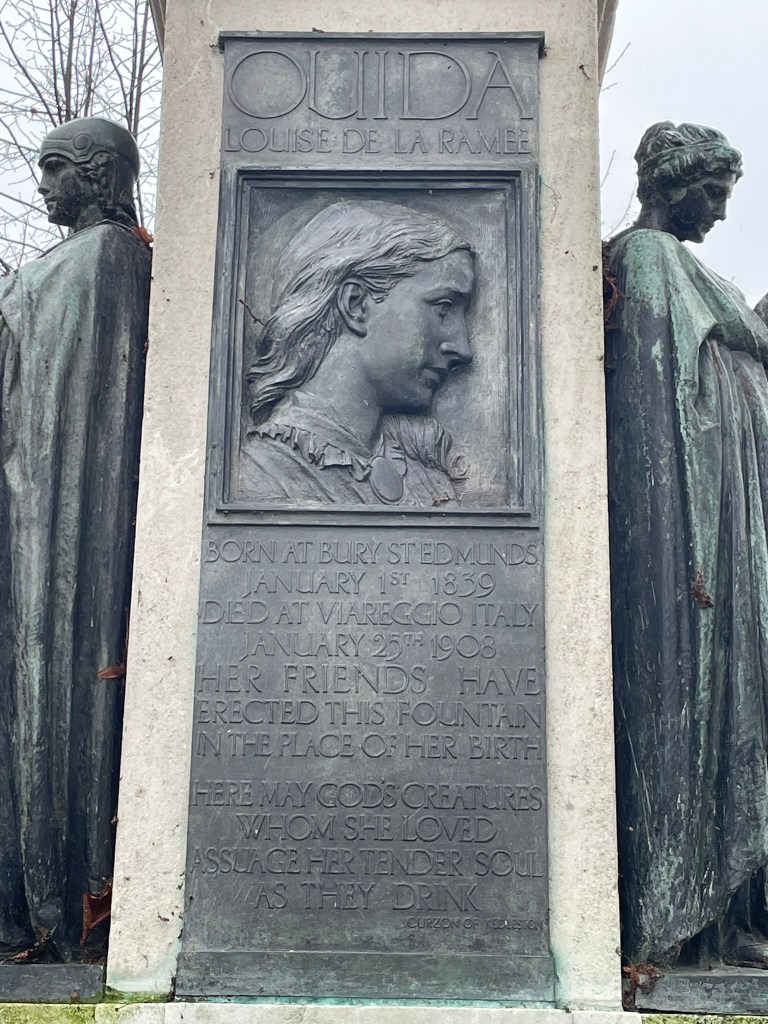
Using the pen name, ‘Ouida’, allegedly from her mispronunciation of ‘Louise’ when she was younger, Ouida was a popular sensationalist novel writer with 40 titles to her name, as well as an author of short stories, essays and children’s books.

Ouida’s lifestyle has been described as lavish but one that was often beyond her means.  She moved with her mother and grandmother to London in 1857 (her French father being largely absent) and wrote for serialized publications where her popularity grew with her first novel published, Held in Bondage in 1863. Taking up residency in a London hotel and schmoozing with the glitterati, the lifestyle worked while her writing was popular.  Her most renowned works was the novel Under Two Flags (1867) and the children’s book A Dog in Flanders (1872) which was made into film.  

She moved to Italy with her mother in 1874 where her glamourous life continued, although her writing popularity was on the wane.  There’s an account of missed copyright too.  Either way her lifestyle did not adjust accordingly and when her mother died in 1893, she was buried in a pauper’s cemetery and Ouida had to rely on the support of others to sustain a living.

Ouida was a major supporter of animal rights and was against the hunting and fur trade as well as vivisection – values demonstrated in her book The New Priesthood: A Protest against Vivisection (1897) and her love of dogs, of which she had up to 30 in any one time.
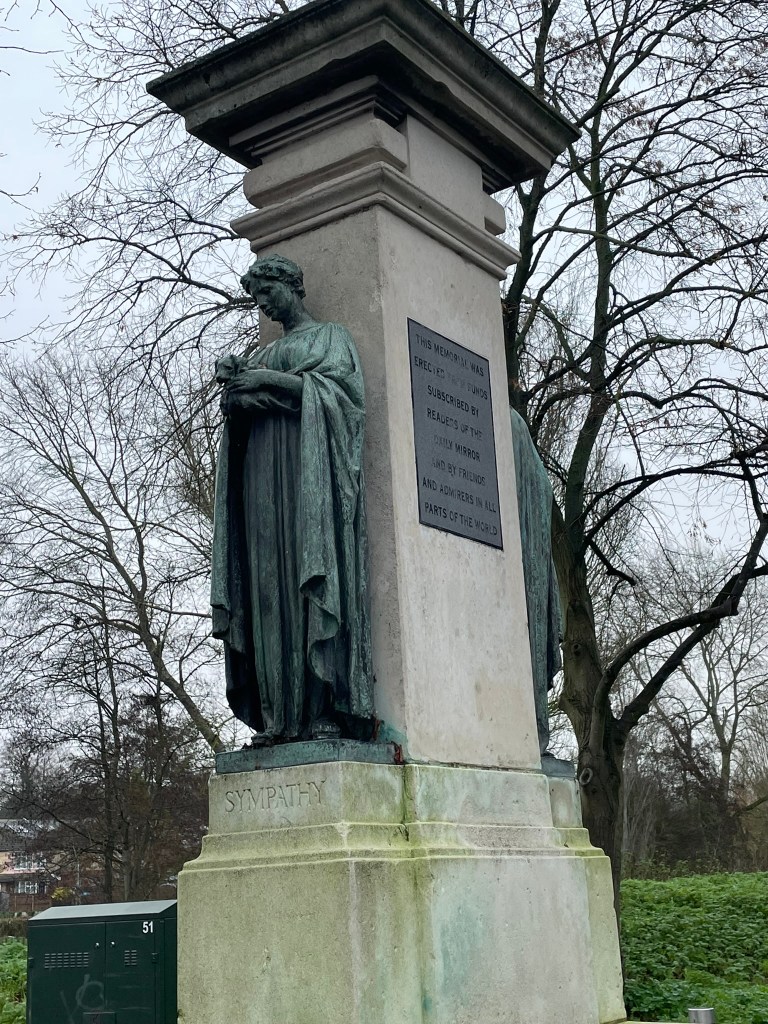
Soon after her death, her friends organised, through public subscription, the statue that now stands in Bury St Edmunds complete with a drinking fountain at its base for dogs and horses in recognition of her love of animals.
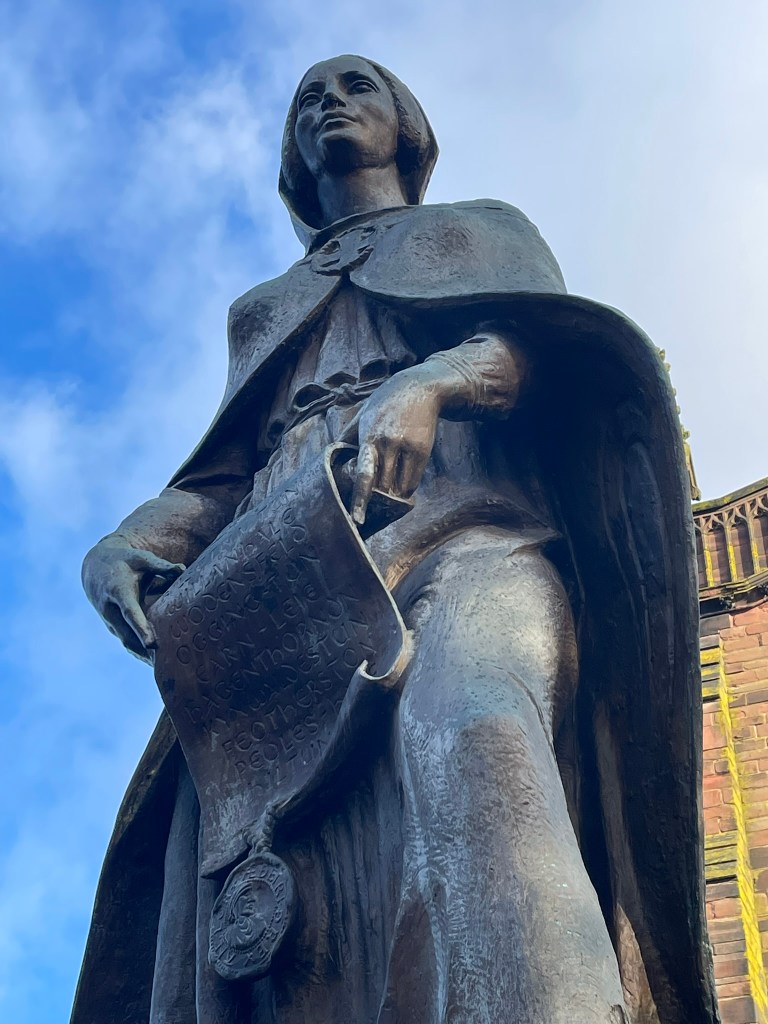
Lady Wulfruna

(c935-c1005)

St Peter’s Church, Wolverhampton

My 101st statue visit and I’m on the home stretch, with around two thirds of women done.  I wonder round the statue taking shots at various angles, including mandatory selfie, when a man offers to take my picture.  I readily hand over my phone and then panic while he walks away with it.  As it happens, he is only stepping back to get the full picture, but he captures me part smile/part look of terror whilst I reason with myself that he’s just a citizen doing a good turn.  Speaking of which…

In 985 King Ethelred II (Ethelred the Unready) gave a considerable amount of land to Wulfruna by royal charter.  The land contained livestock, farms, mills, other buildings and, of course, residents. 

This isn’t to say it was all plain sailing for her up to that point.  In her lifetime the nation was divided into seven kingdoms, with Mercia in constant battle with other kingdoms and the odd invasion by the Vikings.  Wulfruna was a member of the ruling Mercian family and already had land, property and wealth in her own right.  So far so cosy.  Enter the Danes hellbent on capturing land and money who saw an opportunity to kidnap someone of high importance to be held to ransom.  Wulfruna’s story in all this is not clear, but thanks to the 985 royal charter we find her in good enough health to set up the place we now call Wolverhampton (a mix of her name and the Anglo-Saxon word ‘heatun’ meaning ‘high land’).

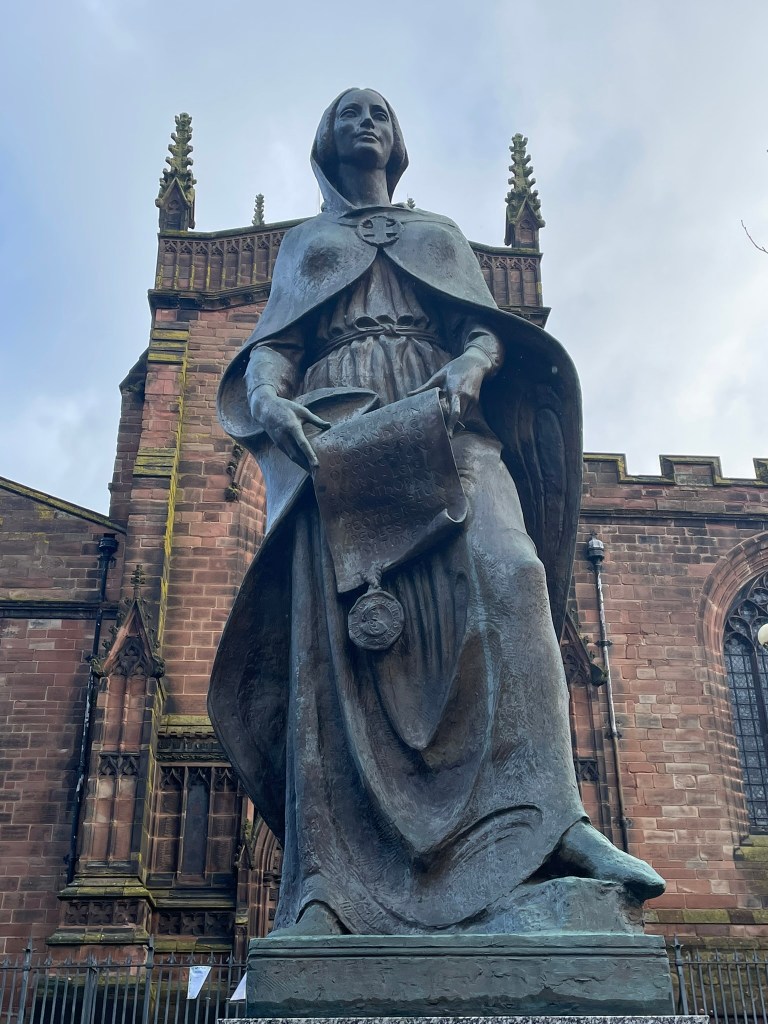
Here, in 994, she founded a monastery and was known as a generous benefactor to the area.  The site is now occupied by St Peter’s Church, which dates from 1425 and where her statue now stands, depicting a young Lady Wulfrana holding the Royal Charter (although this wasn’t bequeathed to her until much later).  This sculptor was to be Charles Wheeler’s last commission and was unveiled after his death.

Dorothy Round

(1909 – 1982)

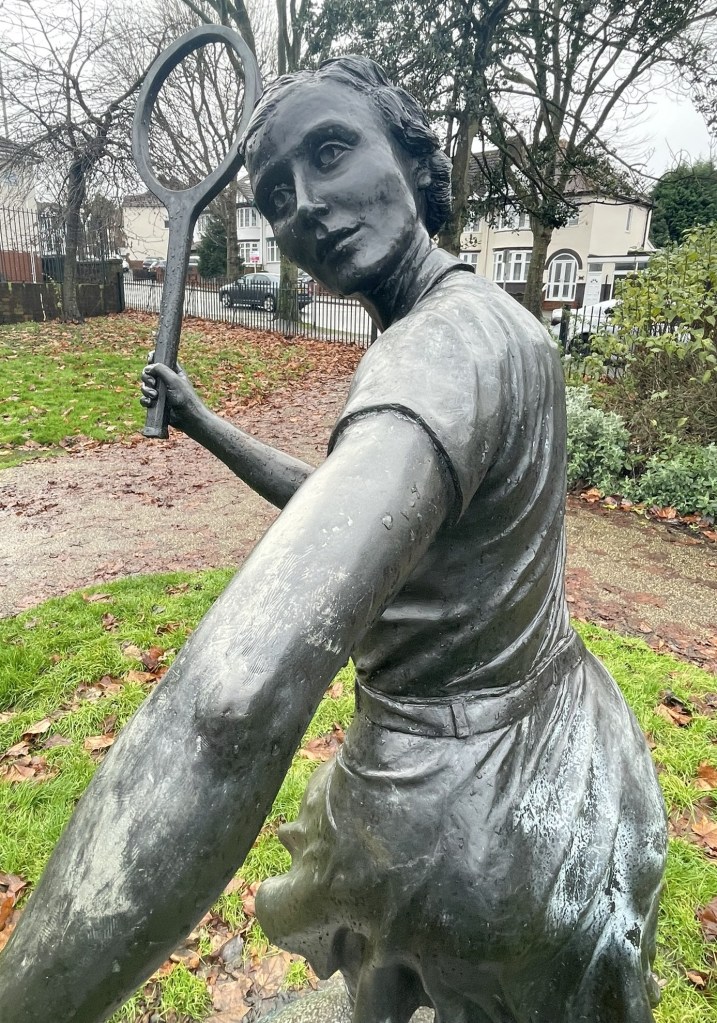
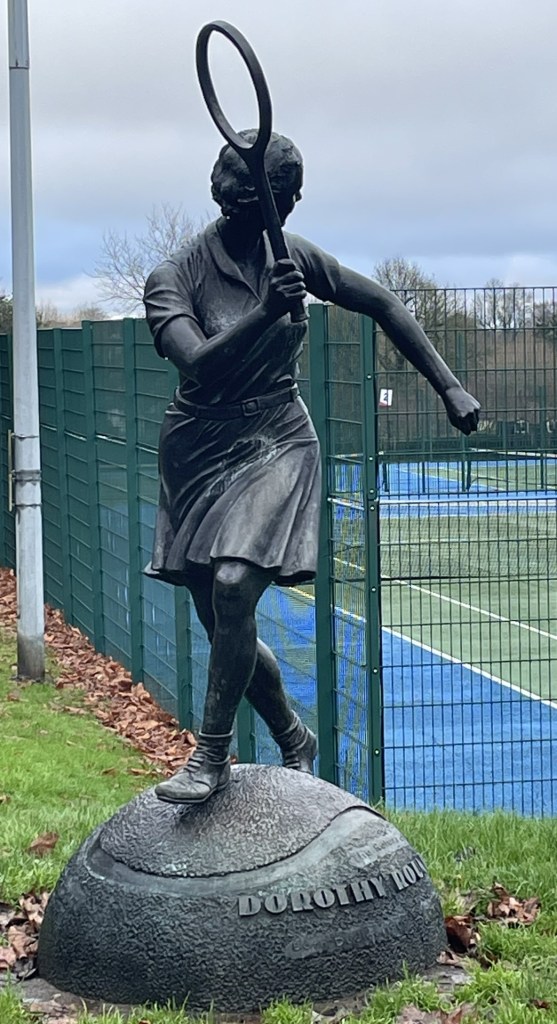
Wimbledon Champion in 1934 and 1937, Dorothy is not the only woman smashing it out of the park – this visit marks my 100th statue!

As well as Wimbledon titles, Dorothy won the 1935 Australian Championships and had success as a mixed doubles player at Wimbledon, winning a total of three titles.

Dorothy won her first junior tennis tournament at 16, making her Wimbledon debut at the age of 18.  By the 1933 Wimbledon Championships, she was seeded no. 2 but declined to compete in the French Championships that same year, as, because of her religious convictions, she did not want to play on a Sunday.  Dorothy’s Methodist faith was integral to her and she continued to teach at a Methodist Sunday School in Dudley even at the height of her fame.

Her wedding day in 1937 drew huge crowds of onlookers with journalists at the event calling it ‘a riot’.  Check out the archived footage if you can, it’s great to see a crowd get behind a female sports hero.

Dorothy’s daughter unveiled the sculpture near Priory Park’s tennis courts in her hometown of Dudley.  The statue is entitled, The Return of Dorothy Round, capturing her quick paced return serves.  She could definitely take someone out with that racket.

Mary Macarthur

(1880 – 1921)

Mary was a suffragist and trade unionist.  Born in Glasgow, and starting life as a writer and journalist, she joined a trade union, and essentially never looked back.  She was General Secretary of the Women’s Trade Union League and helped form the National Federation of Women Workers and the Anti-Sweating League.  She supported and campaigned for 1000’s of workers paving the way for the 1909 Trade Board Act which saw, for the first time, legally enforceable minimum wages in the UK, particularly in specific ‘sweated’ trades – industries with long working hours, poor working conditions and low pay, many of which relied on women workers.

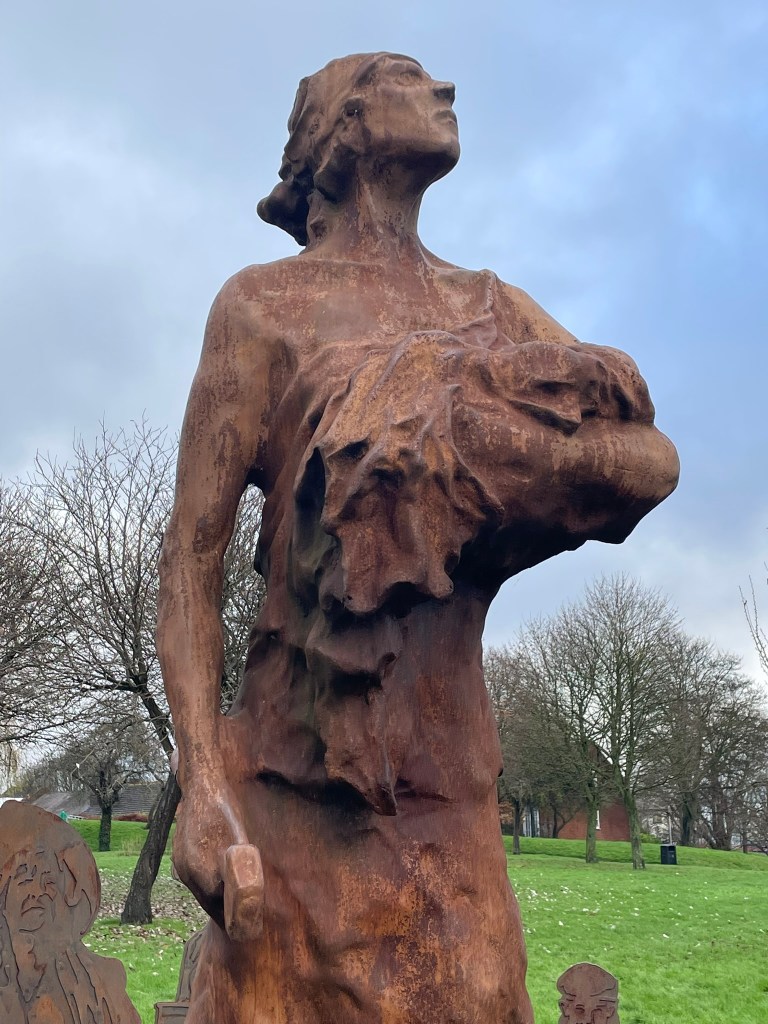
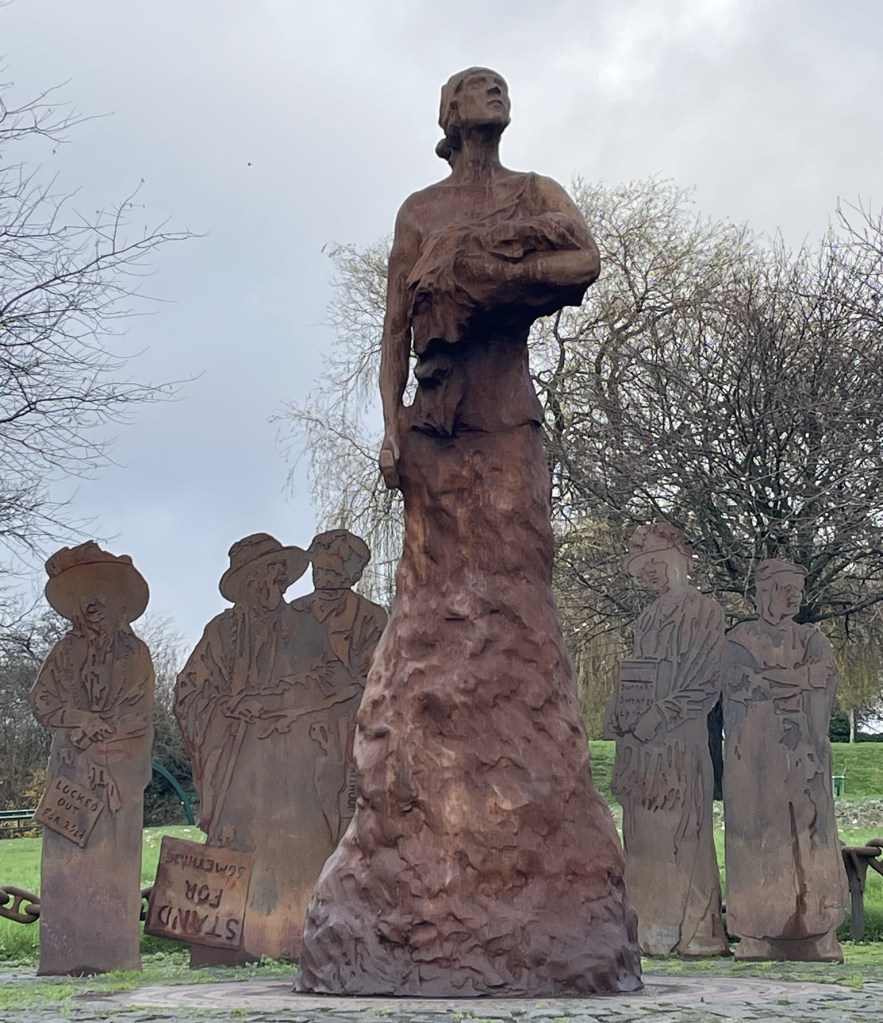
Here, her place is earned as the leader of Cradley Heath’s women chain workers, leading a ten-week strike in 1910, which resulted in a minimum wage being introduced in the industry, lifting workers out of abject poverty.

It is fitting that Mary’s sculptor is Luke Perry – who comes from a family of chain workers.  The statue captures Mary cradling a baby in her left arms while holding a hammer in her right.  Her multi-tasking is admirable if a little unsafe….

I struggle to get the circular text around the base of the statue into any type of decent picture.  On the drive back home I realise I could have taken a video.  Sigh.

Remember Ada Salter?  She invited Mary to London to help organise the Bermondsey Uprising – a mass protest of 14,000 women striking for better pay and working conditions.  Small world.

Ekaterine Kate Frolov

(1986 – 2000)

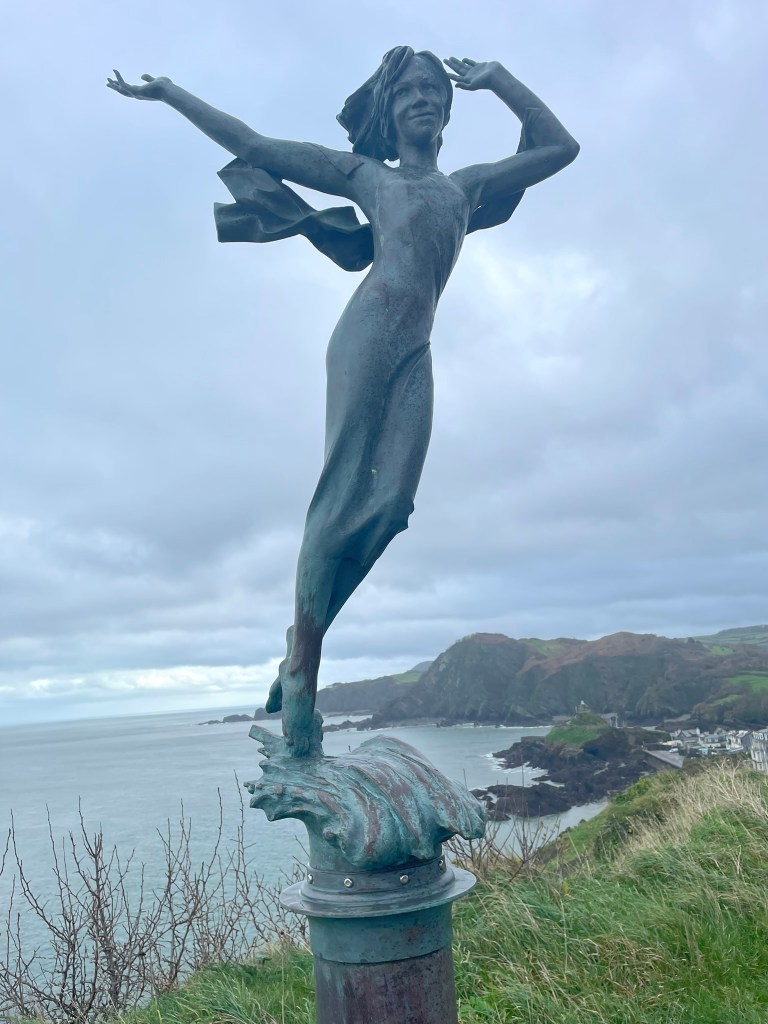
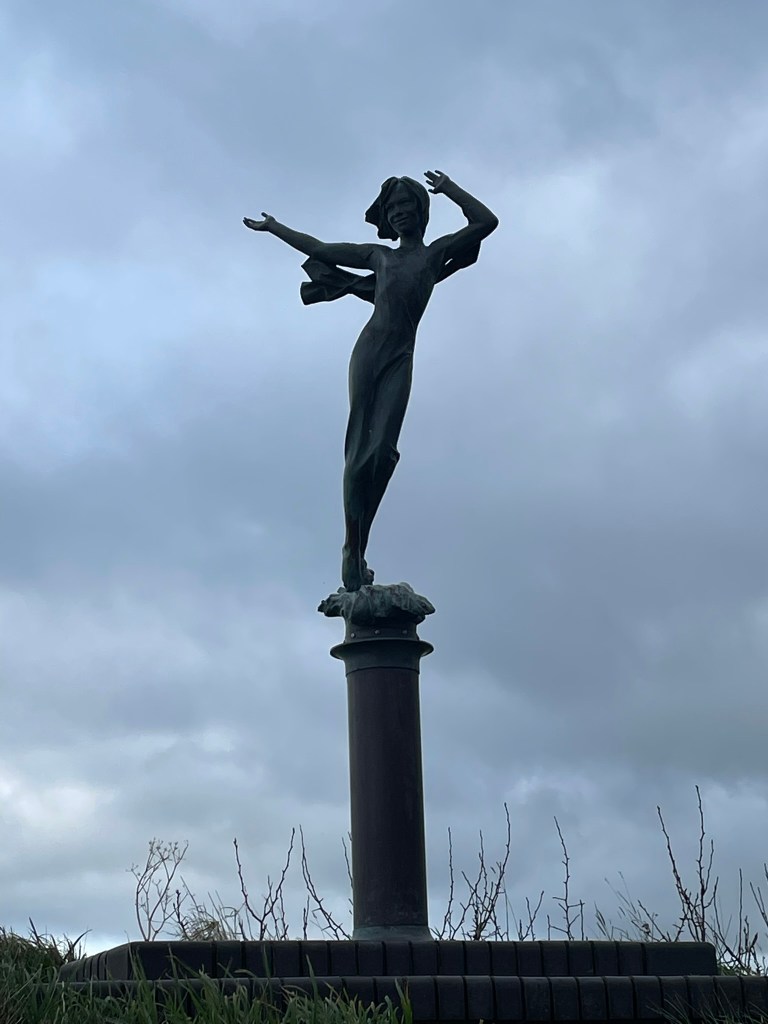
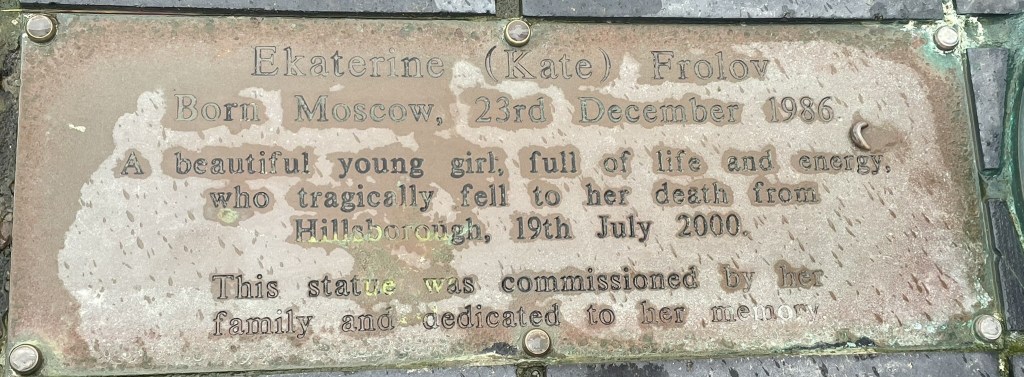
This statue is a memorial to a 14-year-old girl who tragically lost her footing on a foggy day on Hillsborough and fell from the cliff.  Ekaterine (or Kate as she was known) was from Russia and studying English at a language school in town. 

Her family erected this bronze statue in 2009.  It stands on Capstone Hill, overlooking Ilfracombe Bay.  Sadly, the sculptor is unknown, but I love the free spirited essence of the pose, with Kate’s hair and scarf lifted by the wind.  Beautiful.

Sophia Constable

(1862 – 1932)

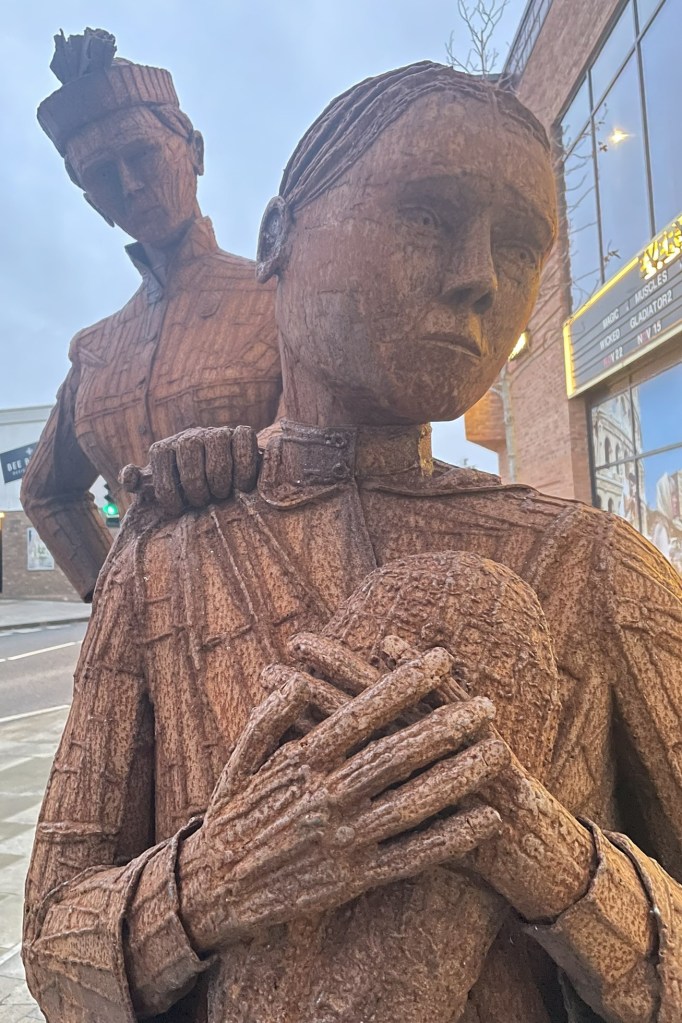
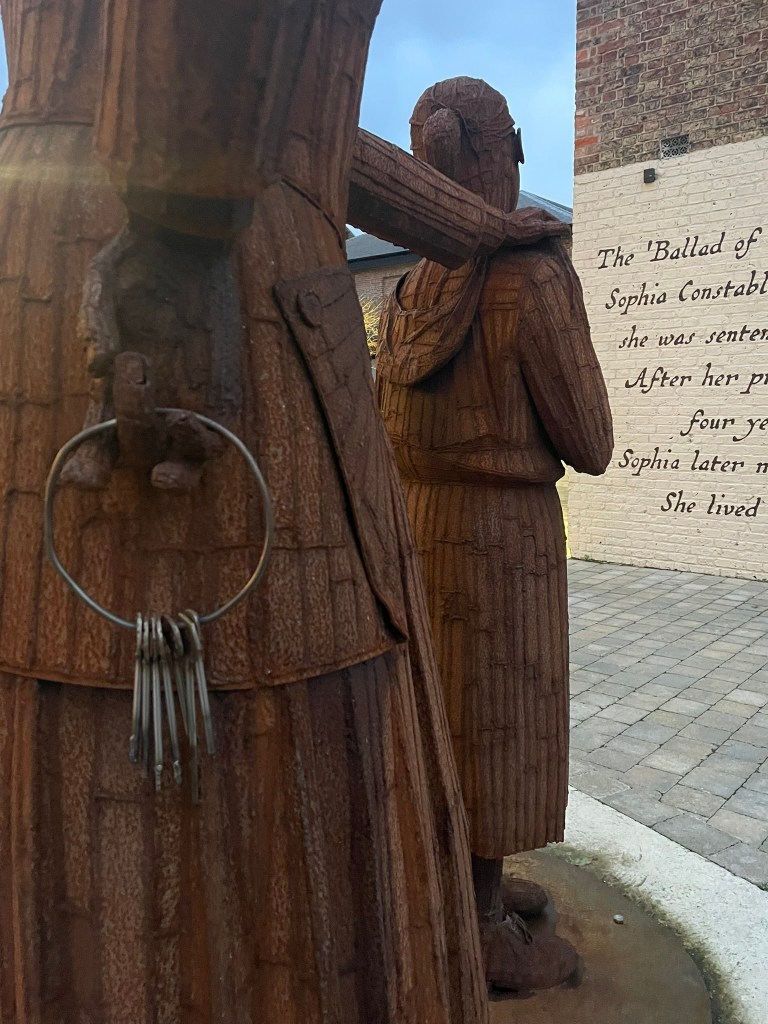
We would probably not be aware of the year Sophie was born if it wasn’t for the fact she was an eleven-year-old girl when she was sent to Northallerton Prison in 1873, making her the youngest female ever to be incarcerated in the prison.  Sentenced to three weeks hard labour for stealing a loaf of bed from a shop in Whitby, her defence of only stealing the threepenny loaf of bread because she was hungry just didn’t cut it.  Following her sentence Sophie the next four years at a reformatory school.

Entitled The Ballad of Sophie Constable, it was unveiled 150 years after her sentence, and has these words at its base:

A life without choice, a future restricted
but all the same found guilty – convicted.
Guilty of stealing by ‘devious deception’
and the law to be followed without exception.
Sophia and her mild transgression,
Sophia Constable, aged eleven
.

It wasn’t all bad – the wall Sophia faces states that she went on to work as a nurse, marry, have children and lived her life to the age of 70.

Northallerton Prison closed in 2013, and Sophie’s statue now stands close to where the women’s wing of the prison was situated.

Dame Eleanor Allan

(? – 1708)

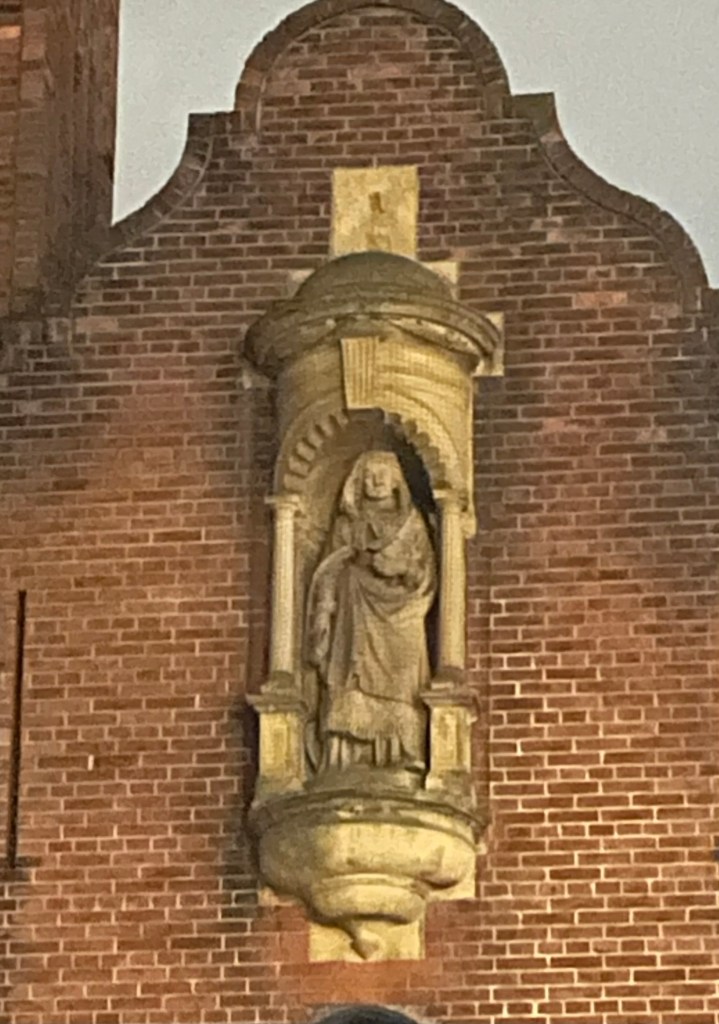
Little is known about Eleanor.  From what we do know, she was a widow who ran a tobacconist business in the late 1600’s, bought a farm in Wallsend and, when sold, used the proceeds to establish a school. The school was named after her and opened a year after her death in 1709.  Originally set up to provide education for ‘40 poor boys and 20 poor girls, the Dame Allan School now commands school fees of around £15k per year.  Check out the current term fees and judge for yourself if perhaps the original intention may have deviated somewhat (bursaries and scholarships are available).

The figure of Eleanor stands high on the gable end wall of College House wearing a mediaeval cloak and holding a book. It is thought the statue was installed around the time the building was put up in 1882, when the school transferred there.

As with many historical figures of that time, Eleanor’s fortune had links with the slave trade with a large part of her wealth formed on the back of slave labour in American tobacco plantations.  Newcastle’s only other woman statue is, you may have guessed, Queen Victoria, whose extravagant effigy stands proud outside the Cathedral.

I reach the statue at 9.30 on a November evening.  The façade is covered in netting to deter those pesky pigeons but with such poor light it’s a miracle I got any exposure at all.  Maybe visit it during the day.

Elizabeth Wolstenholme-Elmy

(1833 – 1918)

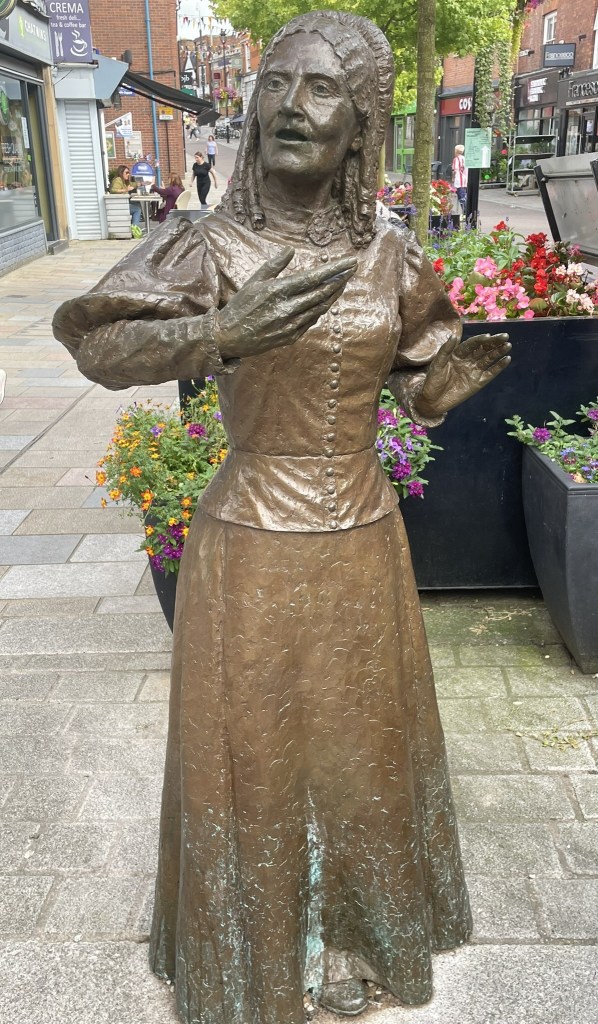
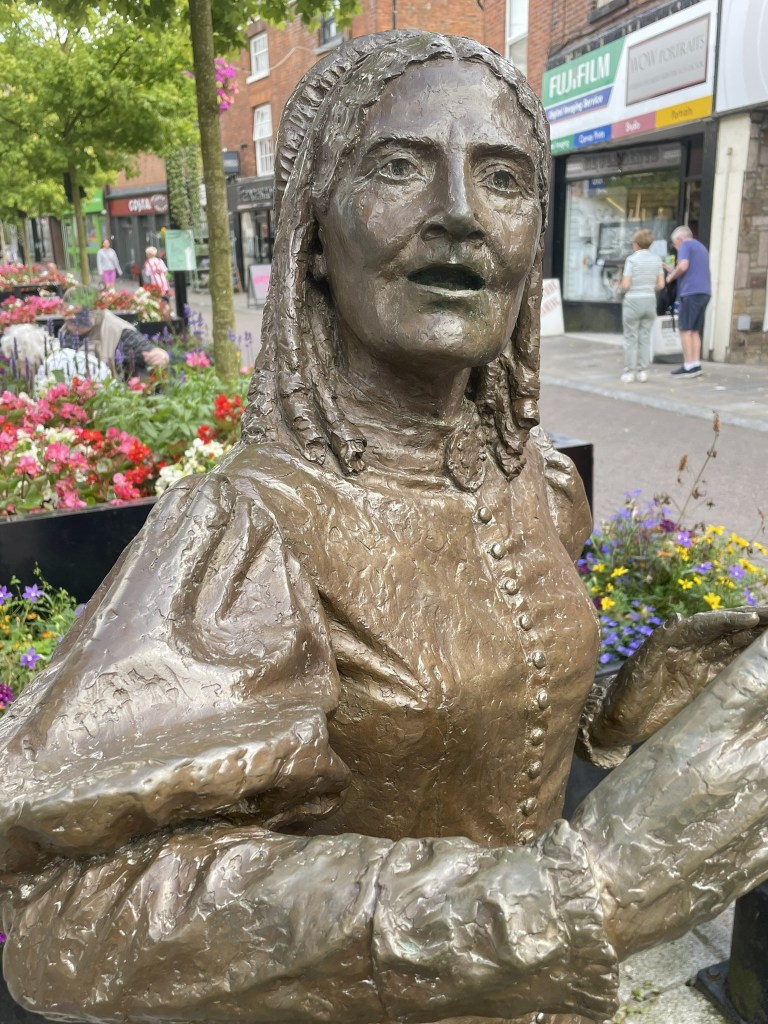
Often overlooked in the history of the suffragette movement (perhaps because her name is so long), Elizabeth was a teacher, writer, poet as well as a suffragette.  Born in 1833, she was given just two years of schooling while her brother was afforded a full education, progressing to professor of mathematics at Cambridge University.  Elizabeth, however, was academic in her own right and despite a limited formal education she became a governess before opening her own private girls school and running it as headmistress.  Elizabeth was committed to improving access and standards of education for women and girls and regularly lobbied on this issue with her work facilitating the foundation of Newnham College.  She gave up her school in 1871 and moved to London to work for the women’s movement, becoming the first paid woman lobbying Parliament on laws detrimental to women including child custody, equal rights within marriage and owning property.  In 1877, the women’s suffrage campaign was centralised as the National Union of Women’s Suffrage Societies and in 1889, Elizabeth was a founding member of the Women’s Franchise League.  From there she moved on to found the Women’s Emancipation Union in 1891.

In 1903, Elizabeth was invited onto the executive committee of Emmeline Pankhurst’s WSPU (Women’s Social and Political Union), finding a fresh movement for emancipation.  She was at the time supportive of militant action and took part in the WSPU Hyde Park rally in 1908 at the age of 75, leading the ‘North country’ procession but 1912, her stance on the WSPU’s militant action had changed and she reverted to more constitutional methods.

Elizabeth died on 12 March 1918 in Manchester, six days after the Representation of the People Act received the royal assent granting the vote to some women.

Sister Dora (Dorothy Wyndlow Pattison)

(1832 – 1878)

Dora arrived in Walsall from north Yorkshire in 1865 – at the height of the industrial revolution.  For the next 13 years she worked tirelessly to establish and run a professional medical service for the people of Walsall at a time when disease, epidemics, abject poverty and dangerous working conditions were commonplace.  She looked after relatives of victims of the Pelsall mining disaster in 1872, in which 22 men and boys were killed, with 13 survivors.  She formed a particular bond with the local railway company.  Many workers, at some point in their working life, required medical treatment due to working hazards and Dora created a bond with them.  In 1873, in recognition of her devotion, workers saved up their meagre wages to buy a pony and carriage to assist with her home visits to ailing patients.  In 1875 an explosion occurred in a local iron foundry.  Sister Dora was at the heart of emergency medical care which saw around 16 men seriously or fatally injured in the accident.  That same year Walsall was hit by smallpox.  Dora worked directly with the patients, risking her own life to help them.

When she died in 1878 thousands lined Bridge Street in the town centre to pay their respects with her coffin borne by eighteen railwaymen, engine drivers, porters and guards, all in working uniform.

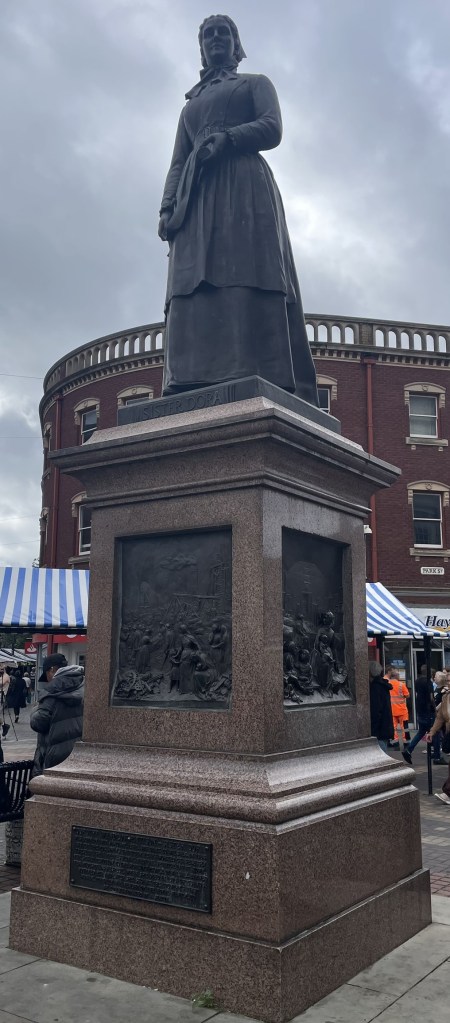
The respect for Dora is still present in the town, with not one, but three statues attributed to her.

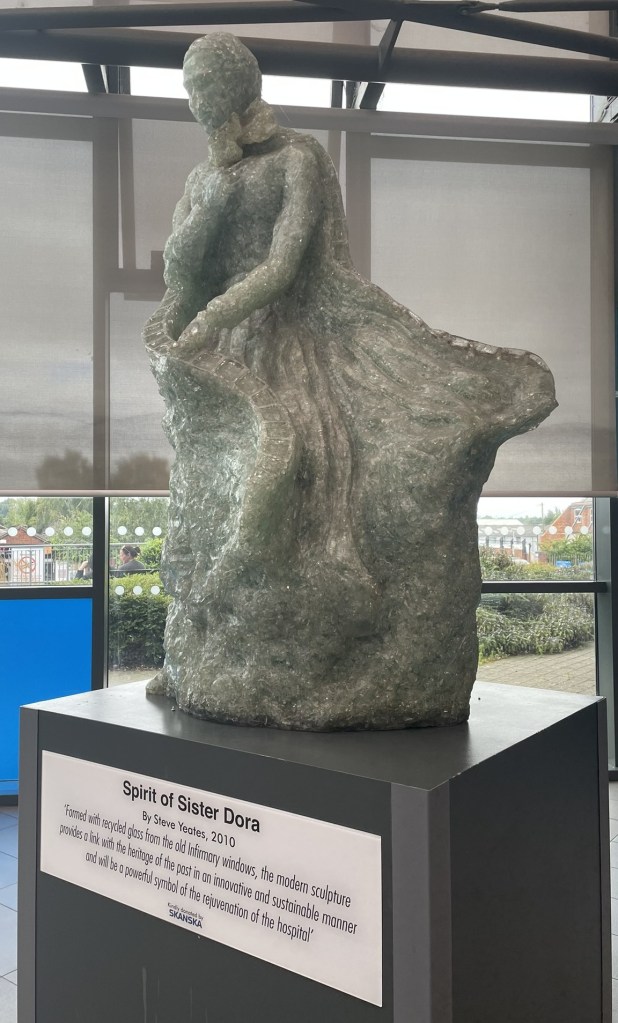
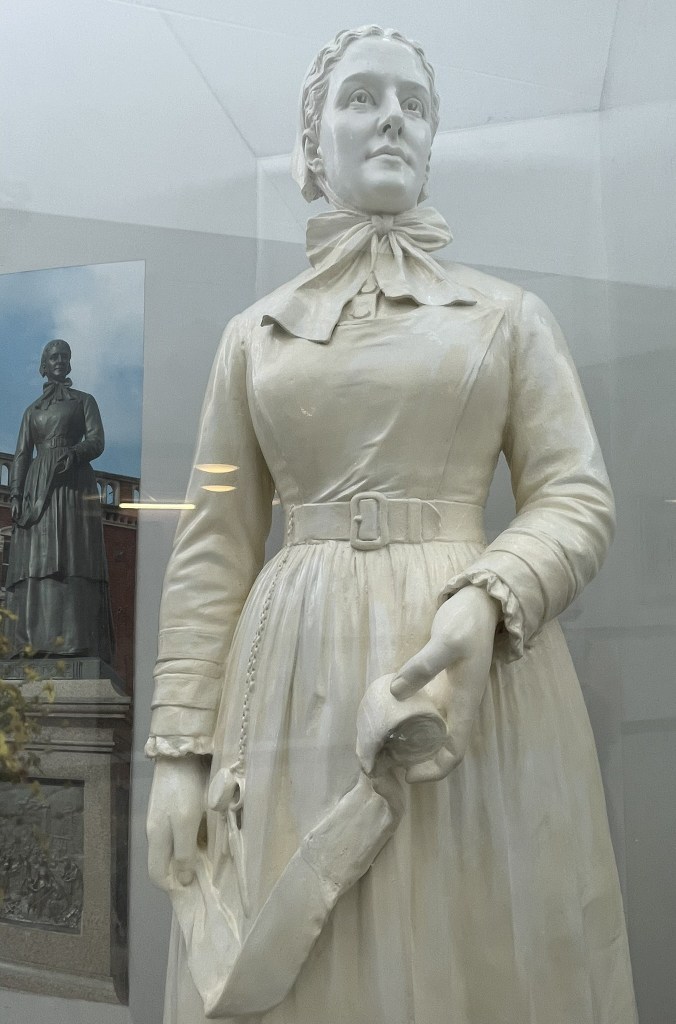
The first stop is the Walsall Manor Hospital.  Parking is tight, so I stunt roll out of a moving car to take in the first and most recent tributes on the ground floor reception – a glass figure made from the old Infirmary windows, bringing old into new.  Upstairs in a glass case is a plaster cast used to make the original 1886 statue.  Known as the first non-royal woman to receive a public statue in the UK, the original was carved in white Sicilian marble, but, due to erosion, was replaced in 1956.  This cast was given to the council in 1921 by the daughter of the original sculptor (F J Williamson). 

Today, the bronze statue of Dora stands proud on The Bridge in Walsall town centre.

Lady Godiva

(? – 1066ish)

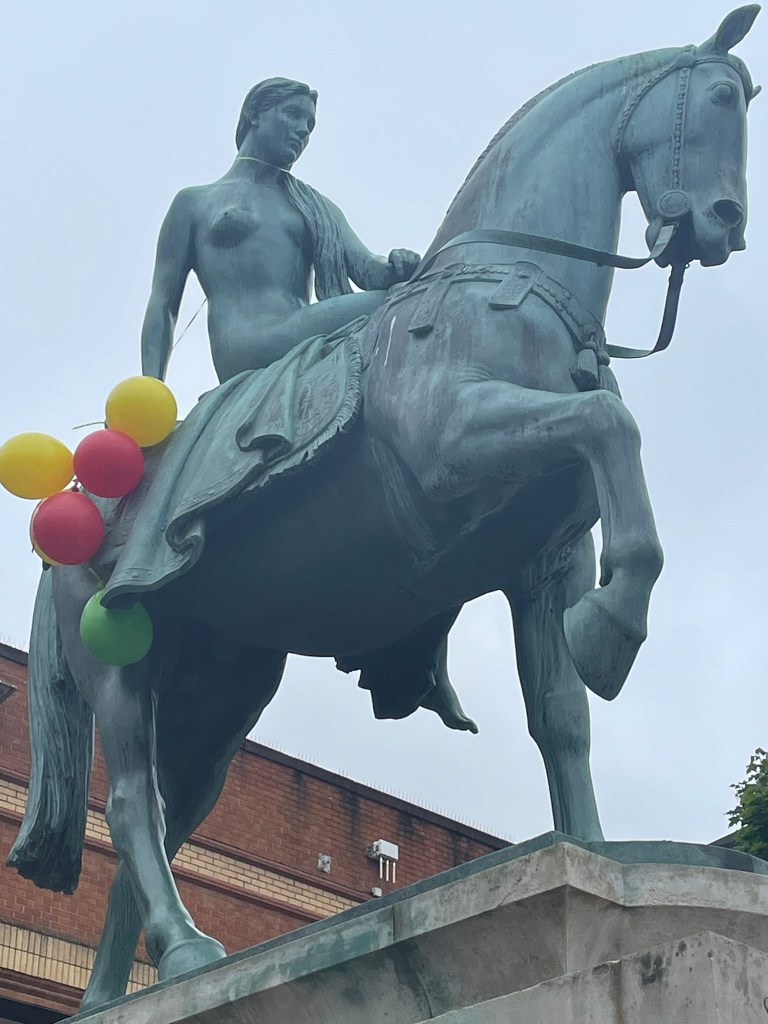
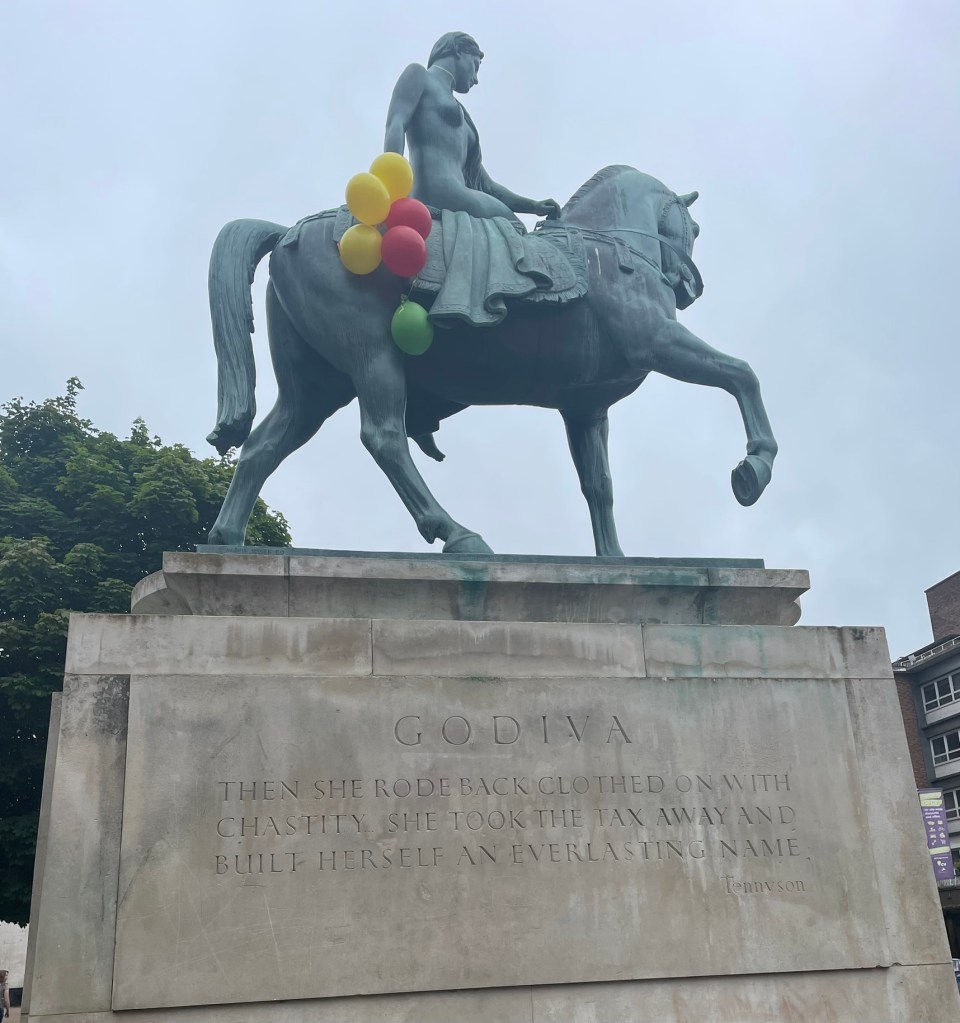
How far would you go for social injustice?  Lady Godiva was a religious woman renowned for her generous gifts to churches and abbeys.  Her birth date is unknown, but her marriage to Leofric, Earl of Mercia around 1035 is recorded.  She was a wealthy noblewoman in her own right, but, seeing the plight of ordinary people, she pleaded with her husband – Lord of Coventry – to ease their burden of taxes.  So far, so straightforward.  However, he suggested, legend has it, that she ride naked through the town for the cause (party balloons optional).  As the day approached, folk were ordered to stay indoors, windows barred and she rode through the town having only her long her covering her.  Of course, one cheeky fella stole a look and was rendered blind, hence the turn of phrase, ‘Peeping Tom’.  Still, Lord Coventry could have revoked taxes without his wife having to conduct a ride of shame.  If only tax decreases were that simple, eh?

Fun fact! Lady Godiva’s original Anglo-Saxon first name was Godgifu(or sometimes spelled Godgyfu), which translates to “gift of God”. ‘Godiva’ is the Latinised version.

The statue actually goes by the title, ‘Self Sacrifice’.  Sculpted by William Reid-Dick, it was commissioned in the 1930’s by another William (Bassett-Green) who was a wealthy Coventry businessman fascinated by the Godiva story.  The project was stalled by the second World War and when the artist came to finish the work some 10 years later, the cost of creation had increased.  However, Basset-Green refused to pay for any additional costs.  After an anonymous donor making up the difference the unveiling happened in 1949.