Catherine Booth

(1929-1890)

William Booth College, Champion Park, Denmark Hill, London SE5 8BQ and Mile End Road, London E1 4TP
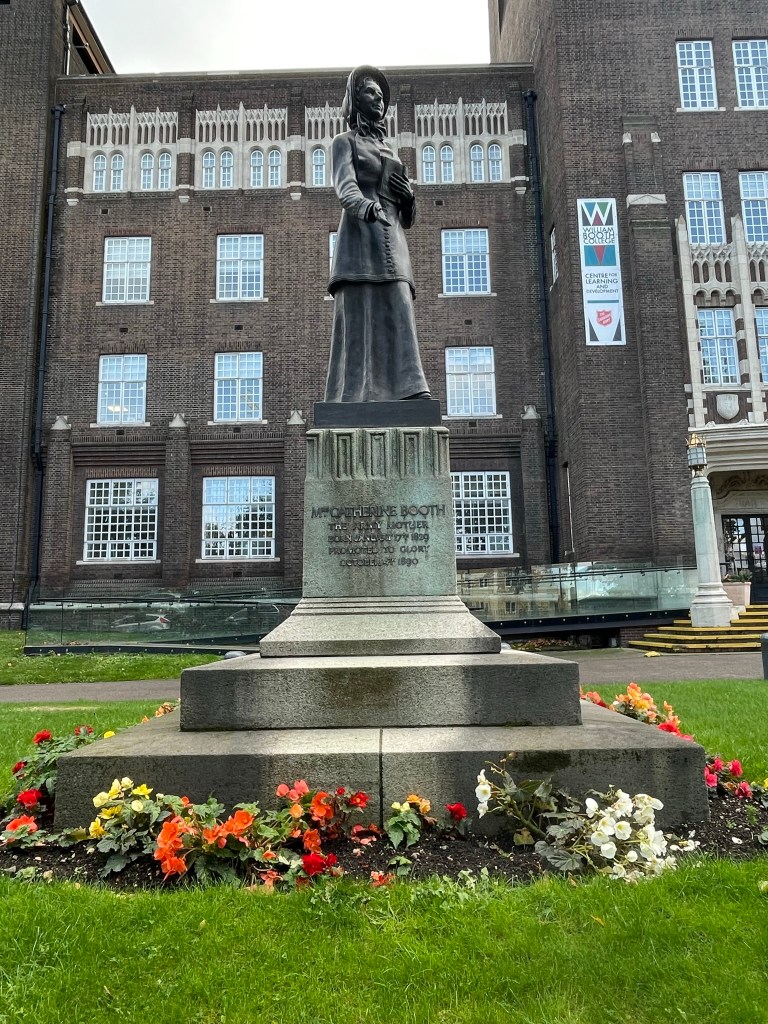
Catherine received a strict evangelical upbringing with the values of piety and selflessness instilled in her.  She attended Wesleyan classes at a young age but later became dissatisfied and moved away from the faith around 1850.  A few years later she met and married William Booth and shared faith values and a passionate belief in the need for church reform. Catherine had been home educated by her mother and due to illness, she had spent many years housebound which served to make Catherine a voracious reader of the bible and other religious works, leading to an interpretation of the Bible which supported equality and challenged the precept that it was unfeminine for women to preach. 
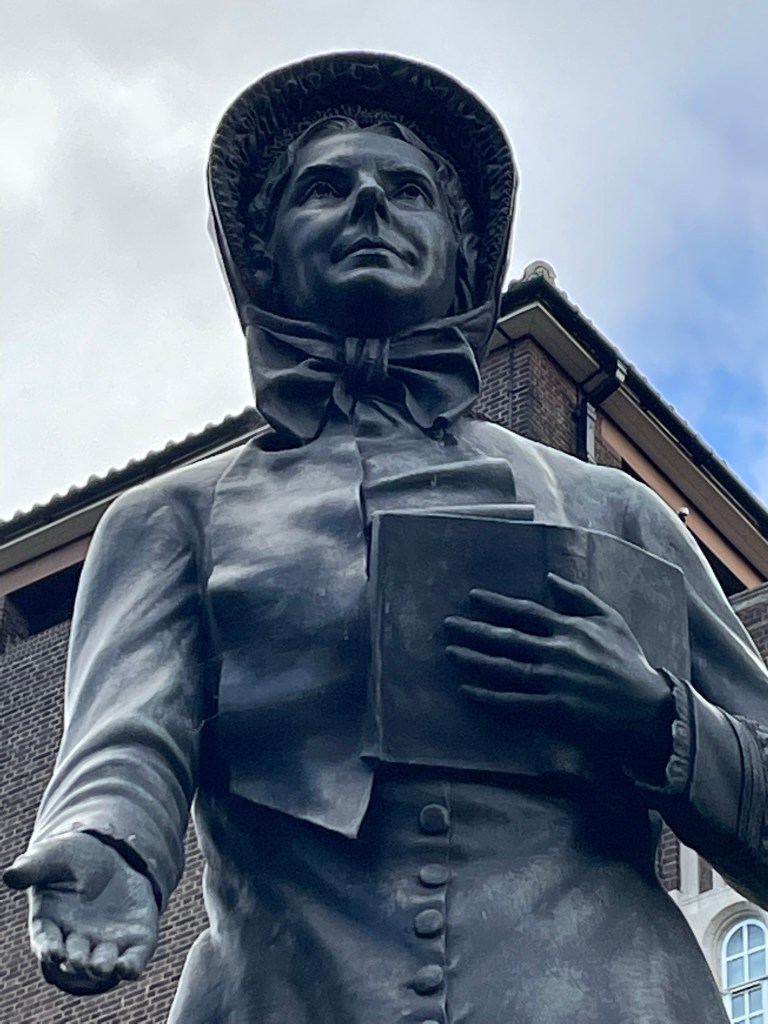
William was at first opposed but by 1860 Catherine was speaking publicly, winning many converts which helped sway William’s opinion.  Subsequently the value of female ministry was proclaimed by The Salvation Army (established in 1865) and a statement regarding sexual equality in ministry was published in The Salvation Army’s Orders and Regulations.  For many Salvationists Catherine’s legacy is this success in advancing public roles for women in Church life and she is affectionately remembered as ‘The Army Mother’.

Catherine is also celebrated for her commitment to social reform, advocating for better conditions and pay for women workers in London’s sweated labour, notably in the match-making industry.  All this, it is written, while giving dedication to her duties as a wife and mother of eight and her commitment to The Salvation Army.  

Still, she dodged the bullet of school bun sales, World Book Day costumes and various taxiing to judo/football/swimming lessons.  Pick your hard.

The Mile End statue is a fibreglass replica of the original in Denmark Hill, donated by the women of the US Salvation Army to mark the Army’s 150th anniversary in 2015.

In each location, Catherine is stood in preaching action, adjacent to her co-founder and husband William Booth.

Still unsure if it is worth a visit?  Let’s note a Trip Advisor review from November 2023, ‘I don’t know who she is.  It’s a pretty standard statue.  It’s not worth going out of your way for’.
Anna Pavlova

(1881-1931)

Victoria Palace Theatre, Victoria Street, London SW1E 5EA

There can’t be many better accolades than having a dessert named after you.*

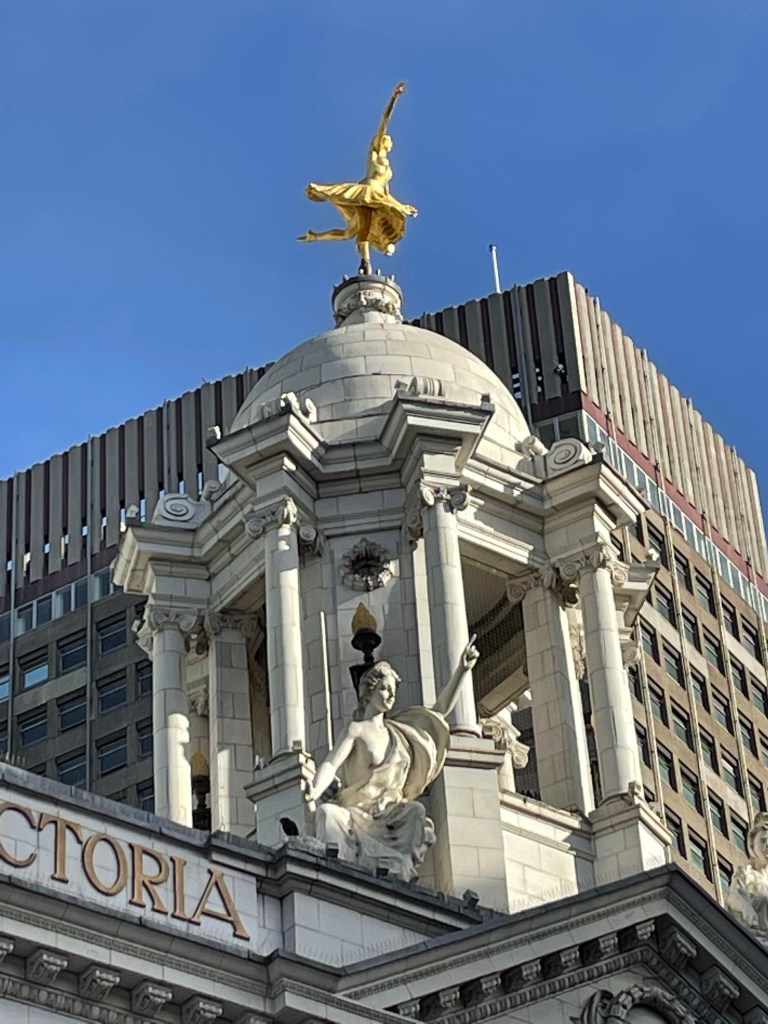
Born into poverty in St Petersburg, Russia, Anna trained at the city’s Imperial Ballet school culminating in her reaching top rank of prima ballerina in 1906.  Famously known for her performances, particularly The Dying Swan, she toured worldwide and set up her own dance company in 1913.  However, she settled in London and made it her adoptive home.  It was whilst she was touring that she contracted pneumonia and died at the age of 49.

The statue was erected in 1911, and it was said that Pavlova considered it unlucky for her to see it, so she avoided it at all costs.  It was taken down in 1939 for safe-keeping during the war but the original did not return, and a replica was installed in 2006, complete with head spike and netting to deter pigeons. 

Fortunately, from my angle the bird deterrent hardly plays in the shot, although I’m slightly concerned of being accused of upskirting…..

*Meringue based dessert originating in the antipodes in the early 20th century.  Apparently the Aussies and the Kiwis are still fighting over the origins.

Harriet Tubman

(1822-1913)

Huddersfield Library and Art Gallery, Huddersfield

I google women statues in the UK and get lost in sites, articles and blogs.  Then I come across the Public Statues and Sculptures Association site pssauk.org.  There, I find a list of all the 128 women in the UK with photos (mostly), brief descriptions of the figures, the artist and where they are situated.  Boom.  Who knew it would be that easy.  All that is left for me to do is to log who they are and where they are so I can create a schedule of visits.  I have my favourite method of data collection – spreadsheets, and I go about breaking the statues in to regions of the UK simply as:

Scotland and NI – an impressive list!
North West
North East
Wales and South West
Midlands
South East
London

It just takes a few hours and I marvel at technology.

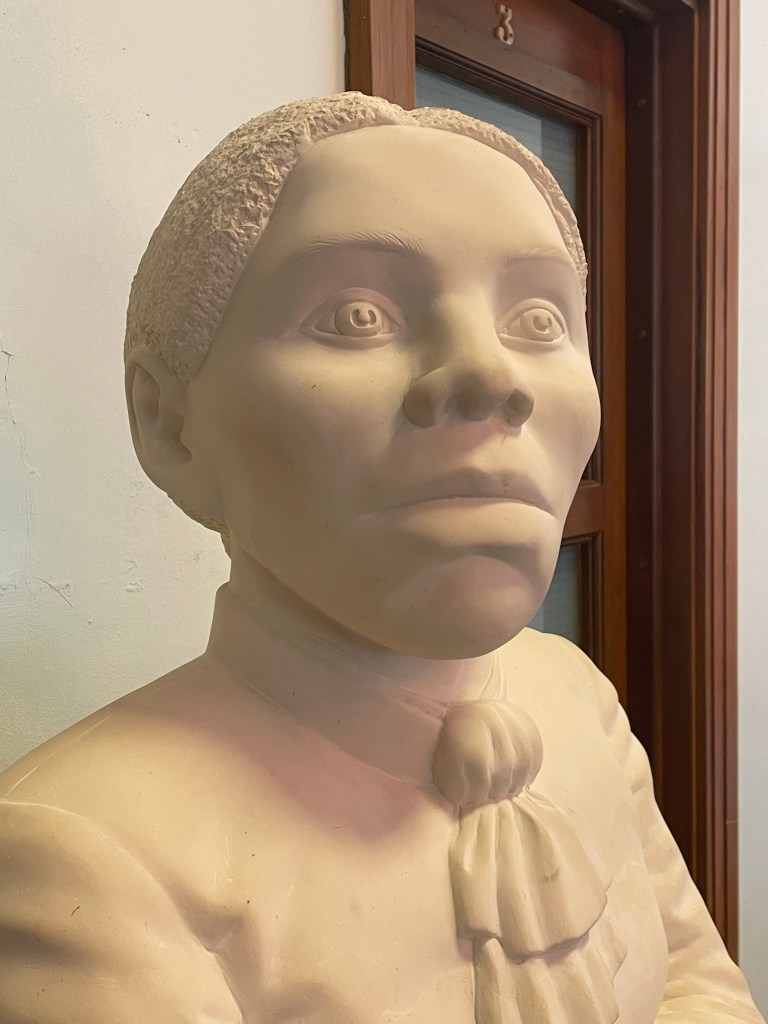
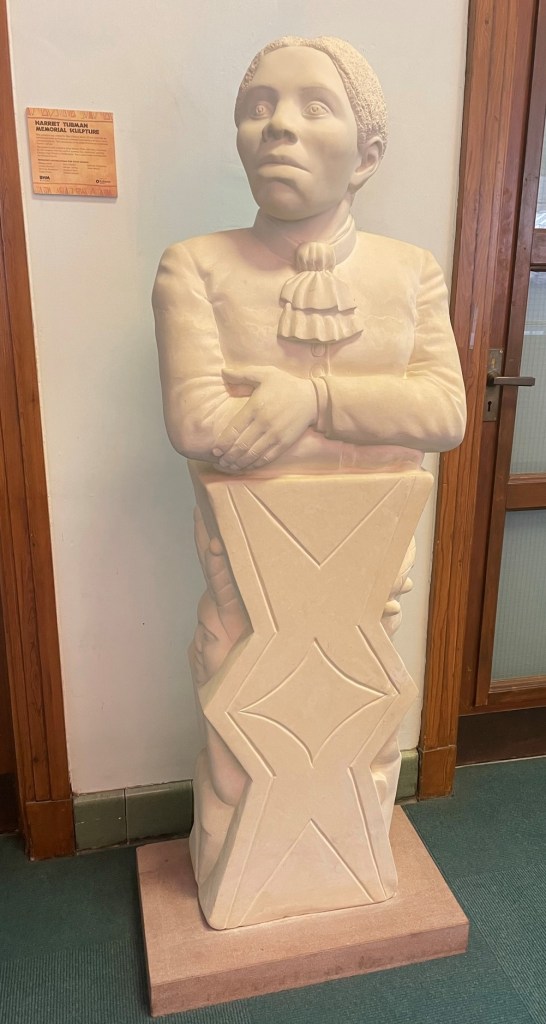
Sadly, Leeds is lacking a female (non-royal) statue, but West Yorkshire has a few gems so I start heading a little southward.  The Harriet Tubman memorial was commissioned by Kirklees Council and unveiled on 1st October 2013 to mark Black History Month and the centenary of her death.  Tubman was an abolitionist and political activist.  An escaped slave, she was instrumental in the US Underground Railroad which offered hundreds of slaves a passage to safety.

I arrange to meet my friend Nic who lives in Huddersfield and relish talking about my endeavour, (despite early days) and generally catching up.  It would be great if all statue visits could be accompanied with a good natter and a pitstop at (sadly) the now defunct Humpit Hummus Café.

Annie Kenney

(1879-1953)

Parliament Square, High Street, Oldham

Born in 1879 Annie started working life in a cotton mill at the age of 10 and soon took on relentless 12-hour shifts.  She remained at the mill for 15 years, eventually getting involved in trade unionism and the suffragist movement.

After hearing Christabel Pankhurst speak about women’s rights at an Independent Labour Party meeting in 1905, Annie became involved in the campaign for women’s suffrage and was renowned for standing on an orange box ringing a bell to get attention for her speeches.  Her actions as a suffragette included her being imprisoned 13 times and taking part in several hunger strikes.

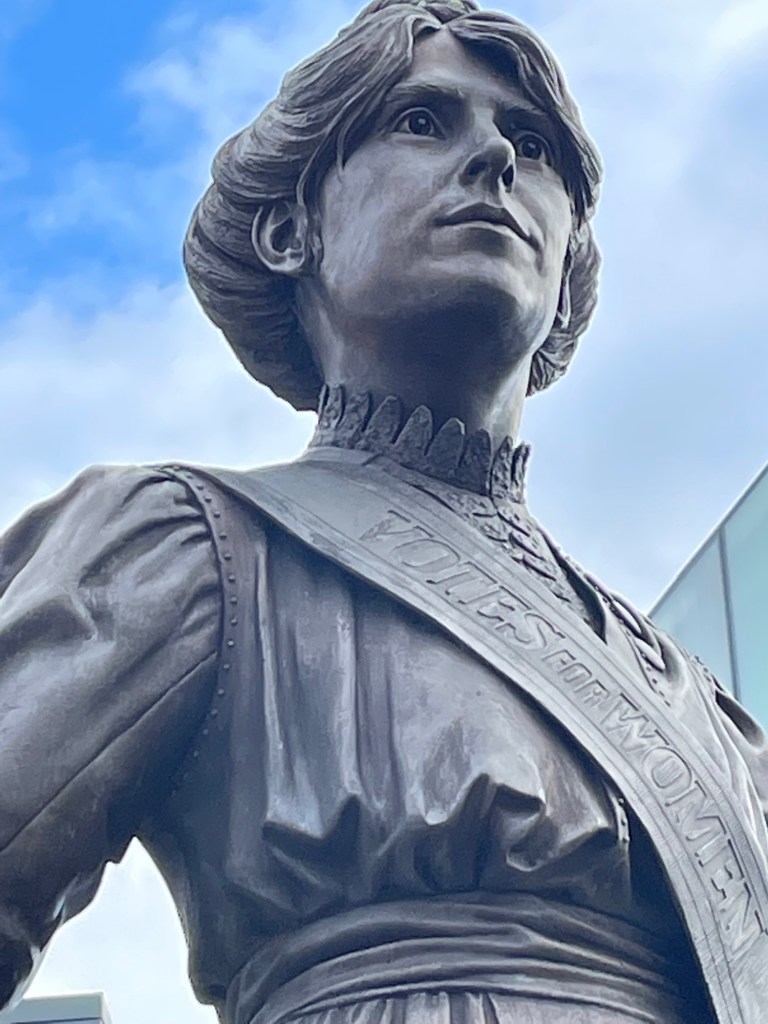
The statue was unveiled outside Oldham Town Hall in December 2018 marking the centenary of the Representation of the People Act 1918, which gave some British women the right to vote, honouring the only working-class woman to hold a senior position in the Women’s Social and Political Union. 

I learn all this after my visit, as she is one of a few statues I am journeying to throughout the northwest.  Had I learned about her losing a finger in a cotton mill accident I could have given the statue a closer inspection to see if such a gruesome detail has been added; or in this case; taken away.  Perhaps someone can let me know.

Victoria Wood

(1953-2016)

Library Gardens, Silver Street/Manchester Road, Bury

Comedian, actor, songwriter, screenwriter, producer and director.  Phew that’s a lot of roles.

Known for her own TV show as well as productions such as Acorn Antiques and Dinner Ladies, Victoria was a versatile, respected and admired entertainer.

The statue in her home town was largely fundraised by Victoria’s brother and unveiled in 2019 with a second unveiling in 2025 after being hit by a taxi leading to extensive repair work.

Gracie Fields

(1898-1979)

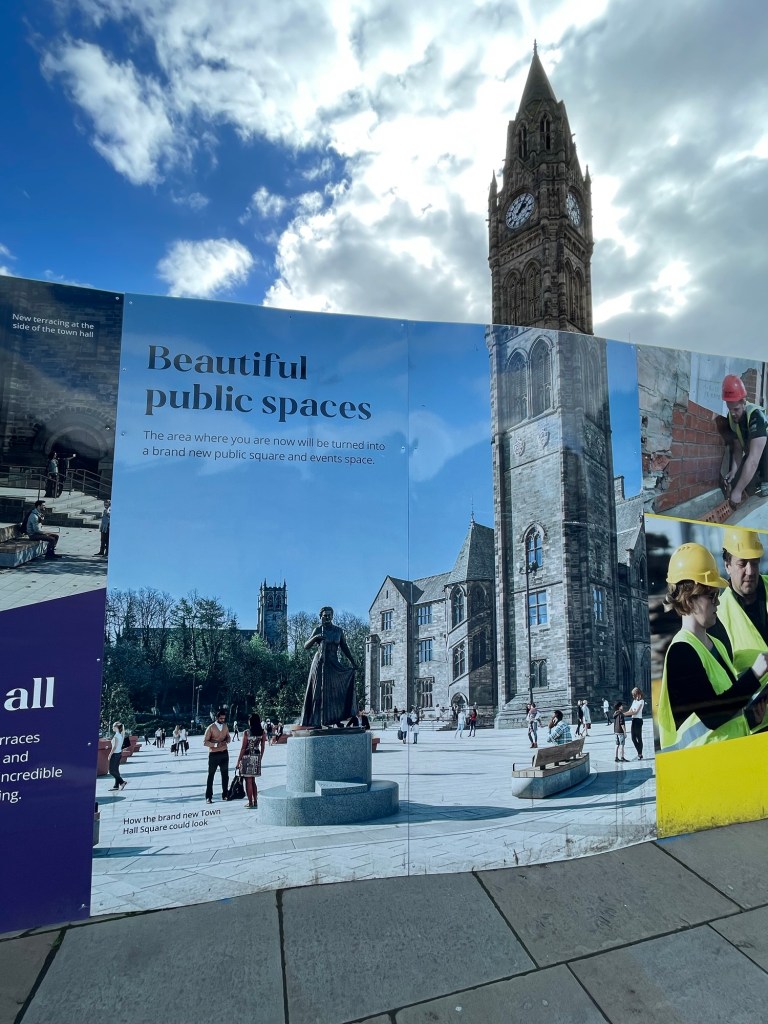
Town Hall Square, Rochdale

Image from the boarding surrounding the square

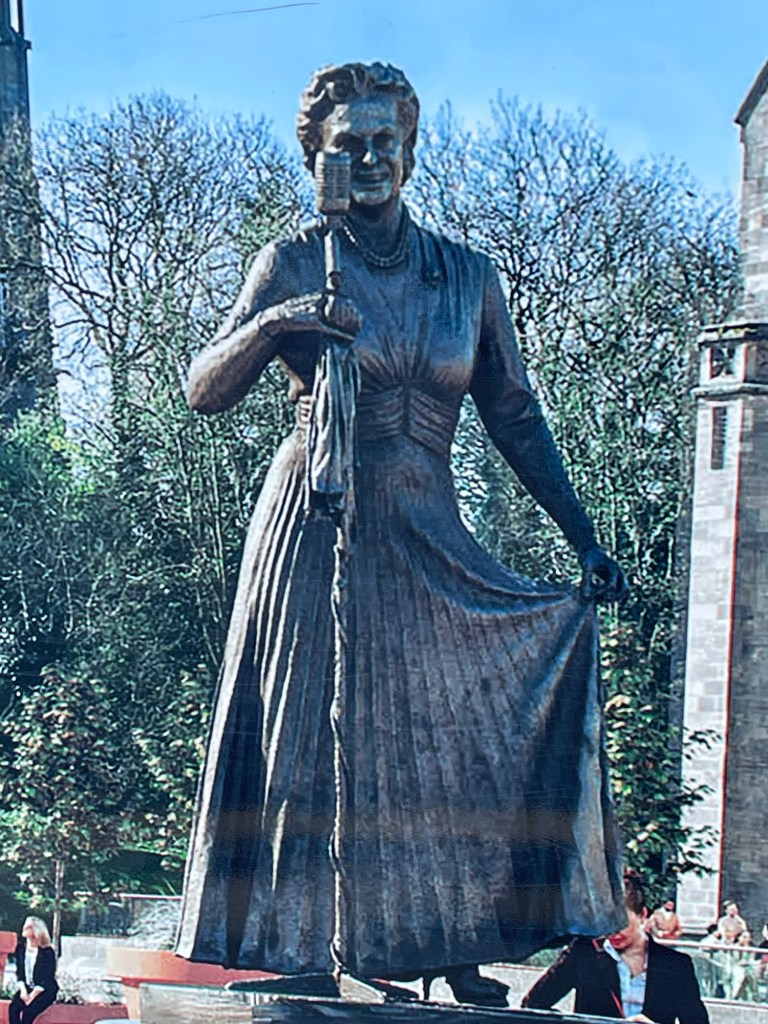
Born above a Rochdale fish and chip shop in 1898 Gracie spent her early life working in a cotton mill whilst also attending school and theatre groups where she graduated on to bigger stages.  Actor, comedian and singer, Gracie went on to star in films and stage productions, performing globally, making her the world’s highest-paid female in the 1930’s.  She earned honours not just for her career, but for her vast charitable work and generosity, but is best known for her work entertaining troops during the war where she travelled extensively.

Should look good when it’s finished!

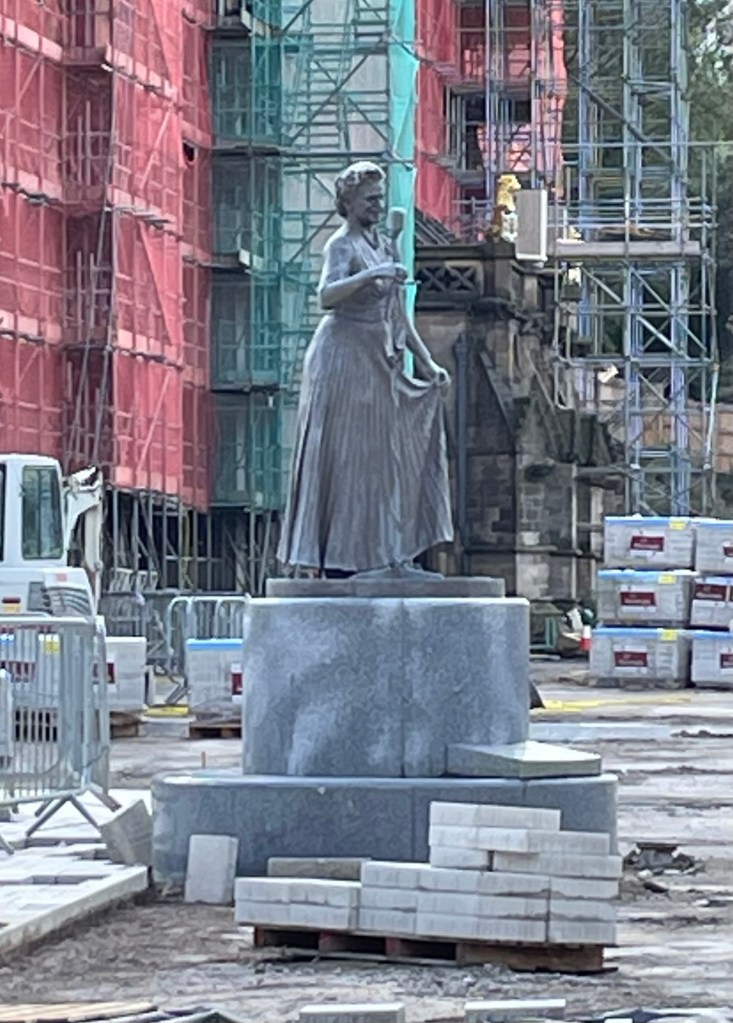
But back to Rochdale.  Heralded as the first statue of a woman to be erected in Greater Manchester in more than 100 years, it was unveiled in 2016, standing proudly outside the Grade 1 listed town hall.  Phone camera at the ready I walk up to the Town Hall to be met by mass construction.  It’s a Sunday so the machines are quiet, but unbeknown to me, the area is being re-developed and I can only gaze at Gracie through the fencing.  She survives intact but surrounded by rubble – reminiscent of impromptu war time sing – a- longs with the troops perhaps?

Looking ‘Graceful’ amongst rubble

I manage to slip my phone through the fencing and grab some inadequate shots of her.  Must do better.

Amy Johnson

(1903-1941)

Prospect Street, and Hawthorne Avenue, Hull and
Herne Bay Promenade, Kent

Hawthorne Avenue, Hull

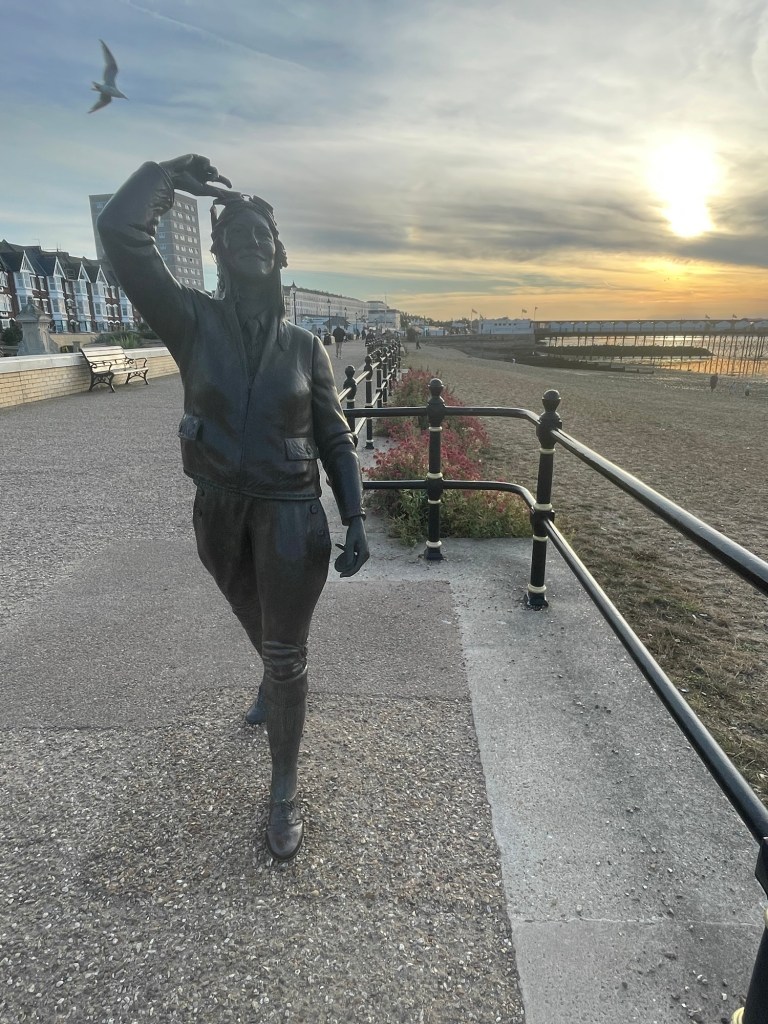
Amy was one of my first statue visits and remains one of my favourites. I love her optimistic gaze upwards. The sky is yours Amy.

Stone memorial on Prospect Street, Hull city centre

In Hull city centre, this statue is situated in a small memorial garden with pictures journeying her incredible life.

Herne Bay Promenade

The statue in Herne Bay was cast alongside the Hull one and is life-size.  It carries the same optimistic gaze as her twin in Hawthorne Avenue but here she looks out to sea, where her fatal plane journey ended about 12 miles off the coast of Herne Bay.

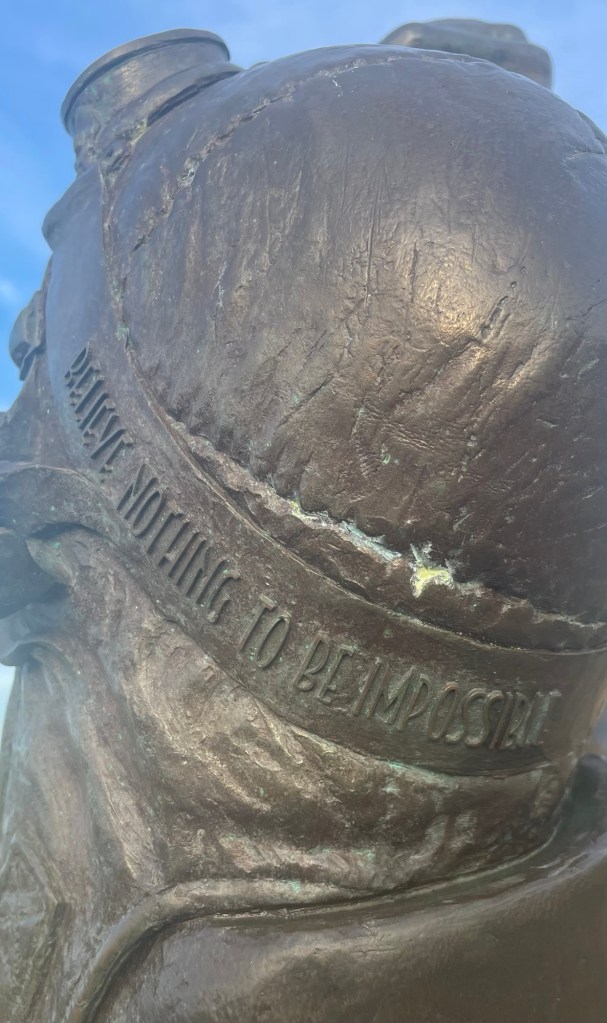
Believe nothing to be impossible

I walk around her and notice the inspirational words on her attire (had I missed this in Hull?) No matter, I’ve seen it when I needed to.

Born in Hull, Amy achieved many firsts.  After qualifying as the first woman in the UK to become an Air Ministry Engineer she was the first woman to fly solo from England to Australia in 1930.  The following year she was the first pilot to fly from London to Moscow in one day.  Her last long distance flight was in 1936 when she flew a record breaking solo from London to Cape Town. 

She died when her plane came down in the Thames Estuary, the details of which remain a mystery.  Allegedly flying to deliver the plane to Oxfordshire, her timing and journey were way off course, particularly for a skilled pilot like Amy.  Given it was during wartime was she on a secret mission?  Was it bad weather?  The end is a mystery, but the subject is a legend.

Emmeline and Christabel Pankhurst

(1858 – 1928) + (1880 – 1958)

Victoria Tower Gardens South, Westminster, London SW1P

St Peter’s Square, Manchester

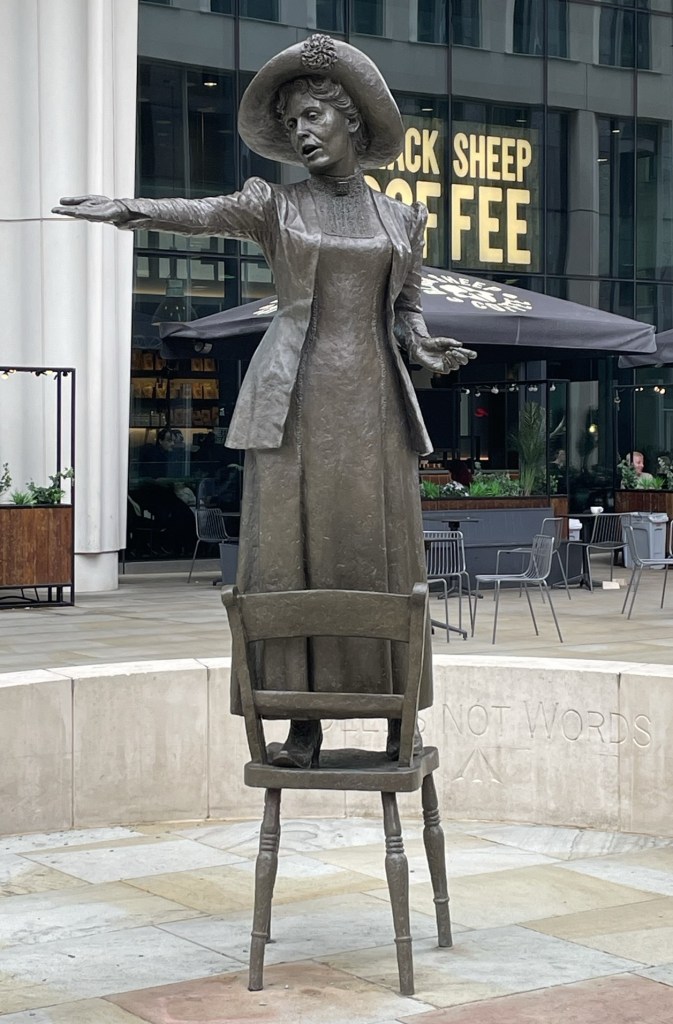
This is the memorial to Emmeline Pankhurst, the leader of the suffragettes who campaigned for women’s right to vote, including a relief to her daughter Christabel, both poignantly erected in the shadows of the Houses of Parliament.

Born in Manchester, in 1903 Emmeline was one of the founders of the Women’s Social and Political Union (WSPU). Along with her daughters Christabel and Sylvia they were active in demonstrations and direct action to fight for the right to vote.  Like many suffragettes, Emmeline was arrested on numerous occasions over the next few years and went on hunger strike herself, resulting in violent force-feeding.

The outbreak of war of World War Two in 1914 meant many activists, including Emmeline focused on the war effort.  By 1918 the Representation of the People Act gave voting rights to women over 30.  Emmeline died on 14 June 1928, a month before all adult women could finally vote in elections (then at the age of 21).

Ada Lovelace

(1815-1852)

Ergon House, Horseferry Road/Dean Ryle Street London SW1

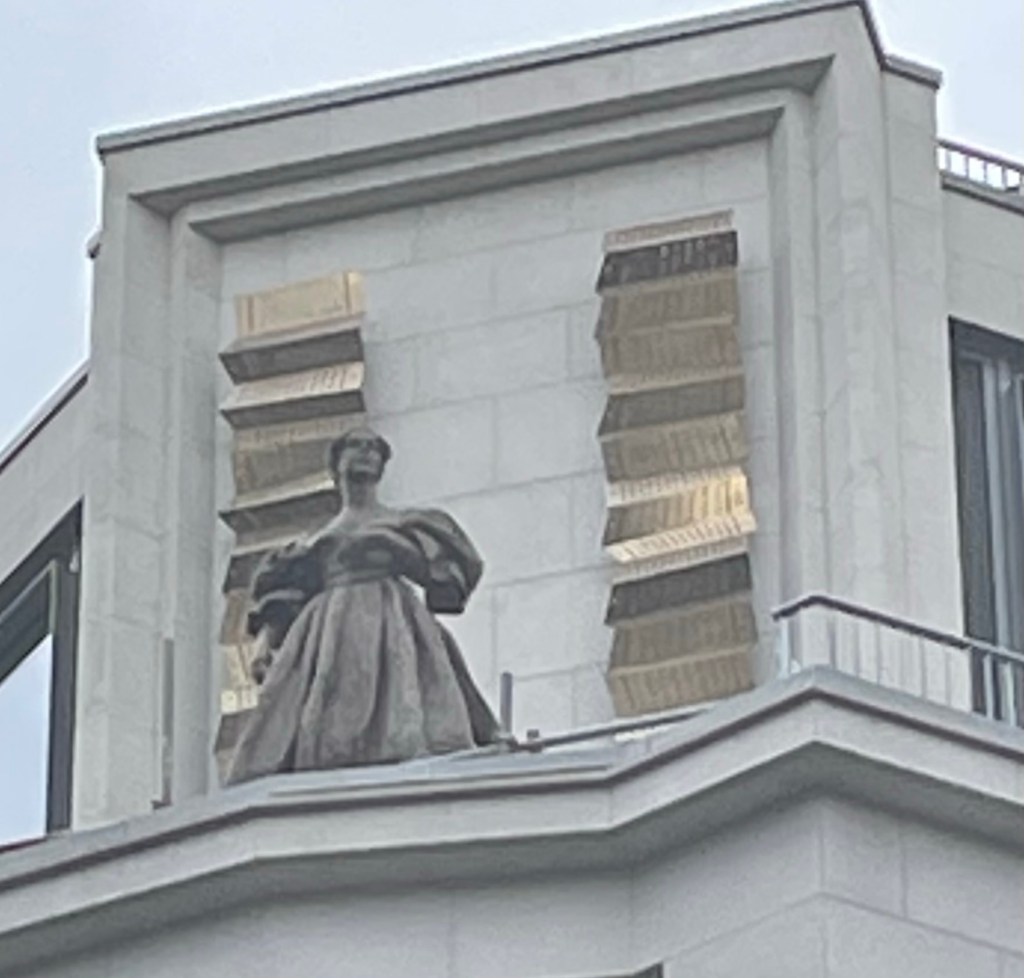
Tricky to find and even trickier to capture on camera. Ada sits high on a building between Dean Ryle Street and Horseferry Road.  In an age of perpetually looking down at smartphones it seems counterintuitive to look up, but there she stands, surveying London’s continually changing landscape.

Ada is best known as a mathematician and technology pioneer, at a time when few women entered those fields. She worked closely with Charles Babbage on the analytical engines —mechanical prototypes of the computer — and is sometimes credited as being the world’s first computer programmer.

Did you know???????  She is celebrated on the second Tuesday of every October, which has become known as Ada Lovelace Day.

The punchcards behind her are an early form of computer memory that would have been used with Babbage on the analytical engine had it been built.  Apparently the cards contain two coded puzzles contributed by a team of international scientists.  Clearly I’d be able to crack them if they weren’t so far away…..

Violet Szabo

(1921 – 1945)

Queen’s Walk, Lambeth Palace Road, London SE1 7LB

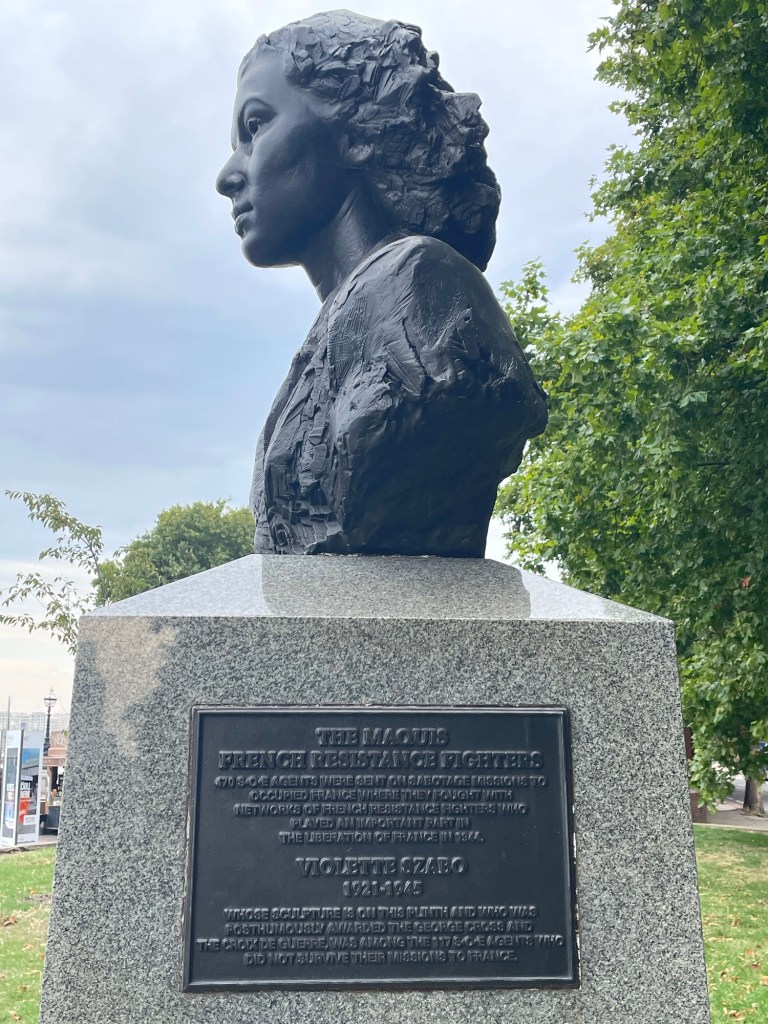
Having a bad day?  Then think of the plight of Violette Szabo, Special Agent.  The Special Operations Executive (SOE) was secretly formed for the purpose of recruiting agents of many nationalities, who would volunteer to fight for freedom, by performing acts of sabotage in countries occupied by the enemy during the Second World War. 

At the outbreak of the Second World War, she joined the Women’s Land Army and the Auxillary Territorial Service before joining the SOE where she underwent extensive training as a field agent.  Her training was put to the test in several missions, none more so than her final mission.  Thwarted by the SS, her group made a getaway held off by Szabo shooting at the enemy before she was finally captured, tortured and interrogated.  Transferred to Ravensbrück concentration camp she kept up the morale of the other imprisoned resistance fighters by beginning to organize an escape from the camp. Unfortunately, in February 1945 the Germans discovered her plans and she was taken to the execution block where she was shot and killed at the age of 23.

Szabo was one of 117 Special Agents who did not survive their missions to France and her statue represents the bravery and fortitude of all who died for the freedom of others.