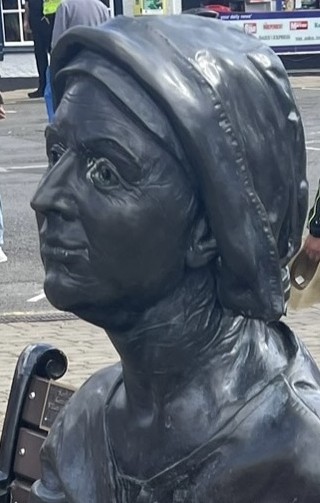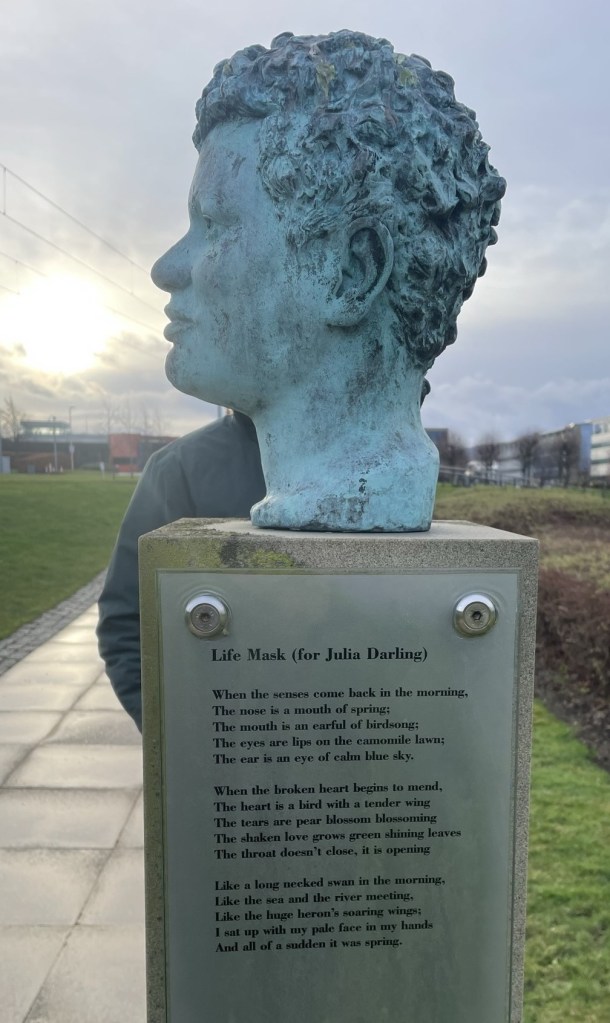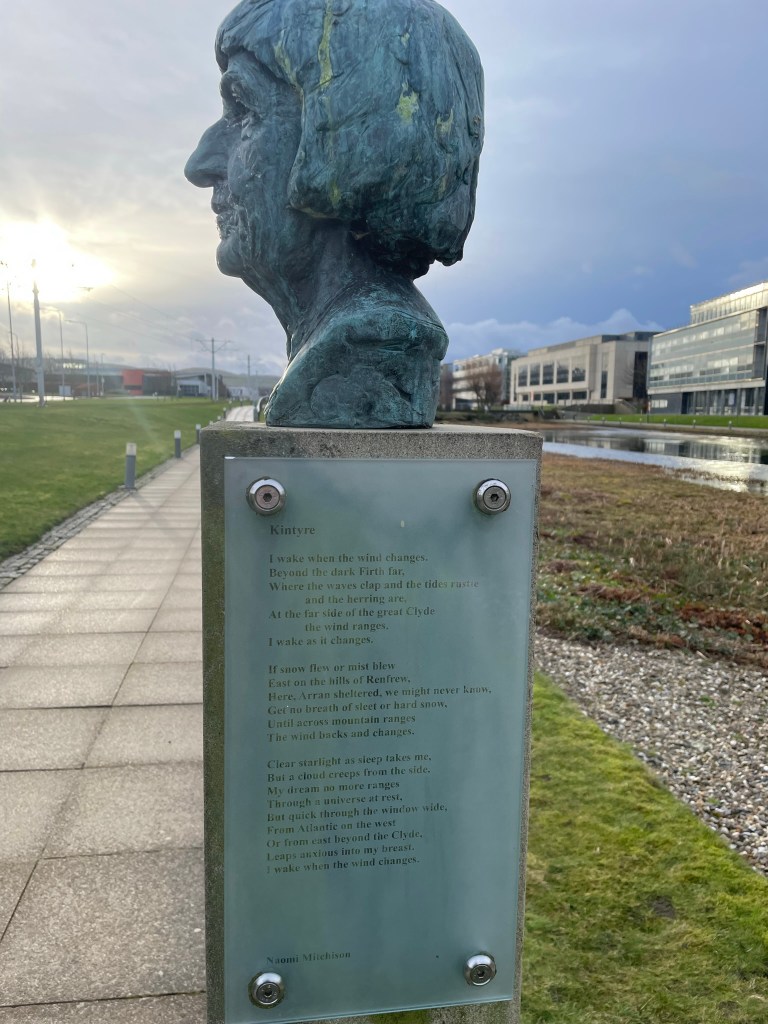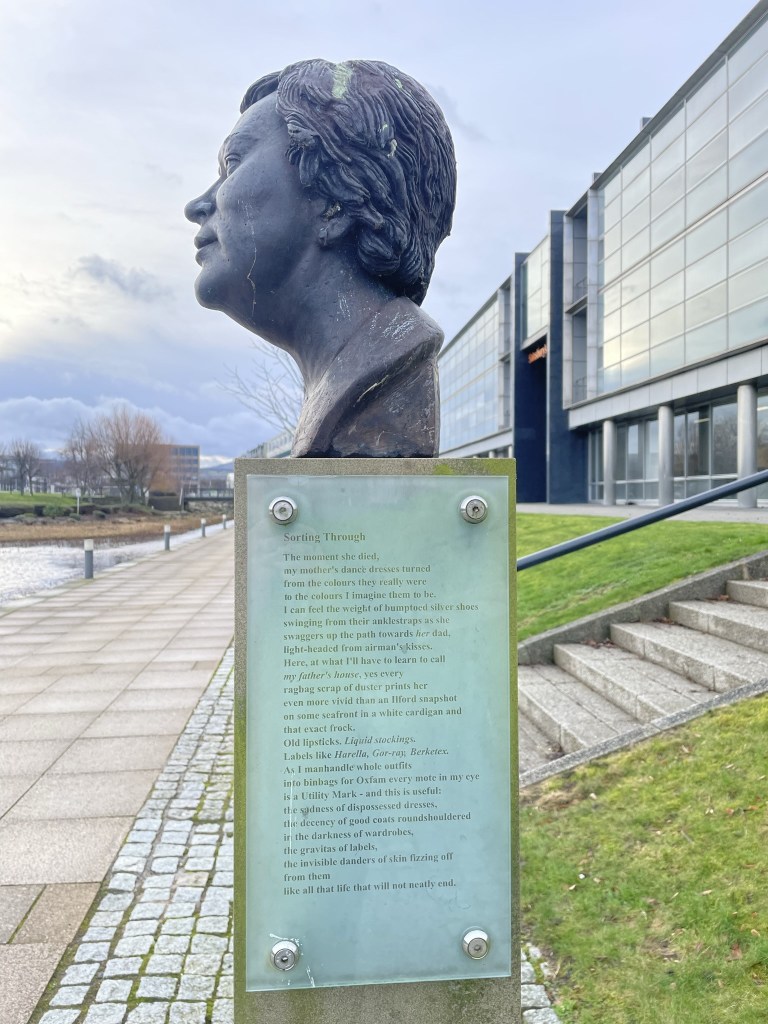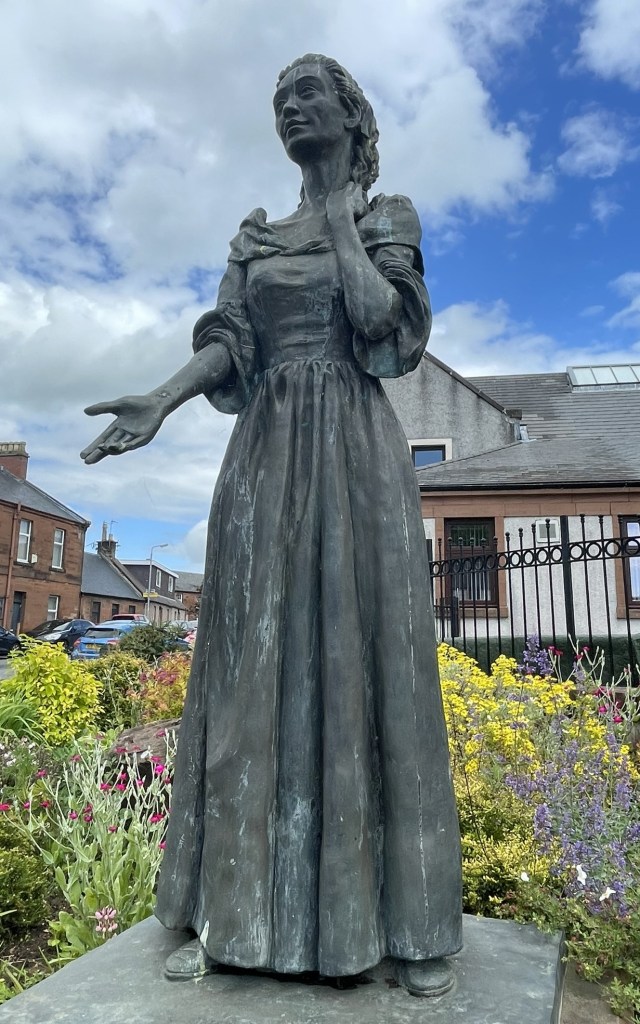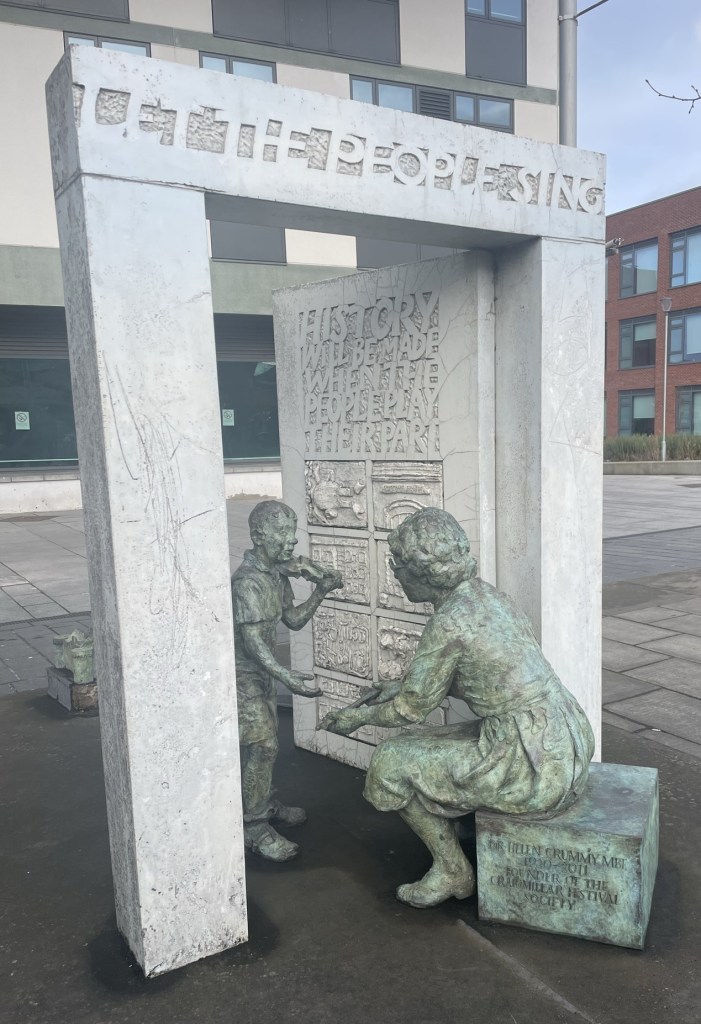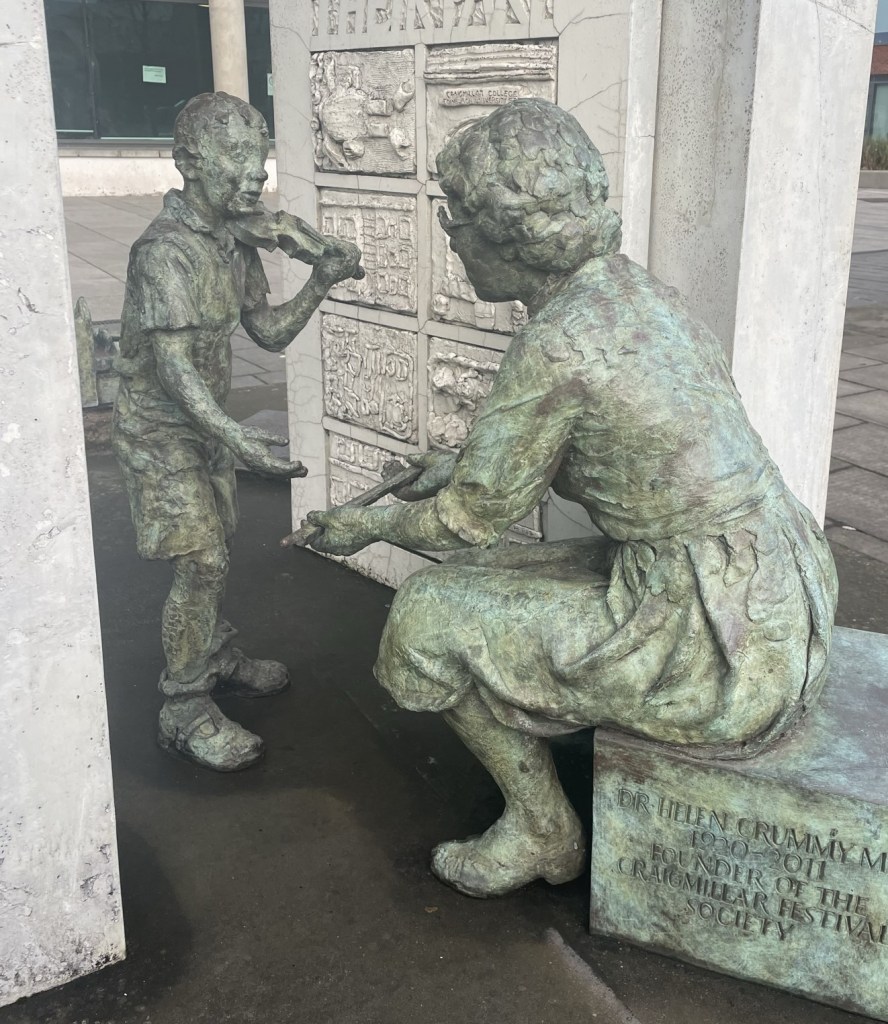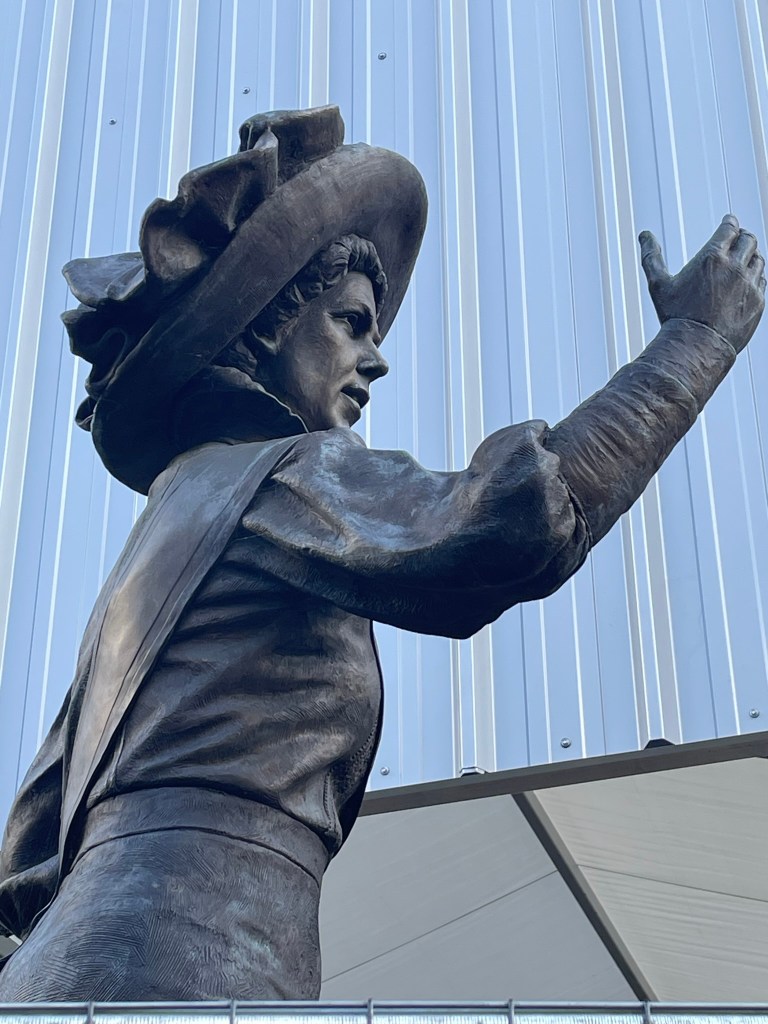
Don’t you fret, you are totally sorted for Agatha commemorations in the UK. Last count: 4. Watch out Florence Nightingale – she’s coming for you.
Cary Green Park, Palk Street, Torquay
‘Born in Torquay in 1890, Agatha Christie became, and remains, the best-selling novelist of all time. She is best known for her 66 detective novels and 14 short story collections, as well as the world’s longest-running play – The Mousetrap. Her books have sold over a billion copies in the English language and a billion in translation.’
Cranbourn Street, London WC2H
The above text is from Agatha’s dedicated website so I’m not arguing with the information. Now we know who she is, let’s just enjoy her memorials….
The Strand, Torquay MarinaHigh Street, Wallingford, Oxfordshire
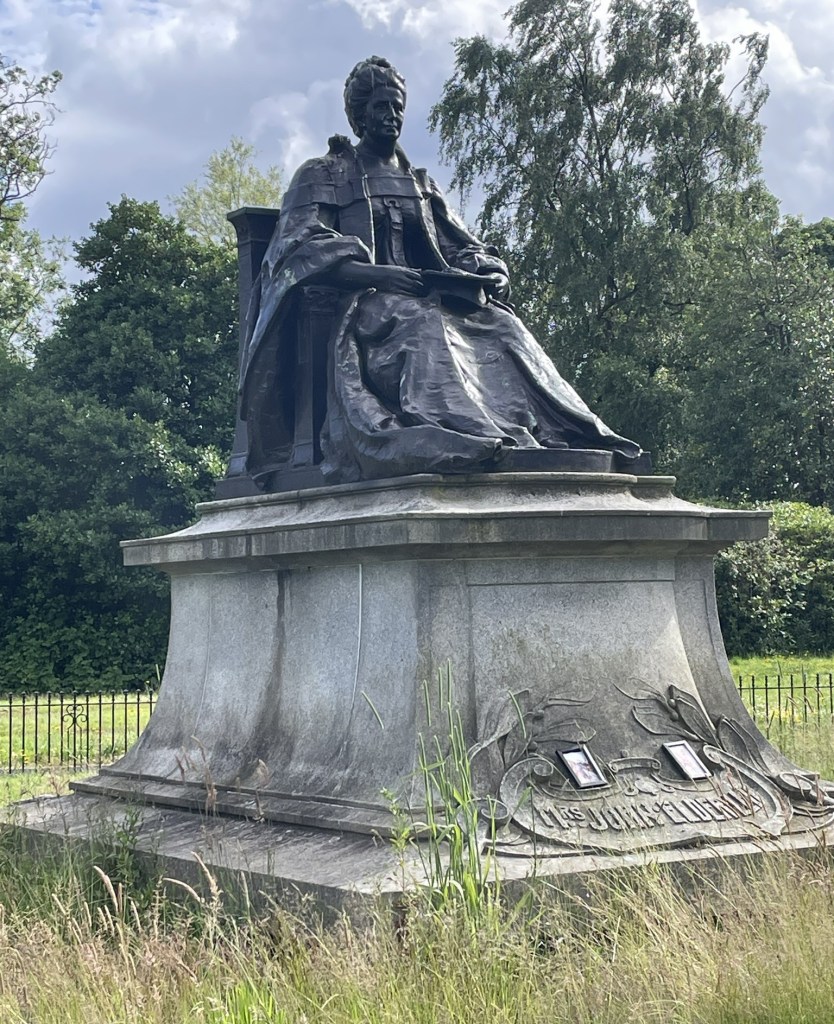
One of the earliest statues to a named woman, Georgina’s obituaries recorded someone who campaigned ‘with passionate indignation against cruelty and injustice’.
One of the first patrons of the RSPCA (Royal Society for the Prevention of Cruelty to Animals) and one of the founders of the Anti-Vivisection League (to stop scientific experiments on live animals) she famously fought for animal rights becoming vegetarian in 1876 and vice-president of the Vegetarian Society in 1884 – take that Paul McCartney! In 1885 she co-founded the Plumage League (campaigning against the use of feathers in women’s fashion). This amalgamated with the Plumage Section, the roots of which served to grow into RSPB (Royal Society for the Protection of Birds).
The statue complete with a birdbath was erected two years after her death in October 1903 to commemorate her philanthropic works.
In 1918 some women over the age of 30 got the vote and in that same year a separate law was passed – the Parliament (Qualification of Women) Act – which allowed women to stand as candidates and be elected as MPs. The following year the first woman MP took her seat in the House of Commons. That was Nancy Astor. Although…..
The first woman to actually be elected to the Commons was Constance Markievicz, in the general election of 1918. However, as a member of Sinn Fein, she did not take her seat. This sends me down a rabbit hole of internet information; it’s fascinating, taking in the Easter Uprising and the independence of Ireland. But I’m digressing. Let’s get back to Nancy.
Winning 51% of the Plymouth Sutton by-election vote, Nancy Astor was elected as the Conservative MP after her husband, former MP Waldorf Astor, was elevated to the peerage. One small step for feminism, one giant leap for nepotism?????
Still, she held the seat until she stood down in 1945, holding it for an impressive 25 years. Although she had never been involved in campaigns for women’s suffrage, she was a great supporter of the women’s movement once in Parliament, with Waldorf Astor working to promote the admission of women to the House of Lords during the 1920s. She is described as an advocate for temperance, welfare and education, but Nancy was not without controversy. It is documented that she held anti-Catholic, and anti-semitic views and was a Nazi sympathiser which, it is suggested, led to her being asked to step down towards the end of the war.
On the centenary of her election, this statue was unveiled after a Crowdfunder campaign raised more than £140,000 in just over one year; an extraordinary achievement. Even more gobsmacking was the bipartisan approach, with women MP’s across the political parties showing support. The statue forms part of Plymouth’s Powerful Women trail. Also, note Nancy’s fancy signature on the plinth. Truly sublime.
Born in Saltash, Ann married a waterman – a job entailing carrying people and/or cargo across the River Tamar. Together they had 14 children, but when her husband died, Ann took on the waterman role. She was described as tall, strong and very good at rowing which led to her joining public regattas and races.
Her rowing success spread nationwide and it is believed that in 1833 Ann and her crew beat the ten best male crews in France leading to the title, ‘The Champion Rower of the World’. Ann continued to competitively row past the age of 60. She was also known to row out to warships in the Tamar and joke with the crews.
The fibreglass statue was unveiled in 2013 in Saltash in the main shopping street and relocated to the waterfront in 2018, presumably as there’s less tomfoolery from the public on a Sunday morning riverside stroll than a spicy Saturday night in Saltash centre. But I’m only guessing. Still, I like to think Ann would have fended off any vandals.
Somewhere, somehow, I hear that a church near the east coast is running a project replacing crumbled stone carvings with new ones, showcasing 9 pioneering women. I could research and write about them myself, but when I arrive an exhibition captures all you need to know…
So you don’t have to endure my jaunty phone camera angles, the exhibition also features plaster casts of the carvings. Phew. The initial plan for one carving to be Queen Elizabeth was changed to Libby Lane, the first female Bishop in the myself, Church of England.
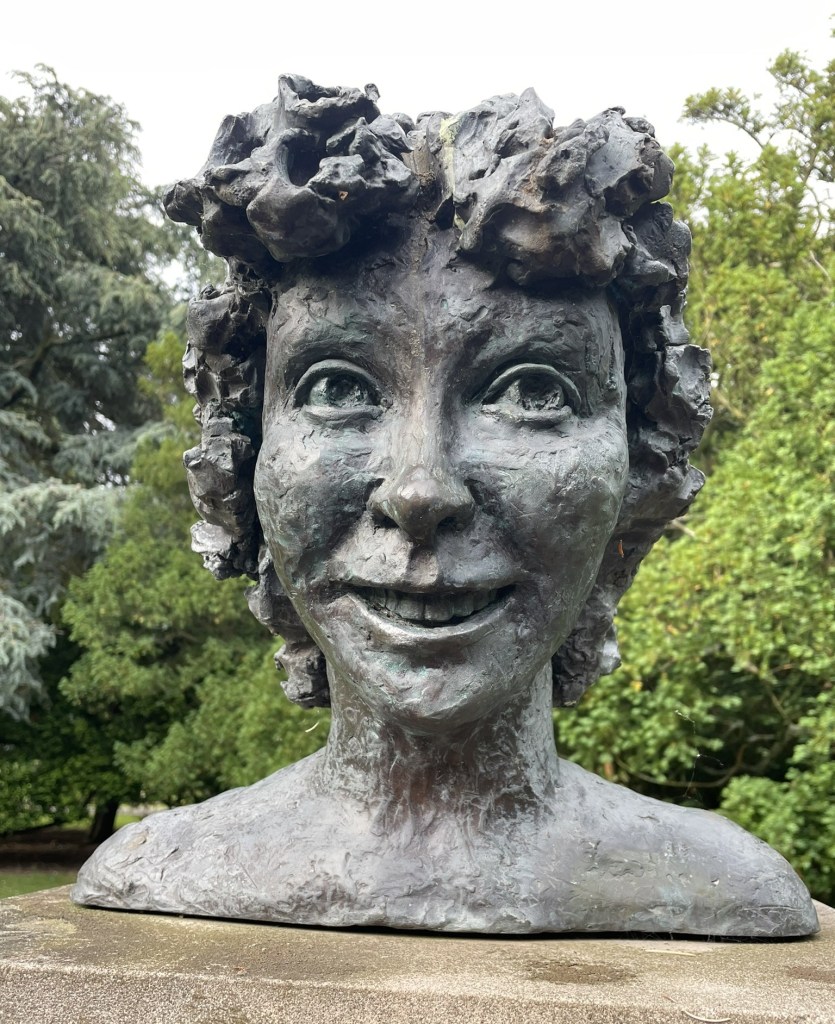
When I find Floella’s bust on the University of Exeter’s campus, I’m instantly irked by the tarpaulin behind spoiling the pictures. And then I realise I can just take a shot from a different angle and see it another way. Let that be a lesson in life right there.
People of a certain generation will be familiar with Floella. She was a prominent figure in children’s TV around the 70’s and 80’s in Playaway and Playschool, but her CV extends far beyond presenting, into film, campaigning and writing, becoming a peer in the House of Lords in 2010.
Born in Trinidad, she came to the UK at the age of 10 experiencing culture shock adjusting to British life and the adversities she faced. Studying at night school for A-levels, she auditioned for acting roles and, as the saying goes, the rest is history.
In 2006, she was awarded an honorary degree by the University of Exeter for contributions to the United Kingdom and served for ten years. The bust was subsequently unveiled a year later with the plague reading:
Consideration ~ put yourself in the place of others and show empathy and respect. Never be judgmental. Contentment ~ don’t be jealous and envious but be satisfied with what you have. That way you are open and ready to receive what is right for you. Confidence ~ Be a decent human being, feel worthy and like the person you are. Give and love unconditionally and more will come back to you.
Author and poet, Mary wrote 6 novels as well as poems, short stories and nature essays. Growing up and spending most of her time around Shropshire she gained inspiration from her countryside surroundings with her work centring around her home county. The Mary Webb Society states, ‘She developed an extraordinary perception for minute detail in nature and this is reflected in the richness of her poetry and prose.’
As most things happen around late 19th/early 20th century; things weren’t always easy. She developed Graves’ Disease (a thyroid disorder) at the age of 20, which was to cause her ill health for much of her life and lead to her premature death. She became very self-conscious due to the disfiguring features of the disease and began to retreat into her own solitary world, taking solace in writing.
Her first book was published in 1916, The Golden Arrow, but her most famous work is Precious Bane (1924). Her health deteriorated soon after this, leaving a novel unfinished when she died aged 46.
The back of Mary’s bust reveals a pile of her books and is situated outside Shrewsbury Library. Nice touch.
There’s no doubt that a lot of my statue visits are poignant, giving me pause to reflect and think about the course of life and how it can change so easily. With my write ups I normally scout around the internet, cross referencing and generally getting lost before throwing a bit of history together in the hope it honours the woman cited. Here, I am directly taking the text from pssauk.org website (Public Statues and Sculpture Association) where I originally gleam information on statues and made my list of the women to visit. The write up captures Katie so beautifully it would be wrong to write otherwise.
‘Katie attended Malvern College from 1994-99 and then St Edmund Hall, Oxford, but died tragically young of a brain haemorrhage at the age of twenty-five. She was a volunteer at a Quest Overseas project in Peru, where she taught sport, art, music and theatre to the children in Villa Maria, a shanty town in Lima. She was passionate about the project and following her death a fund established in her name was used to provide better living conditions for disadvantaged children and single mothers in that community.
A keen sportswoman, she is depicted in this statue as a fourteen-year-old schoolgirl Katie playing Netball. The memorial statue was commissioned by her parents, Kevan and Penny, to stand in her old school.’
On the day I visit there are two quotes tied to her feet from the Random Acts of Kindness Foundation:
‘There are two ways of spreading light: be the candle or the mirror that reflects it’
Edith Wharton
‘Do your little bit of good where you are; it’s those little bits of good put together that overwhelm the world’.
Desmond Tutu
The inscription on Katie’s plinth is a quote from Abraham Lincoln:
‘In the end, it’s not the years in your life that count, it’s the life in your years’.
The second statue in the Monumental Welsh Women campaign depicts Elaine’s achievements as screenwriter and revolutionary evolutionary theorist. She sits atop an ocean wave that mutates into a sheaf of her writings, fluttering away from her.
Born in nearby Pontypridd and educated at Oxford (studying English), she returned to Wales, settling in Mountain Ash and had a successful career as a screenwriter, but was perturbed by scholarly opinion on evolution, favouring Alister Hardy’s ‘aquatic ape theory’ which suggested the evolution of humans was more likely to be from water rather than fighting in the savannah. From here the ideas and process were developed into her own writings and she went on to write several books on the matter, alongside her television work.
Royal Fort House Gardens, Tyndall Avenue, University of Bristol
It’s not usual to start with death, but this is where Henrietta’s legacy begins. Her cause of passing was a particularly aggressive form of cancer and during her treatment a section of her tumour was taken and sent to a laboratory. Her family and indeed Henrietta at the time were unaware of this. But there was something unique in Henrietta’s samples. Unlike previous human cells, Henrietta’s continued to grow and divide outside the human body, making them the first human immortal cell line. This meant that they could be kept indefinitely and thus play a vital role in science.
Henrietta remains, to many, an unknown contributor to worldwide research. So unique were the cells and so crucial to Biomedical science, they were attributed their own name – HeLa cells (after the first letters of her name) and have been pioneering in medical advances including the polio vaccine, chemotherapy, Sars and COVID-19.
Behind all this, let’s not forget there was a family orientated woman, described as hard-working and loving. One of ten children, she went on to have five of her own, leaving a young family when she passed at just 31 years old.
In this creation, Bristol artist Helen Wilson-Roe heralds the first public statue of a Black woman made by a Black woman in the UK. Members of Henrietta’s family were present at the unveiling and now involved in keeping Henrietta’s legacy alive.
Henrietta’s cells survive today in countless laboratories, helping to continue to make groundbreaking discoveries in medicine.