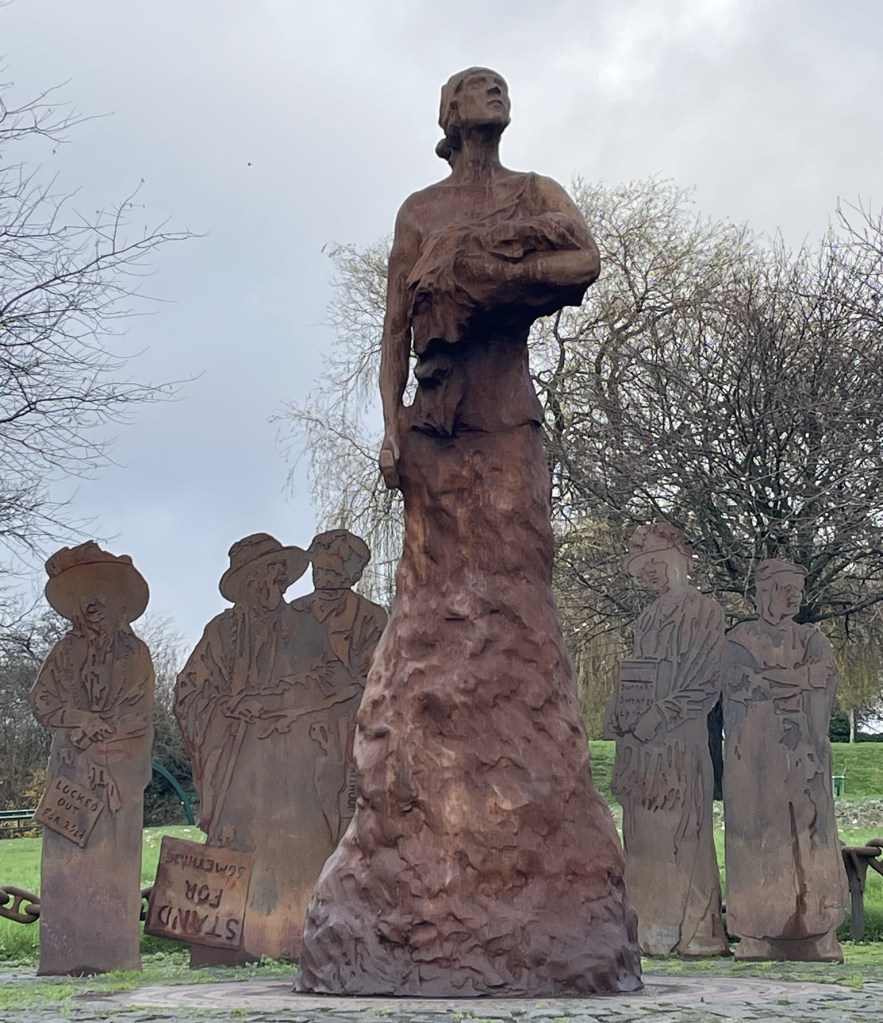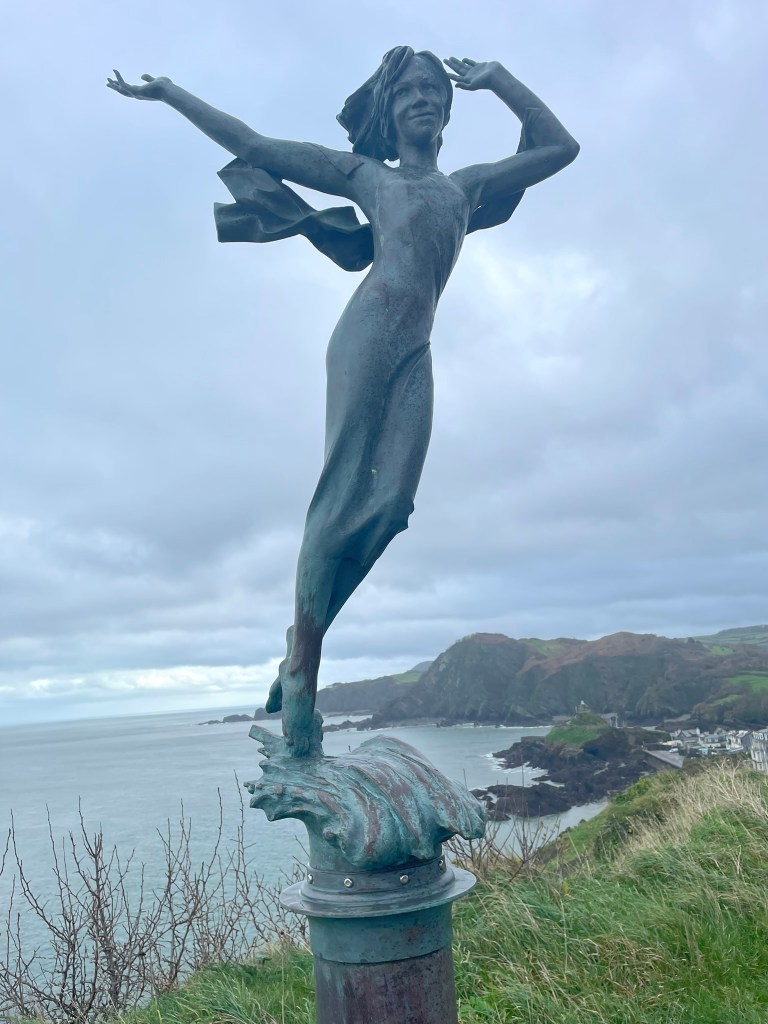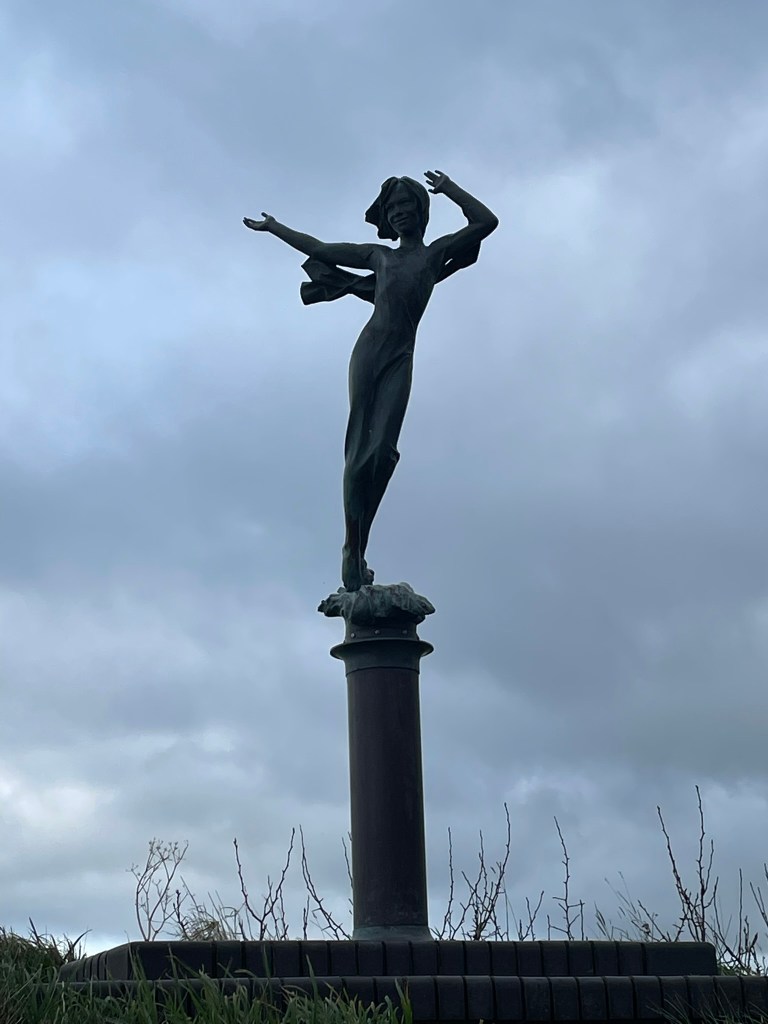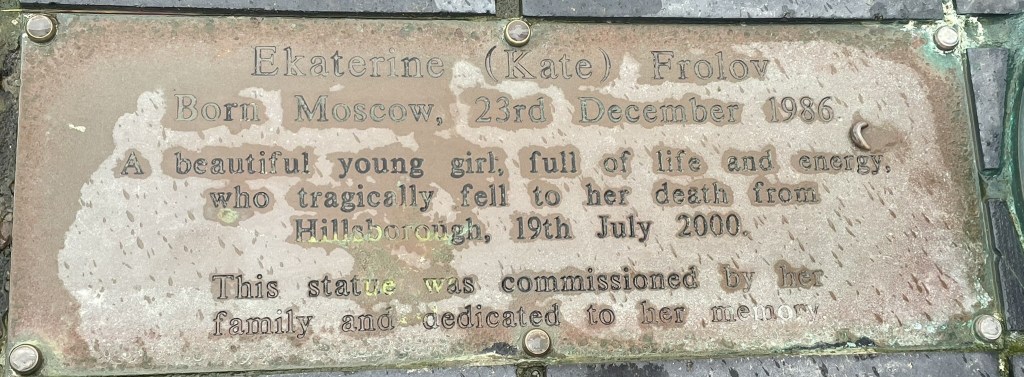
Lady Anne Clifford

(1590 – 1676)

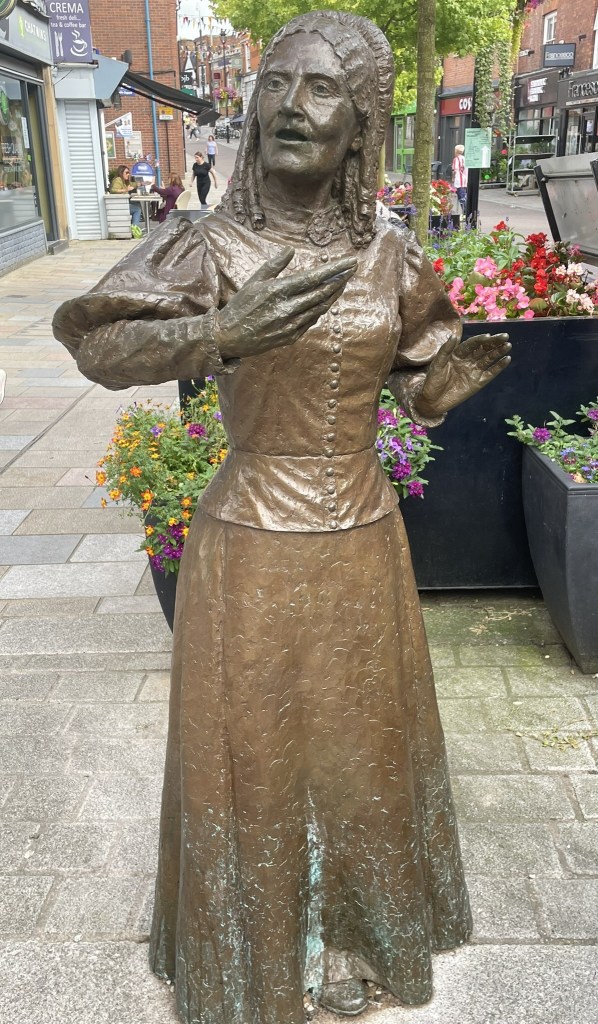
Born at Skipton Castle and the only surviving child of George Clifford, 3rd Earl of Cumberland, you’d think it was a safe bet that Anne would have inherited on her father’s passing.  Unfortunately, life wasn’t that easy.  George’s titles and estates passed to his brother Francis.  Deprived of her inheritance, Anne fought a long and complex legal battle culminating in King James I, judging in favour of her Uncle Francis.  When her Uncle’s son died without a male heir, Anne finally inherited the Clifford estates, covering some 90,000 acres across northern England.  Careful what you wish for. 

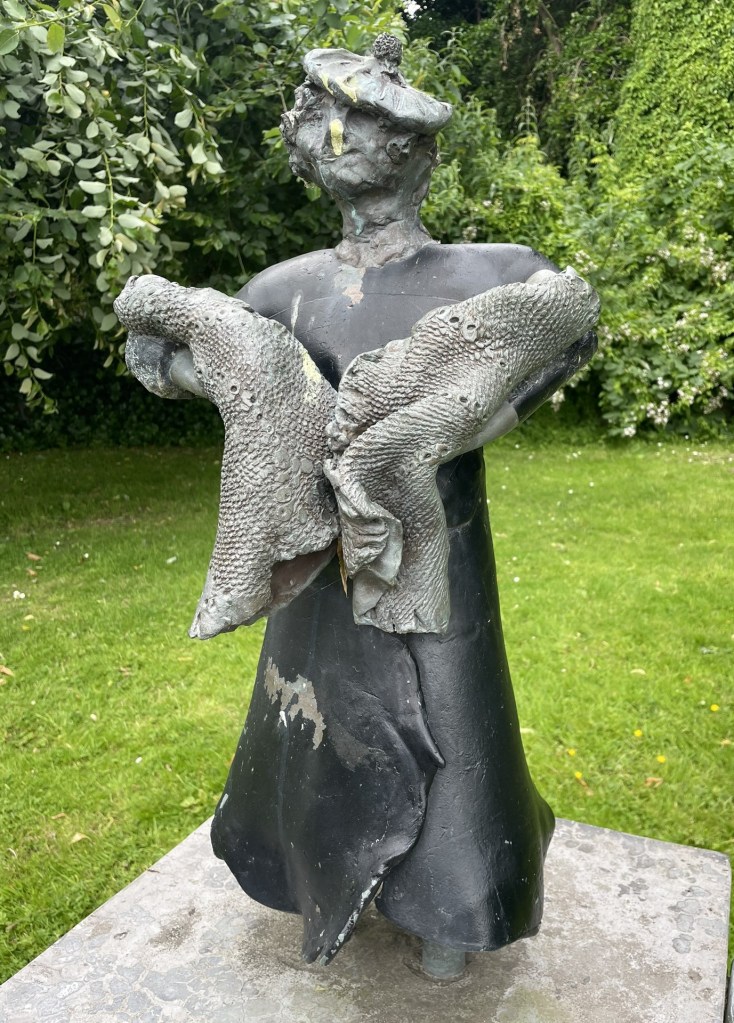
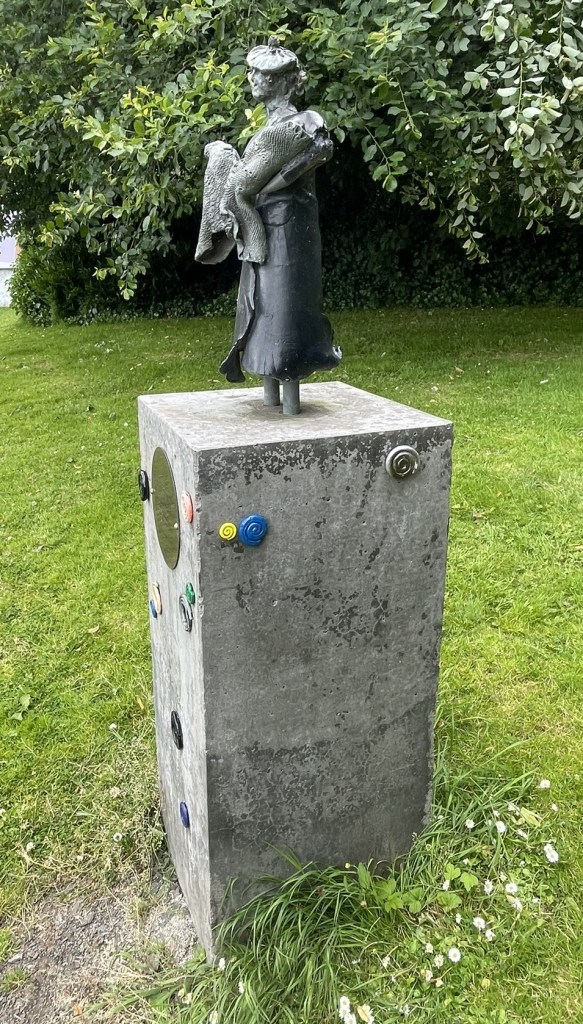
As a devout Christian, with her wealth she restored many churches and was a generous benefactor, taking her Estate Owner role seriously.  She was deemed to be a creative person, with a passion for art, architecture and sculpture.  Her own statue depicts her bare footed as a nod to her free spiritedness.

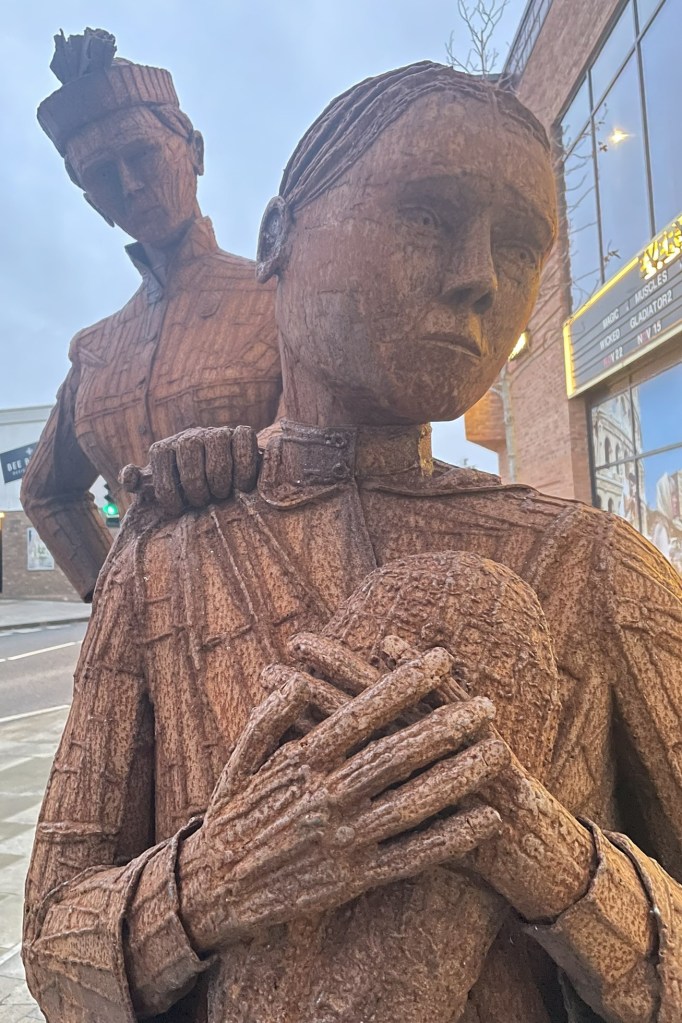
Emily Wilding Davison

(1872 – 1913)

Emily Wilding Davison was a suffragette whose efforts for women’s right to vote made her one of the most prominent figures in the movement.  Joining the Women’s Social and Political Union (WSPU) in 1906 she became an officer and a chief steward during marches.  Three years later she gave up her job as a teacher and went to work full-time for the suffragette cause.  In this time, she was arrested nine times, went on hunger strike seven times and was force-fed on forty-nine occasions.  An ardent campaigner, her tactics included breaking windows, throwing stones, setting fire to post-boxes, planting bombs and hiding overnight in the Houses of Parliament – including on the night of the 1911 Census, making her address, ‘The House of Commons’ therefore affording the same voting rights as men.  She died after being hit by King George V’s horse at the 1913 Derby when she walked onto the track during the race.  Mystery still surrounds the circumstances.  She gave no prior explanation for what she planned to do at the Derby with historians noting she had bought a return train ticket.  Theories include the suggestion she was attempting to pin a suffragette flag to the king’s horse.

The statue in Epsom sets out the dates for emancipation:

1918 – property owning women over the age of 30
1928 – all women over the age of 21
1968 – all women over the age of 18

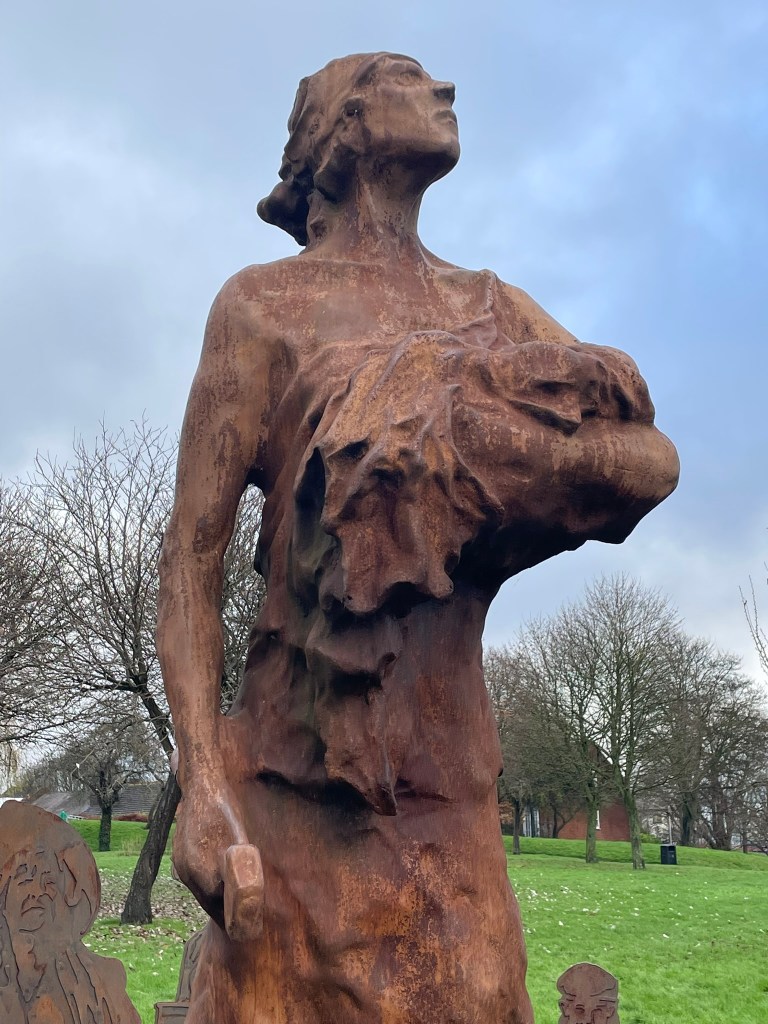
Both statues have her seated (and Ray Lonsdale’s depiction is a favourite of mine) but given her history it is hard to imagine her being that sedentary.  Still, the detail in both depictions are worthy of a visit.

Margot Fonteyn

(1919 – 1991)

Regarded as the UK’s first homegrown prima ballerina, Margot was born in Reigate and began ballet lessons aged four before her family moved to China.  Returning to the UK aged 14 she joined Sadler’s Wells School in 1934 (later renamed the Royal Ballet).  When the company’s first prima ballerina left, many of the roles were inherited by Margot (by then aged 16).

In 1949, she led the company in a tour of the United States and became an international celebrity.  She became president of the Royal Academy of Dancing in 1954 and, largely due to her international fame and many guest artist requests, the Royal Ballet allowed Fonteyn to become a freelance dancer in 1959.

She was reaching the end of her career when she first performed with Nureyev in Giselle in1962; a role she was reluctant to take on due to a 19 year age difference.  Still, their partnership became one of the most famed in ballet’s history.  Fonteyn retired in 1979 at the age of 60 but continued to be involved in the world of dancing until she died.

The bronze was unveiled by Margot herself in 1980 and was commissioned by fans from around the globe.  The statue depicts her as the water sprite, Ondine, which was her favourite role.

Shirley Bassey

(1937 – )

Buoyed up by yesterday’s statue unveiling in south Wales, I take a detour home via north Wales.  I’m in the country anyway, so why not saunter along the west coast and take in a Shirley Bassey sculpture while I can?

I take the jaunt along the A487, happily coasting behind Owen Jones’ Landscape Gardener’s truck.  His vehicle design features successful project pictures and lists his contact details.  By the time he turns off some 100 miles later I feel I know him well enough to do his accounts.

Born in Tiger Bay, Cardiff, Shirley began performing as a teenager in 1953.  By 1959 she was the first Welsh person to get a number one hit in the UK Singles Chart and over the next 40 years has accumulated 27 hits in the Top 40 Charts and sold over 140 million records worldwide.  She is the only singer who has recorded more than one James Bond film theme song (bonus points if you can name all three).

The sculpture took artist Marc Rees around 600 hours to create, and is based on Queen Boudicca, complete with power pose, spear and a hollow heart symbolising art as the beating heart of the community.

I park up at the castle on a sleepy Sunday morning to the spot where Shirley should be.  Accept she isn’t there.  I walk round its perimeter in case I have mistaken the balcony and approach a few strangers for direction, all to be met with a blank.  When the castle opens, I finally get somewhere when the receptionist tells me that the sculptor was only temporary and hadn’t been there for years.

David Lloyd George may well shake his fist.

And so this weekend we gained a statue and lost a statue.  Maybe the statue will turn up again one day.  And if it is sitting in your back garden or your own castle, drop me a line…

Sarah Jane Rees

‘Cranogwen’ (1839 –1916)

It’s fair to say that I am pretty excited for most of the statues I visit, but this one is particularly special as I’m planning to make the unveiling.

Welsh teacher, poet, editor, master mariner and temperance campaigner.  That all sounds pretty deserving of a statue.

Part of the Monumental Welsh Women campaign (see Betty Campbell and Elaine Morgan) this is number 3 of 5 planned.

Born in the village of Llangrannog and spurning a life of dressmaking, Sarah (better known for her Bardic name, Cranogwen) was destined for a life on the seas.  She worked with her father as a sailor on cargo ships between Wales and France before gaining a master mariner’s certificate – allowing her to command a ship in any part of the world.

She became a head-teacher at 21, educating the children of the village, while teaching navigation and seamanship in the summer months.

In 1865 she became the first woman to win a poetry prize at the Welsh poetry and music festival National Eisteddfod.  From there she went on to be one of the most popular poets in Wales publishing her first collection of poems in 1870 exploring themes from Welsh patriotism to shipwrecks.

In 1879 she became the first woman to edit a Welsh-language women’s magazine, Y Frythones, running it for 13 years.  Featuring stories, poems and features, it campaigned for girls’ education and even had a ‘problem page’.  If only I could subscribe.

Her talent for the written word went hand in hand with her talent for the spoken word.  An ardent believer in the Temperance movement, she visited America twice as a campaigner and preacher, thus further breaking boundaries for women’s roles in Victorian times.

Which brings us to her big reveal.  Shrouded in purple and applauded with justified reverence the revealed statue captures her reading her most famous poem, The Wedding Ring accompanied by her dog Fan.  Marvellous. 

She is buried nearby at St Carannog’s Churchyard.

Amy Winehouse

(1983 – 2011)

Gaining critical acclaim in the early 2000’s, Amy’s musical career was global, winning international awards for her work as a musician and vocalist.  Her career, however, was often marred by her personal life, overshadowed by her alcoholism and substance misuse.  There is a lot of information out there should you wish to find it.

Three years after her death, her bronze life-sized statue was unveiled in the Stables Market in Camden near where she lived and has been a prominent photo opportunity ever since.

A few years back I took part in a ‘Women in Music’ tour around the area, the guide pointing out the hole at the side of Amy’s hairstyle so that a flower could be placed there, as was so often her signature style.  Now, as I visit, I notice it is empty.  I dutifully pick a flower from a nearby raised bed and place it in her hair.  I think she would have approved.

Wimbledon Busts – Various female champions

In 2004, The All England Lawn Tennis Club commissioned sculptor Ian Rank-Broadly to produce five bronze busts of the former Ladies’ Singles British Champions to sit outside Centre Court:

Kathleen ‘Kitty’ McKane Godfrey (1896-1992) – 1924 and 1926 Champion

Dorothy Round (1909-1982) – 1934 and 1937 Champion

Angela Mortimer (1932 -2025) – 1961 Champion

Written off by a tennis coach as she only started playing the sport at the age of 15, Angela went on to become the 1961 Wimbledon Champion, beating fellow Brit Christine Truman – the first all British women’s final since 1914.  What made the match all the more unusual, was that both players had a sensory disability.  Angela was partially deaf and her competitor Christine Truman was almost blind in one eye.  Seen as an outlier and tennis amateur, Angela’s victory earned her a £20 voucher to spend at a sport shop.

Ann Haydon Jones (1938) – 1969 Champion

Beating Billie Jean King at Wimbledon, Ann was the first left-handed female player to do so.

Virginia Wade (1945 – ) – 1977 Champion

I get sidetracked researching Virginia’s tennis career as she was the model used in David Wynne’s Tower Bridge sculpture, ‘Girl with a Dolphin’. Wow.  Even more wow, Virginia still holds the title of last British woman champion. 

I rock up at Wimbledon having not booked anything in the hope I can get some pictures of the busts.  Access denied.  As it turns out, even with booking a tour, it seems that the route does not feature the artwork.  My only hope is to get a Wimbledon final ticket or improve my backhand – whichever happens first.

I’m still trying to see them.  If anyone has friends in high places please get in touch.  In the meantime, I (think) I have captured them thus.

Ada Salter

(1866-1942)

Leaving behind a comfortable life, Ada headed to London to work in the city slums as a Methodist ‘Sister of the People’.  She married Alfred Salter in 1900 and both became Quakers, labouring in dire conditions to bring food supplies to hungry families, improve living standards and protect workers’ rights.  Ada was the first woman councillor in Bermondsey in 1909 and went on to be elected as president of the Women’s Labour League in 1914.

In 1922, the same year that Alfred became MP, Ada became the first woman mayor in London.  Both worked tirelessly to bring safer, cleaner health practices to the district.  This included Ada’s vision of green spaces for people to improve health and wellbeing in the heart of some of the most polluted areas of the city.

The three statues, entitled, ‘Doctor Salter’s Daydream’ captures a happy moment for the family: Ada, Alfred and their daughter Joyce.  Tragically, their only child caught scarlet fever at the age of 8, a disease that spread around the slums where her parents fought so hard to improve people’s lives.

Joan Littlewood

(1914-2002)
Theatre Royal, Gerry Raffles Square, London E15 1BN

Born and raised in London, Joan had seen early stage performances and was left disappointed by the seemingly privileged world of theatre.  Moving to Manchester, she met Jimmie Miller (later named Ewan MacColl) and they set up a hub of playwriting that included hard hitting themes often not covered on a public level.  In 1941, she was banned from the BBC for her alleged extreme communist views and for fear of broadcasting her dangerous ideas to the nation.  MI5 observed her for almost two decades.

Lauded as the founder of modern young people’s theatre, Joan arrived at the Theatre Royal with her Workshop Company in 1953, getting children from the streets in Stratford involved in drama.  She continued staging productions with social issues at the heart, notably Shelagh Delaney’s, ‘A Taste of Honey’ in 1958 and 1963’s, ‘Oh What a Lovely War!’

The bronze statue, called ‘The Mother of Modern Theatre’ is based on an iconic 1970’s photograph of Joan sitting on rubble in almost exactly this location where the Theatre was threatened with demolition.

Mary Wollstonecraft

(1759-1797)
Newington Green, Islington, London

If anyone knows any female statue in the UK, it is probably this one.

Dedicated ‘for’ Mary Wollstonecraft rather than a depiction of her, the statue has caused great controversy, portraying a naked female figure emerging from a swirling mingle of female forms. The plinth is etched with Mary’s famous words, “I do not wish women to have power over men but over themselves”.  But enough of the nudey scandal, over to you Mary….. Largely self-educated, Mary’s relatively short life was far from conventional.  She was passionate about education for women, culminating in her most famous work, ‘A Vindication of the Rights of Woman’ (1792) – widely viewed as the foundation of early feminism, outlining that woman should be treated – big gasp – equal to men.

Mary involved herself with a group of radical thinkers and writers based in Newington Green including William Godwin whom she later married when pregnant.  However, 11 days after the birth of her daughter, she died, presumably from sepsis.   Her daughter went on to become a writer.  You will know her as Mary Shelley, author of Frankenstein.

Back to Newington Green and what’s to be made of the sculptor?  Maybe pay a visit yourself and see what you think.  If it isn’t your thing there is a great kids adventure playground nearby.